Read all of these information dumps and not just this page.
Part 1 of this dump
https://justpaste.it/Korean_History_1
this dump is Part 2
https://justpaste.it/Korean_History_2
Part 3
https://justpaste.it/Korean_History_3
Part 4
https://justpaste.it/6vewk
https://justpaste.it/Korean_History_4
Part 5
https://justpaste.it/Korean_History_5
Part 6
https://justpaste.it/Korean_History_6
Part 7
https://justpaste.it/2yccg
https://justpaste.it/Korean_History_7
Part 8
https://justpaste.it/8ppgs
https://justpaste.it/Korean_History_8
Please read that in addition to reading this page.
Hui Muslims in the Ming dynasty were also obsessed with Korean women.
http://web.archive.org/web/20160611124056/https://history.ubc.ca/sites/default/files/documents/readings/robinson_culture_courtiers_ch.8.pdf
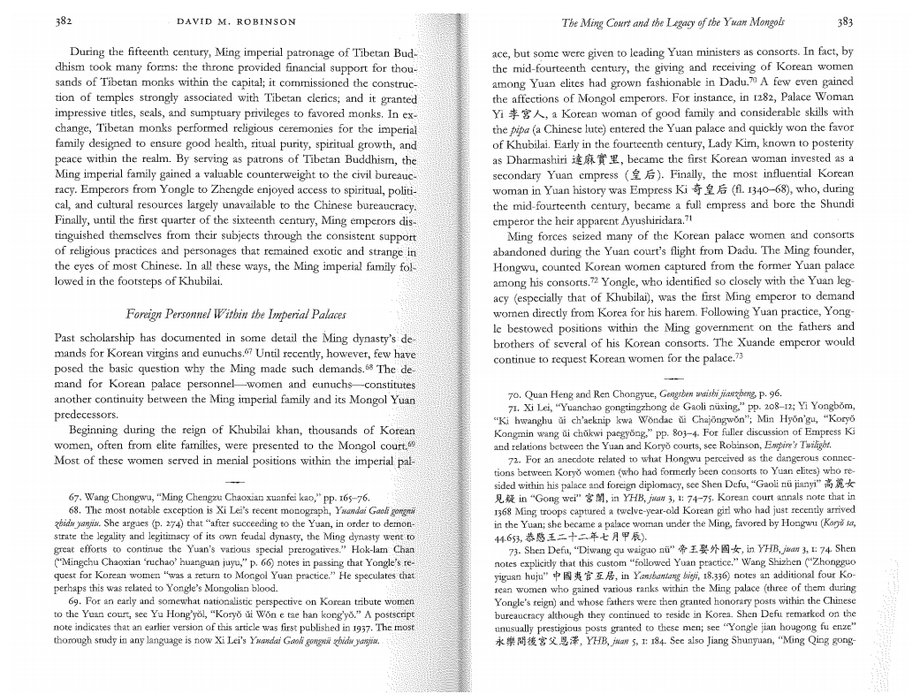
this page, a Muslim at the Ming court spoke about the beauty of Korean women
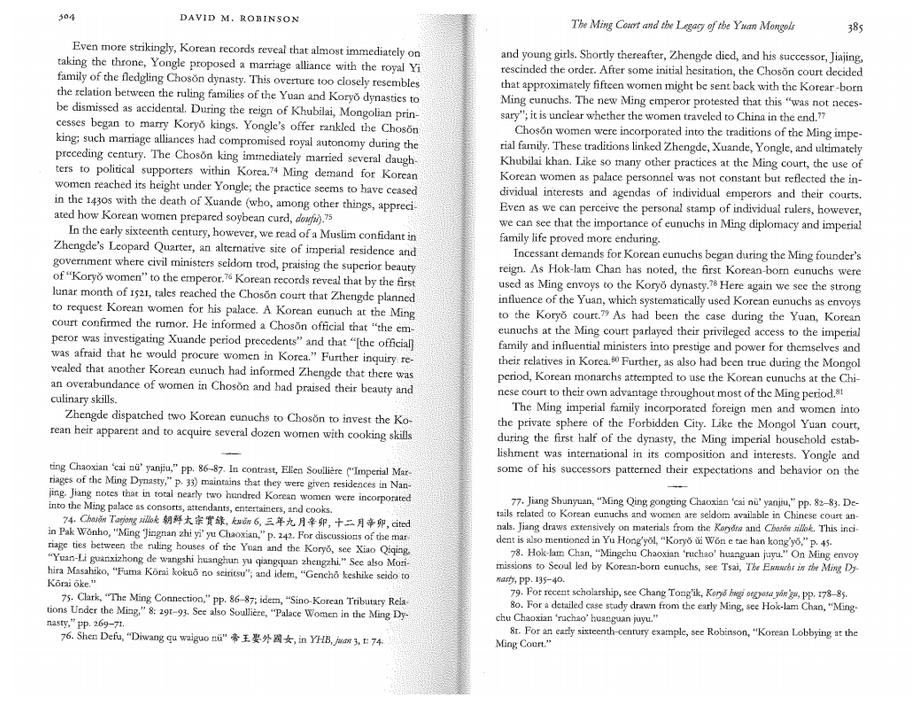
* the discrepancy between the number here of thousands vs half a million in the other source is that the other source includes women taken during the invasion of Korea itself and not just official tributes
also some Ming porcelain with Arabic inscriptions
http://www.alaintruong.com/archives/2018/04/21/36339392.html
A rare Ming blue and white porcelain pen box, Jingdezhen area, Jiangxi province, China, Zhengde... alaintruong.com
ye historical account contemporary possession black
Результати пошуку
Discourses of Race and Rising China - Сторінка 170
books.google.com.ua › books
Знайдено всередині книги – Сторінка 170
This historical account provided by Ye Ziqi, a famous fourteenth-century scholar and philosopher who also wrote about everyday life in urban China both contemporary and historical, shows that the possession of both black and Korean slaves became the standard among China's upper class. Ye's portrait might be more ...
ignore the stuff below that talks about the Tang dynasty, just focus on the part about Ye Ziqi's Caomuzi in the 14th century (Yuan dynasty) He said northern Chinese (referring to Yuan elites in northern China like Beijing, including Mongols and Hui Muslims) having Korean girls as maids
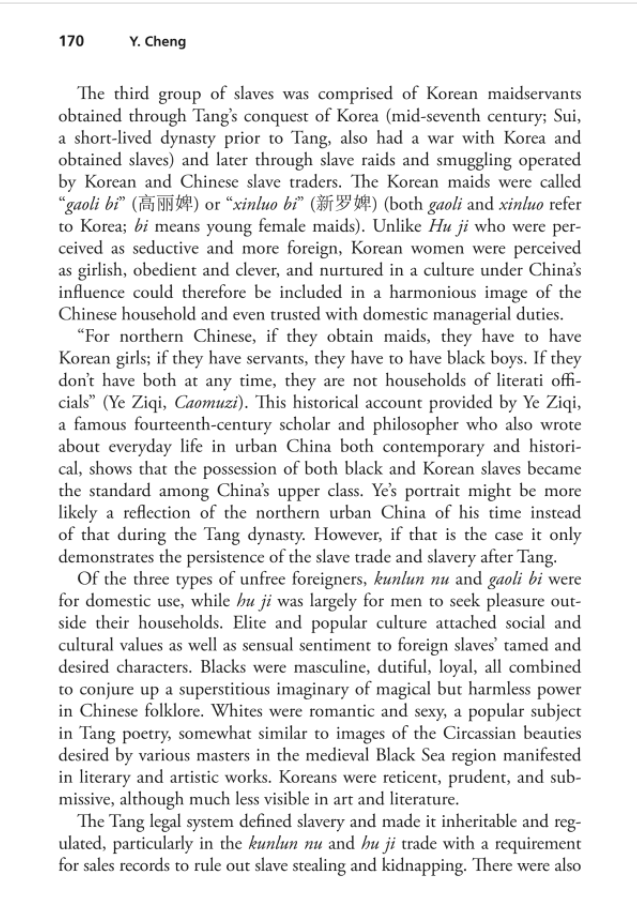 this source also quotes the same guy mentioning how important men in northern China during the Mongol period had Korean girls as servants
https://books.google.ca/books?id=VTlIAAAAYAAJ&focus=searchwithinvolume&q=%22korean+maidservants%22
Africans Abroad books.google.ca

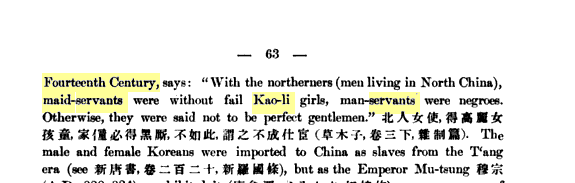
and this source too
https://books.google.ca/books?id=rBIUAQAAMAAJ&focus=searchwithinvolume&q=%22Fourteenth+Century+%2C+says+%3A+%E2%80%9C+With+the+northerners+%28+men+living+in+North+China+%29+%2C+maid+-+servants+were+without+fail+Kao+-+li+...+The+male+and+female+Koreans+were+imported+to+China+as+slaves+from+the+Tang+era+%28+see+%23+WE+%21+%2C+%3D+t+%2C+dll+%29+%2C+but+as+the+...%22
Memoirs of the Research Department of the Toyo Bunko (the Oriental Library). books.google.ca
 https://books.google.ca/books?id=IZ_WAAAAMAAJ&focus=searchwithinvolume&q=%22Fourteenth+Century+%2C+says+%3A+%E2%80%9C+With+the+northerners+%28+men+living+in+North+China+%29+%2C+maid+-+servants+were+without+fail+Kao+-+li+...+The+male+and+female+Koreans+were+imported+to+China+as+slaves+from+the+T+%27+ang+era+%28+see+%23+%2C+%23+D+%3D+t+%2C+O+%29+%2C+but+as+the+...%22
Memoirs of the Research Department books.google.ca


https://twitter.com/DeerRabbit7/status/1263076873875132416
•Jang is family korean name there ancestors are arab ( some of them )
• Arab called Korea with that name
Hundreds years ago there was a kingdom called koryeo in Korean Peninsula.. so arab who visited the country for trade call it Koriya
WOW My people roamed the whole world
http://www.businessreport.kr/news/articleView.html?idxno=18238
[Special Report] [Vin Salman, Crown Prince of Saudi Arabia] “오래전부터 아라비아제국과 대한민국은 형제였다” / "A long... businessreport.kr
"The `Doksu Jang Clan’ of South Korea can trace their origins back to Arabia, when a Muslim official was naturalized and granted their official surname by the king at that time. The clan has thrived over the years with approximately 300,000 descendants. In light of this, the Global Digital Economy Newspaper (Business Report) will feature a special article titled "Korea-Arabia, We Are Brothers" on the occasion of Saudi Crown Prince Bin Salman's visit to Korea on June 26."
This Turks is mentally confused. either the Jang clan were founded by a Uyghur Buddhist, or by a non-Uyghur Turkic Muslim or Arab Muslim. They cold not have been founded by a Uyghur Muslim because Old Uyghurs weren't Muslims
https://twitter.com/akifakyel/status/1184434404883603456
Kore'de hemen her soy isim bir aşirete, klana tekabül eder. Bunlardan Doksu Cang'ın (Deoksu Jang) kurucusu Uygur Türkü. Jang Sun Ryong demişler. Asıl ismi neydi acep? Kore Yarımadası'nın ilk Müslümanlarından.
remember this
Chagatai Khan, the ancestor of the Mughals was Islamophobic who oppressed Muslims. He put a ban on halal.
"The Mongol Empire: A Historical Encyclopedia" - Timothy May
"Great Events in Religion: An Encyclopedia of Pivotal Events in Religious History" - Florin Curta, Andrew Holt
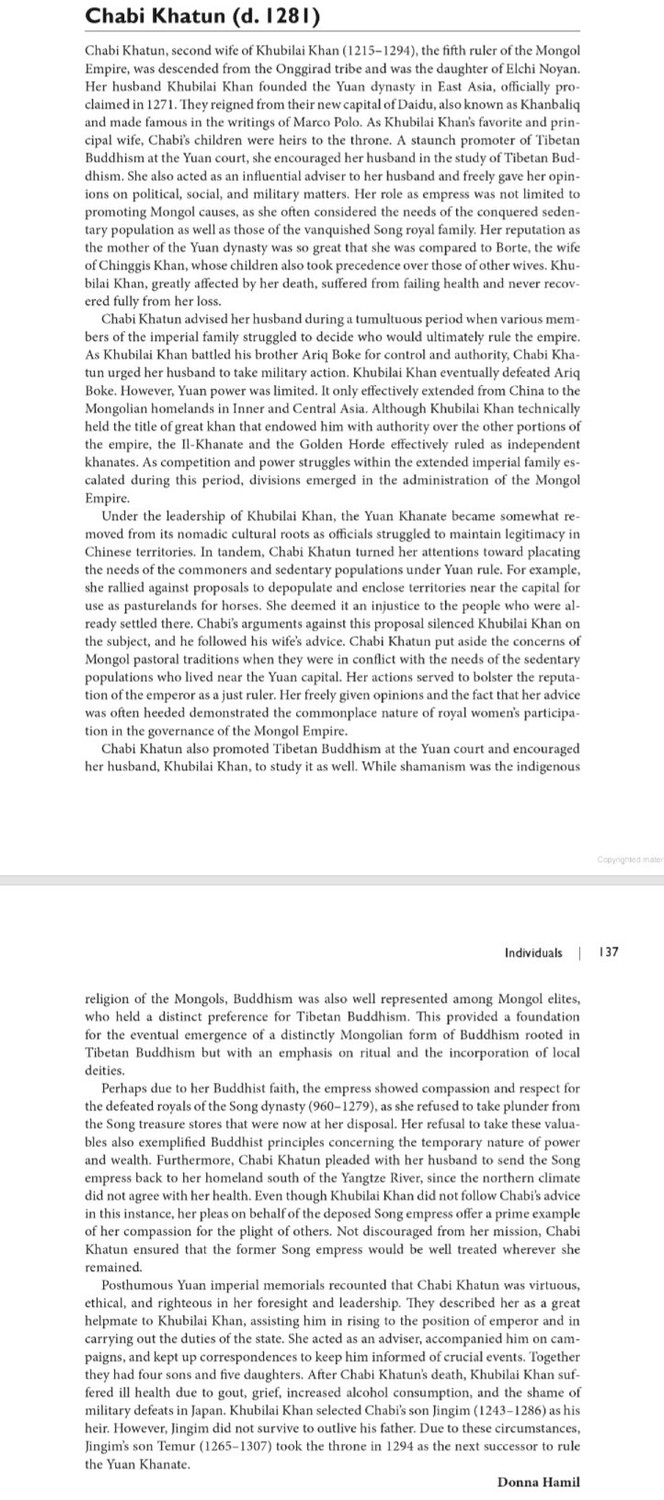 "chabi khatun advised her husband during a tumultuous period when various members of the imperial family"
Результати пошуку
The Mongol Empire: A Historical Encyclopedia [2 volumes]: A ...
books.google.com.ua › books
Timothy May · 2016
Знайдено всередині книги – Сторінка 136
Chabi Khatun advised her husband during a tumultuous period when various members of the imperial family struggled to decide who would ultimately rule the empire. As Khubilai Khan battled his brother Ariq Boke for control and authority, ...
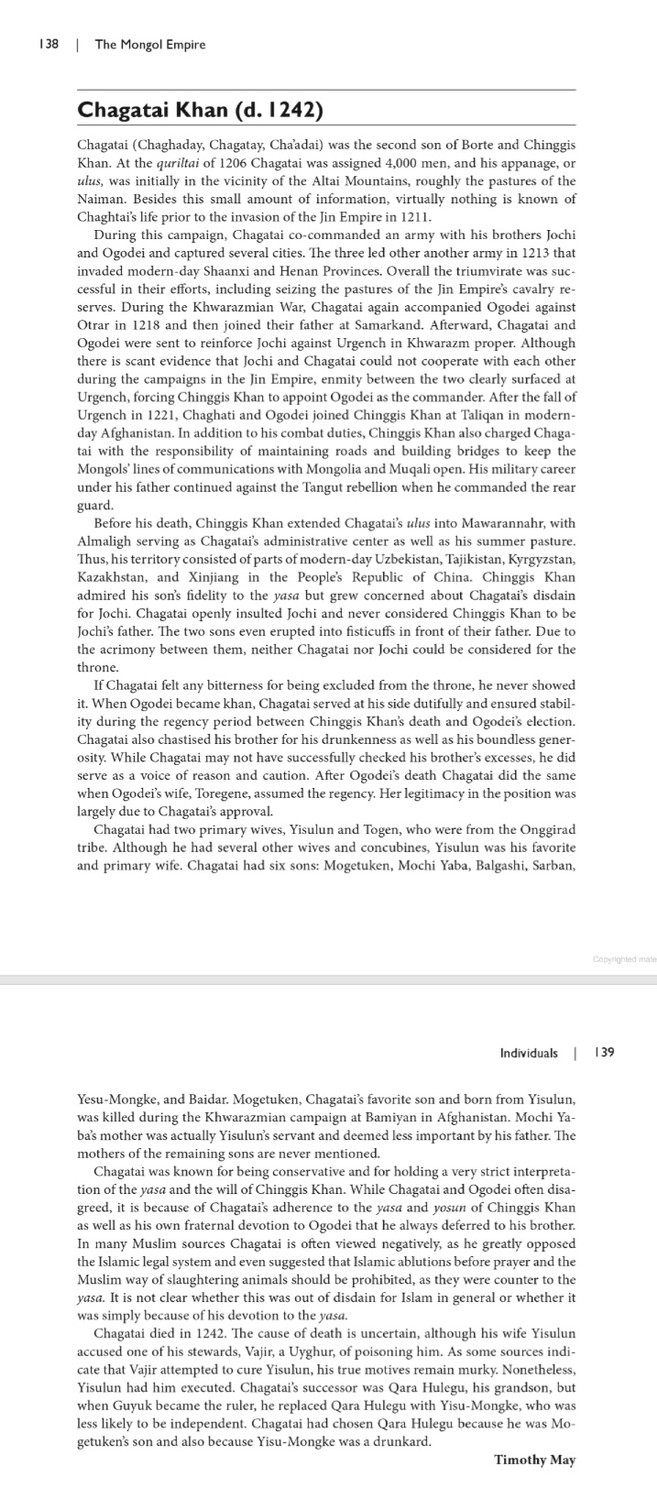 "In many Muslim sources Chagatai is often viewed negatively, as he greatly opposed the Islamic legal system and even suggested that Islamic ablutions before prayer and the Muslim way of slaughtering animals should be prohibited"
Результати пошуку
The Mongol Empire: A Historical Encyclopedia [2 volumes]: A ...
books.google.com.ua › books
Timothy May · 2016
Знайдено всередині книги – Сторінка 139
In many Muslim sources Chagatai is often viewed negatively, as he greatly opposed the Islamic legal system and even suggested that Islamic ablutions before prayer and the Muslim way of slaughtering animals should be prohibited, as they ...
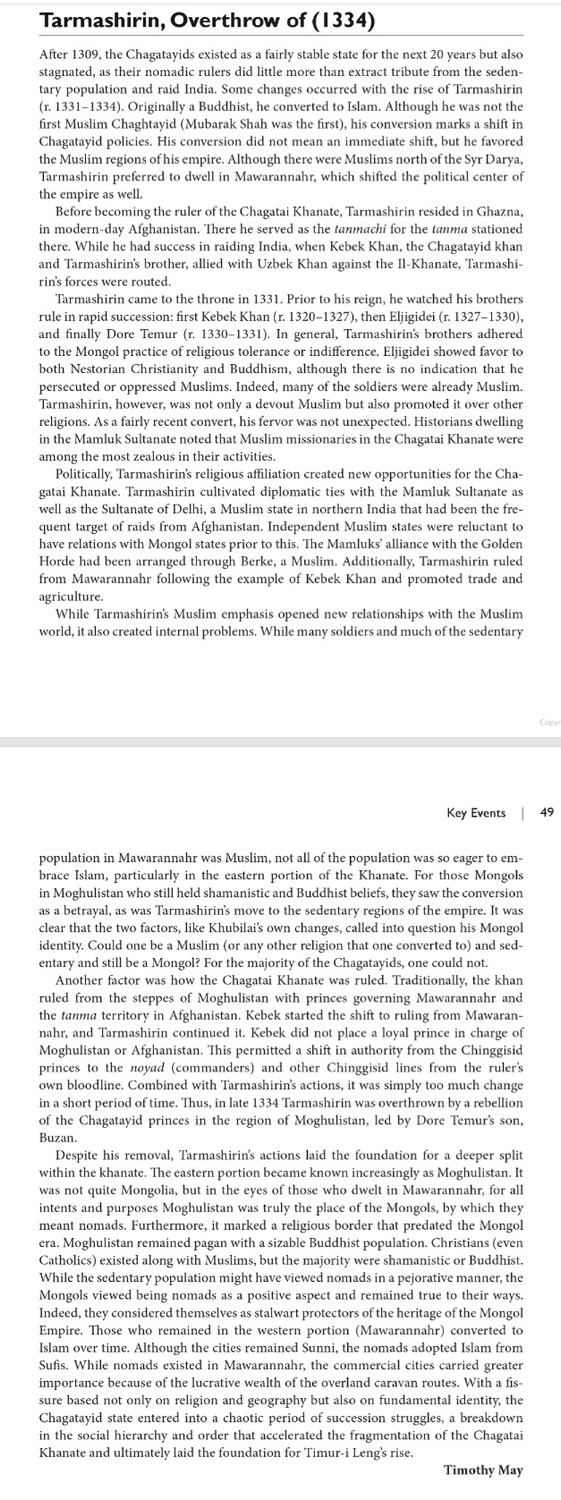 "the chagatayids existed as a fairly stable state for the next 20 years but also stagnated"
Результати пошуку
The Mongol Empire: A Historical Encyclopedia [2 volumes]: A ...
books.google.com.ua › books
Timothy May · 2016
Знайдено всередині книги – Сторінка 48
After 1309, the Chagatayids existed as a fairly stable state for the next 20 years but also stagnated, as their nomadic rulers did little more than extract tribute from the sedentary population and raid India. Some changes occurred with the rise of ...
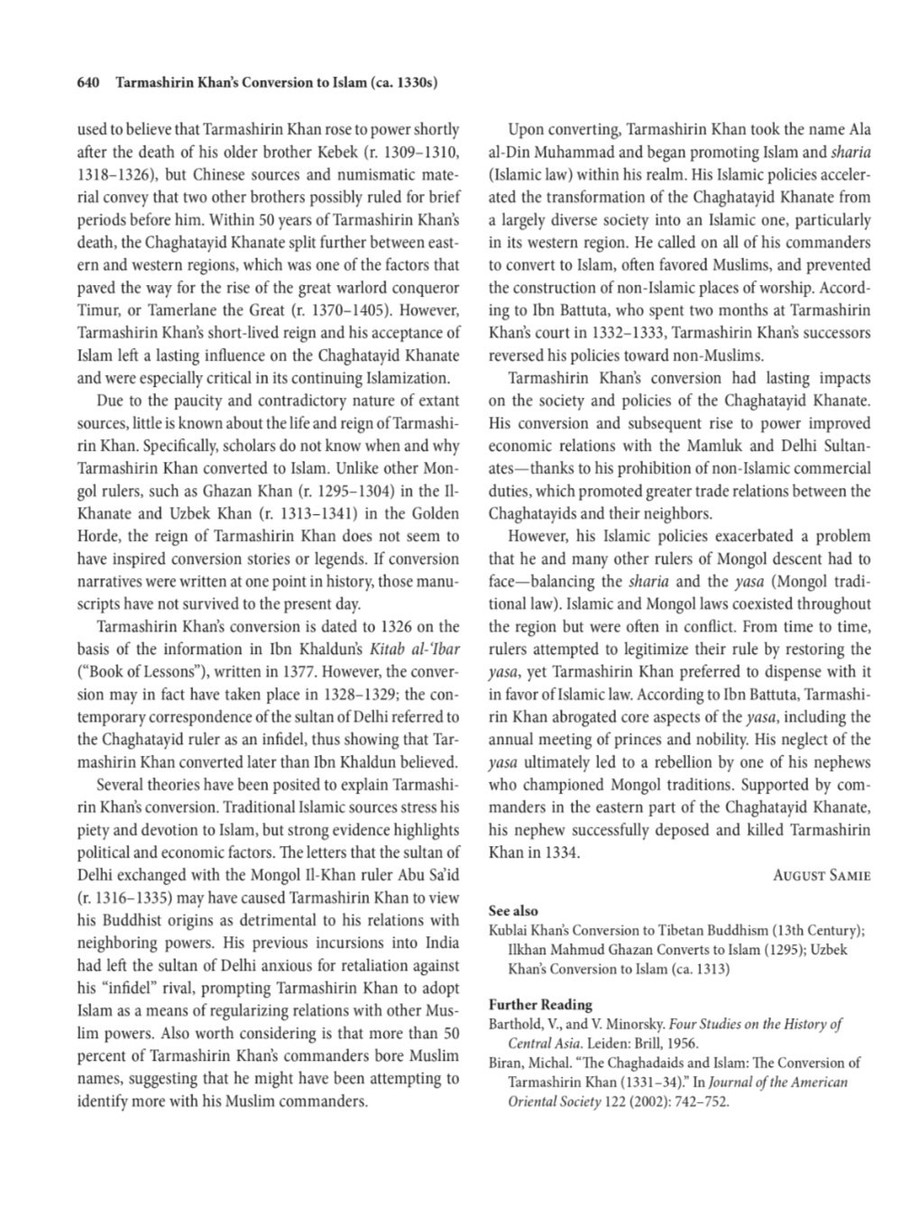
"which promoted greater trade relations between the Chaghatayids and their neighbors."
Результати пошуку
Great Events in Religion: An Encyclopedia of Pivotal Events ...
books.google.com.ua › books
Florin Curta, Andrew Holt · 2016
Знайдено всередині книги – Сторінка 640
... relations with the Mamluk and Delhi Sultanates—thanks to his prohibition of non-Islamic commercial duties, which promoted greater trade relations between the Chaghatayids and their neighbors. However, his Islamic policies exacerbated a ...
This was connected to switching Han for Central Asians. Han were sent to Bukhara and Samarqand to rule Central Asian Muslims while Central Asian Muslims were sent to China and Korea as officials
So Chagatai put anti-Muslim laws in his realm in Central Asia and used Han, Khitan and Tangut officials to rule Central Asian Muslims while Central Asian Muslims were appointed as governor of Yunnan in China and in charge of finance, tax collections and played the other role there
Later on, the role of these intermediaries broke down
Eventually the Chagatai Khans converted to Islam later and stopped being anti-Musilim, while the Yuan similarly started to revoke the privileges of the Semu class and pass anti-Muslim laws so they were no longer privileged.
The Yuan no longer needed the Central Asians and Chagatai no longer needed this Han, Khitan, Tangut class, this eventually led to the massive rebellion against the Yuan by Muslims in Quanzhou
and here is the source for the Yuan later turning against the Semu and Central Asians and start passing laws against Semu and Central Asian Muslims
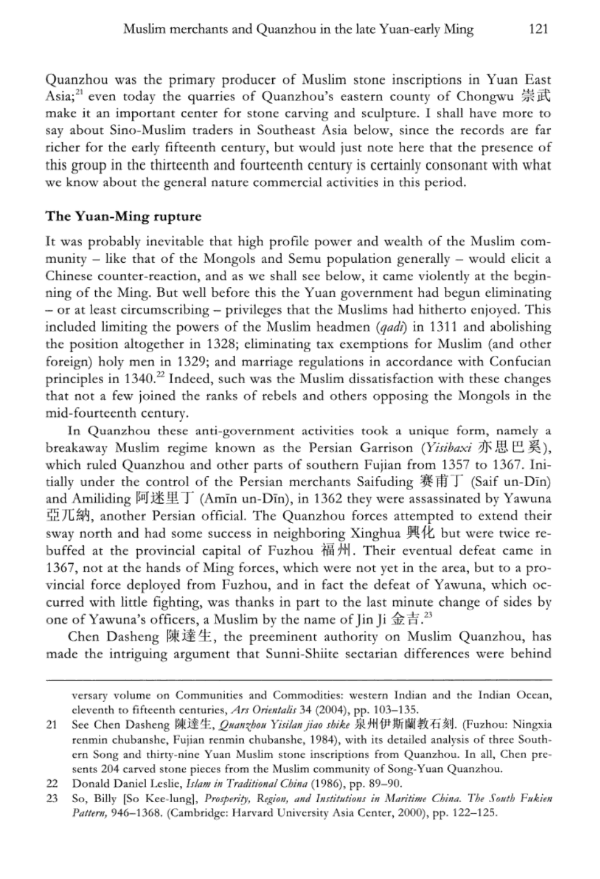 "Indeed, such was the Muslim dissatisfaction with these changes that not a few joined the ranks of rebels and others opposing the Mongols in the mid-fourteenth century."
Результати пошуку
The East Asian Mediterranean: Maritime Crossroads of ...
books.google.com.ua › books
Angela Schottenhammer · 2008
Знайдено всередині книги – Сторінка 121
22 Indeed , such was the Muslim dissatisfaction with these changes that not a few joined the ranks of rebels and others opposing the Mongols in the mid - fourteenth century . In Quanzhou these anti - government activities took a unique form ...
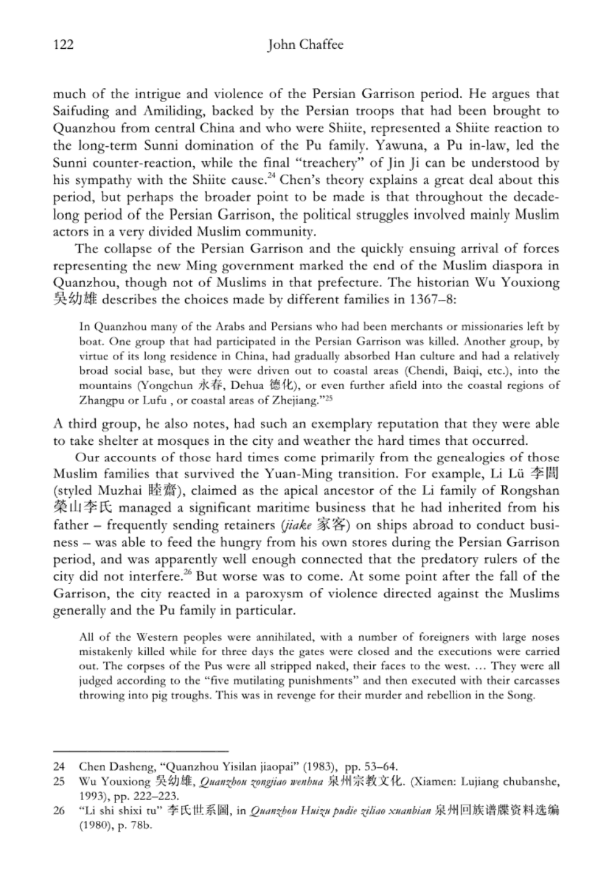
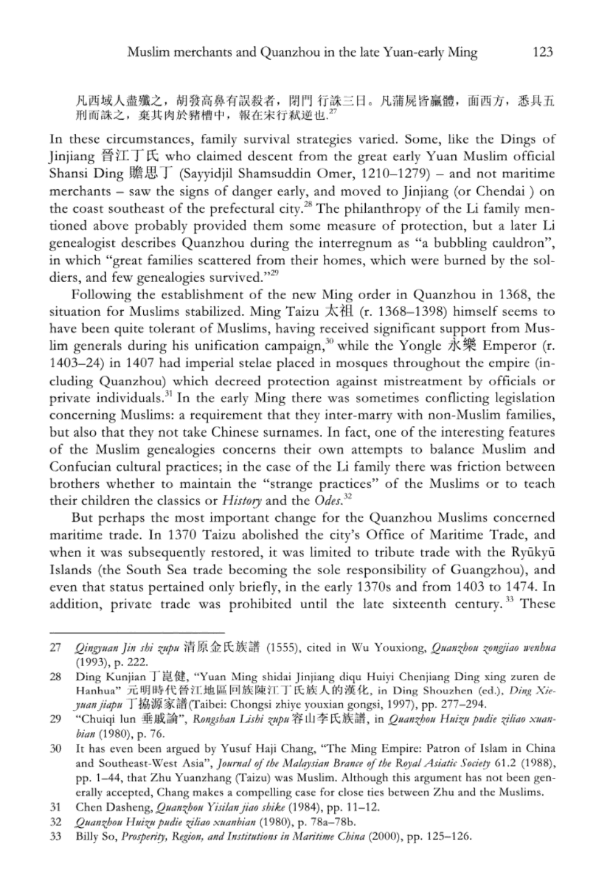
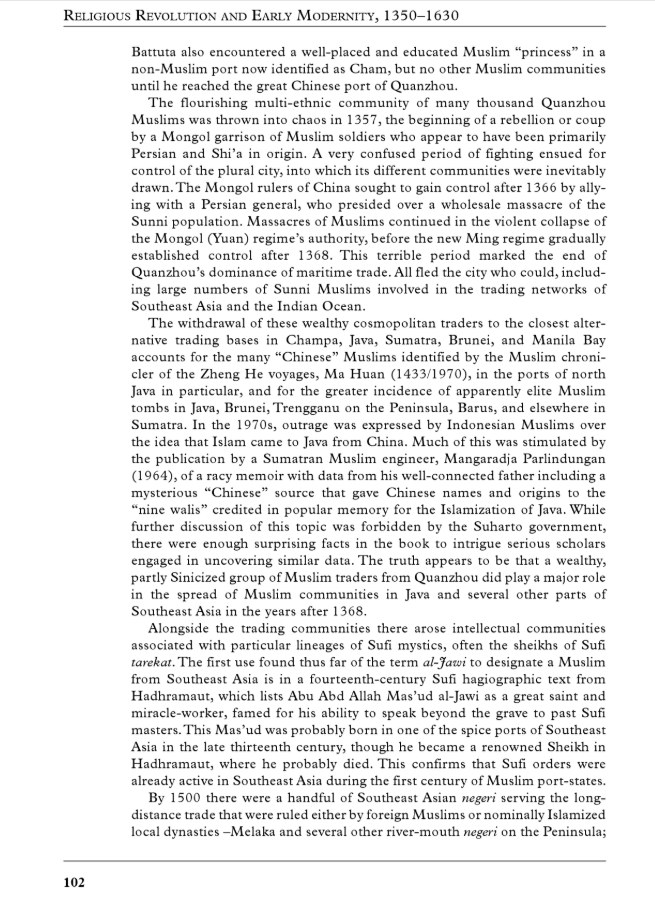 "Massacres of Muslims continued in the violent collapse of the Mongol (Yuan) regime's authority, before the new Ming regime gradually established control after 1368."
Результати пошуку
A History of Southeast Asia: Critical Crossroads - Сторінка 102
books.google.com.ua › books
Знайдено всередині книги – Сторінка 102
Massacres of Muslims continued in the violent collapse of the Mongol (Yuan) regime's authority, before the new Ming regime gradually established control after 1368. This terrible period marked the end of Quanzhou's dominance of maritime ...
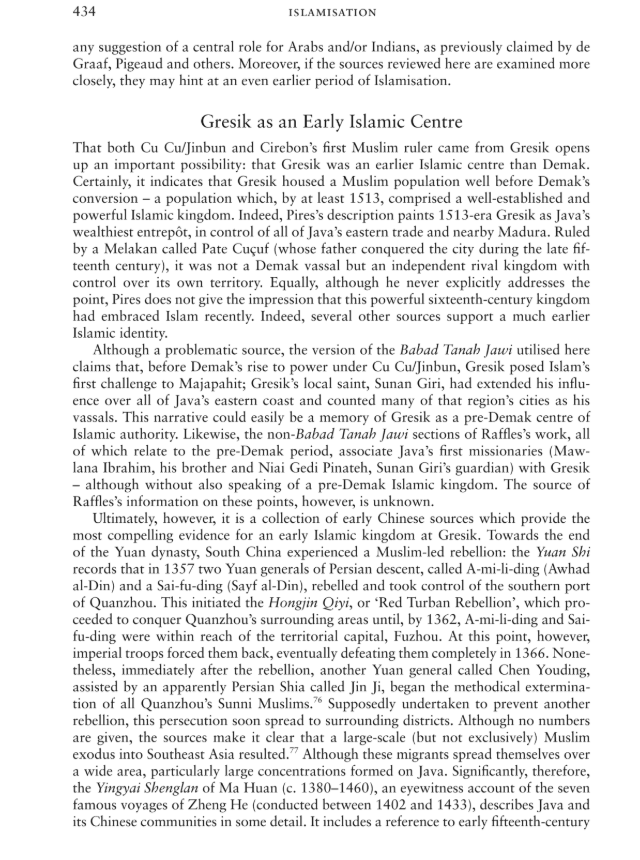
"began the methodical extermination of all Quanzhou's Sunni Muslims."
Результати пошуку
Islamisation: Comparative Perspectives from History - Сторінка 434
books.google.com.ua › books
A. C. S. Peacock · 2017
Знайдено всередині книги – Сторінка 434
... assisted by an apparently Persian Shia called Jin Ji, began the methodical extermination of all Quanzhou's Sunni Muslims.76 Supposedly undertaken to prevent another rebellion, this persecution soon spread to surrounding districts.
https://books.google.com.ua/books?id=8C1WDwAAQBAJ&pg=PA434&dq=%22began+the+methodical+extermination+of+all+Quanzhou%27s+Sunni+Muslims.%22&hl=uk&sa=X&ved=2ahUKEwiwsJmpn-PtAhWHraQKHSUBBRoQ6AEwAHoECAAQAg#v=onepage&q=%22began%20the%20methodical%20extermination%20of%20all%20Quanzhou's%20Sunni%20Muslims.%22&f=false
 And I don't need to provide a source for the later Chagatai Khans converted to Islam since that is known. The Yuan and Chagatai switched positions from the beginnings. At the end of the Yuan they were relying on Han generals like Chen Youding to uphold their rule after turning on the Semu. But the Chagatai were more successful in their shift unlike the Yuan, the Chagatai Mongol rulers completely melded their identity with their Turkic Muslim subjects after conversion.
another source for Chagatai Khan (the founder of the Chagatai Khanate) for being anti-Muslim (when he was relying on Han, Khitan and Tangut officials to rule Bukhara and Samaqand) His later descendants converted to Islam
https://iranicaonline.org/articles/chaghatayid-dynasty
"CHAGHATAYID DYNASTY, name given to the descendants of Čengīz Khan’s second son Čaḡatai, who reigned in Transoxania until ca. 771/1370 and in parts of Turkestan down to the 11th/17th century. Čaḡatai accompanied his father on his first campaigns against north China and subsequently on the great expedition to the West (616-22/1219-25). According to Jovaynī (ed. Qazvīnī, I, pp. 31, 226-27), when Čengīz Khan allotted an ulus, that is, pasturage and subject peoples, to each of his sons Čaḡatai’s share extended from the borders of the Uighur territory as far as Samarkand and Bukhara, and his seasonal residences lay on the river Ili, not far from Almalïḡ (Almālīḡ/q); though the fiscal administration of his lands was in the hands of civil officials directly responsible to the great khan. The same author (I, pp. 162, 227) depicts Čaḡatai as extremely zealous in enforcing Mongol customary law, the yasa; the Muslims especially suffered, since various prescriptions of the Šarīʿa, such as those for ritual ablution or for the slaughter of animals, ran counter to Mongol practice. It is difficult to imagine that this policy could be enforced among Muslims in general, and Jovaynī’s remarks in all probability apply mainly to those Muslims domiciled in the vicinity of Čaḡatai’s own encampments or at the great khan’s capital, Qaraqorum. Nevertheless, Čaḡatai certainly acquired a reputation for being no friend of the Muslims. According to one version given by Rašīd-al-Dīn (Jāmeʿ al-tawārīḵ II, ed. Blochet, p. 184), he died seven months before his brother, the great khan Ögedei (Ūkatāy), in 638/1241, but Jovaynī’s statement that he outlived him (II, p. 227) is corroborated by the local chronicler Jamāl Qarši, who says that Čaḡatai died in 642/1244-45 (Barthold, Turkestan1 I: Teksty, St. Petersburg, 1898, p. 138)."
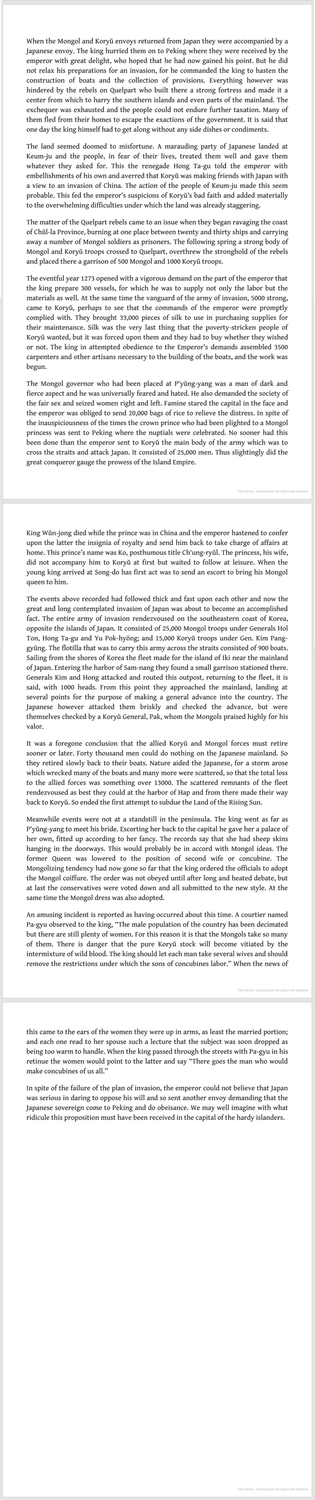
stationed in korea women invade japan mongol
The History of Korea (Vol.1&2): Complete Edition
books.google.com.ua › books
Знайдено всередині книги
When the young king arrived at Song-do has first act was to send an escort to bring his Mongol queen to him. The events ... The entire army of invasion rendezvoused on the southeastern coast of Korea, opposite the islands of Japan. It consisted of ... of Japan. Entering the harbor of Sam-nang they found a small garrison stationed there. ... A courtier named Pa-gyu observed to the king, “The male population of the country has been decimated but there are still plenty of women. For this ...
Militarized Global Apartheid
books.google.com.ua › books
Знайдено всередині книги
Japan, South Korea, Hong Kong, Taiwan, Singapore, and China all import hundreds of thousands of foreign migrant workers ... of colonial occupation by invading foreigners (Japan and the U.S., and even further back, Mongols and Manchus). ... to a South Korean parent and a parent from the U.S. or another Asian country).61 Many Filipina women work as hostesses in the clubs that service the constant force of 28,000 U.S. service members stationed in South Korea since World War II.
Guide to Korean Culture - Сторінка 24
books.google.com.ua › books
Знайдено всередині книги – Сторінка 24
During the next one hundred years , Koryo fell into decay , and her kings became pawns and puppets of the Mongol ... and customs were adapted to the Mongol tradition under the watchful eyes of the Mongol mandarins stationed in Koryo . ... During the reign of King Kongmin , Koryo was invaded by Japanese pirates on sea , and by Chinese bandits called ' the Red ... Secretly he married a beautiful female slave of Sin Don , the notorious wicked monk , while frequenting his private ...
The Koreas - Сторінка 21
books.google.com.ua › books
Знайдено всередині книги – Сторінка 21
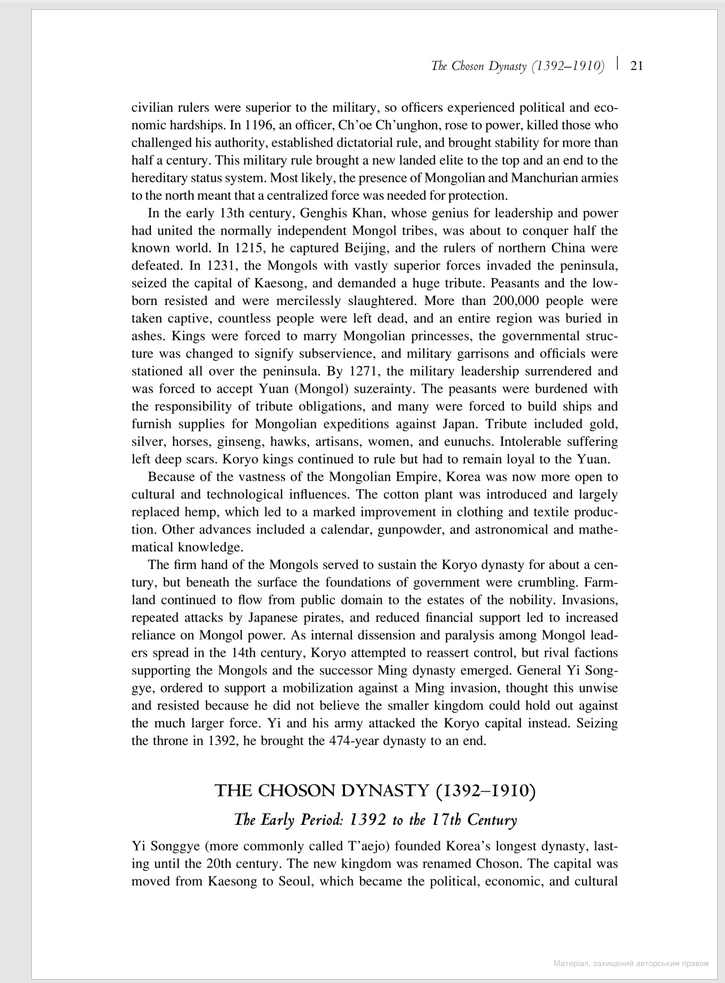
In 1231, the Mongols with vastly superior forces invaded the peninsula, seized the capital of Kaesong, and demanded a ... the governmental structure was changed to signify subservience, and military garrisons and officials were stationed all ... of tribute obligations, and many were forced to build ships and furnish supplies for Mongolian expeditions against Japan. ... Because of the vastness of the Mongolian Empire, Korea was now more open to cultural and technological influences.
Japanese Civilization in the Modern World: Administrative ...
books.google.com.ua › books
1984 · У вигляді фрагментів
Знайдено всередині книги – Сторінка 89
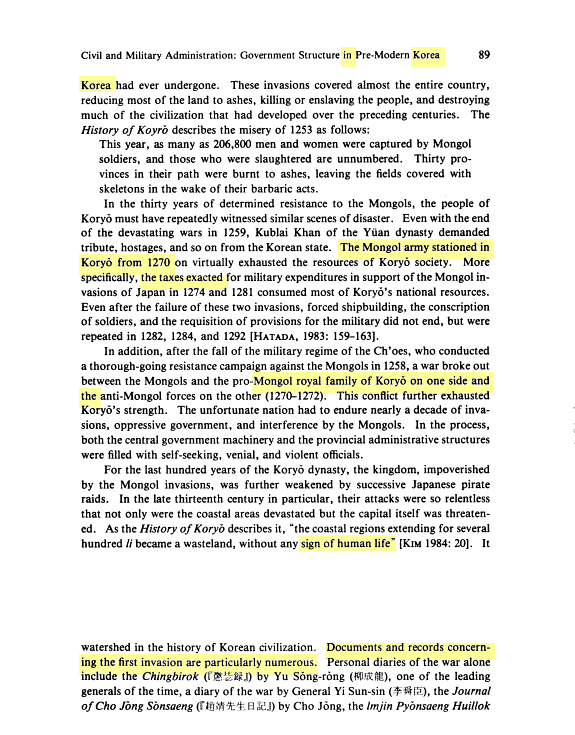
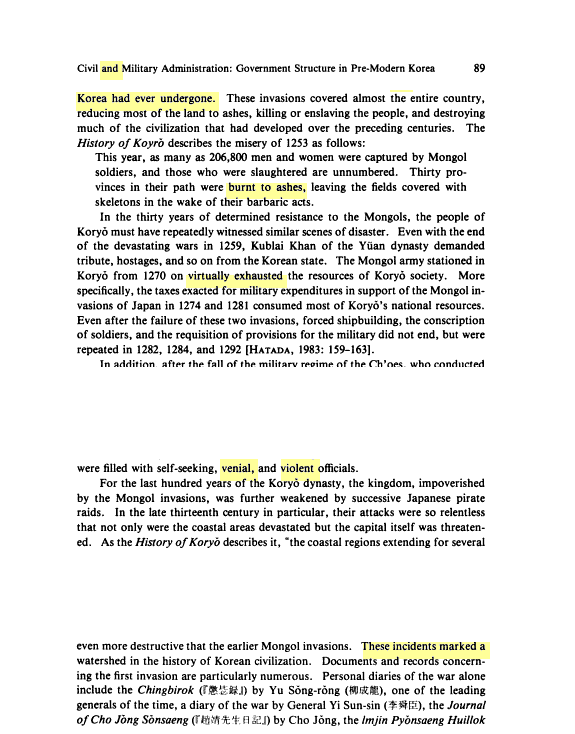
Korea had ever undergone . ... year , as many as 206,800 men and women were captured by Mongol soldiers , and those who were slaughtered are unnumbered . ... The Mongol army stationed in Koryo from 1270 on virtually exhausted the resources of Koryo society . More specifically , the taxes exacted for military expenditures in support of the Mongol invasions of Japan in 1274 and 1281 consumed ... Documents and records concerning the first invasion are particularly numerous .
The Annals of King T'aejo - Сторінка 66
books.google.com.ua › books
2014
Знайдено всередині книги – Сторінка 66
One of the major battles was the invasion of the Red Turban bandits in the Sinch'uk year (1361), in which the king was forced ... Councilor Ch'oe Yŏng. When Mongolian Nahachu invaded our northeastern border, our military commanders were all ... In the Kyŏngsin year (1380), Japanese marauders landed at Chinp'o135 and rampantly burned and plundered our districts and villages, killing men and women, frequenting the borders of Yanggwang, Kyŏngsang, and Chŏlla Provinces.
The Military Establishment of the Yuan Dynasty - Сторінка 195
books.google.com.ua › books
Знайдено всередині книги – Сторінка 195
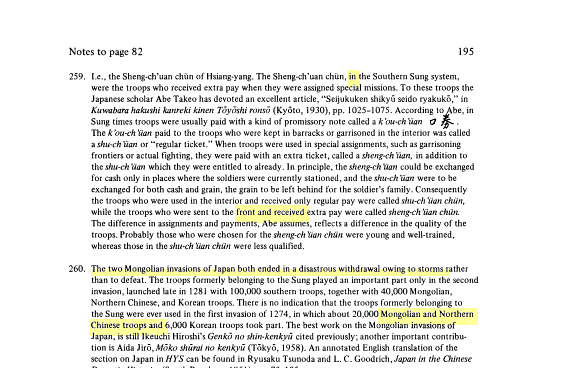
To these troops the Japanese scholar Abe Takeo has devoted an excellent article , “ Seijukuken shikyū seido ryakuko , ” in ... the sheng - ch ' uan could be exchanged for cash only in places where the soldiers were currently stationed , and the shu ... used in the first invasion of 1274 , in which about 20 , 000 Mongolian and Northern Chinese troops and 6 , 000 Korean ... sent by the Yuan government to Korea and 140 Korean women were subsequently captured ( Koryo sa , I , 424b ) .
American Prejudice - Сторінка xi
books.google.com.ua › books
Знайдено всередині книги – Сторінка xi
American and European males have fought in the South Pacific , Japan , Korea , and Vietnam , among other places . ... several children in Las Vegas schools whose mothers were Japanese and whose fathers were " blacks " who had been stationed in Japan . ... She also claimed the same for European women who were impregnated by the invading Mongol armies , which reached the gates of Paris and ...
Encyclopedia of Modern Asia - Том 5 - Сторінка 111
books.google.com.ua › books
"To the northeast, the Mongols, displeased with the quantity and quality of the Koreans' first shipment of tribute"
Commodity and Exchange in the Mongol Empire: A Cultural ...
books.google.com.ua › books
Знайдено всередині книги – Сторінка 28
To the northeast , the Mongols , displeased with the quantity and quality of the Koreans ' first shipment of tribute , dispatched envoys to their court in 1232 demanding " one million military uniforms , " " ten thousand pieces of genuine purple ...

"Mongols even demanded that young women and eunuchs work at the imperial palaces. To meet their requirements, in 1274 Koryŏ established the Kyŏrhon togam, or Directorate for Marriage, to seek out young women and, in 1275, placed a ban on marriage throughout the country. Many Koryŏ families were forced to dress young women in men's clothing to hide them. Once Mongols took Koryŏ's young women in, however, they gave them respectable positions. The Koryŏ women who went to Yuan, either willingly or unwillingly, were usually married to Mongol aristocrats, high-level officials, or rich men, even"
A History of Korea: From "Land of the Morning Calm" to ...
books.google.com.ua › books
Знайдено всередині книги – Сторінка 172
Mongols even demanded that young women and eunuchs work at the imperial palaces. To meet their requirements, in 1274 Koryŏ established the Kyŏrhon togam, or Directorate for Marriage, to seek out young women and, in 1275, placed a ...
https://books.google.com.ua/books?id=s2EVi-MpnUsC&pg=PA172&dq=%22Mongols+even+demanded+that+young+women+and+eunuchs+work+at+the+imperial+palaces.+To+meet+their+requirements,+in+1274+Kory%C5%8F+established+the+Ky%C5%8Frhon+togam,+or+Directorate+for+Marriage,+to+seek+out+young+women+and,+in+1275,+placed+a+ban+on+marriage+throughout+the+country.+Many+Kory%C5%8F+families+were+forced+to+dress+young+women+in+men%27s+clothing+to+hide+them.+Once+Mongols+took+Kory%C5%8F%27s+young+women+in,+however,+they+gave+them+respectable+positions.+The+Kory%C5%8F+women+who+went+to+Yuan,+either+willingly+or+unwillingly,+were+usually+married+to+Mongol+aristocrats,+high-level+officials,+or+rich+men,+even%22&hl=uk&sa=X&ved=2ahUKEwju55v0spztAhUF-aQKHSwmB7sQ6AEwAHoECAAQAg#v=onepage&q=%22Mongols%20even%20demanded%20that%20young%20women%20and%20eunuchs%20work%20at%20the%20imperial%20palaces.%20To%20meet%20their%20requirements%2C%20in%201274%20Kory%C5%8F%20established%20the%20Ky%C5%8Frhon%20togam%2C%20or%20Directorate%20for%20Marriage%2C%20to%20seek%20out%20young%20women%20and%2C%20in%201275%2C%20placed%20a%20ban%20on%20marriage%20throughout%20the%20country.%20Many%20Kory%C5%8F%20families%20were%20forced%20to%20dress%20young%20women%20in%20men's%20clothing%20to%20hide%20them.%20Once%20Mongols%20took%20Kory%C5%8F's%20young%20women%20in%2C%20however%2C%20they%20gave%20them%20respectable%20positions.%20The%20Kory%C5%8F%20women%20who%20went%20to%20Yuan%2C%20either%20willingly%20or%20unwillingly%2C%20were%20usually%20married%20to%20Mongol%20aristocrats%2C%20high-level%20officials%2C%20or%20rich%20men%2C%20even%22&f=false
"members of the royal family, and ended up in the higher echelon of Mongol society. The later empress Ki, for example, became consort of the Mongol emperor Shundi and bore him a son, Zhaozong, who became the next emperor of the Yuan dynasty."
A History of Korea: From "Land of the Morning Calm" to ...
books.google.com.ua › books
Знайдено всередині книги – Сторінка 173
members of the royal family, and ended up in the higher echelon of Mongol society. The later empress Ki, for example, became the consort ofthe Mongol emperor Shundi and bore him a son, Zhaozong, who became the next emperor ofthe ...
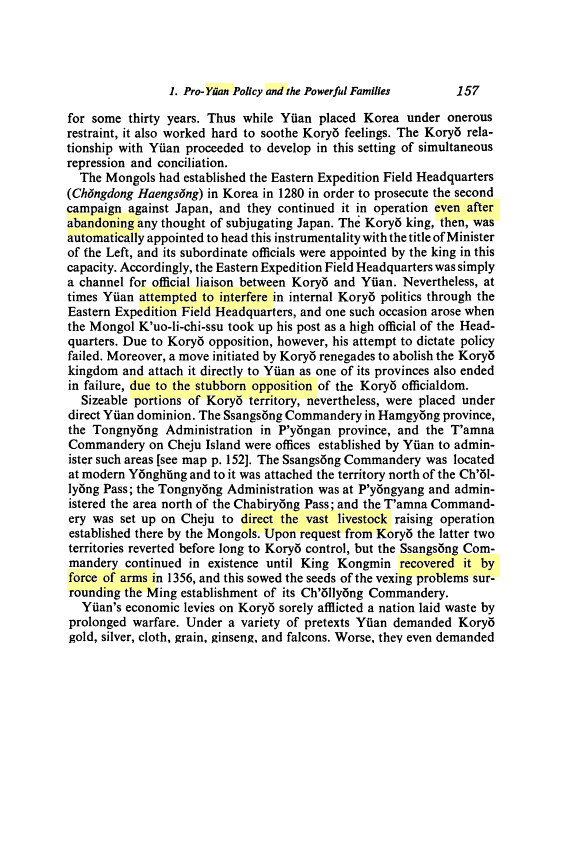
"Yüan's economic levies on Koryŏ sorely afflicted a nation laid waste by prolonged warfare. Under a variety of pretexts Yüan demanded Koryŏ gold, silver, cloth, grain, ginseng, and falcons. Worse, they even demanded young women and ...
A New History of Korea
books.google.com.ua › books
Знайдено всередині книги
Koryŏ's aristocratic ruling class, in collusion with the Mongols, schemed to drive a king from the throne. ... the second campaign against Japan, and they continued it in operation even after abandoning any thought of subjugating Japan. ... Yüan's economic levies on Koryŏ sorely afflicted a nation laid waste by prolonged warfare. Under a variety of pretexts Yüan demanded Koryŏ gold, silver, cloth, grain, ginseng, and falcons. Worse, they even demanded young women and eunuchs.
.
A New History of Korea - Сторінка 157
books.google.com.ua › books
李基白 ·
1997 ·
У вигляді фрагментів
Знайдено всередині книги – Сторінка 157
Thus while Yüan placed Korea under onerous restraint , it also worked hard to soothe Koryð feelings . ... second campaign against Japan , and they continued it in operation even after abandoning any thought of subjugating Japan . ... Yüan ' s economic levies on Koryo sorely afflicted a nation laid waste by prolonged warfare . Under a variety of pretexts Yüan demanded Koryo gold , silver , cloth , grain , ginseng , and falcons . Worse , they even demanded young women and eunuchs .
https://books.google.com.ua/books?id=xB8RAQAAMAAJ&q=%22Y%C3%BCan%27s+economic+levies+on+Kory%C5%8F+sorely+afflicted+a+nation+laid+waste+by+prolonged+warfare.+Under+a+variety+of+pretexts+Y%C3%BCan+demanded+Kory%C5%8F+gold,+silver,+cloth,+grain,+ginseng,+and+falcons.+Worse,+they+even+demanded+young+women+and+...&dq=%22Y%C3%BCan%27s+economic+levies+on+Kory%C5%8F+sorely+afflicted+a+nation+laid+waste+by+prolonged+warfare.+Under+a+variety+of+pretexts+Y%C3%BCan+demanded+Kory%C5%8F+gold,+silver,+cloth,+grain,+ginseng,+and+falcons.+Worse,+they+even+demanded+young+women+and+...&hl=uk&sa=X&ved=2ahUKEwj99Iums5ztAhWS3KQKHTL5AAQQ6AEwAXoECAAQAg
"missions to the Mongols increased nearly eightfold over those to the Liao and Jin.153"
Empire's Twilight: Northeast Asia under the Mongols - Сторінка 49
books.google.com.ua › books
Знайдено всередині книги – Сторінка 49
ute missions to the Mongols increased nearly eightfold over those to the Liao and Jin.153 The Mongols imposed heavy burdens on subjugated polities, but part of this steep increase arose out of an extensive “giftexchange” with the imperial ...
"the Khan's procurement of Korean concubines, and Korea's recruitment of talented men for its bureaucracy, its primary sources and its later historians were not as critical of Mongol rule.4"
Eurasian Influences on Yuan China - Сторінка 200
books.google.com.ua › books
Morris Rossabi · 2013
Знайдено всередині книги – Сторінка 200
... to royal intermarriages, the Khan's procurement of Korean concubines, and Korea's recruitment of talented men for its bureaucracy, its primary sources and its later historians were not as critical of Mongol rule.4 Japanese historians depicted ...

"Despite this inglorious end, Empress Gi's life and times present an intriguing picture of Goryeo's adaptation to the Mongol overlord period. She was likely most responsible, for example, for spreading Korean influence in China—through her political command, to be sure, but also through her incorporation of Korean females and eunuchs in the Yuan court. They in turn contributed to the flowering of a "Korean style" in the Chinese capital, from clothing and food to lifestyle. As a Korean observer at the time noted, it became fashionable for elite males in China to take Korean concubines, who exuded an aura of beuty and sophistication. Chinese sources, too—and often not in a flattering way—noted that Korean women, in particular, wielded strong influence over popular taste in China. Such a phenomenon may have represented a peak in the export of Korean culture in premodern times, and not until the early twenty-first century would Korean culture, popular or high, enjoy such widespread emulation and appeal outside the peninsula. This presents, then, another reminder that the Mongol period, while certainly a time of humiliating subjugation to a foreign power, also left a more faborable imprint. We certainly cannot discount the horrific circumstances of the long Mongol siege of the mid-thirteenth entury, or of the way Lady Gi and countless other captives wound up in China in the first place."
A History of Korea - Сторінка 49
books.google.com.ua › books
Знайдено всередині книги – Сторінка 49
Despite this inglorious end, Empress Gi's life and times present an intriguing picture of Goryeo's adaptation to the Mongol overlord period. She was likely most responsible, for example, for spreading Korean influence in China—through her ...
https://books.google.com.ua/books?id=Rjy7DQAAQBAJ&pg=PA49&dq=%22Despite+this+inglorious+end,+Empress+Gi%27s+life+and+times+present+an+intriguing+picture+of+Goryeo%27s+adaptation+to+the+Mongol+overlord+period.+She+was+likely+most+responsible,+for+example,+for+spreading+Korean+influence+in+China%E2%80%94through+her+political+command,+to+be+sure,+but+also+through+her+incorporation+of+Korean+females+and+eunuchs+in+the+Yuan+court.+They+in+turn+contributed+to+the+flowering+of+a+%22Korean+style%22+in+the+Chinese+capital,+from+clothing+and+food+to+lifestyle.+As+a+Korean+observer+at+the+time+noted,+it+became+fashionable+for+elite+males+in+China+to+take+Korean+concubines,+who+exuded+an+aura+of+beuty+and+sophistication.+Chinese+sources,+too%E2%80%94and+often+not+in+a+flattering+way%E2%80%94noted+that+Korean+women,+in+particular,+wielded+strong+influence+over+popular+taste+in+China.+Such+a+phenomenon+may+have+represented+a+peak+in+the+export+of+Korean+culture+in+premodern+times,+and+not+until+the+early+twenty-first+century+would+Korean+culture,+popular+or+high,+enjoy+such+widespread+emulation+and+appeal+outside+the+peninsula.+This+presents,+then,+another+reminder+that+the+Mongol+period,+while+certainly+a+time+of+humiliating+subjugation+to+a+foreign+power,+also+left+a+more+faborable+imprint.+We+certainly+cannot+discount+the+horrific+circumstances+of+the+long+Mongol+siege+of+the+mid-thirteenth+entury,+or+of+the+way+Lady+Gi+and+countless+other+captives+wound+up+in+China+in+the+first+place.%22&hl=uk&sa=X&ved=2ahUKEwj_usKNt5ztAhVDLewKHfasAD8Q6AEwAHoECAAQAg#v=onepage&q=%22Despite%20this%20inglorious%20end%2C%20Empress%20Gi's%20life%20and%20times%20present%20an%20intriguing%20picture%20of%20Goryeo's%20adaptation%20to%20the%20Mongol%20overlord%20period.%20She%20was%20likely%20most%20responsible%2C%20for%20example%2C%20for%20spreading%20Korean%20influence%20in%20China%E2%80%94through%20her%20political%20command%2C%20to%20be%20sure%2C%20but%20also%20through%20her%20incorporation%20of%20Korean%20females%20and%20eunuchs%20in%20the%20Yuan%20court.%20They%20in%20turn%20contributed%20to%20the%20flowering%20of%20a%20%22Korean%20style%22%20in%20the%20Chinese%20capital%2C%20from%20clothing%20and%20food%20to%20lifestyle.%20As%20a%20Korean%20observer%20at%20the%20time%20noted%2C%20it%20became%20fashionable%20for%20elite%20males%20in%20China%20to%20take%20Korean%20concubines%2C%20who%20exuded%20an%20aura%20of%20beuty%20and%20sophistication.%20Chinese%20sources%2C%20too%E2%80%94and%20often%20not%20in%20a%20flattering%20way%E2%80%94noted%20that%20Korean%20women%2C%20in%20particular%2C%20wielded%20strong%20influence%20over%20popular%20taste%20in%20China.%20Such%20a%20phenomenon%20may%20have%20represented%20a%20peak%20in%20the%20export%20of%20Korean%20culture%20in%20premodern%20times%2C%20and%20not%20until%20the%20early%20twenty-first%20century%20would%20Korean%20culture%2C%20popular%20or%20high%2C%20enjoy%20such%20widespread%20emulation%20and%20appeal%20outside%20the%20peninsula.%20This%20presents%2C%20then%2C%20another%20reminder%20that%20the%20Mongol%20period%2C%20while%20certainly%20a%20time%20of%20humiliating%20subjugation%20to%20a%20foreign%20power%2C%20also%20left%20a%20more%20faborable%20imprint.%20We%20certainly%20cannot%20discount%20the%20horrific%20circumstances%20of%20the%20long%20Mongol%20siege%20of%20the%20mid-thirteenth%20entury%2C%20or%20of%20the%20way%20Lady%20Gi%20and%20countless%20other%20captives%20wound%20up%20in%20China%20in%20the%20first%20place.%22&f=false
Lorge, Peter. China Review International, vol. 17, no. 3, 2010, pp. 377–379. JSTOR, www.jstor.org/stable/23733178. Accessed 25 Nov. 2020.

"The envoys from the Yuan court and officials dispatched by the various imperial offices , such as the administrations , courts , and bureaus ( ju , ssu , yuan ) as well as the directorates and offices ( chien , ssu ) , are mostly people of my country . They do not endeavor to spread Your Majesty's virtuous ideas but seek rather to boast of themselves in their localities . Their own power becomes their passion as they seek always to repay obligations or take revenge, thereby insulting the state councillors and humiliating the country's ruler. They remain for years without returning to Yuan, taking more wives and concubines and committing every evil possible. Twice a year they offer speical incense at various temples on Mount Kumgang, creating additional burdens for the people. By creating work, they go against Your Majesty's will to seek blessings for the people."
Sourcebook of Korean Civilization: Volume One: From Early ...
books.google.com.ua › books
Peter H. Lee · 2010
Знайдено всередині книги – Сторінка 361
The envoys from the Yuan court and officials dispatched by the various imperial offices , such as the administrations , courts , and bureaus ( ju , ssu , yuan ) as well as the directorates and offices ( chien , ssu ) , are mostly people of my country .
https://books.google.com.ua/books?id=ZU1uLvWyRJYC&pg=PA361&dq=%22The+envoys+from+the+Yuan+court+and+officials+dispatched+by+the+various+imperial+offices+,+such+as+the+administrations+,+courts+,+and+bureaus+(+ju+,+ssu+,+yuan+)+as+well+as+the+directorates+and+offices+(+chien+,+ssu+)+,+are+mostly+people+of+my+country+.+They+do+not+endeavor+to+spread+Your+Majesty%27s+virtuous+ideas+but+seek+rather+to+boast+of+themselves+in+their+localities+.+Their+own+power+becomes+their+passion+as+they+seek+always+to+repay+obligations+or+take+revenge,+thereby+insulting+the+state+councillors+and+humiliating+the+country%27s+ruler.+They+remain+for+years+without+returning+to+Yuan,+taking+more+wives+and+concubines+and+committing+every+evil+possible.+Twice+a+year+they+offer+speical+incense+at+various+temples+on+Mount+Kumgang,+creating+additional+burdens+for+the+people.+By+creating+work,+they+go+against+Your+Majesty%27s+will+to+seek+blessings+for+the+people.%22&hl=uk&sa=X&ved=2ahUKEwj2r6fBuZztAhUQGewKHRqlBa0Q6AEwAHoECAAQAg#v=onepage&q=%22The%20envoys%20from%20the%20Yuan%20court%20and%20officials%20dispatched%20by%20the%20various%20imperial%20offices%20%2C%20such%20as%20the%20administrations%20%2C%20courts%20%2C%20and%20bureaus%20(%20ju%20%2C%20ssu%20%2C%20yuan%20)%20as%20well%20as%20the%20directorates%20and%20offices%20(%20chien%20%2C%20ssu%20)%20%2C%20are%20mostly%20people%20of%20my%20country%20.%20They%20do%20not%20endeavor%20to%20spread%20Your%20Majesty's%20virtuous%20ideas%20but%20seek%20rather%20to%20boast%20of%20themselves%20in%20their%20localities%20.%20Their%20own%20power%20becomes%20their%20passion%20as%20they%20seek%20always%20to%20repay%20obligations%20or%20take%20revenge%2C%20thereby%20insulting%20the%20state%20councillors%20and%20humiliating%20the%20country's%20ruler.%20They%20remain%20for%20years%20without%20returning%20to%20Yuan%2C%20taking%20more%20wives%20and%20concubines%20and%20committing%20every%20evil%20possible.%20Twice%20a%20year%20they%20offer%20speical%20incense%20at%20various%20temples%20on%20Mount%20Kumgang%2C%20creating%20additional%20burdens%20for%20the%20people.%20By%20creating%20work%2C%20they%20go%20against%20Your%20Majesty's%20will%20to%20seek%20blessings%20for%20the%20people.%22&f=false
"The envoys from the Yüan court and officials dispatched by the various imperial offices, such as the administrations, courts and bureaus (fu, ssu, yüan) as well as the directorates and offices (chien, ssu), are mostly people of my country. They do not endeavor to spread Your Majesty's virtuous ideas but seek rather to boast of themselves in their localities. Their own power becomes their passion as they seek always to repay obligations to take revenge, thereby insulting the state councillors and humiliating the country's ruler. They remain for years without returning to Yüan, taking more wives and concubines and committing every evil possible. Twice a year they offer special incense at various temples on Mount Kŭmgang, creating additional burdens for the people. By creating work, they go against Your Majesty's will to seek blessings for the people."
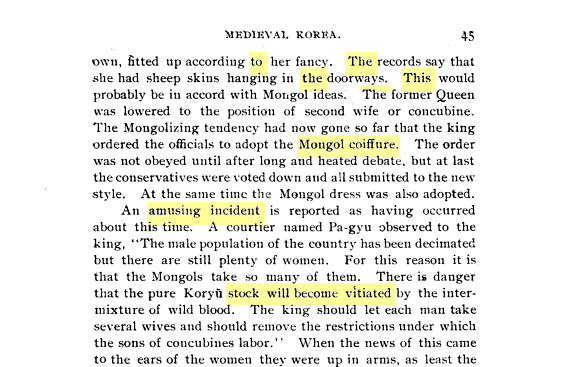
"An amusing incident is reported as having occured about this time. A courtier named Pa-gyu observed to the king, "The male population of the country has been decimated but there are still plenty of women. For this reason it is that the Mongols take so many of them. There is danger that the pure Koryu stock will become vitiated by the intermixture of wild blood. The king should let each man take several wives and should remove the restrictions under which sons of concubines labor." When the news of
The History of Korea (Vol.1&2): Complete Edition
books.google.com.ua › books
Знайдено всередині книги
An amusing incident is reported as having occurred about this time. A courtier named Pa-gyu observed to the king, “The male population of the country has been decimated but there are still plenty of women. For this reason it is that the ...

Korea Review - Том 2 - Сторінка 45
books.google.com.ua › books
1902 · У вигляді фрагментів
Знайдено всередині книги – Сторінка 45
An amusing incident is reported as having occurred about this time . A courtier named Pa - gyu observed to the king , “ The male population of the country has been decimated but there are still plenty of women . For this reason it is . that the ...
The Korea Review - Том 2 - Сторінка 45
books.google.com.ua › books
1902 · У вигляді фрагментів
Знайдено всередині книги – Сторінка 45
An amusing incident is reported as having occurred about this time . A courtier named Pa - gyu observed to the king , “ The male population of the country has been decimated but there are still plenty of women . For this reason it is that the ...
The bulk of Central Asian Muslim immigration to China was during the Yuan and early Ming dynasty. Major amounts of foreign Central Asian Muslims, Naiman Christians, Jews, and Buddhists like the Buddhist Uighurs of Qocho and Tibetans were moved into China. They were classified as Semu by the Mongols.
The Mongols and the Semu foreigners viewed Korean women as the most beautiful. The Mongol Yuan demanded the Korean Kingdom of Goryeo send a massive tribute of thousands of Korean virgin girls to become concubines and castrated Korean boys to become eunuchs for the Mongols. The Mongols and Semu Central Asian Muslims, Indian Muslims, Uighur Buddhists, Tibetan Buddhists and others took Korean girls as wives. Koreans were classified as "Han ren" along with northern Chinese, Jurchen and Khitan.
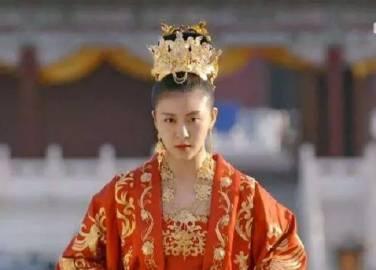
Even today there are Korean TV dramas like Empress Ki which talk about the tribute of Korean girls and Korean boy eunuchs as gifts to the Mongols. Empress Ki was one of the Korean tribute girls. The numerous Korean concubines and wives of the Mongols came to wield power in the Yuan court. Empress Ki and her eunuch Bak Bulhwa were both Korean.
A Hui from Ningxia called Ma Juan 马娟 wrote a journal article about the marriages between Semu Central Asian foreign Muslim men and Korean women called "元代色目高丽通婚举例". He drew from Yuan era records of marriages between Korean women and foreign Muslim men in China. There was major intermarriage between Korean women and the foreign Semu in China. It wasn't some minor affair.
The Korean history record Goryeosa 高麗史 describes the marriage of a Korean woman, the daughter of Chae Ingyu 채송년 蔡仁揆. She was first married to a Tibetan named Sangha 桑哥 who worked for the Mongols. An Arab Muslim named Abu Ali fled from Ma'bar in south India to China and entered the service of the Mongols. He was then given Sangha's former Korean wife as his own wife after Sangha was executed.
These Korean women who were married to Mongol men and Semu Central Asian Muslim, Indian Muslim, and Buddhist Uighur men were used by the Korean Goryeo government to expand ties and linkages to their husband's homelands and cultures like Muslim Sultanates in India and the Buddhist Uighur Qocho Kingdom.
Yuan dynasty and Ming dynasty history record mention that it was popular for aristocratic high ranking Northerners in Yuan dynasty China to have Korean girls as slaves-《續資治通鑒·順帝紀》中稱,“京師達官貴人,必得高麗女,然后為名家” 《草木子·雜制篇》中稱:“北人女使,必得高麗女孩童﹔家僮,必得黑?。不如此,謂之不成仕宦。” Korean women were described as more beautiful than Chinese since they had "jade" like skin. “肌膚玉雪發雲霧”
In the Ming dynasty, the early Ming Emperors imitated the Mongol tribute demands on Korea and made Korea send Korean virgin girls and eunuchs to the Ming. Modern South Koreans are still so angry over this concubine and eunuch tribute they made a fantasy movie where a fictional Korean takes revenge by killing fictional Ming soldiers.
The Ming Zhengde Emperor surrounded himself with Central Asian Muslim advisors and Muslim eunuchs. One of his Muslim advisors praised Korean women's beauty and recommended them to Zhengde. mentioned in Chapter 8 of "The Ming Court and the Legacy of the Yuan Mongols". This was over a century after the fall of the Yuan and showed that Korean women were regarded as more beautiful than Chinese women by Central Asians Muslims. The Zhengde Emperor himself had several Central Asian Muslim Semu girls as concubines.
That is the explanation for Hui Muslims in eastern Chinese cities like Beijing, Tianjin etc. A lot of them are the result of Muslim male foreigners marrying Korean women. Koreans were classified as "Han" by the Mongols and eventually the descendants of these unions assimilated to Chinese Confucian culture and adopted Mandarin as their language.
Johan Elverskog Buddhism And Islam On The Silk Road
emperor stressed zhongguo huizi kangxi
China Marches West: The Qing Conquest of Central Eurasia
books.google.com.ua › books
Знайдено всередині книги – Сторінка 191
The editors of the military chronicle Record of the Emperor's Personal Expeditions to Pacify the Northern Frontiers ... He stressed that Galdan had violated the ways of the Dalai Lama by invading the Qing frontiers and had claimed support from the princes of Kokonor, the Russians, and “China's Muslims” (Zhongguo Huizi) in order to plot to conquer China and set up a Muslim as its ruler.72 Kangxi once .
Islam and Tibet: Interactions Along the Musk Routes - Сторінка 291
books.google.com.ua › books
Anna Akasoy, Charles S. F. Burnett, Ronit Yoeli-Tlalim · 2011
Знайдено всередині книги – Сторінка 291
Surprisingly , the Chinese Emperor Kangxi suspected him of looking for allies among the Muslims of the area and sending some of them into China as spies . Furthermore , to quote Peter Perdue , the emperor stressed that Ghaldan ' had claimed support from the princes of Kokonor , the Russians and “ China's Muslims " ( Zhongguo Huiziļ7 ) in order to launch an attack on China and to set up a Muslim as its ruler ' . ... Here Huizi does not distinguish Turkic and Chinese Muslims .
the respondent was a Korean woman of an older-age group, who had married an Uzbek man
Insights and Commentaries: South and Central Asia: South and ...
books.google.com.ua › books
... Koreans was 0.2 per cent, or 1 person out of 500 respondents (This respondent was a Korean woman of an olderage group, who had married an Uzbek man).
Ms Anita Sengupta, Mr Mirzokhid Rakhimov · 2015
consumed ... addition after the fall military regime ch'oes conducted Documents and records concerning the first invasion are particularly numerous .
Japanese Civilization in the Modern World: Administrative ...
books.google.com.ua › books
1984 · У вигляді фрагментів
Знайдено всередині книги – Сторінка 89
In addition , after the fall of the military regime of the Ch'oes , who conducted a thorough - going resistance campaign against the Mongols in 1258 , a war ... Documents and records concerning the first invasion are particularly numerous .
Japanese civilization in the modern world III: ... - Сторінка 89
books.google.com.ua › books
Tadao Umesao, Masatake Matsubara, D. Eleanor Westney · 1989 · У вигляді фрагментів
Знайдено всередині книги – Сторінка 89
In addition , after the fall of the military regime of the Ch ' oes , who conducted a thorough - going resistance campaign against the Mongols in 1258 , a war ... Documents and records concerning the first invasion are particularly numerous .
"Admixture also occurs when armies enter and dominate a state or country . After the Germans invaded adjacent countries , some European women were impregnated by rape or an affair . One European woman in a classroom assured students that women deliberately aborted the fetuses . She also claimed the same for European women who were impregnated by the invading Mongol armies , which reached the gates of Paris"
American Prejudice - Сторінка xi
books.google.com.ua › books
Знайдено всередині книги – Сторінка xi
Admixture also occurs when armies enter and dominate a state or country . After the Germans invaded adjacent countries , some European women were impregnated by rape or an affair . One European woman in a classroom assured ...
When the Mongols placed the Uighurs of the Kingdom of Qocho over the Koreans at the court the Korean King objected, then the Mongol Emperor Kublai Khan rebuked the Korean King, saying that the Uighur King of Qocho was ranked higher than the Karluk Kara-Khanid ruler, who in turn was ranked higher than the Korean King, who was ranked last, because the Uighurs surrendered to the Mongols first, the Karluks surrendered after the Uighurs, and the Koreans surrendered last, and that the Uighurs surrendered peacefully without violently resisting.
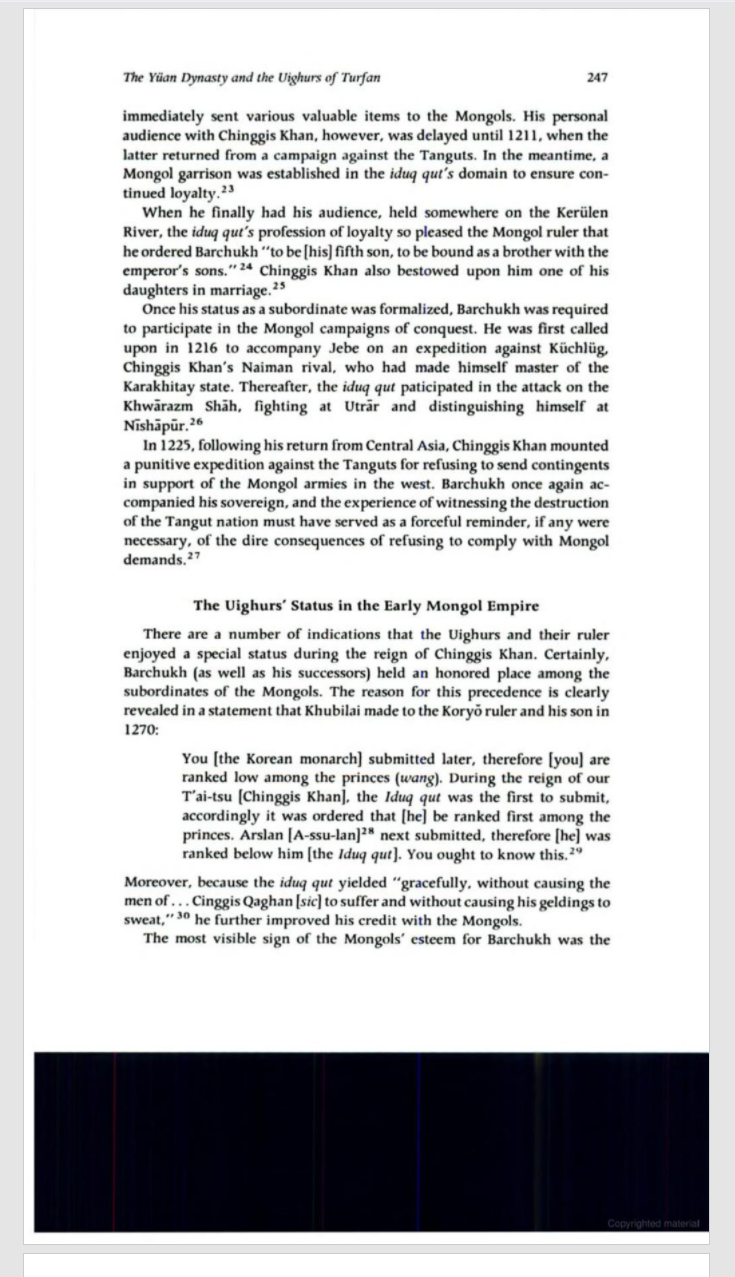
China Among Equals The Middle Kingdom and Its Neighbors, 10th-14th Centuries edited by Morris Rossabi NINE The Yüan Dynasty and the Uighurs of Turfan in the 13th Century THOMAS T. ALLSEN Subordinate States in the Mongol Empire Page 247
https://books.google.ca/books?id=sNpD5UKmkswC&pg=PA247#v=onepage&q&f=false

https://www.academia.edu/7542628/The_Semu_ren_in_the_Yuan_Empire_who_were_they
Koreans were ranked as Han people along with northern Chinese.
The Yuan dynasty "Han people" classification included Koreans, Bohais, Jurchens and Khitans, and they are included in statistics of intermarriage between Semu and "Han people".
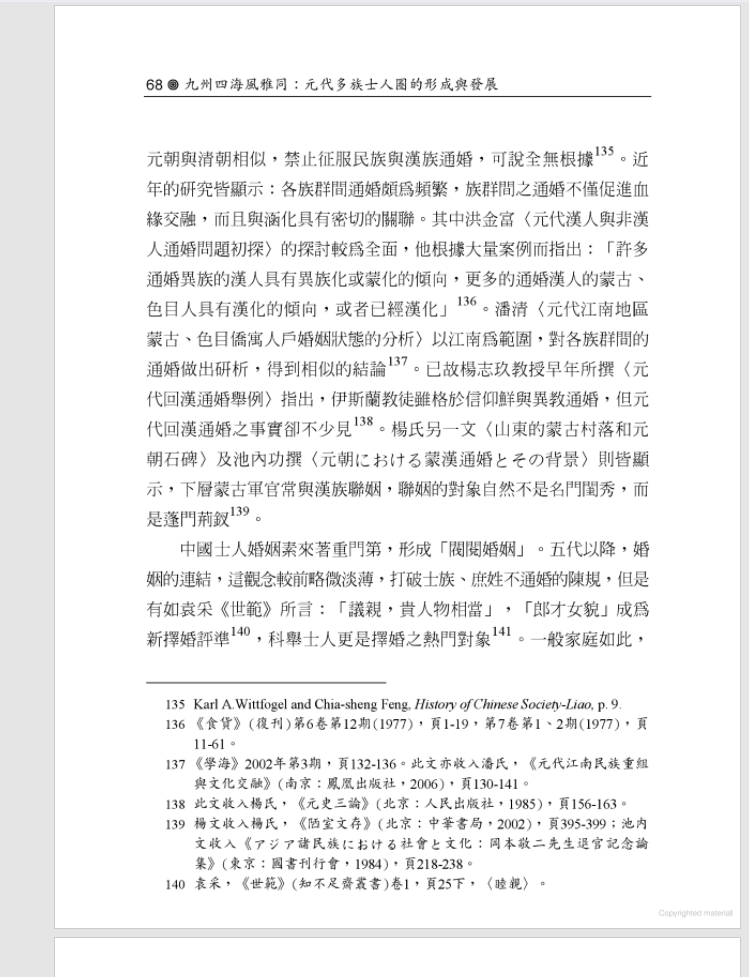
https://books.google.ca/books?id=odRFBAAAQBAJ&pg=PA68#v=onepage&q&f=false
九州四海風雅同:元代多族士人圈的形成與發展
By 蕭啟慶
Title九州四海風雅同:元代多族士人圈的形成與發展Author蕭啟慶Publisher聯經出版事業公司, 2012ISBN9860327947, 9789860327946Length440 pages Export CitationBiBTeX EndNote RefMan

Semu and Han intermarried with Mongols including Han Chinese men marrying Semu women and Mongol women. Korean women married Semu men and Mongol men.
蒙古族与他族通婚
更新:2016-8-28 4:52:10 | 作者:悠悠历史网
http://web.archive.org/web/20161011060134/http://www.uulishi.com/contents/1495/7071.html
https://archive.is/fWE4i
The Haluhu (哈剌鲁) Semu married Koreans, Uighurs Tangwu, Mongols and Han during Yuan rule.
元代内迁哈剌鲁人的文化变迁
[摘要]哈剌鲁人是元代西北的一个民族,唐时称葛逻禄。有元一代,大批哈剌鲁人从西域迁入中原内地,在文化习俗上逐渐受中原文化影响。这在取字、言行、丧葬习俗、通婚等方面都有体现,并且出现了像�贤、伯颜宗道等具有较高中原文化素养的知识分子。
[关键词]元代; 哈剌鲁人;文化融合
[中图分类号]K247 [文献标识码]A [文章编号]1005-3115(2015)18-0005-02
http://m.xzbu.com/7/view-7070076.htm
http://web.archive.org/web/20161011141643/https://m.xzbu.com/7/view-7070076.htm
https://archive.is/rIFgh
Tibetan, Qincha, Uighur, Hui Hui, and Han intermarried with Korean women during the Yuan dynasty.
2002年国内蒙元史研究综述
蔡春娟
2004-04-07 09:00:40 阅读 577 次
作者提供,原刊《中国史研究动态》2003年11期
http://web.archive.org/web/20060601041528/http://www.eurasianhistory.com/data/articles/b01/42.html
https://archive.is/DuFsg
Korean women married Indian, Uyghur, and Turkic Semu men.[27]
David M. Robinson (2009). Empire's Twilight: Northeast Asia Under the Mongols. Harvard University Press. pp. 315–. ISBN 978-0-674-03608-6.
https://books.google.ca/books?id=PDjWpqU55eMC&pg=PA315

This intermarriage of Korean women and Semu men was extensive in China during the Yuan dynasty.
元代色目高丽通婚举例
【摘要】:元代普遍存在着族际通婚。本文通过举例 ,论证了色目人与高丽人之间的通婚 ,希望对于元代中韩关系的研究有所裨益。
http://web.archive.org/web/20170214205903/http://www.cnki.com.cn.dincheng.cn/Article/CJFDTOTAL-LXSK200205016.htm
https://archive.is/qF0fA
http://web.archive.org/web/20161011135943/http://www.cqvip.com/qk/81568x/2002005/6733344.html
https://archive.is/dRk2U
Han Chinese Southern Song emperor Zhao Xian (Emperor Gong) married a Borjigin Mongol Yuan Princess, daughter of Kublai Khan. He was also made the Duke of Ying by Kublai Khan, emperor of the Yuan dynasty.
https://historum.com/threads/song-yuan-dynastic-marriage.180522/
recently I came across a reference that song emperor gong (zhao xian) married a member of the borjigin clan.
two questions: what was her name, if known?
how, specifically was she related to khubilai khan, or any other of his relatives? (ie: her lineage)
thank-you
which sources suggest she was khubilai khan's daughter?
Rashid al-Din writes that Zhao Xian was the Khan's son-in-law (The Successors of Genghis Khan, p.287).
https://archive.org/details/Boyle1971RashidAlDin/page/n291
As for the sons-in-law of the Qa’an, those whose names are known are as follows. One is the son of the ruler of Solangqa. 192 Another is Manzitai of the Qonqiirat tribe: he is married to a daughter whose name is *Onegejin. 193 Another is the son of the ruler of Manzi, who in former times was their ruler but [who] has now been deposed and resides with the Qa’an in the capacities of son-in-law and emir. 194 And God knows best what is right, and it is to Him that we return.
https://findwords.info/term/manji
Generally, however, these nine parts into which Manji, or Southern China, was divided, may be considered as the provinces of Kiang-nan, Kiang-si, Che kiang, Fo-kien, Kuan-tong, Kuang-si, Koei cheu, Hu-kuang, and Ho-nan.
Contenting himself with exacting from the emperor of the Song, who ruled over Manji, or southern China, the payment of an annual tribute, he retreated to the northward, and in 1260 was proclaimed grand khan, at Shang-tu, which from that time became his summer residence.
Kublaï proceeded, in 1268, to subdue the kingdom of Manji, or Southern China, at that time ruled by the dynasty of Song, whose capital, named Hong-cheu, was taken in 1276, and the whole was annexed to his empire in 1280.
https://academickids.com/encyclopedia/index.php/Manji
Manji (from Chinese Manzi, "southern barbarians") was also the name Marco Polo used to refer to southern China, that is, that part of China that had recently been conquered by Kublai Khan. See China in world languages.

Zhao Wanpu al-din princes emirs boyle footnote zhao xian suju songzhu pelliot sonju
Buddhist Encounters and Identities Across East Asia редактори Ann Heirman, Carmen Meinert, Christoph Anderl
Бібліографічна інформація
Buddhist Encounters and Identities Across East Asia
books.google.com.ua › books
Probably due to Zhao Wanpu's half-Mongolian blood, he was not executed but exiled ... Zhao Xian was also a prominent translator of Sino-Tibetan Buddhist texts. ... 54 Al-Din 1971: 287: “Of The Princes and Great Emirs in Attendance on the ... According to Pelliot, Suju is a spelling mistake of Sonju (Chinese: Songzhu), see ...
Ann Heirman, Carmen Meinert, Christoph Anderl · 2018 · Religion
Zhao Xian 趙㬎 (1271–1323), the last emperor of the Chinese Song Dynasty ... Zhao Xian was survived by a son Zhao Wanpu 趙完普 (dates unknown), ... 54 Al-Din 1971: 287: “Of The Princes and Great Emirs in Attendance on the Qa'an ... Boyle's footnote (p. ... of Sonju (Chinese: Songzhu), see Pelliot 1959: 661, “Facfur.”.
One of the four most beautiful women in ancient China ... - italki
www.italki.com › post › exerc...
When the steward minister worried. zhao jun stand out ,and solved the problem. after zhaojun went to xiongnu, the two family ,han and xiongnu unity peace and ...
Відсутні: Wanpu al- din princes emirs boyle footnote xian suju songzhu pelliot sonju
emperor of the Han Dynasty. Liu Fuling; Zhao Di. In more languages. Spanish. Zhao Di. emperador de la dinastía Han. Liu Fuling. Traditional Chinese. 漢昭帝.
Відсутні: Wanpu al- din emirs boyle footnote suju songzhu pelliot sonju
Liu Cong served his father as Prince of Chu after the declaration of Han Zhao in 304, but he was defeated at Luoyang by Jin dynasty general Huan Yan in his first ...
Відсутні: Wanpu al- din emirs boyle footnote xian suju songzhu pelliot sonju
https://www.zhaocaidan.com/216334
Немає даних про цю сторінку.
Відсутні: Wanpu al- din princes emirs boyle footnote xian suju songzhu pelliot sonju
About Emperor Zhao of Han: Emperor of the Han Dynasty ...
peoplepill.com › people › em...
Death, 74BC, Xi'an, People's Republic of China ... Emperor Zhao of Han (94 BC – 5 June 74 BC), born Liu Fuling, was the emperor of ... Liu Dan, the Prince of Yan, was Emperor Wu's oldest surviving son, but Emperor Wu ... 2nd century AD.
Відсутні: Wanpu din emirs boyle footnote suju songzhu pelliot sonju
First Emperor of China: Qin Shi Huang - Weebly
qinshihuang-emperor.weebly.com
Prince Yiren fell in love with Lu Buwei's wife (Zhao Ji) and in exchange for a great sum of money, the prince took her as his concubine. Yiren had his first child ...
Відсутні: Wanpu al- din emirs boyle footnote suju songzhu pelliot sonju
ZHAO MENGFU (1254-1322). Ten Chrysanthemums - Alain.R ...
www.alaintruong.com › 2008/...
30 вер. 2008 р. — ZHAO MENGFU (1254-1322). Ten Chrysanthemums ink and colour on silk, handscroll with three seals of the artist reading Zhao,...
Відсутні: Wanpu din princes emirs boyle footnote xian suju songzhu pelliot sonju
Китайское поэтическое мастерство — Часть I (на англ. яз.)
china.kulichki.com › poetry
The third line describes Xi Shi dancing. The bewitching rhythm of the poem as a whole has also helped to make fools of us. Now Xue Zhao Yun's works can by no ...
Відсутні: Wanpu al- din princes emirs boyle footnote xian suju songzhu pelliot sonju
Han Chinese Shi Gang, son of Han Chinese general Shi Tianze married a Mongol/Semu Kerait woman in the Yuan dynasty.
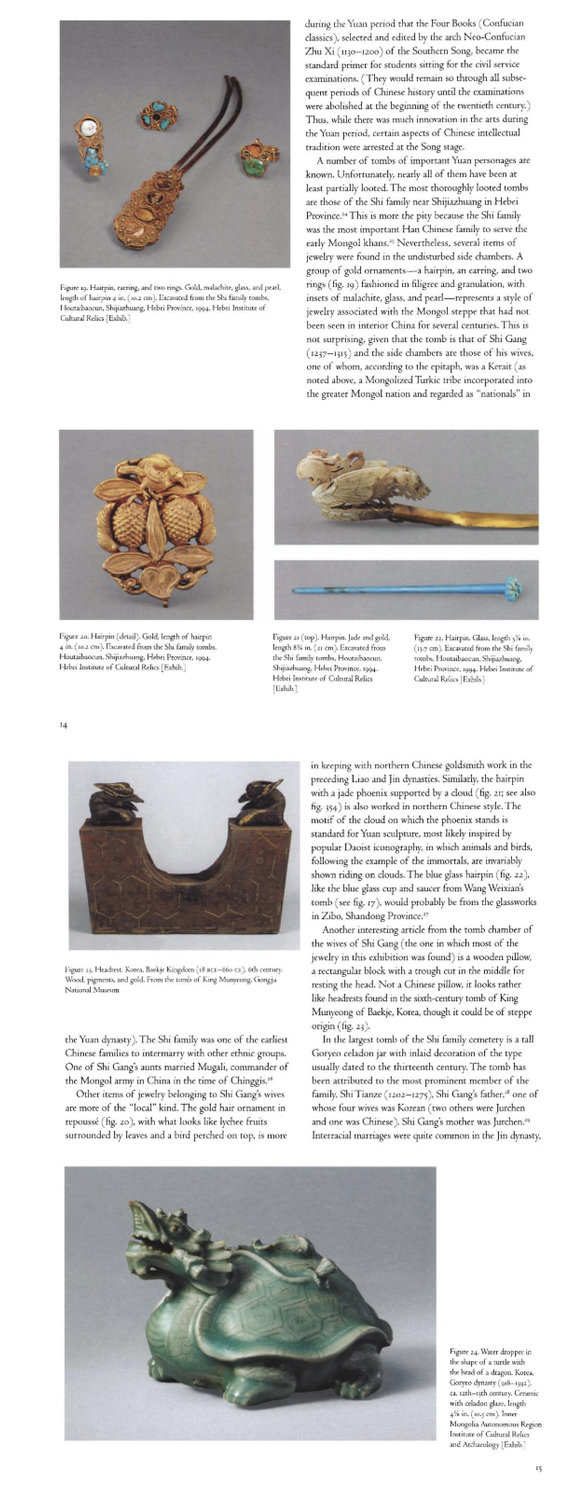 shi gang side chambers wives kerait mongolized turkic tribe mongol nation nationals
Результати пошуку
The World of Khubilai Khan: Chinese Art in the Yuan Dynasty
books.google.com.ua › books
Знайдено всередині книги – Сторінка 14
Excavated from the Shi family tombs, Houtaibaocun, Shijiazhuang, Hebei Province, i994. Hebei Institute of Cultural Relics [Exhih] Figure ... This is not surprising, given that the tomb is that of Shi Gang (1237-1315) and the side chambers are those of his wives, one of whom, according to the epitaph, was a Kerait (as noted above, a Mongolized Turkic tribe incorporated into the greater Mongol nation and regarded as “nationals" in Figure 20. Hairpin (detail). Gold, length of hairpin 4. in.
The World of Khubilai Khan: Chinese Art in the Yuan Dynasty
books.google.com.ua › books
Excavated from the Shi family tombs, Houtaibaocun, Shijiazhuang, Hebei Province, i994. ... This is not surprising, given that the tomb is that of Shi Gang (1237-1315) and the side chambers are those of his wives, one ... was a Kerait (as noted above, a Mongolized Turkic tribe incorporated into the greater Mongol nation and ...
THE MONGUORS OF THE KANSU-TIBETAN FRONTIER ...
kb.osu.edu › bitstream › handle › Schram
Tibetan origin but enrolled in a Monguor clan. She wears the simple Tibetan costume. The two on each side are Monguor, wearing the elaborate Monguor ...
List of Mongol consorts - Wikipedia
en.wikipedia.org › wiki › List...
The following is a list of Mongol consorts. This is list of the consorts of Mongol khagans. Contents. 1 Mongolian Empire; 2 Yuan dynasty; 3 Northern Yuan ...
Відсутні: gang side chambers wives kerait mongolized turkic tribe nation nationals
Genghis Khan - DOKUMEN.PUB
dokumen.pub › download › genghis-khan-his-life-and-le...
(National Palace Museum, Taiwan, ... man who led this nation to victory was Temuchin, 'the smith', ... the Naimans - the Mongol name for a group of the Turkic tribe ... Zongyi regards the Keraits as Mongols, Rashid ad-Din is less ... To'oril is the Mongolized ... burial chambers constructed for the dead Genghis Khan and his.
Afghan girls traded for debts, blood feuds, but 1 tribe outlaws ...
www.taiwannews.com.tw › ne...
10 лип. 2007 р. — She used a black scarf to wipe them away. Despite advances in women's rights and at least one tribe's move to outlaw the practice, girls are ...
Відсутні: gang chambers kerait mongolized turkic mongol nation nationals
Full text of "History of the Mongolian People's Republic"
archive.org › stream › HistoryOfTheMPR
The National-Liberation Movement oi the Mon- golian People (1911-1912). ... contain valuable information on the history of the Turks, Kir- ghiz, Uighurs and ancient Mongol tribes. ... Yuan-shih was compiled during the era of the Ming dynasty in the XIVth century. It is an ... He also won over to his side the Kerait khan Togoril.
Genghis Khan - freebooksmania
freebooksmania.com › The-Mongol-Empire-John-Man
Rachewiltz, School of Pacific and Asian Studies, Australian National ... united the Mongol tribes as their khan,fn2 and the emperor of the northern ... The Keraits' current leader, Toghril, had had a colourful career, having ... When the boy was eight, Yisugei set out to find a future wife for Temujin ... ruler, mongolized as Ong).
The Monguors of the Kansu-Tibetan Border | Qinghai | Mongols
www.scribd.com › doc › The-Monguors-of-the-Kansu-Ti...
21 вер. 2014 р. — Danzan in 1723, in which the ancestor took an active part on the side of the ... Tibetan origin but enrolled in a Monguor clan. ... Cult of Heaven among the Turkic-Mongols <512> ... o Kung-pu-shih-tieh of the second generation <662> ... was inconsistent, leads one to wonder just what the central national
(PDF) Jewels from the India Run, Lisbon, Fundação Oriente ...
www.academia.edu › Jewels_from_the_India_Run_Lisbo...
Melo also left his wife Cey- in Munich, gifted to the Lisbon court by King ... the India Run The Portuguese and jewels from Asia interior and lateral sides delicately ... remains open to further research and Gang (1237-1315) – of the Shi family, one ... Sultanate of his wives, of Kerait origin (a Mongolized Turkic tribe).26 complex ...
Genghis Khan took the Jurchen Wanyan Jin Princess of Qi (or Princess Qiguo) as his concubine. She was the daughter of Jurchen Jin emperor Wanyan Yongji also known as Prince Shao of Wei.
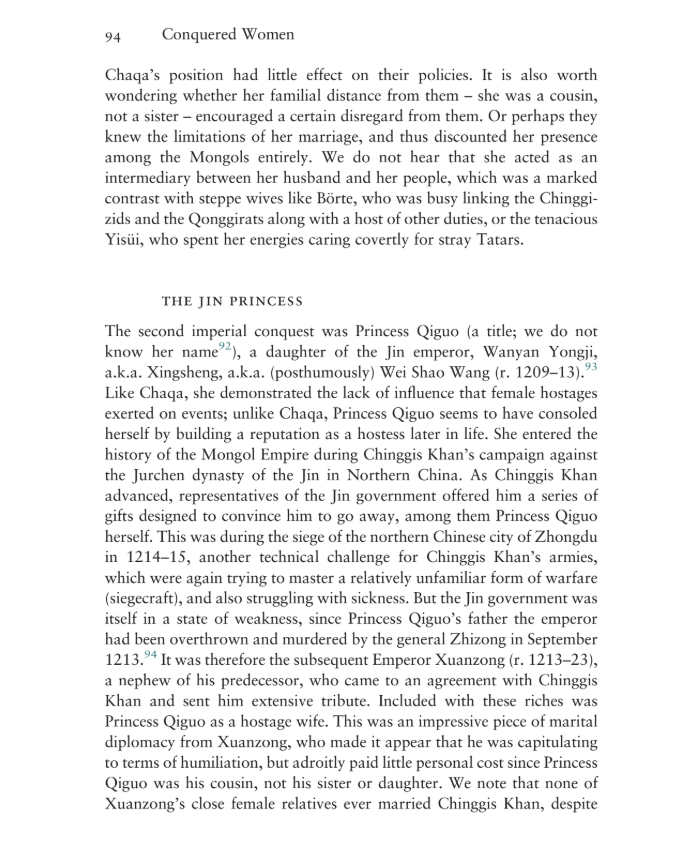 "the second imperial conquest was princess qiguo (a title"
Результати пошуку
Women and the Making of the Mongol Empire - Сторінка 94
books.google.com.ua › books
Знайдено всередині книги – Сторінка 94
... the jin princess The second imperial conquest was Princess Qiguo (a title; we do not know her name92), a daughter of the Jin emperor, Wanyan Yongji, a.k.a. Xingsheng, a.k.a. (posthumously) Wei Shao Wang (r. 1209–13).93 Like Chaqa, ...
The Xiongnu Chedihou Chanyu gave his daughter to the Han Chinese General Li Ling to defect. Chedihou then appointed Li Ling as governor or ruler of Jiankun (Yenisei) were he built a Chinese Han dynasty style palace. Yenisei Kyrgyz (Kirghiz) Khagans (Khaghans) of the Are clan claimed descent from Li Ling.
A Mongol Borjigin princess was married to the Han Chinese Southern Song Emperor Gong (Zhao Xian). Their son was Zhao Wanpu.
Kublai Khan also married off a Mongol Borjigin Princess to the third last Song dyansty Han Chinese child Emperor Gong, named Zhao Xian in exchange for him capitulating and surrendering Hangzhou without a fight. they had one son, Zhao Wanpu.
Genghis Khan took the Jurchen Wanyan Jin Princess of Qi (or Princess Qiguo) as his concubine. She was the daughter of Jurchen Jin emperor Wanyan Yongji also known as Prince Shao of Wei.
Another Mongol Borjigin Princess A Gai (Agai or Agai Zhu) married King Duan Gong of Dali who was also of Han Chinese descent and they had two children. She was daughter of Basalawarmi, Mongol Yuan Prince of Liang in Yunnan. Dali was a vassal kingdom in Yunnan and the Duan family were paternally Han Chinese who originated from Wuwei in Gansu according to Yuan dynasty records but ruled over a Bai majority population in the kingdom of Dali and intermarried with Bai. After false rumours circulated that Duan Gong plotted to seize power from Basalawarmi as the Yuan dynasty was falling apart and Ming Yuzhen was planning to attack from Sichuan, Basalawarmi asked his daughter to poison him. His daughter refused and warned her husband but he did not believe it. One of Basalawarmi's officers later killed him and she was put on suicide watch by her father. Duan Gong's daughter Duan Sengnu or Qiangna or Qiangnu raised her younger brother Duan Bao to avenge his death. Basalawarmi committed suicide when the Ming dynasty invaded.
Duan Gong and Borjigin Princess Agai.
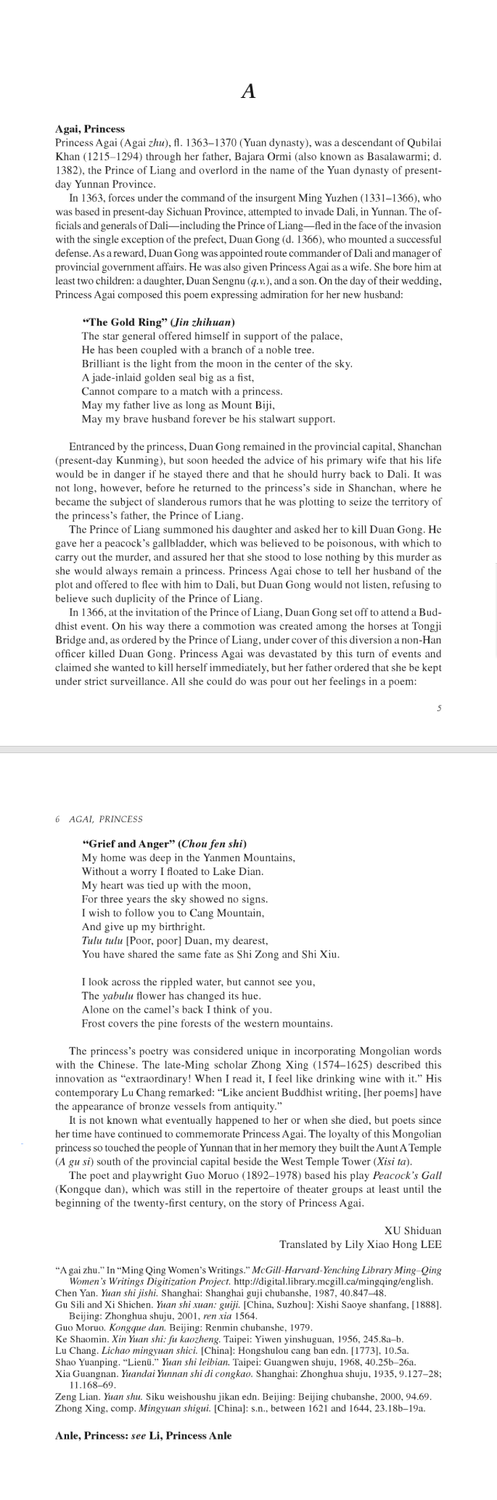
"the prince of liang summoned his daughter and asked her to kill duan gong"
Biographical Dictionary of Chinese Women: Tang Through Ming, ...
books.google.com.ua › books
Lily Xiao Hong Lee, Sue Wiles · 2014
Знайдено всередині книги – Сторінка 5
The Prince of Liang summoned his daughter and asked her to kill Duan Gong. He gave her a peacock's gallbladder, which was believed to be poisonous, with which to carry out the murder, and assured her that she stood to lose nothing by ...
Biographical Dictionary of Chinese Women, Volume II: Tang ...
books.google.com.ua › books
Знайдено всередині книги – Сторінка 5
The Prince of Liang summoned his daughter and asked her to kill Duan Gong. He gave her a peacock's gallbladder, which was believed to be poisonous, with which to carry out the murder, and assured her that she stood to lose nothing by ...
Duan Gong's daughter Duan Sengnu and son Duan Bao.
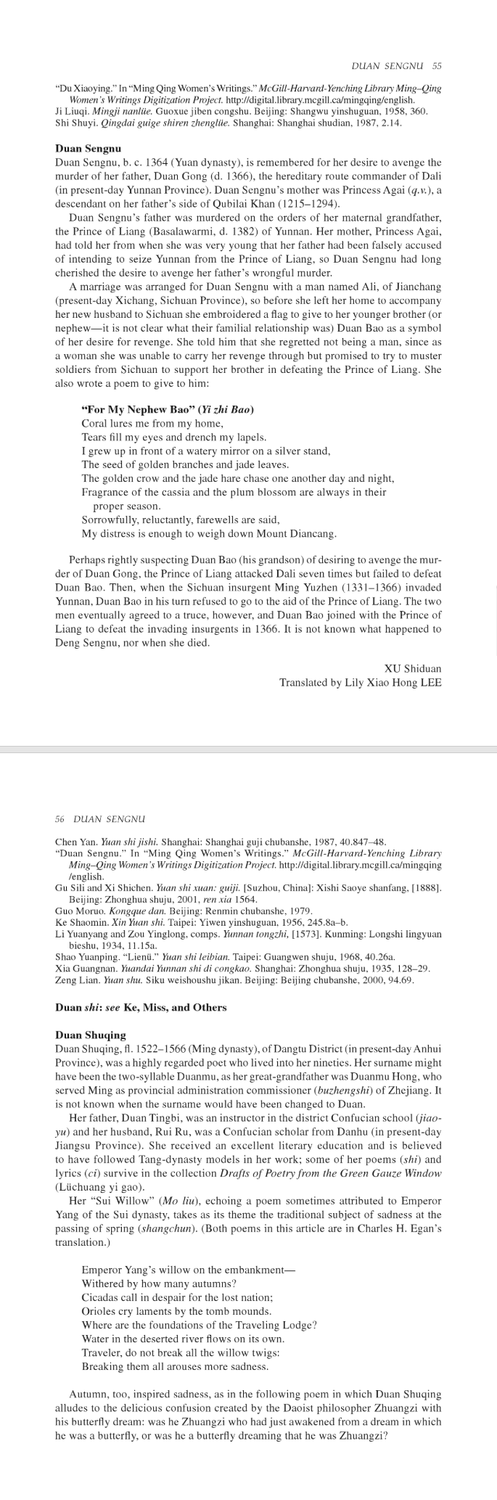
"her mother, princess agai, had told her from when she was very young that her father"
Результати пошуку
Biographical Dictionary of Chinese Women, Volume II: Tang ...
books.google.com.ua › books
Знайдено всередині книги – Сторінка 55
Her mother, Princess Agai, had told her from when she was very young that her father had been falsely accused of intending to seize Yunnan from the Prince of Liang, so Duan Sengnu had long cherished the desire to avenge her father's ...
Biographical Dictionary of Chinese Women: Tang Through Ming, ...
books.google.com.ua › books
Lily Xiao Hong Lee, Sue Wiles · 2014
Знайдено всередині книги – Сторінка 55
Her mother, Princess Agai, had told her from when she was very young that her father had been falsely accused of intending to seize Yunnan from the Prince of Liang, so Duan Sengnu had long cherished the desire to avenge her father's ...
Duan Sengnu
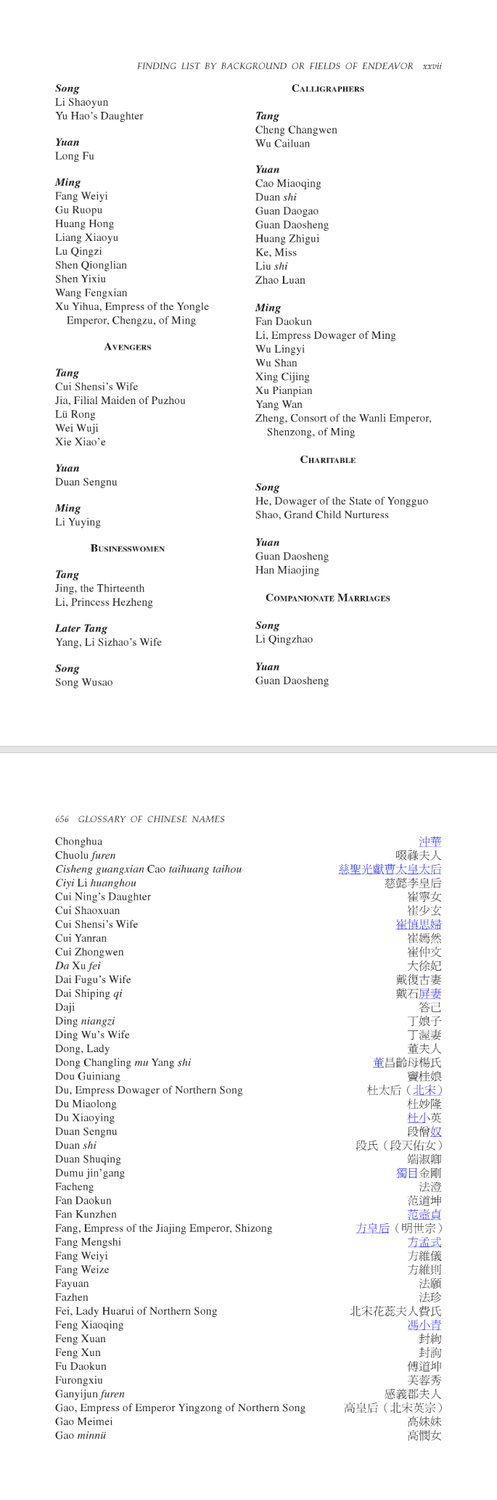
"duan shi" "he, dowager of the state of yongguo"
Результати пошуку
Biographical Dictionary of Chinese Women: Tang Through Ming, ...
books.google.com.ua › books
Lily Xiao Hong Lee, Sue Wiles · 2014
Знайдено всередині книги – Сторінка xxvii
... Tang Cheng Changwen Wu Cailuan Yuan Cao Miaoqing Duan shi Guan Daogao Guan Daosheng Huang Zhigui Ke, ... Consort of the Wanli Emperor, Shenzong, of Ming chAritABle Song He, Dowager of the State of Yongguo Shao, Grand ...
Biographical Dictionary of Chinese Women, Volume II: Tang ...
books.google.com.ua › books
Знайдено всередині книги – Сторінка xxvii
... CALLIGRAPHERS Tang Cheng Changwen Wu Cailuan Yuan Cao Miaoqing Duan shi Guan Daogao Guan Daosheng ... Consort of the Wanli Emperor, Shenzong, of Ming CHARITABLE Song He, Dowager of the State of Yongguo Shao, ...
Duan Gong's daughter Qiangna or Qiangnu and his son Duan Bao.
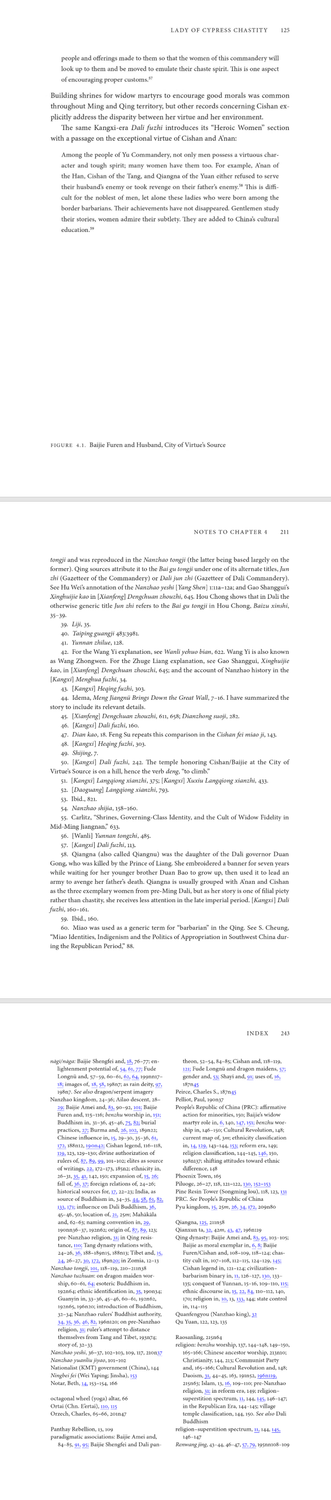
qiangna daughter bao
https://books.google.ca/books?id=Fx0mDQAAQBAJ&pg=PA211&dq=qiangna+daughter+bao&hl=en&newbks=1&newbks_redir=1&sa=X&ved=2ahUKEwiz8KKe-N3tAhVvGFkFHRCtCpEQ6AEwAHoECAYQAg
Goddess on the Frontier: Religion, Ethnicity, and Gender in ...
books.google.ca › books
FOUND INSIDE – PAGE 211
Qiangna (also called Qiangnu) was the daughter of the Dali governor Duan Gong, who was killed by the Prince of Liang. She embroidered a banner for seven years while waiting for her younger brother Duan Bao to grow up, then used it to ...
Mandarin Primer: An Intensive Course in Spoken Chinese
books.google.ca › books
Imperial China 900-1800
books.google.ca › books
In this history of China for the 900-year span of the late imperial period, Mote highlights the personal characteristics of the rulers and dynasties and probes the cultural theme of Chinese adaptations to recurrent alien rule.
Biographical Dictionary of Chinese Women: Tang Through Ming, ...
books.google.ca › books
Lily Xiao Hong Lee, Sue Wiles · 2014
This volume of the Biographical Dictionary of Chinese Women completes the four-volume project and contains more than 400 biographies of women active in the Tang through Ming dynasties (618-1644).
Imperial China and Its Southern Neighbours
books.google.ca › books
Within these extensive rubrics, this edited collection further interrogates the nature of Asian polities and their historiography, the constitution of Chineseness, imperial China’s southern expansions, cultural hybridity, economic ...
Foreign Assistance Programs
books.google.ca › books
Foreign Assistance Programs
https://books.google.ca/books?id=SQWW7QgUH4gC&printsec=frontcover&dq=qiangna+daughter+bao&hl=en&newbks=1&newbks_redir=1&sa=X&ved=2ahUKEwiz8KKe-N3tAhVvGFkFHRCtCpEQ6AEwAnoECAIQAg
Receptions of Greek and Roman Antiquity in East Asia
books.google.ca › books
2019
Receptions of Greek and Roman Antiquity in East Asia broadens the scope of the Western Classical tradition by offering pioneering insights (of leading scholars from Europe, East Asia, and North America) into East Asian receptions of Greco ...
China's Encounters on the South and Southwest: Reforging the ...
books.google.ca › books
China's Encounters on the South and Southwest.
The Last Emperors: A Social History of Qing Imperial ...
books.google.ca › books
In this book, Evelyn Rawski re-interprets the remarkable success of this dynasty, arguing that it derived not from the assimilation of the dominant Chinese culture but rather from an artful synthesis of Manchu leadership styles with Han ...
In the Shadow of the Mongol Empire: Ming China and Eurasia
books.google.ca › books
Memories of the Mongol Empire loomed large in fourteenth-century Eurasia. Robinson explores how Ming China exploited these memories for its own purposes.
A drama play based on Duan Gong and Princess Agai.

"poison the cakes and give some to Muge, her own son"
Результати пошуку
A Selective Guide to Chinese Literature 1900-1949: The Drama
books.google.com.ua › books
Nils Göran David Malmqvist, European Science Foundation · 1989
Знайдено всередині книги – Сторінка 126
poison the cakes and give some to Muge , her own son , in order to show the Prince of Liang that Duan Gong is a traitor . Out of her love for her paramour , she does so and Muge dies instantly . Shocked , the Prince of Liang wants to kill Duan ...
More on the play with Duan Gong and Princess Agai.

"he is a prolific writer and has been rated among the greatest and the most versatile cultural figures in twentieth-century China"
Результати пошуку
Receptions of Greek and Roman Antiquity in East Asia - Сторінка 310
books.google.com.ua › books
2019
Знайдено всередині книги – Сторінка 310
Firstly, he is a prolific writer and has been rated among the greatest and the most versatile cultural figures in twentieth-century China. In 1957–1963, People's Literature Press in Beijing published the seventeen-volume Moruo's Literary Works.
More on the drama about Duan Gong and Princess Agai.
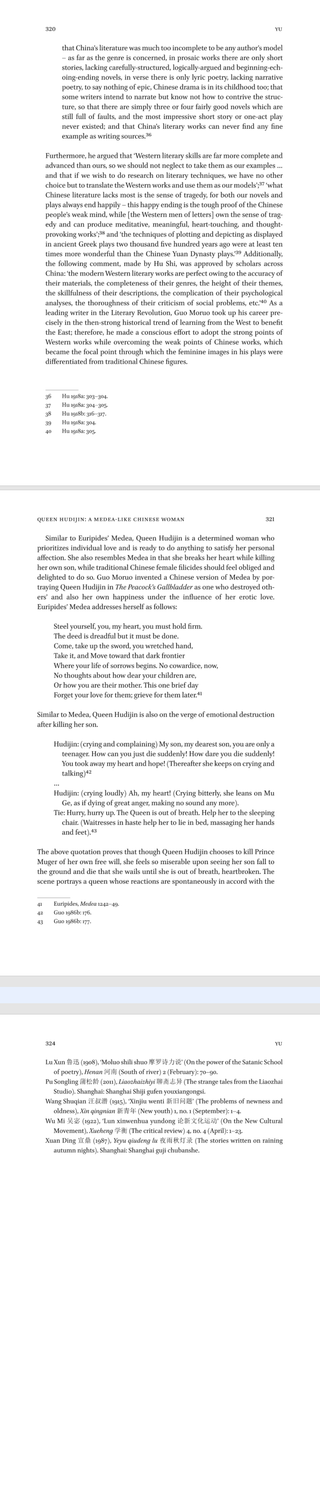
from the same book as the previous
argyle duan gong
In Italian on Duan Gong and Princess Agai.
Cina, Volumes 15-16 Istituto italiano per il Medio ed Estremo Oriente, Istituto italiano per l'Africa e l'Oriente Istituto italiano per il medio ed estremo oriente., 1979 University of Minnesota page 295
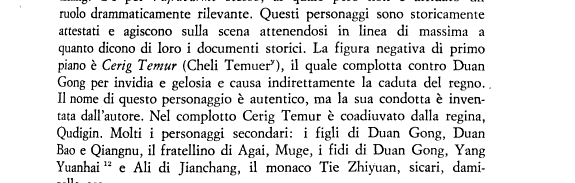 More on Duan Gong and Princess Agai in Italian.
 More in Italian on Duan Gong and Princess Agai.

complotta contro Duan Gong per invidia e gelosia e causa
Результати пошуку
Cina - Томи 15 – 16 - Сторінка 295
books.google.com.ua › books
1979 · У вигляді фрагментів
Знайдено всередині книги – Сторінка 295
La figura negativa di primo piano è Cerig Temur ( Cheli Temuer " ) , il quale complotta contro Duan Gong per invidia e gelosia e causa indirettamente la caduta del regno . Il nome di questo personaggio è autentico , ma la sua condotta è ...
figura negative di primo piano cheli temuer
Результати пошуку
Cina - Томи 15 – 16 - Сторінка 295
books.google.com.ua › books
1979 · У вигляді фрагментів
Знайдено всередині книги – Сторінка 295
Questi personaggi sono storicamente attestati e agiscono sulla scena attenendosi in linea di massima a quanto dicono di loro i documenti storici . La figura negativa di primo piano è Cerig Temur ( Cheli Temuer " ) , il quale complotta contro ...
nel complotto cerig temur dalla regine qudigin qiangnu
Результати пошуку
Cina - Томи 15 – 16 - Сторінка 295
books.google.com.ua › books
1979 · У вигляді фрагментів
Знайдено всередині книги – Сторінка 295
Il nome di questo personaggio è autentico , ma la sua condotta è inventata dall'autore . Nel complotto Cerig Temur è coadiuvato dalla regina , Qudigin . Molti i personaggi secondari : i figli di Duan Gong , Duan Bao e Qiangnu , il fratellino di ...
This is
Biographical Dictionary of Chinese Women, Volume II Tang Through Ming 618 - 1644 Lily Xiao Hong Lee, Sue Wiles Routledge, 2015 1317515625, 9781317515623 716 pages
The Duan family's origins discussed.
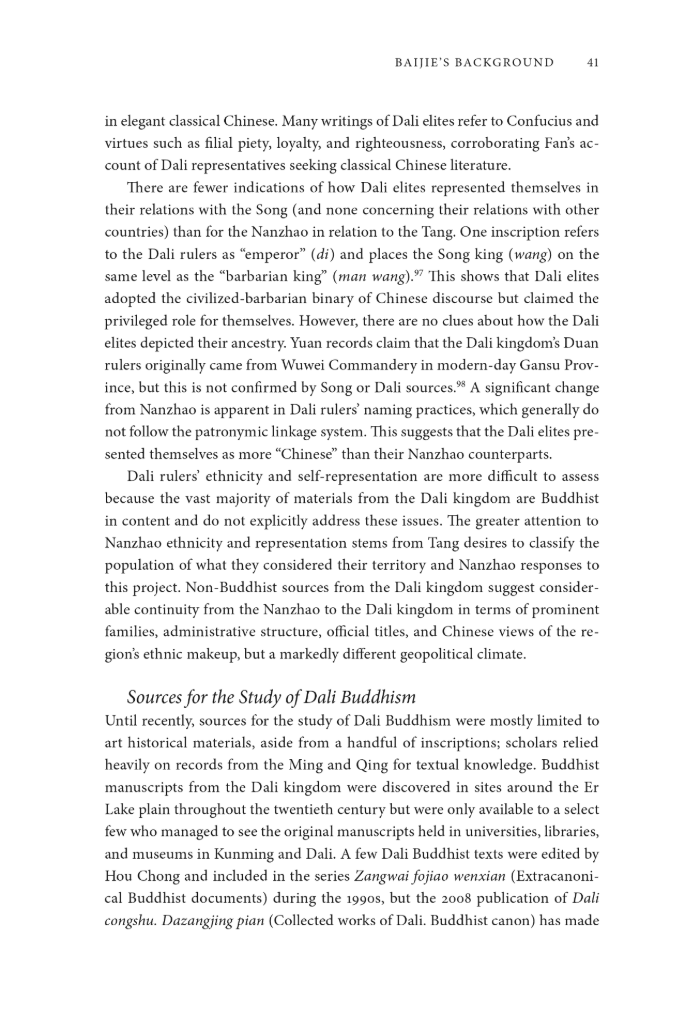
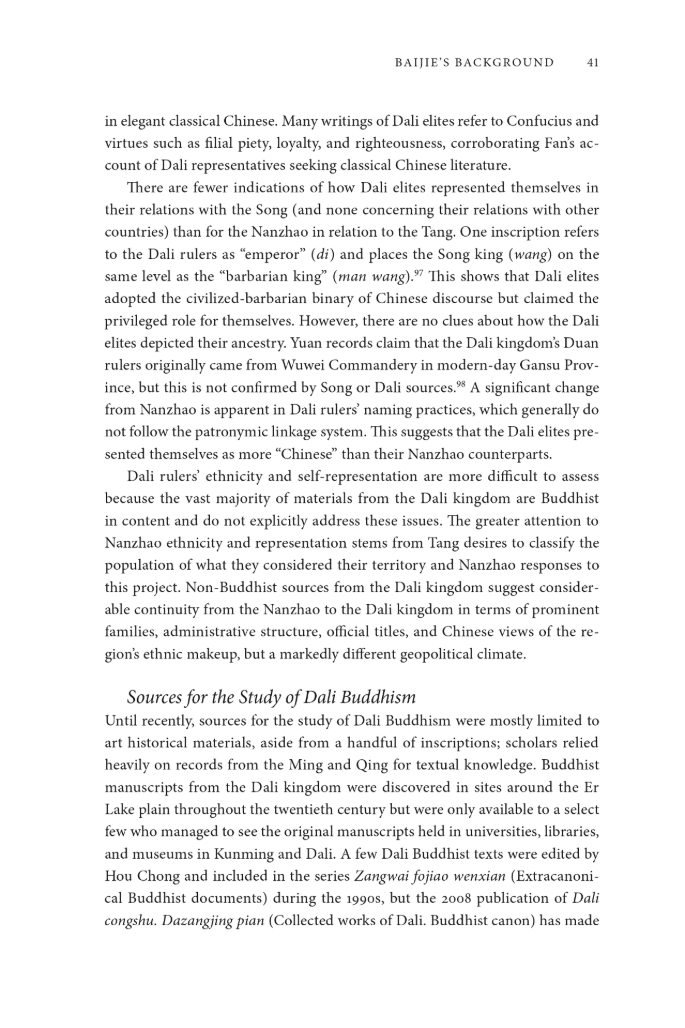
"Yuan records claim that the Dali kingdom's Duan rulers originally came from Wuwei Commandery in modern-day Gansu"
Goddess on the Frontier: Religion, Ethnicity, and Gender in ... - Page 41
books.google.ca › books
FOUND INSIDE – PAGE 41
Yuan records claim that the Dali kingdom's Duan rulers originally came from Wuwei Commandery in modern-day Gansu Province, but this is not confirmed by Song or Dali sources.98 A significant change from Nanzhao is apparent in Dali ...
Imperial China 900-1800
books.google.ca › books
In this history of China for the 900-year span of the late imperial period, Mote highlights the personal characteristics of the rulers and dynasties and probes the cultural theme of Chinese adaptations to recurrent alien rule.
China's Encounters on the South and Southwest: Reforging the ...
books.google.ca › books
China's Encounters on the South and Southwest.
Biographical Dictionary of Chinese Women: Tang Through Ming, ...
books.google.ca › books
Lily Xiao Hong Lee, Sue Wiles · 2014
This volume of the Biographical Dictionary of Chinese Women completes the four-volume project and contains more than 400 biographies of women active in the Tang through Ming dynasties (618-1644).
Imperial China and Its Southern Neighbours
books.google.ca › books
Within these extensive rubrics, this edited collection further interrogates the nature of Asian polities and their historiography, the constitution of Chineseness, imperial China’s southern expansions, cultural hybridity, economic ...
Receptions of Greek and Roman Antiquity in East Asia
books.google.ca › books
2019
Receptions of Greek and Roman Antiquity in East Asia broadens the scope of the Western Classical tradition by offering pioneering insights (of leading scholars from Europe, East Asia, and North America) into East Asian receptions of Greco ...
In the Shadow of the Mongol Empire: Ming China and Eurasia
books.google.ca › books
Memories of the Mongol Empire loomed large in fourteenth-century Eurasia. Robinson explores how Ming China exploited these memories for its own purposes.
The Cambridge History of China: Sui and T'ang China, 589-906 ...
books.google.ca › books
Denis Twitchett · 1979
International scholars and sinologists discuss culture, economic growth, social change, political processes, and foreign influences in China since the earliest pre-dynastic period
Amid the Clouds and Mist: China’s Colonization of Guizhou, ...
books.google.ca › books
One purpose of this book is to examine how China’s three late imperial dynasties--the Yuan, Ming, and Qing--conquered, colonized, and assumed control of the southwest.
Buddhist Encounters and Identities Across East Asia
books.google.ca › books
Ann Heirman, Carmen Meinert, Christoph Anderl · 2018
Buddhist Encounters and Identities across East Asia offers a fascinating picture of the intricacies of regional and cross-regional networks and the complexity of Buddhist identities emerging across Asia.
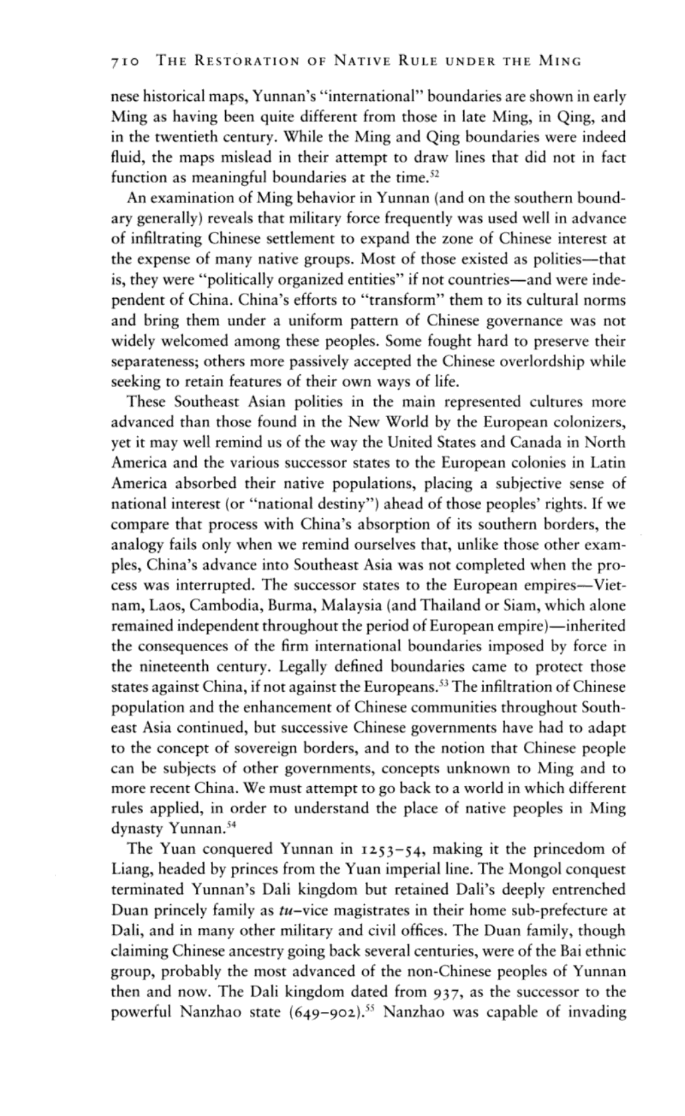
More on the Duan family of Dali's origins.
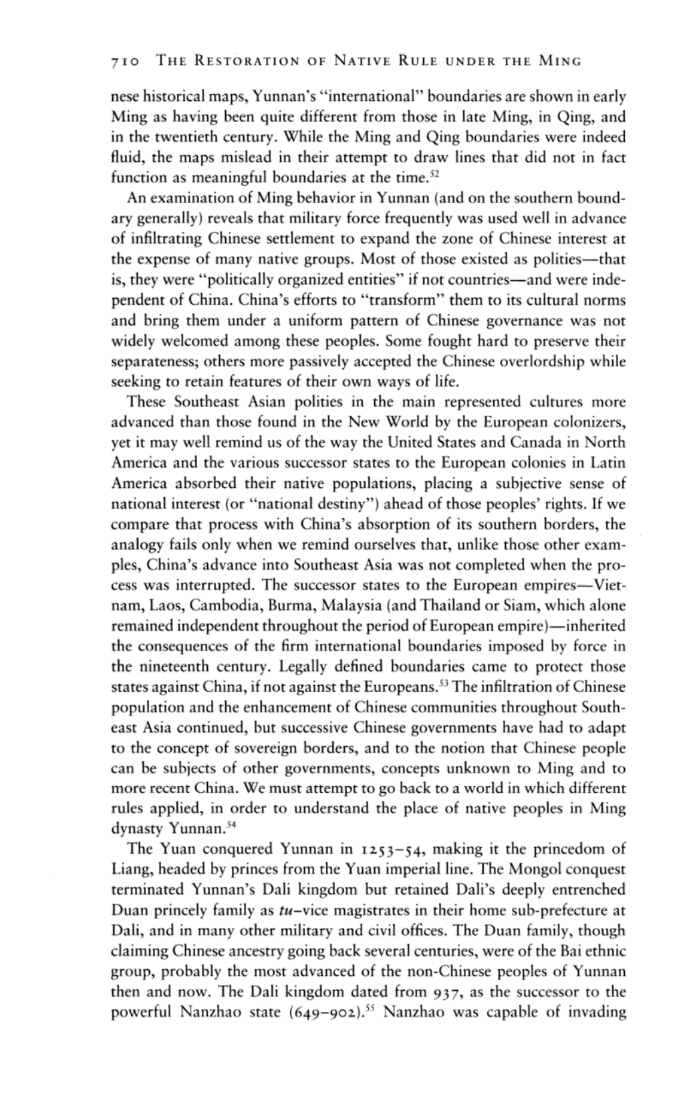
"The Duan family, though claiming Chinese ancestry going back several centuries"
Результати пошуку
Imperial China 900-1800 - Сторінка 710
books.google.com.ua › books
Знайдено всередині книги – Сторінка 710
The Duan family , though claiming Chinese ancestry going back several centuries , were of the Bai ethnic group , probably the most advanced of the non - Chinese peoples of Yunnan then and now . The Dali kingdom dated from 937 , as the ...
Biographical Dictionary of Chinese Women, Volume II Tang Through Ming 618 - 1644 Lily Xiao Hong Lee, Sue Wiles Routledge, 2015 1317515625, 9781317515623 716 pages
"was the daughter of the Dali governor Duan Gong"
Результати пошуку
Receptions of Greek and Roman Antiquity in East Asia - Сторінка 313
books.google.com.ua › books
2019
Знайдено всередині книги – Сторінка 313
In order to give his appreciation for Duan Gong's life-saving behavior and to maintain an alliance with Dali's military power, King Basalawarmi arranged for his beautiful daughter, Princess Argyle, to marry Duan Gong. The princess, the ...
Imperial China and Its Southern Neighbours
books.google.com.ua › books
Victor H Mair · 2016
Знайдено всередині книги
In this story, the Prince of Liang marries off his , the territory of the former Dali beautiful daughter, Princess Agai , the governor of Dali, as a ... The earliest identification of this object as a poison dates to the Ming (1368– to Duan Gong 1644).
Asien, Australien-Ozeanien - Сторінка 1175
books.google.com.ua › books
Знайдено всередині книги – Сторінка 1175
Herrschaft ( 268 - 284 ) - Governors / Statthalter in Yunnan - 1252 - 12 . ... 916 917 918 919 1330 Du Qian , Yunnan Wang - Governors / Statthalter in Dali ( Ta - li ) - 1253 - 1260 Duan Xingzhi S . a . ... 1317 - 1331 Duan Long 1331 - 1332 Duan Xuan 1332 - 1333 Duan Yi 1333 - 1345 Duan Guang 1345 - 1366 Duan Gong ...
Li Shi Min, Founding the Tang Dynasty: The Strategies that ...
books.google.com.ua › books
Знайдено всередині книги – Сторінка 42
When Li Yuan crossed the Yellow River, Li Shen Tong, Chai Shao's wife and Duan Lun all sent envoys to meet Li Yuan. ... On 22 September, Li Yuan crossed the Wuishui River from Linjin (now in Zhaoyi in Dali, Shaanxi Province) to ... The governor of Fufeng Dou jin defended the city. ... Qiu Shi Li sent his younger brother Qiu Xing Gong with five hundred men carrying rice and wheat and beef and wine ...
Between Winds and Clouds: The Making of Yunnan (second ...
books.google.com.ua › books
Знайдено всередині книги – Сторінка 93
In 1240 , Meng Gong , governor of Sichuan , refused to open official markets in Sichuan on the account that since the Guangxi - Dali trade existed ... 119 Within a year , the Dali Kingdom was destroyed , and the Duan family surrendered .
Daily Report, China: Index - Том 21,Випуск 7 - Сторінка 7
books.google.com.ua › books
Знайдено всередині книги – Сторінка 7
... Governor Jul 26 95 31 - 32 - - - Central Bank Outlines Tight ' Money Policy Dalai Lama Jul 10 95 1 - - - Hong Kong : Dalai Lama Appeal ... Daughter Deng Weizhi Jul 11 95 36 - 37 - - - Sociologist Reviews Causes Of Rising Crime Rates Deng Xiaoping Jul 5 95 30 - 31 ... Half Du Donghai Jul 28 95 23 - 24 - - - Shaanxi Military District Commander Inspects Flood Prevention Work Duan Qiuping Jul 17 95 ...
Entomology Abstracts
books.google.com.ua › books
2000 · Попередній перегляд недоступний
ตํานานเกี่ยวกับท้าวฮุ่งท้าวเจือง: ... - Сторінка 39
books.google.com.ua › books
1995 · У вигляді фрагментів
Знайдено всередині книги – Сторінка 39
A - Nong and Nong Zhi - gao , the wife and the second son of Nong Quanfu , had to go out of Leihuo Dong ( tribe ) and attach themselves to Nong Xia - qing of ... He set up “ Da - Li State ” in Tangyou Zhou contending with the king of Jiao Zhi . ... Nong sent a letter and cash gifts to Chen Gong , the governor of Yong Zhou , and asked that Chen report his wishes to the Song Emperor . ... 17 Ma Duan - lin .
Нариси з функціонального синтаксису української мови
books.google.com.ua › books
part 3 of this justpaste dump is here
A Han Chinese scholar official, Zhou Xianchen (1188-1262) who was skilled in martial arts led a militia against the Mongols in his town in 1216 and then defected to the Mongols. His brother passed the civil service exams and he was supposed to as well. The Mongols made him a hereditary feudal warlord in northern Shanxi province, Dingxiang town. One of the passes in the Jin border wall, Yanmen was immediately north of Dingxiang. Zhou Xianchen became a military local fuedal warlord instead of a scholar-official examination candidate. He ruled Dingxiang as Shihou (hereditary vassal), the title awarded to him by the Mongols for his military service to the Mongol empire. He cooperated with Quanzhen Daoists to help rebuild the social order in northern China. Quanzhen nun Guo Shouwei worked with Zhou Xianchen.
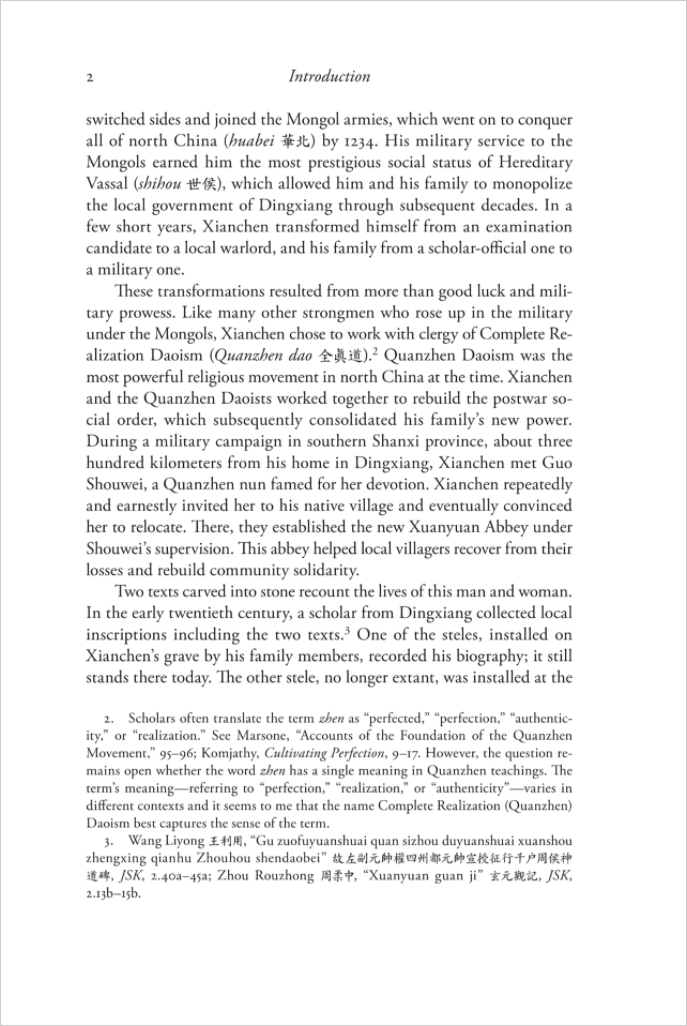
Northern elites in the Yuan dynasty having Korean girls as slaves
Materials for a Genealogy of the Niohuru Clan books.google.ca

元史:附录京师达官贵人必得高丽女然后为名家
来源: http://www.pdsruili.com 大清铜币网
元朝的宫廷和一些官宦之家大量使用高丽侍女,到了元朝后期,甚至出现了“京师达官贵人必得高丽女然后为名家”的现象。
高丽女入元最初来源于蒙古军队在征服高丽过程中的掳掠,这些被掠夺的人口在元朝沦为被贩卖的驱口,境遇十分悲惨。元人郝经对此有过描述:“(高丽)自被天兵都破碎,称臣纳质兵弗退。残灭虏掠五十年,穷蹙无聊竟何罪。尽将生口卖幽燕,年年探借高丽钱。肌肤玉雪发云雾,罗列人肆真可怜。”自1259年高丽臣服于蒙古,一些蒙古贵族便通过与高丽人联姻将一部分高丽女子带到中国。(《庚申外史》卷下;《陵川集》卷十《高丽叹》)
随着元朝与高丽关系的发展,高丽贡女便成为高丽女入元的主要渠道。在高丽臣服于蒙古之后,蒙古主要通过在高丽扶植以高丽王为首的亲元势力来加强对高丽的控制,而高丽王为巩固自己的统治也逐渐采取了亲元的政策。于是蒙元朝廷不断向高丽索要贡女,而高丽政府为讨好元廷也经常主动向元廷进贡高丽童女,高丽女被迫入元给高丽人民造成了极大的伤害。高丽为了保证能不断地向元廷进贡童女,规定“良家处女,先告官,然后嫁之,违者罪之”。高丽官员李榖在给元御史台的疏文中,对征集高丽童女给高丽人民造成的苦难进行了描述:“侧闻高丽之人生女者,即秘之,惟虑不密,虽比邻不得见,每有使臣至自中国,便失色相顾,曰:胡为乎来哉?非取童女子耶,非取妻妾者耶?已而军吏四出,家搜户扪,若或匿之,则系累其邻里,缚束其亲族,鞭挞困苦,见而后己。一遇使臣,国中骚然,虽鸡犬不得宁焉。及其聚而选之,妍丑不同,或啖其使臣而饱其欲,虽美而舍之。舍之而他求,每取一女,阅数百家,唯使臣之为听,莫或敢违,何者,称有旨也。如此者岁再焉,或一焉,间岁焉,其数多者,至四五十。既在其选,则父母,宗族相聚哭泣,日夜声不绝。及送于国门,牵衣顿仆,拦道呼号,悲痛愤懑,有投井而死者,有自缢者,有忧愁绝倒者,有血泣丧明者,如此之类,不可殚记。其取为妻妾者,虽不若此,逆其情,取其怨,则无不同也。书曰:匹夫匹妇,不获自尽民主,罔与成厥功。恭惟国朝德化,所及万物咸遂,高丽之人,独有何罪,而受此苦乎?”可见对入元高丽童女的征集给高丽人民造成的苦难之深。
除元宫廷向高丽索要贡女外,一些蒙古贵族更是随意到高丽去索要童女,再加上在征集高丽童女的过程中,元朝和高丽官吏的诸多不法行为,都加深了高丽人民的苦难。(《高丽史》卷三十《忠烈王世家》;《高丽史》卷一百九《李榖传》)
随着元朝和高丽政治关系的发展,以贡品、联姻和赠送等渠道入元的高丽童女逐渐多了起来,有越来越多的高丽童女进入元宫廷和官宦之家,其中不少高丽女由于得宠而获得了较为尊贵的地位。正如高丽人李榖所说:“今高丽妇女在后妃之列,配王侯之贵,而公卿大臣多出高丽外甥者。”元朝上层娶高丽女子的有仁宗、明宗、顺帝、实逗太子、峦峦太子、安西王安难达、鲁王、吴王及丞相桑哥、脱脱等。
入元高丽女中地位最为显赫的当数顺帝的皇后奇完者忽都。奇后更是利用高丽童女作为笼络权臣的手段。1358年(至正十八年),“祁(奇)后亦多蓄高丽美人,大臣有权者,辄以此女送之,京师达官贵人必得高丽女然后为名家。高丽女婉媚,善事人,至则多夺宠”。可见到元后期,拥有高丽女已成为元朝贵族身份的象征。元末明初,叶子奇《草木子》中也说,“北人女使,必得高丽女孩童;家僮,必得黑厮。不如此,谓之不成仕宦。”时人的诗句通过一名历尽苦难的妇女对高丽女的羡慕,反映出高丽女在元朝后期的特殊地位:“……恨身不作三韩女,车载金珠争夺取。银铛烧酒玉杯饮,丝竹高堂夜歌舞。
黄金络臂珠满头,翠云绣出鸳鸯绸。醉呼阉奴解罗幔,床前爇火添香篝。”(《庚申外史》卷下;《草木子》卷三下《杂制篇》;《金台集》卷一《新乡媪》)
为何此时元朝官宦之家对高丽女情有独钟?《庚申外史》说,“高丽(女)婉媚,善事人。”这当然是原因之一。然而最主要的原因可能并非如此。在元朝与高丽的特殊关系下,以贡女渠道进入元朝的高丽童女长期存在,更有甚者,高丽王把进贡和赠送高丽童女作为在元廷展开外交活动的手段,同时一些贪求富贵的高丽官员,也争相把自己的女儿许配给元廷的高官,这便使得元朝统治层役使和联姻高丽女的现象逐渐增多,而这势必会导致元朝官宦之家的争相效尤。在此背景下,到元朝后期,当顺帝皇后高丽女奇氏把高丽美女作为一种礼品,来笼络元朝的权贵时,元朝出现“京师达官贵人必得高丽女然后为名家”的现象当不为偶然。
蒙古统治者长期形成的对外族的认识,是其能接受高丽女的基础。蒙古人长期实行族外婚制,这便使得蒙古族在联姻时容易接受外族,而不是一味地加以排斥。在对待被征服民族的态度上,蒙古族也不是一味地贬低、鄙视,对于那些较早归附自己的民族,他们往往给予较高的地位。同时,蒙古统治者在长期的生活和征服战争中形成了文化上的开放意识,对各种文化往往能兼收并蓄。所有这些,使得蒙古人在娶高丽女时,从意识形态上讲,并不会受到太大的束缚。诚然,蒙古统治者在对待外族的问题上也提倡尊卑有别,但这种尊卑意识还远没有达到在联姻问题上对全社会具有一种普遍约束力的程度。《庚申外史》卷上:“初世祖皇帝家法:贱高丽女子,不以入宫。”世祖的这一家法从现有的史料来看,并没有被认真遵守。元帝频繁向高丽索要童女以充实后宫,便是一个有力的证明。
值得一提的是,元朝中后期众多的高丽女入元,并且大都生活在宫廷和官宦之家,这对当时的元朝和高丽文化交流亦产生一些影响。比如元代高丽服饰曾流行一时。“自至正以来,宫中给事使令,大半为高丽女,以故四方衣服、鞋帽、器物,皆依高丽样子,此关系一时风气,岂偶然哉。”《南村辍耕录》中云:“杜清碧先生本应召次钱唐,诸儒者争趋其门。燕孟初作诗嘲之,有‘紫藤帽子高丽靴,处士门前当怯薛’之句,闻者传以为笑。用紫色棕藤缚帽,而制靴作高丽国样,皆一时所尚。”元朝人张昱所撰《可闲老人集》中的两首诗,也说明当时高丽风尚对元朝宫廷的影响,其一云“绯国宫人直女工,衾裯载得内门中。当番女伴能包袱,要学高丽顶入宫”,其二云“宫衣新尚高丽样,方领过腰半臂裁。连夜内家争借看,为曾著过御前来”。(《庚申外史》卷下;《南村辍耕录》卷二十八《处士门前怯薛》;《可闲老人集》卷二《辇下曲》、《宫中词》)
在元朝蒙古宫廷里,宫女太监几乎全是韩国人(高丽人)。元军不断进入高丽掠夺人口,在1254年就抢掠了20万人。这些人大部分都送进了皇宫和王公贵族府邸。因此,元朝诗人郝经有诗云:“尽将生口卖幽燕,年年探借高丽钱,肌肤玉雪发云雾,罗列人肆真可怜。”
蒙古皇宫里更是如此,当时记载:“自至正以来 展开全文c
【超话】历史那些事
2.3万 帖子8.5万粉丝
+ 关注
02月27日 11:03 来自 历史那些事超话
The Arab Sayyid Ali and his Korean wife given to him by Kublai Khan.
The East Asian Mediterranean books.google.ca
The true origin of Hui Muslims in China
The origin of Hui people is often shrouded in legend in early Arab Muslim contacts with the Tang dynasty or lazily expressed as "foreign Muslim men coming to China and marrying local women".
The true origin of most Hui people is far more interesting and much more heterogeneous. A Hui is basically just a Muslim in China who practices Chinese culture and 99% of the time speaks Mandarin.
Unfounded and mythical Hui legends place the coming of Islam to China to Sa'ad ibn Abi Waqqas coming to the Tang dynasty court and his foundation of the Huaisheng Mosque in Guangzhou. There are zero Tang official records describing any sort of meeting with Sa'ad ibn Abi Waqqas and the current Huaisheng mosque was rebuilt multiple times and no proof any original one dating back to the Tang dynasty exists. Sa'ad ibn Abi Waqqas died in the city of Medina in Arabia and not in China.
Many Hui myths are aimed at back dating their arrival to the earliest time possible- the Tang and Song dynasties. For example, the ancestor of Sayyid Ajjal who arrived in the Yuan dynasty, is claimed to have arrived in the Song dynasty in the person of Sofeier. This was a forged legend.
There were communities of Arab Muslims and Persian Muslims and Persian Zoroastrians, Christians and Jews who arrived during the Tang dynasty and Song dynasty, but they contributed relatively little to the Hui population compared to the massive arrival during and after the Yuan dynasty. Arabs built a Mosque in Mingzhou but abandoned it and did not leave a local Hui population there, and of the Hui families in Quanzhou, only the Pu family is descended from an Arab who arrived during the Song dynasty while the other Hui are all descended from Yuan arrivals.
The bulk of Central Asian Muslim immigration to China was during the Yuan and early Ming dynasty. Major amounts of foreign Central Asian Muslims, Naiman Christians, Jews, and Buddhists like the Buddhist Uighurs of Qocho and Tibetans were moved into China. They were classified as Semu by the Mongols.
The Mongols and the Semu foreigners viewed Korean women as the most beautiful. The Mongol Yuan demanded the Korean Kingdom of Goryeo send a massive tribute of thousands of Korean virgin girls to become concubines and castrated Korean boys to become eunuchs for the Mongols. The Mongols and Semu Central Asian Muslims, Indian Muslims, Uighur Buddhists, Tibetan Buddhists and others took Korean girls as wives. Koreans were classified as "Han ren" along with northern Chinese, Jurchen and Khitan.
Even today there are Korean TV dramas like [Empress Ki](https://en.wikipedia.org/wiki/Empress_Ki_(TV_series) which talk about the tribute of Korean girls and Korean boy eunuchs as gifts to the Mongols. Empress Ki was one of the Korean tribute girls. The numerous Korean concubines and wives of the Mongols came to wield power in the Yuan court. Empress Ki and her eunuch Bak Bulhwa were both Korean.
A Hui from Ningxia called Ma Juan 马娟 wrote a journal article about the marriages between Semu Central Asian foreign Muslim men and Korean women called "元代色目高丽通婚举例". He drew from Yuan era records of marriages between Korean women and foreign Muslim men in China. There was major intermarriage between Korean women and the foreign Semu in China. It wasn't some minor affair.
The Korean history record Goryeosa 高麗史 describes the marriage of a Korean woman, the daughter of Chae Ingyu 채송년 蔡仁揆. She was first married to a Tibetan named Sangha 桑哥 who worked for the Mongols. An Indian Muslim named Abu Ali fled from Ma'bar to China and entered the service of the Mongols. He was then given Sangha's former Koren wife as his own wife after Sangha was executed.
These Korean women who were married to Mongol men and Semu Central Asian Muslim, Indian Muslim, and Buddhist Uighur men were used by the Korean Goryeo government to expand ties and linkages to their husband's homelands and cultures like Muslim Sultanates in India and the Buddhist Uighur Qocho Kingdom.
Yuan dynasty and Ming dynasty history record mention that it was popular for aristocratic high ranking Northerners in Yuan dynasty China to have Korean girls as slaves-《續資治通鑒·順帝紀》中稱,“京師達官貴人,必得高麗女,然后為名家” 《草木子·雜制篇》中稱:“北人女使,必得高麗女孩童﹔家僮,必得黑?。不如此,謂之不成仕宦。” Korean women were described as more beautiful than Chinese since they had "jade" like skin. “肌膚玉雪發雲霧”
In the Ming dynasty, the early Ming Emperors imitated the Mongol tribute demands on Korea and made Korea send Korean virgin girls and eunuchs to the Ming. Modern South Koreans are still so angry over this concubine and eunuch tribute they made a fantasy movie where a fictional Korean takes revenge by killing fictional Ming soldiers. (https://en.wikipedia.org/wiki/The_Divine_Weapon)
The Ming Zhengde Emperor surrounded himself with Central Asian Muslim advisors and Muslim eunuchs. One of his Muslim advisors praised Korean women's beauty and recommended them to Zhengde. mentioned in Chapter 8 of "The Ming Court and the Legacy of the Yuan Mongols". This was over a century after the fall of the Yuan and showed that Korean women were regarded as more beautiful than Chinese women by Central Asians Muslims. The Zhengde Emperor himself had several Central Asian Muslim Semu girls as concubines.
That is the explanation for Hui Muslims in eastern Chinese cities like Beijing, Tianjin etc. A lot of them are the result of Muslim male foreigners marrying Korean women. Koreans were classified as "Han" by the Mongols and eventually the descendants of these unions assimilated to Chinese Confucian culture and adopted Mandarin as their language.
Goryeo period
According to local Korean accounts, Muslims arrived in the peninsula in the year 1024 in the Goryeo kingdom, a group of some 100 Muslims, including Hasan Raza, came in September of the 15th year of Hyeonjong of Goryeo and another group of 100 Muslim merchants came the following year.[12]
Trading relations between the Islamic world and the Korean peninsula continued with the succeeding kingdom of Goryeo through to the 15th century. As a result, a number of Muslim traders from the Near East and Central Asia settled down in Korea and established families there. Some Muslim Hui people from China also appear to have lived in the Goryeo kingdom.[13]
With the Mongol armies came the so-called Saengmokin (Semu), this group consisted of Muslims from Central Asia. In the Mongol social order, the Saengmokin occupied a position just below the Mongols themselves, and exerted a great deal of influence within the Yuan dynasty. In the Yuan dynasty, Koreans were included along with Northern Chinese, Khitan and Jurchen in the third class, as "Han ren".[14][15]
2 Japanese families, a Vietnamese family, an Arab family, a Qochanese Uyghur family, 4 Manchuria originated families, 3 Mongol families, and 83 Chinese families migrated into Korea during Goryeo.[16]
During the Yuan dynasty Korean women married Indian, Uyghur (Buddhist), and Turkic Semu men.[17] A rich merchant from the Ma'bar Sultanate, Abu Ali (Paehari) 孛哈里 (or 布哈爾 Buhaer), was associated closely with the Ma'bar royal family. After falling out with them, he moved to Yuan China and received a Korean woman as his wife and a job from the Mongol Emperor, the woman was formerly 桑哥 Sangha's wife and her father was 蔡仁揆 채송년 Chae In'gyu during the reign of 忠烈 Chungnyeol of Goryeo, recorded in the Dongguk Tonggam, Goryeosa and 留夢炎 Liu Mengyan's 中俺集 Zhong'anji.[18][19] 桑哥 Sangha was a Tibetan.[20]
Korean women were viewed as having white and delicate skin (肌膚玉雪發雲霧) by Hao Jing 郝經 (1223-1275), a Yuan scholar, and it was highly desired and prestigious to own Korean female servants among the "Northerner" nobility in the Yuan dynasty as mentioned in Toghon Temür's (shùndì 順帝) Xù Zīzhì Tōngjiàn (續資治通鑒): (京师达官贵人,必得高丽女,然后为名家) and the Caomuzi (草木子) by Ye Ziqi (葉子奇) which was cited by the Jingshi ouji (京師偶記引) by Chai Sang (柴桑).[39][40]
Sangha was a Tibetan.
4 Hui people descendant from Arabs (most likely from Kublai Khan handing out Korean women to random Arabs settling in China), carry Arab paternal Y Dna, like that Arab Sayyid Ali who married a Korean woman given to him by Kublai Khan
Majority of Hui however are not Haplogroup J1 or J2, most of you are O3, O2b and R1a ( R1a because most are descendants of Central Asians who also married Korean women in the Yuan, Arabs were a tiny minority)
R1a reaches up to 18%-32% in Hui, Bonan (Mongolic), Dongxiang (Mongolic) and Salars (Turkic) in northwestern China in Ningxia, Gansu and Qinghai because they are the descendants of the Central Asian Semu but no where in other populations east of them does R1a reach that level.
R1a reaches up to 18%-32% in Hui, Bonan (Mongolic), Dongxiang (Mongolic) and Salars (Turkic) in northwestern China in Ningxia, Gansu and Qinghai because they are the descendants of the Central Asian Semu but no where in Han populations does R1a reach that level.
DNA Genealogy books.google.ca
Ethnicities like Dongxiang have a lot of R1a because Dongxiang are descendants of Central Asian Semu Muslims during the Yuan dynasty marrying Monguor in Qinghai and Gansu (which is why they speak a Monguor type Mongolic language).
Ethnicities like Dongxiang and Bonan are descendants of Central Asian Semu Muslims during the Yuan dynasty in Qinghai and Gansu who speak a Monguor type Mongolic language
The Hui who narrated this video in Arabic said his ancestors came to China during the Mongol empire which fits with what I said
By the way the narrator clearly states in Arabic his ancestors came during the Mongol period yet that is not stopping q8_kanon jacking off and labeling them descendants of the "Arab conquerors" despite them not having come as conquerors. J1_FGC4415 is more level headed and says they are most likely descendants of merchants.
On the other hand there are some people from Yemen and Qatar with East Asian Mongoloid Y chromosome O-M175. Also a Crimean Tatar noble descendant in Crimea with the same O-M175 Y chromosome.
Albert Ma, a descendant of the Hui warlord Ma Fuxiang from Linxia, Gansu tested positive for East Asian Y chromosome O-M175 so he is not a descendant of a Central Asian or Arab.
And a third Hui family, the Na family descended from the fake Sayyid (Ajall Shams ud-Dun 'Umar) who came to Yunnan during the Yuan dynasty, tested positive for Central Asian/South Asian Y haplogroup L1a-M76. They are false Sayyids because Sayyids should carry Arab J1 Y chromosome.
The Caucasoid population of Liqian in Gansu who have colored eyes and hair largely have Han Chinese paternal chromosomes (77% East Asian Han Chinese paternal haplogroups) while their autosomal DNA is 56% Caucasoid.
People with normatively Caucasoid traits and/or who spoke Indo-European languages lived in areas that are now part of Gansu and Xinjiang centuries before the Romans, including the Yuezhi, Wusun, Basmyls, Tocharians, and some prehistoric Siberian populations.[17] One or more of these peoples may have been responsible for the Caucasoid Tarim mummies of Xinjiang. Genetic testing in 2005 revealed that 56% of the DNA of some Zhelaizhai residents could be classified as Caucasoid but did not determine their origins.[18] A subsequent DNA study found that "paternal genetic variation" did not support "a Roman mercenary origin" and that the modern population of Liqian was consistent genetically with being a "subgroup of the Chinese majority Han."[19]
Memoirs of the Research Department of the Toyo Bunko (the Oriental Library).
Memoirs of the Research Department
63
... With the northerners (meu living in North China), maid-servants were without fail Kao-li girls, man-servants were negroes. ... But with the rise of the Yuan dynasty, the Korean girls began once more to be imported, and at last it became part of ...
... the northerners (men living in North China), maid-servants were without fail Kao-li girls, man-servants were negroes. ... But with the rise of the Yuan dynasty, the Korean girls began onee more to be imported, and at last it became part of the ...
https://books.google.ca/books?id=IZ_WAAAAMAAJ&q=...+With+the+northerners+(meu+living+in+North+China),+maid-servants+were+without+fail+Kao-li+girls,+man-servants+were+negroes.+...+But+with+the+rise+of+the+Yuan+dynasty,+the+Korean+girls+began+once+more+to+be+imported,+and+at+last+it+became+part+of+...
https://books.google.ca/books?id=rBIUAQAAMAAJ&q=...+the+northerners+(men+living+in+North+China),+maid-servants+were+without+fail+Kao-li+girls,+man-servants+were+negroes.+...+But+with+the+rise+of+the+Yuan+dynasty,+the+Korean+girls+began+onee+more+to+be+imported,+and+at+last+it+became+part+of+the+...
gypsy christian shuhu huihui
Etymology and Evolution of the Term Huizu: How the formal ... - Page 18
books.google.ca › books
FOUND INSIDE – PAGE 18
Further evidence can be found in expressions such as “Shuhu Hui–Hui” (referring to Jews), “Lüjing Hui–Hui” (“blue–eyed Hui–Hui,” referring to the Christian Ahsu tribe), and Luoli Hui–Hui (referring to Gypsies), which appear repeatedly in ...
https://books.google.ca/books?id=cwWCDwAAQBAJ&pg=PA18&dq=gypsy+christian+shuhu+huihui&hl=en&newbks=1#v=onepage&q=gypsy%20christian%20shuhu%20huihui&f=false
sartuul khwarezm
Concise History of Islam - Page 173
books.google.ca › books
FOUND INSIDE – PAGE 173
Khwarizmi war captives assimilated into the Mongols, forming modern Mongolian clan Sartuul. Rulers of Khwarezm Shahi Mamunids: • Abu Ali Mamun I 992-997 • Abu al-Hasan Ali 997-1009 • Abu al-Abbas Mamun II 1009-1017 • Muhammad ...
Twentieth Century Mongolia - Page 25
books.google.ca › books
FOUND INSIDE – PAGE 25
... himself a home , and confronted Central Asia ' s largest civilization , the Khwarazmian Dynasty of the Sartuul ( Sartaghol ) . ... Shah Muhammad of Khwarazm was in conflict with the influential military and clerical circles while his own mother ...
Yiyu - An Indexed Critical Edition of a Sixteenth Century ... - Page 156
books.google.ca › books
FOUND INSIDE – PAGE 156
... Sartawul (for Khwarezm)' SH Sarta'ul, Hy Sarta'ul, MA. Sarta'ūl, AT Sartayul, RH Sartaul, Khal. Sartuul 'Khalkha Mongols living in Buryatia', Mong. Sartayul sau-wur 587. (sao-wu-er Chin. zuo-er) 'seat, base (of the saddle)' SH sa'u- 'to sit', ...
huihui gypsy luoli green
Aspects of the Maritime Silk Road: From the Persian Gulf to ... - Page 88
books.google.ca › books
Ralph Kauz · 2010
FOUND INSIDE – PAGE 88
Because this people were also named Asu Said the name “ Green Eyes Huihui ” stands for Christians with a Caucasian background . Luoli Huihui LHP was the name for the gypsies . Louli is the Chinese transcription of the name Lūrī which is ...
The East Asian Mediterranean: Maritime Crossroads of ... - Page 136
books.google.ca › books
Angela Schottenhammer · 2008
FOUND INSIDE – PAGE 136
And there were Lüjing Huihui OA " , literally meaning " the Huihui with green eyes ” , which were also named Asu Bosi . This designation referred to Christians with a Caucasian background . Finally , there were so - called Luoli Huihui ! PA4 , an expression used for Gypsies who had immigrated to interior China . The social ...
Etymology and Evolution of the Term Huizu: How the formal ...
books.google.ca › books
The term “Huizu” is the formal name of the Hui–Hui zu (Hui–Hui ethnic group) in contemporary China.
Iran und iranisch geprägte Kulturen: Studien zum 65. ... - Page 310
books.google.ca › books
Markus Ritter, Ralph Kauz, Birgitt Hoffmann · 2008 · Snippet view
FOUND INSIDE – PAGE 310
For instance , the term " Huihui with Green Eyes " ( Lüjing huihui MNAP ) stood for the Caucasian people , " Luoli huihui " M AP was the name of the gypsies , transcribed from the Persian lūri for gypsies from the Multan area . " Zhuhu Huihui ...
Then why do Mongols, Kazakhs and Crimean Tatars have East Asian Y haplogroup O?
Most Central Asian members of both O2a2b1a1-M117 and O2a2b1a2-F444 clearly are derived from the same Neolithic population expansion(s) that has/have left such clear traces in modern populations speaking Sino-Tibetan languages. Most of them are probably related to certain East Asian individuals more recently than the Neolithic.
Paragroup O-M134(xM117) has been found with very high frequency in some samples of Kim Mun people, a subgroup of the Yao people of southern China (16/32 = 50.0% Mountain Kimmun from southern Yunnan, 11/28 = 39.3% Blue Kimmun from western Guangxi). However, this paragroup has been detected in only 3/41 = 7.3% of a sample of Lowland Kimmun from eastern Guangxi (Cai et al. 2011). This paragroup also has been found with high frequency in some Kazakh samples, especially the Naiman tribe (102/155 = 65.81%)(Dulik et al. 2011 and Lu et al. 2011)
Naiman Kazakhs 68%,[4]
O3 in Europe among Crimean Tatars.
https://www.researchgate.net/publication/311805917_The_Tatars_of_Eurasia_peculiarity_of_Crimean_Volga_and_Siberian_Tatar_gene_pools
https://familypedia.wikia.org/wiki/Haplogroup_O-M175
https://www.familytreedna.com/public/CrimeanTatarDNA?iframe=yresults
https://forums.familytreedna.com/forum/group-administrators-forums/surname-project-administration/polish-dna-project/2429-tatars
http://www.iccrimea.org/reports/genographic-results.html
https://www.theapricity.com/forum/archive/index.php/t-61208.html
Hazaras who descend from steppe tribes have O too.
https://en.wikipedia.org/wiki/Haplogroup_O-M175#O-M268_(O1b)
O-F993 Found in Beijing, Shandong, Jiangsu, Fujian, Taiwan, the Philippines, Hazaras, and Qatar[1][12]
https://en.wikipedia.org/wiki/Haplogroup_O-K18#Subclade_Distribution
Found in Han Chinese, Taiwan plains tribes, Vietnamese, , Dai, Filipinos, Koreans, Japanese, West Kalimantan, Hazaras, and Arabs (Qatar). TMRCA of Han Chinese, Dai, Vietnamese, and Japanese members estimated to be 13,700 [95% CI 11,300 <-> 16,300] ybp.[1]
Analysis of DNA extracted from a tooth from what are believed to be the remains of Cao Ding shows that he belonged to this clade. The researchers also found that the Y-chromosome of Cao Ding matches those of self-proclaimed living descendants of Cao Cao who hold lineage records dating back to more than 100 generations ago.[5] Cao Cao laid the foundation of Cao Wei, one of three major states that succeeded the Han Dynasty of China.

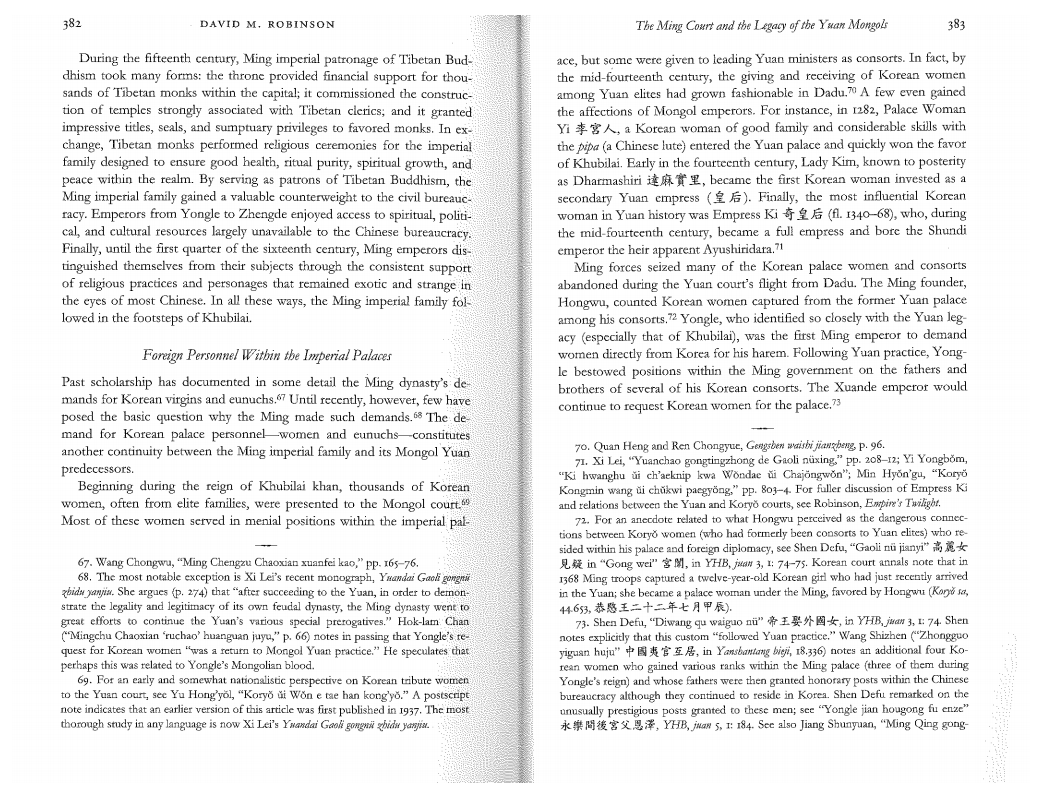
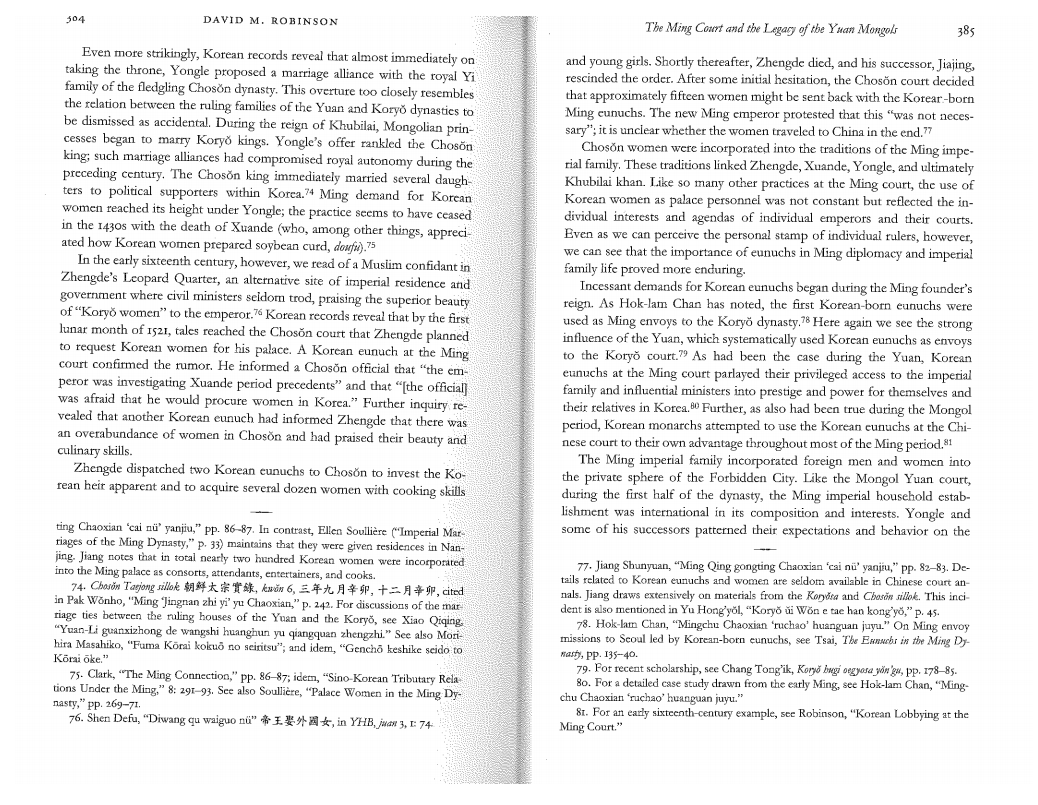
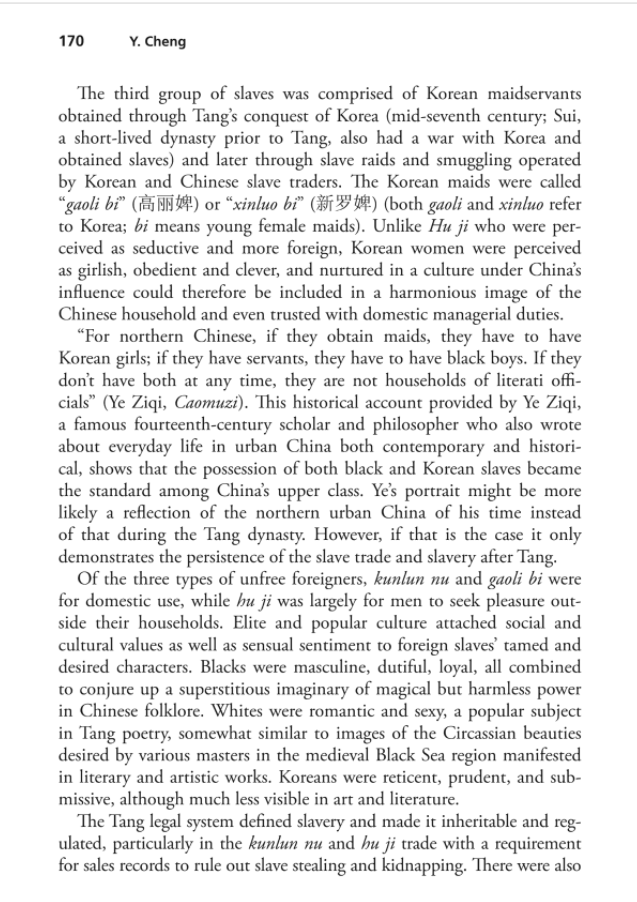 this source also quotes the same guy mentioning how important men in northern China during the Mongol period had Korean girls as servants



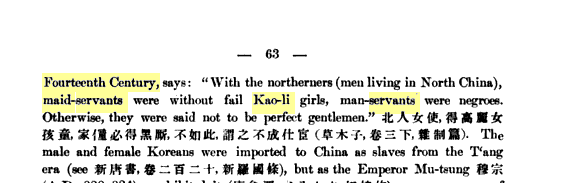
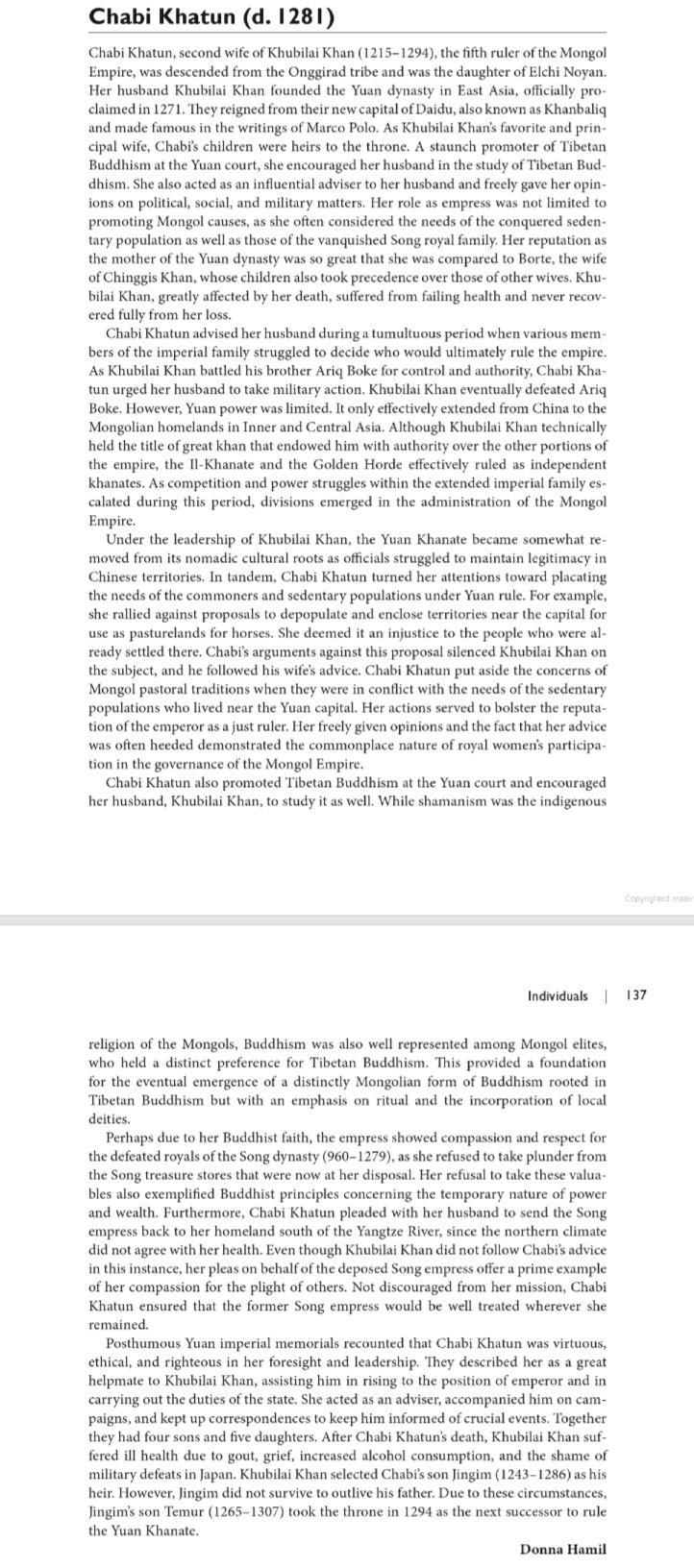 "chabi khatun advised her husband during a tumultuous period when various members of the imperial family"
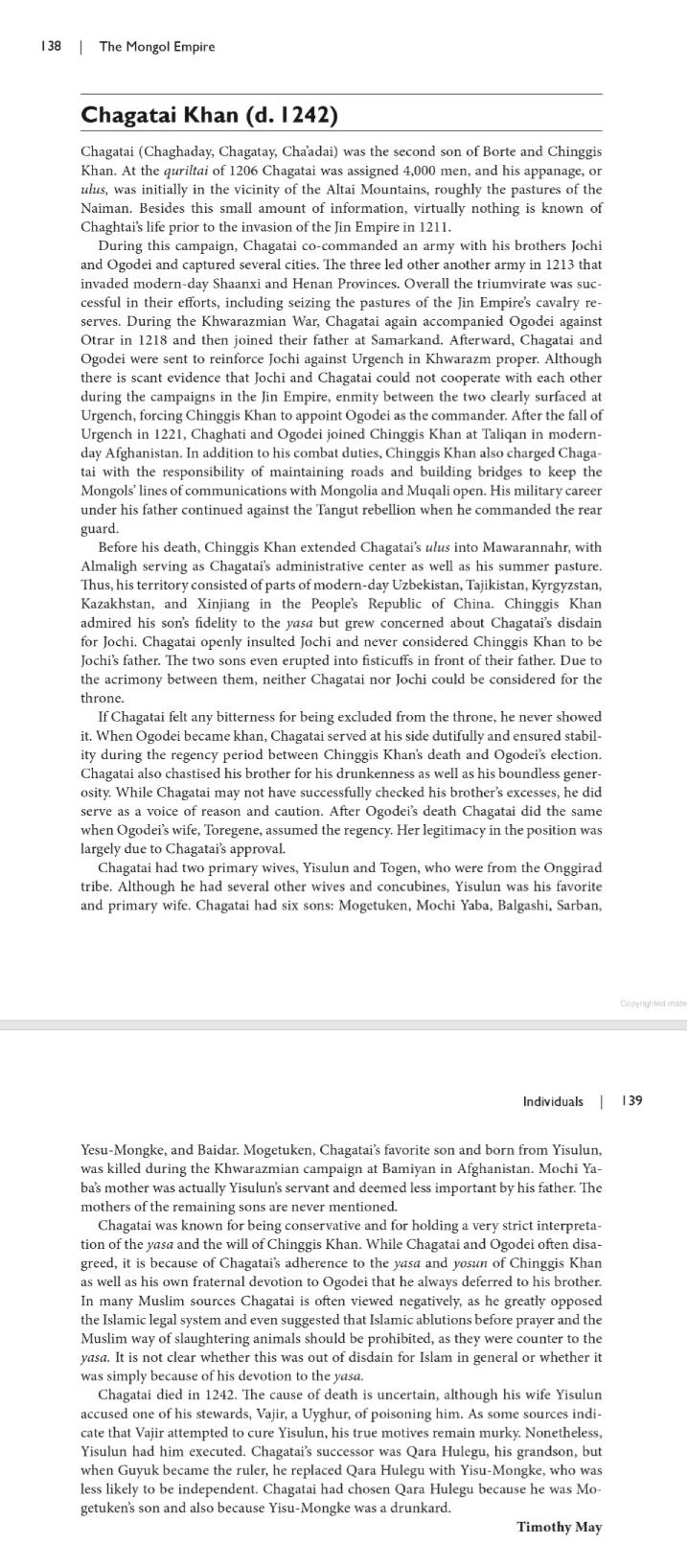 "In many Muslim sources Chagatai is often viewed negatively, as he greatly opposed the Islamic legal system and even suggested that Islamic ablutions before prayer and the Muslim way of slaughtering animals should be prohibited"
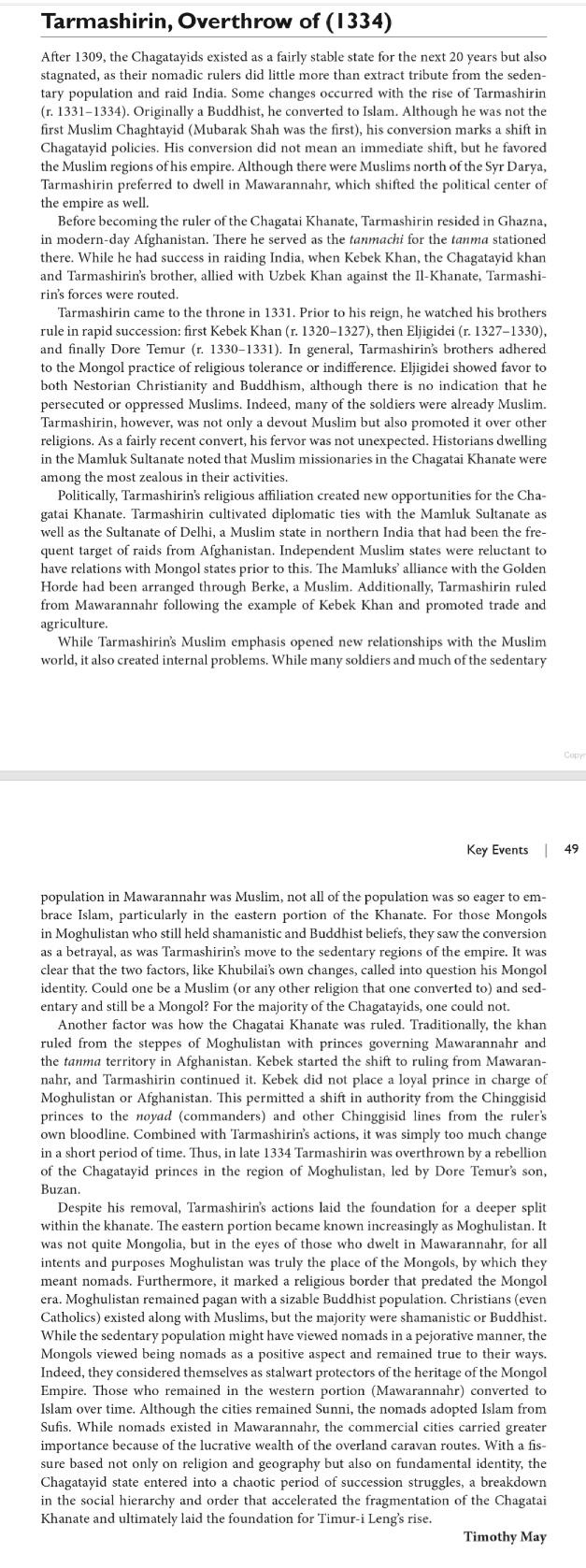 "the chagatayids existed as a fairly stable state for the next 20 years but also stagnated"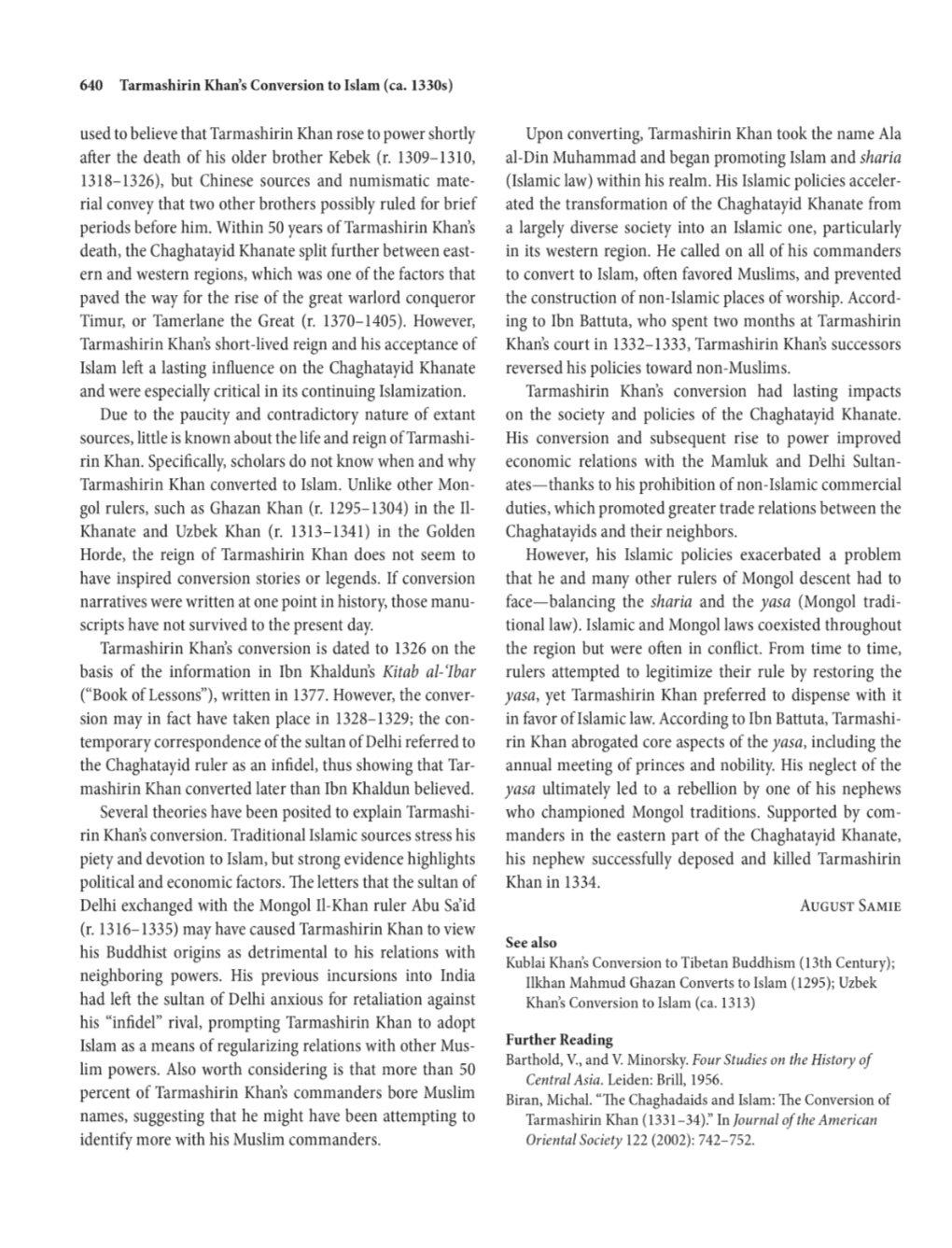
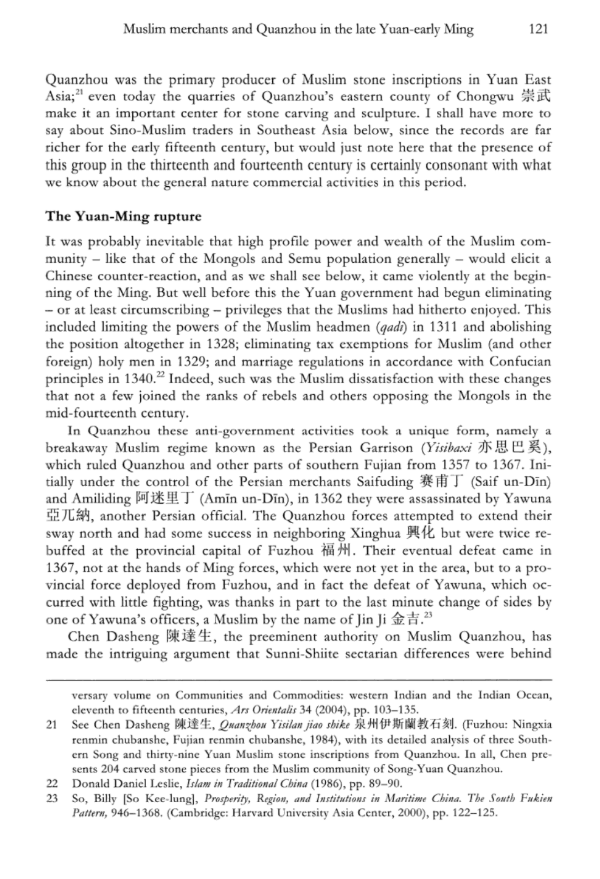 "Indeed, such was the Muslim dissatisfaction with these changes that not a few joined the ranks of rebels and others opposing the Mongols in the mid-fourteenth century."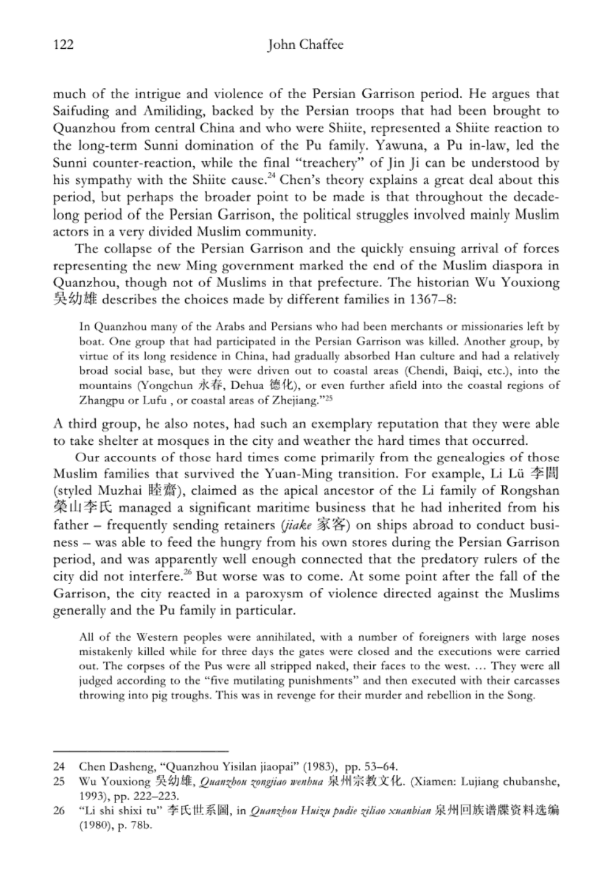
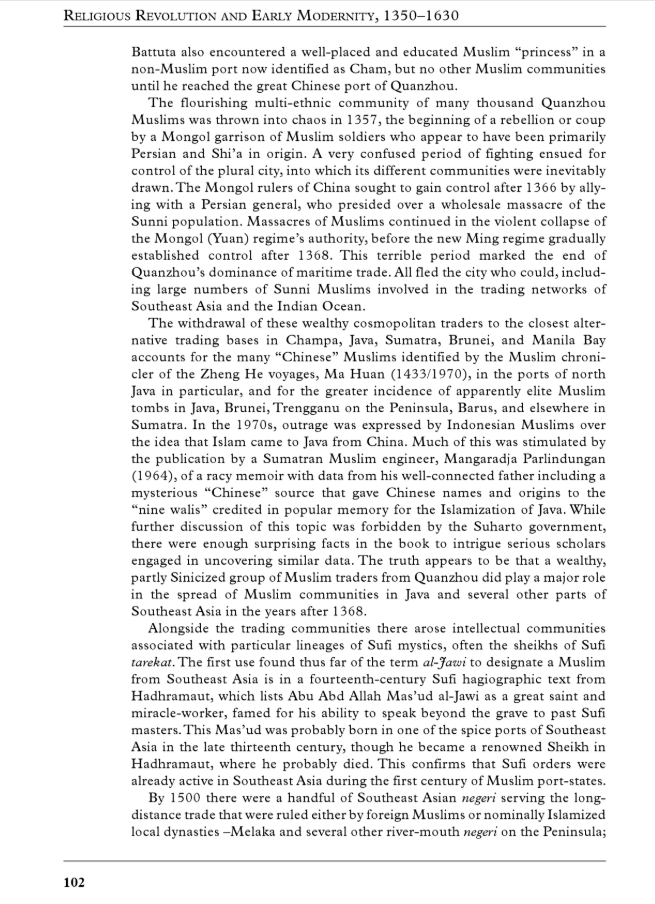 "Massacres of Muslims continued in the violent collapse of the Mongol (Yuan) regime's authority, before the new Ming regime gradually established control after 1368."
 And I don't need to provide a source for the later Chagatai Khans converted to Islam since that is known. The Yuan and Chagatai switched positions from the beginnings. At the end of the Yuan they were relying on Han generals like Chen Youding to uphold their rule after turning on the Semu. But the Chagatai were more successful in their shift unlike the Yuan, the Chagatai Mongol rulers completely melded their identity with their Turkic Muslim subjects after conversion.
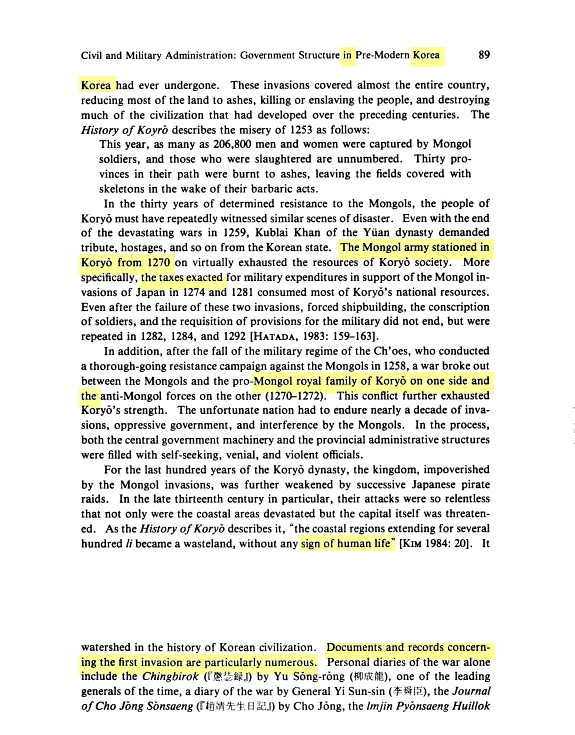
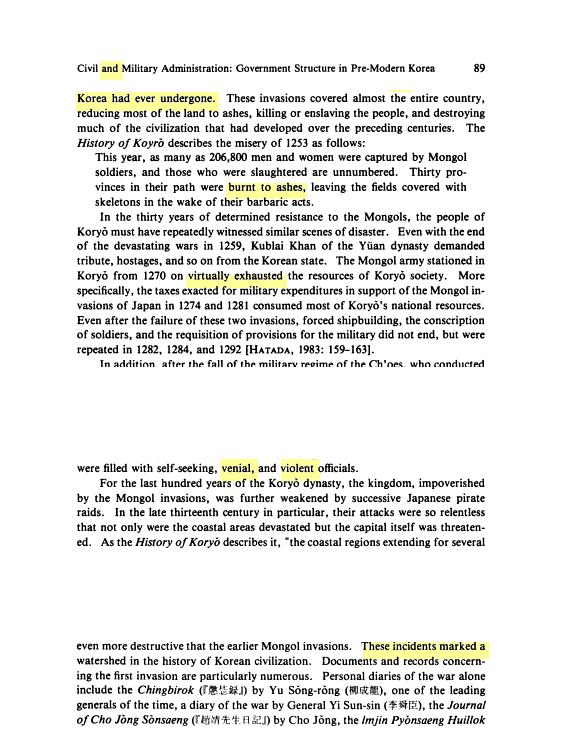
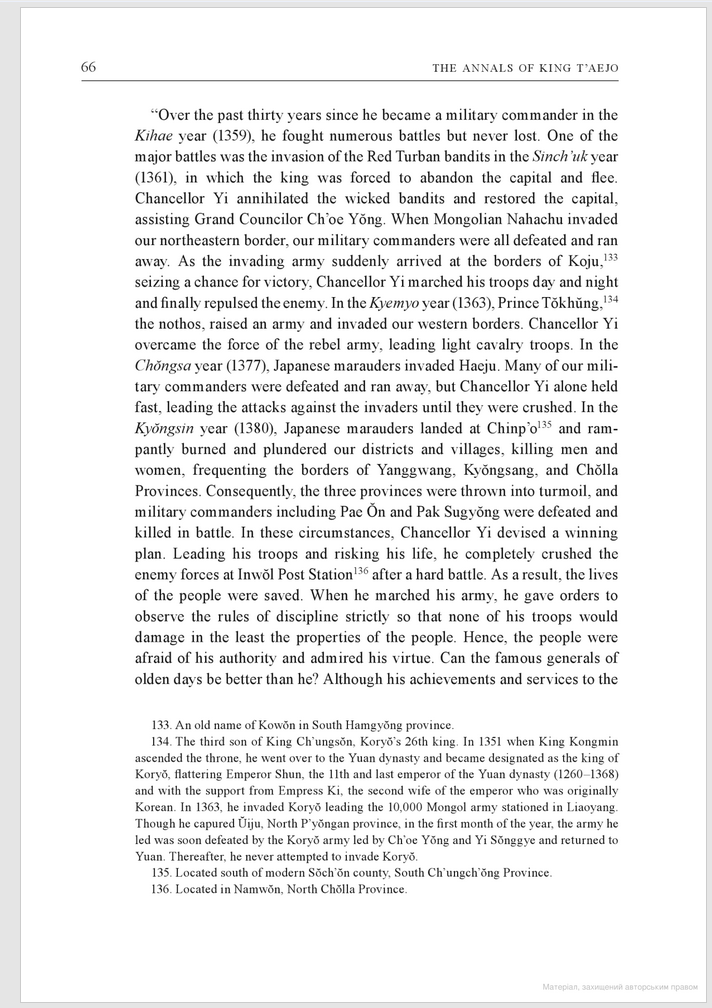
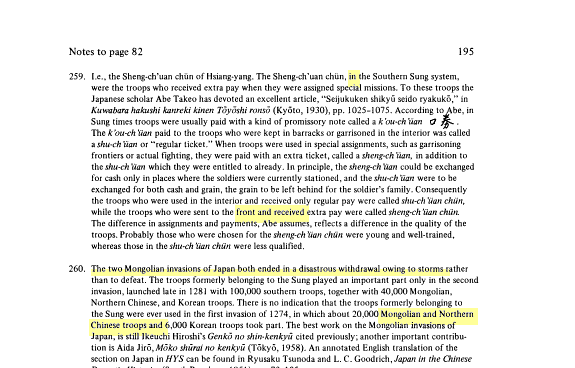
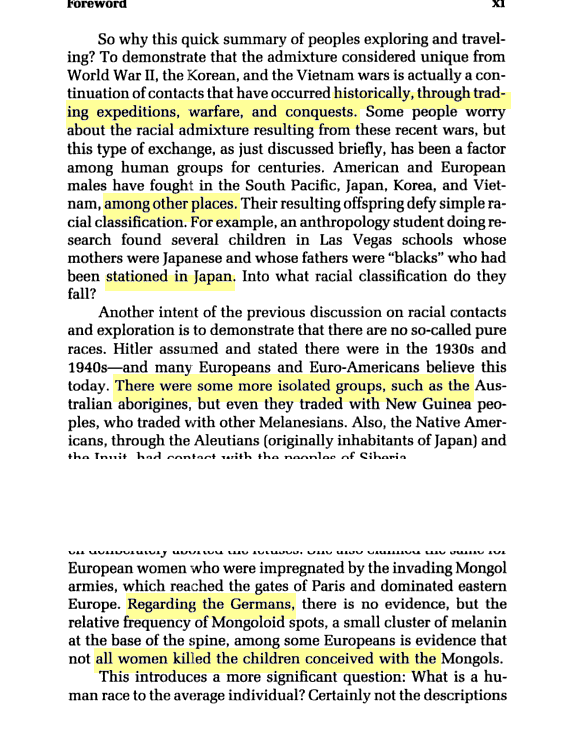
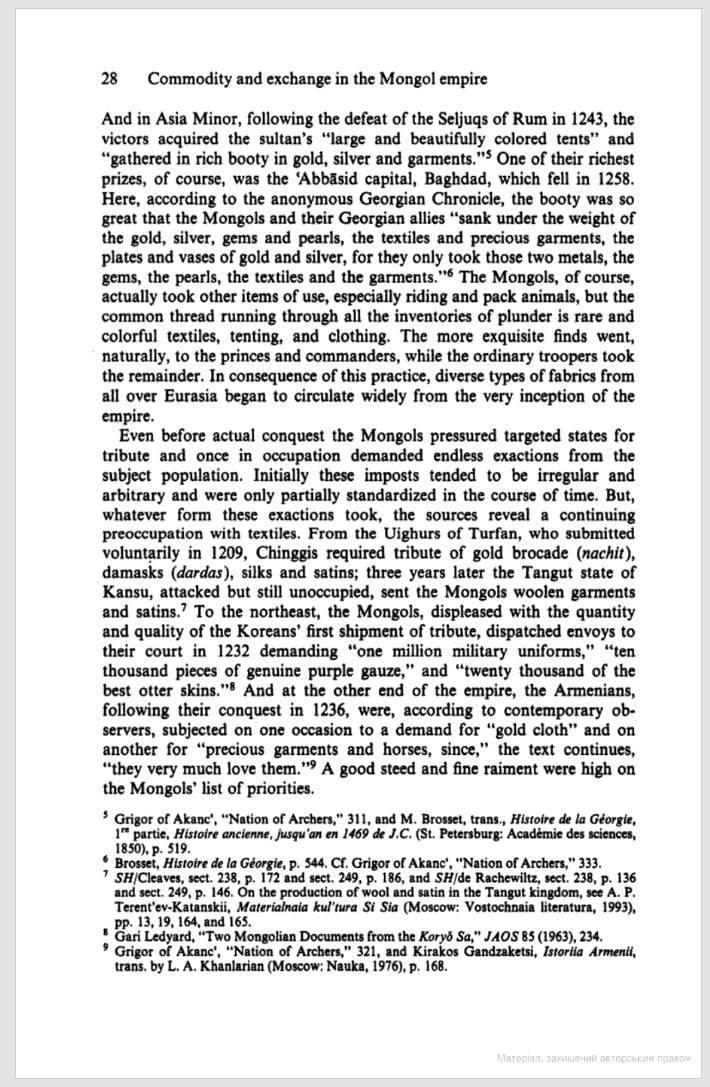










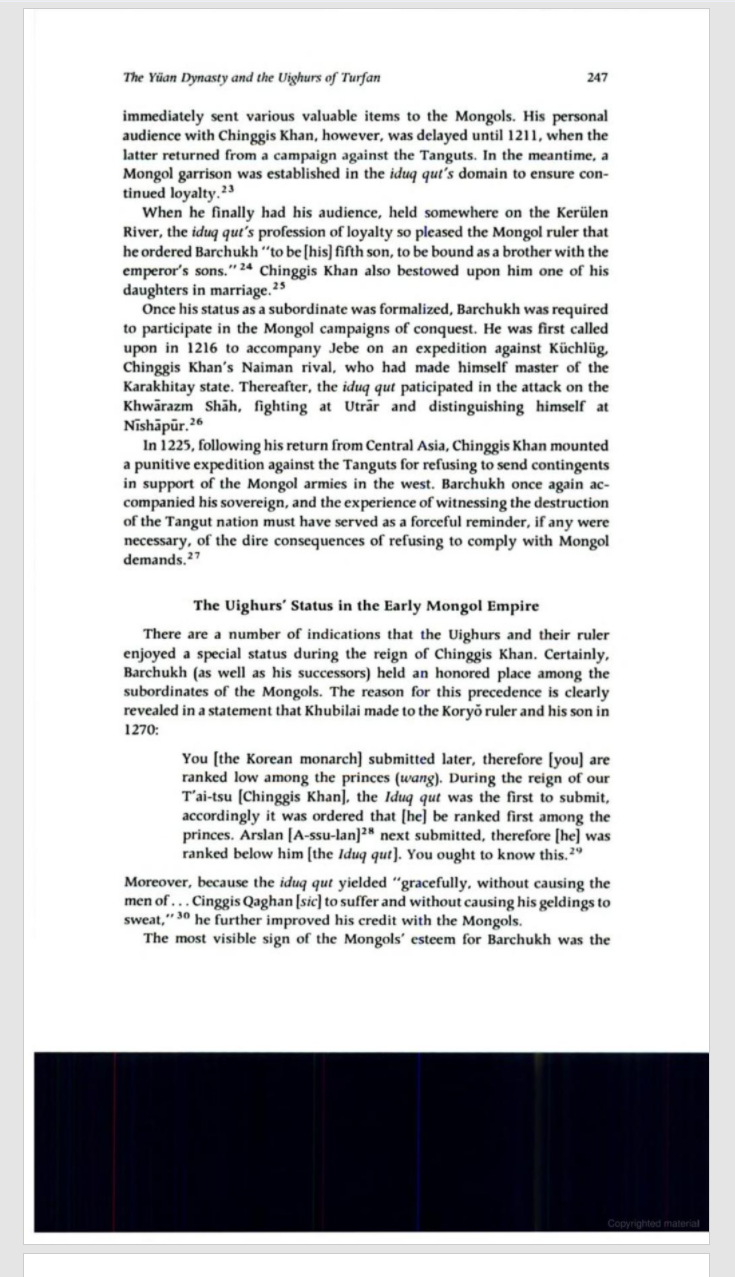
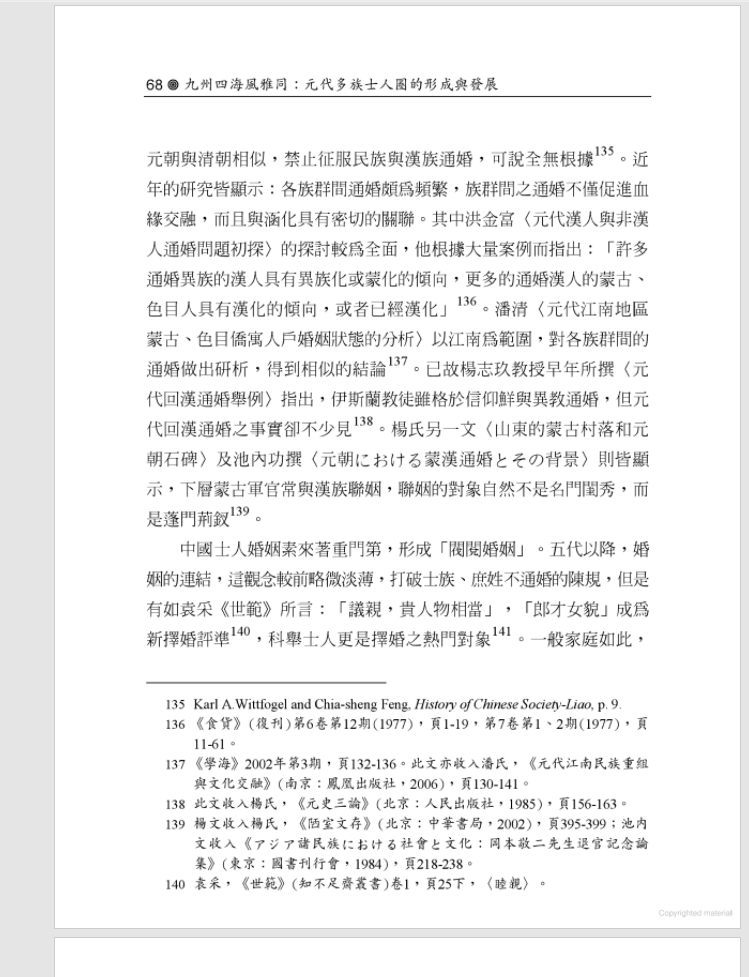




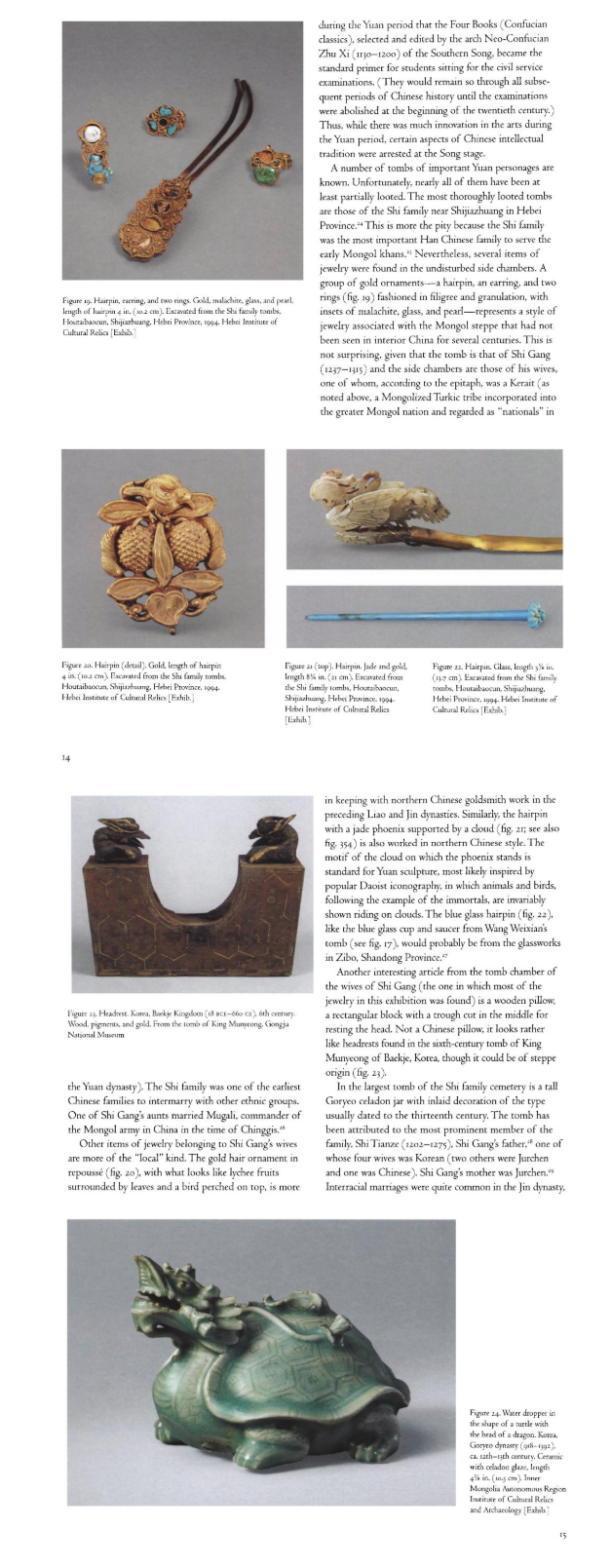 shi gang side chambers wives kerait mongolized turkic tribe mongol nation nationals
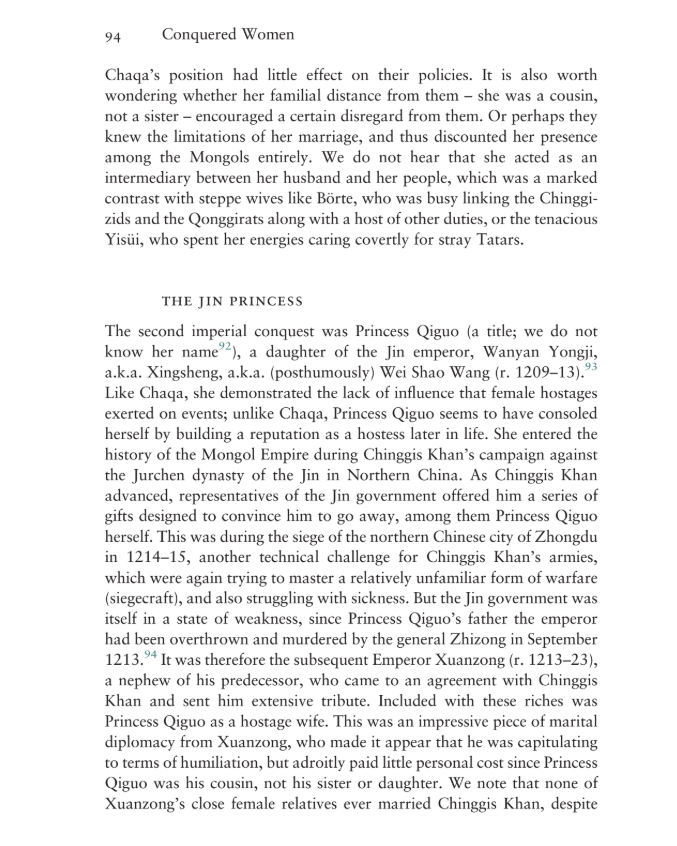 "the second imperial conquest was princess qiguo (a title"
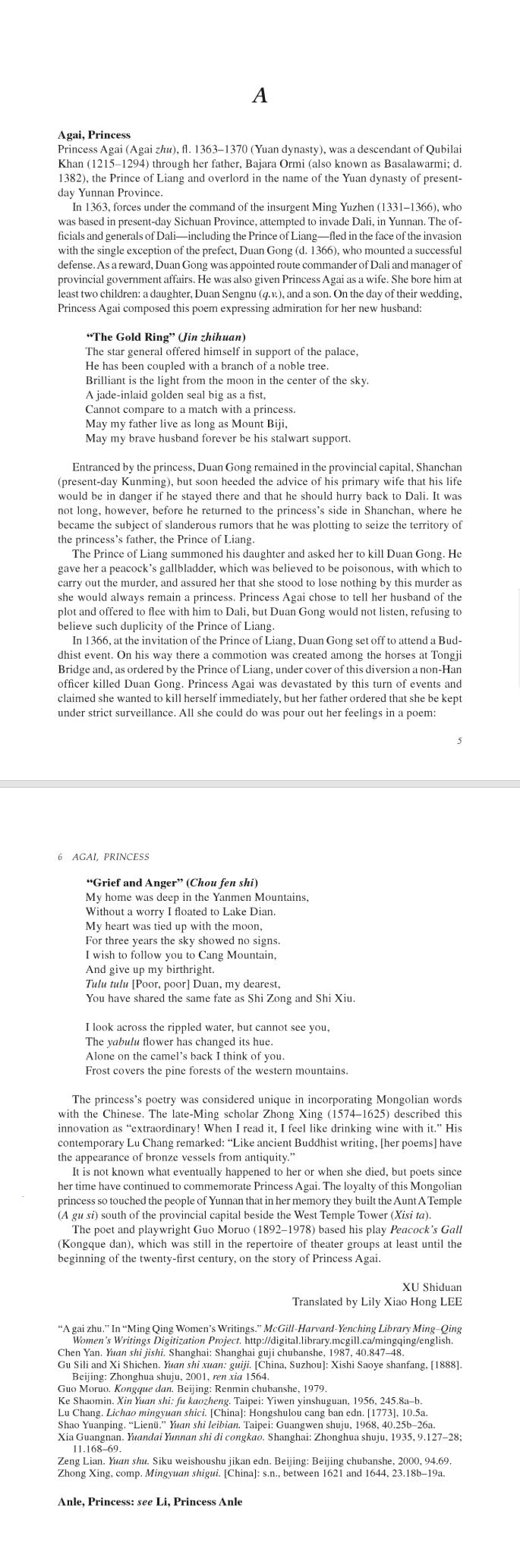
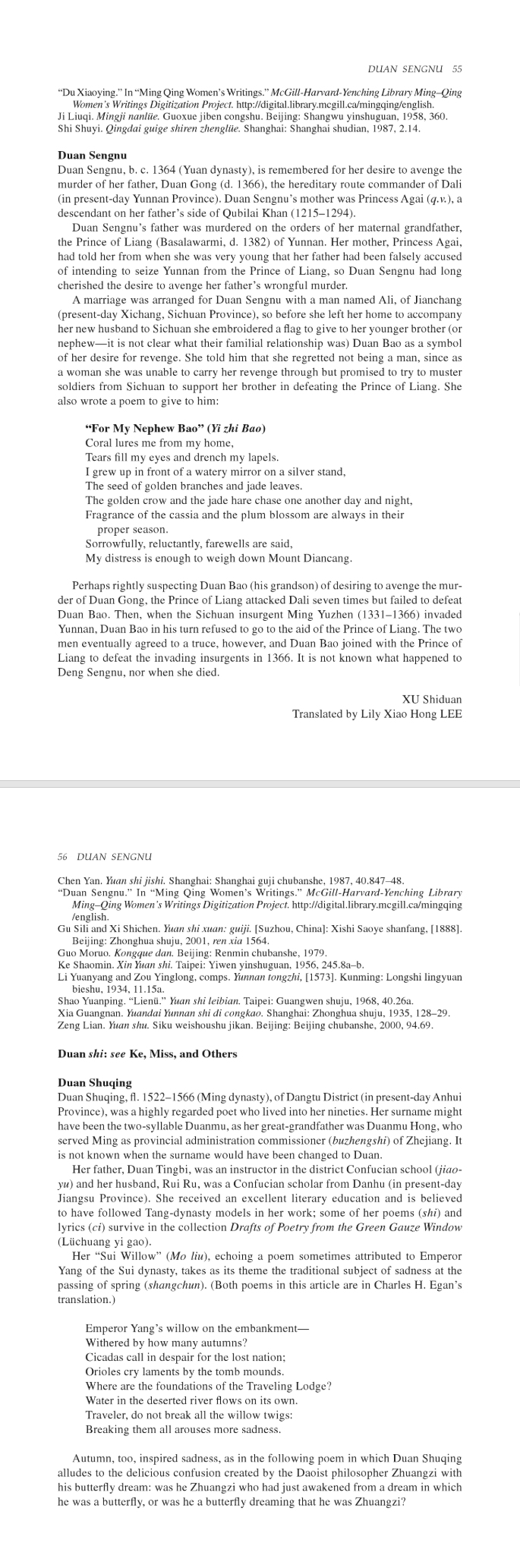
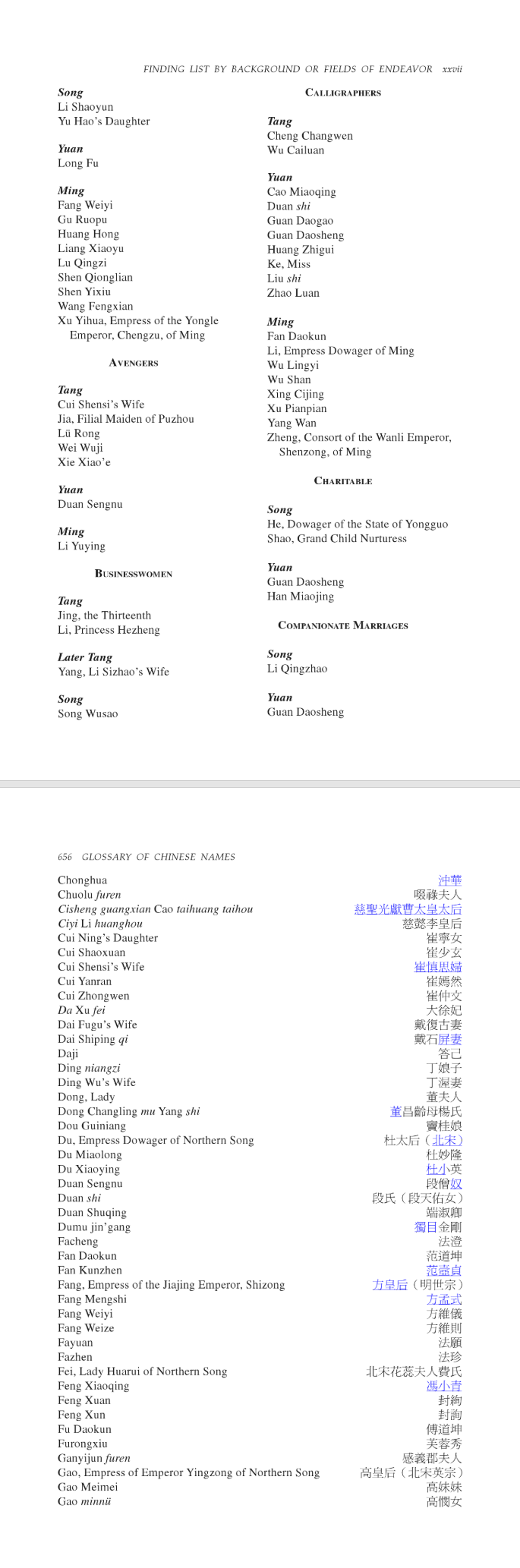
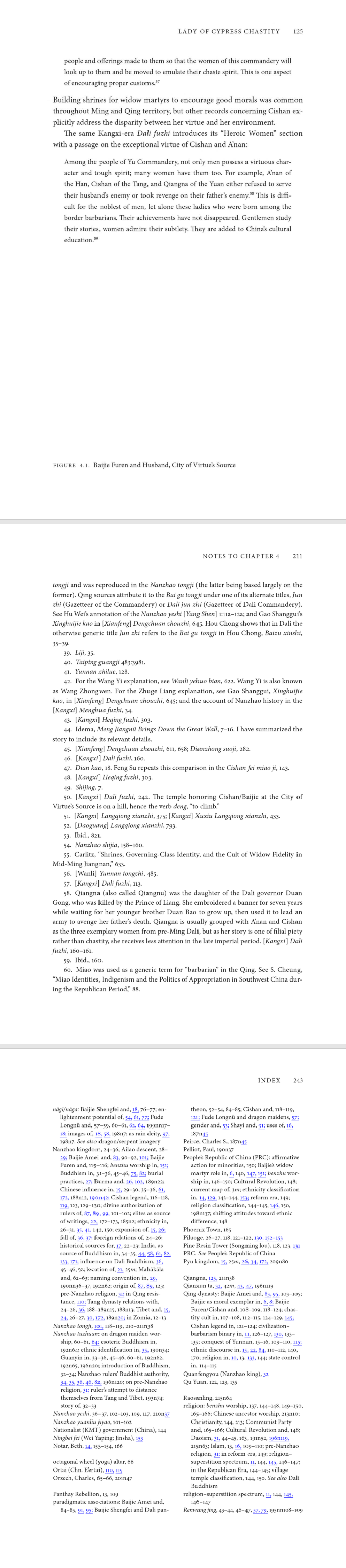
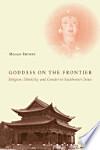


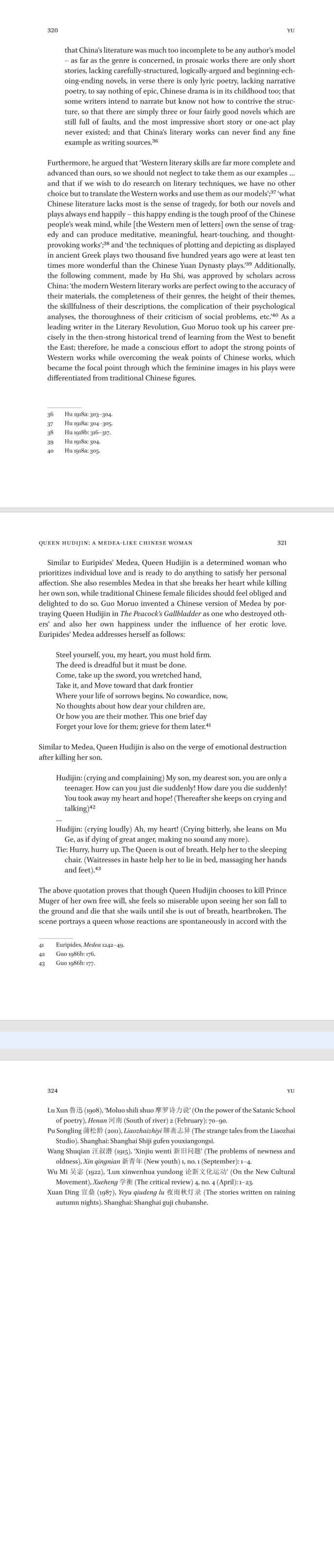
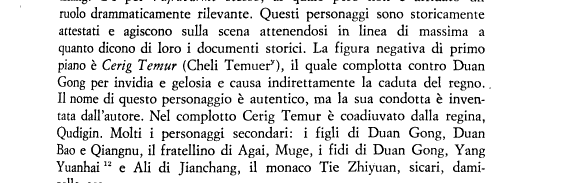 More on Duan Gong and Princess Agai in Italian.
 More in Italian on Duan Gong and Princess Agai.