
Can you tell me more about the author please?
ChatGPT said:
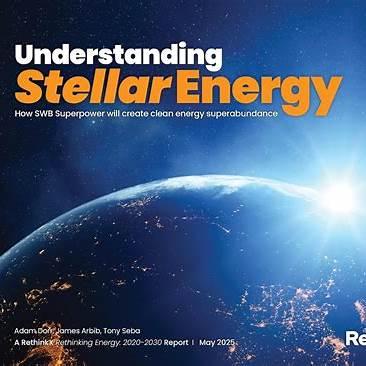
Stellar: A World Beyond Limits, and How to Get There is a 2025 publication by Tony Seba and James Arbib, co-founders of the independent think tank RethinkX. The book presents a comprehensive vision for transitioning from our current extractive systems to a future characterized by abundance, sustainability, and equity.
🌍 Overview of Stellar
Stellar delves into the foundational causes of global challenges such as inequality, environmental degradation, and conflict. The authors argue that these issues stem from entrenched extractive systems established during the agricultural revolution. They propose that by embracing emerging technologies—particularly in solar, wind, and battery (SWB) energy—we can shift towards a regenerative model that fosters superabundance.
The book emphasizes that with near-zero-cost clean energy, humanity can transform various sectors, including food production, transportation, and water management. This transformation could lead to a "Stellar World," where societal structures are reimagined to prioritize human flourishing and ecological balance.
A notable concept introduced is "radiance," referring to the positive, emergent outcomes resulting from the convergence of disruptive technologies. The authors caution against integrating these technologies into existing extractive frameworks, which could undermine their transformative potential. To guide this transition, Stellar outlines eight principles aimed at fostering a regenerative and equitable future.
👤 About Tony Seba
Tony Seba is a renowned thought leader, author, educator, and Silicon Valley entrepreneur. He is recognized for his expertise in technology disruption and its implications for energy, transportation, and societal structures.
Key Highlights:
-
Educational Background: Seba holds a Bachelor of Science in Computer Science and Engineering from the Massachusetts Institute of Technology (MIT) and an MBA from Stanford University.allamericanspeakers.com
-
Professional Experience: He has been involved with disruptive companies like Cisco Systems and RSA Data Security and has taught thousands of entrepreneurs and corporate leaders at Stanford Continuing Studies. https://www.rethinkx.com/team/tony-seba
-
Publications: Seba is the author of several influential books, including:
-
Clean Disruption of Energy and Transportation (2014)
-
Solar Trillions
-
Winners Take All
-
Rethinking Humanity (co-authored with James Arbib)
-
-
Framework Development: He developed the Seba Technology Disruption Framework™, which analyzes patterns of technological change and has been instrumental in forecasting industry disruptions.
https://www.allamericanspeakers.com/celebritytalentbios/Tony%2BSeba/445717 -
Speaking Engagements: Seba has delivered keynotes at global events and organizations, including Google, the European Commission, Davos, COP21, and the National Governors Association.
https://www.leadingauthorities.com/speakers/tony-seba
For more information on his work and initiatives, visit tonyseba.com or his profile at RethinkX.
https://www.rethinkx.com/team/tony-seba
📚 Further Reading and Resources
-
RethinkX Publications: Explore a range of reports and insights on technology-driven disruptions at rethinkx.com.
-
Book Review: An in-depth review of Stellar is available at
https://www.onlyelevenpercent.com/book-review-stellar-by-james-arbib-and-tony-seba/
🧭 Summary
Stellar offers a visionary roadmap for transitioning to a future where technology serves as a catalyst for societal and ecological regeneration. Tony Seba's extensive background in technology disruption and his collaborative work with James Arbib provide a compelling case for reimagining our world beyond the constraints of current systems.
You said:
What ideas, proposals, does Tony Seba pitch, how realistic are they and what could be done to realise them?
ChatGPT said:
Tony Seba and James Arbib's Stellar: A World Beyond Limits, and How to Get There presents a visionary roadmap for transitioning from our current extractive systems to a future characterized by abundance, sustainability, and equity. Drawing from historical analysis and technological forecasting, the authors propose that emerging technologies—particularly in solar, wind, and battery (SWB) energy—can catalyze a shift towards a regenerative model that fosters superabundance.
🌟 Core Concepts and Proposals
1. Extractive Systems as the Root Cause
The authors argue that many of today's global challenges—inequality, environmental degradation, and conflict—stem from entrenched extractive systems established during the agricultural revolution. These systems prioritize resource extraction and have shaped societal structures and mindsets over millennia.
2. Stellar Technologies and Superabundance
Central to their thesis is the concept of "stellar technologies," which include solar, wind, and battery energy systems. The authors posit that these technologies can provide near-zero-cost clean energy, leading to "radiance"—a state of superabundance where energy is so plentiful that it enables transformative changes across various sectors, including food production, transportation, and water management.
3. Systems Thinking and Integration
The book emphasizes the importance of systems thinking, cautioning against integrating new technologies into existing extractive frameworks. Such integration could undermine their transformative potential. Instead, the authors advocate for reimagining societal structures to prioritize human flourishing and ecological balance. https://www.linkedin.com/pulse/book-review-stellar-james-arbib-tony-seba-dr-steven-fawkes-gaw7e
4. Guiding Principles for Transition
To guide this transition, Stellar outlines eight principles aimed at fostering a regenerative and equitable future. These principles serve as a framework for policymakers, innovators, and communities to navigate the complexities of systemic change.
🔍 Critical Assessment
Strengths:
-
Holistic Vision: The book offers a comprehensive perspective, linking technological advancements to societal transformation.
-
Emphasis on Systems Thinking: By highlighting the interconnectedness of various sectors, the authors underscore the need for integrated solutions.
-
Actionable Framework: The eight guiding principles provide a practical roadmap for stakeholders to engage with the proposed transition. https://www.onlyelevenpercent.com/
Limitations:
-
Technological Optimism: The authors' confidence in the rapid deployment and scalability of stellar technologies may overlook potential challenges, such as infrastructural constraints and geopolitical dynamics.
-
Societal Adaptation: While the book addresses systemic change, it may underemphasize the complexities of shifting societal mindsets and behaviors entrenched over centuries.
🛠️ Pathways to Realization
To actualize the vision presented in Stellar, several strategies can be pursued:
-
Policy Reform: Governments can implement policies that incentivize the adoption of clean energy technologies and discourage extractive practices.
-
Investment in Research and Development: Allocating resources to innovate and improve the efficiency and accessibility of stellar technologies is crucial.
-
Educational Initiatives: Promoting systems thinking and sustainability in educational curricula can foster a generation equipped to navigate and lead the transition.
-
Community Engagement: Grassroots movements and community-led projects can demonstrate the feasibility and benefits of regenerative systems on a local scale.
📚 Further Exploration
For those interested in delving deeper into the concepts discussed in Stellar, the following resources may be valuable:
-
RethinkX Publications: https://www.rethinkx.com/publications/stellar
-
Book Review by Dr. Steven Fawkes: https://www.onlyelevenpercent.com/book-review-stellar-by-james-arbib-and-tony-seba/
-
Tony Seba's Presentation on Super Abundant Utopia:
https://opentools.ai/youtube-summary/exclusive-tony-seba-predicts-super-abundant-utopia
🧭 Conclusion
Stellar presents an ambitious yet thought-provoking blueprint for a future where technology and humanity coalesce to create a world of abundance and equity. While the path to such a future is fraught with challenges, the book serves as a catalyst for dialogue and action, urging readers to reconsider the foundations of our societal structures and envision transformative possibilities.
You said:
ChatGPT said:
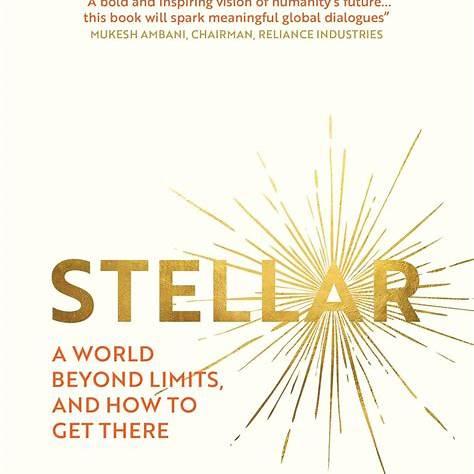
In their book Stellar: A World Beyond Limits, and How to Get There, Tony Seba and James Arbib outline eight guiding principles designed to facilitate the transition from our current extractive systems to a regenerative and equitable future. These principles serve as a framework for reimagining societal structures in the context of emerging technologies and the potential for superabundant clean energy.
🌱 The Eight Guiding Principles of a Stellar Future
While the book does not list these principles in a numbered format, they can be distilled from the overarching themes and proposals presented throughout the text:
-
Embrace Systems Thinking
Recognize the interconnectedness of various sectors and the importance of holistic approaches to problem-solving. -
Prioritize Regenerative Models
Shift from extractive practices to regenerative ones that restore and enhance ecological and social systems. -
Leverage Technological Convergence
Utilize the convergence of technologies—such as solar, wind, and battery (SWB) systems—to create superabundant clean energy. -
Redefine Ownership and Access
Rethink traditional notions of ownership to promote equitable access to resources and opportunities. -
Foster Open Collaboration
Encourage open-source principles and collaborative efforts to accelerate innovation and dissemination of solutions. -
Design for Emergence
Create conditions that allow for emergent outcomes, where the whole becomes greater than the sum of its parts. -
Align Incentives with Desired Outcomes
Structure economic and policy incentives to support regenerative practices and discourage extractive behaviors. -
Cultivate a Stellar Mindset
Adopt a mindset that embraces abundance, adaptability, and the potential for transformative change.
🔍 Realism and Implementation
The principles outlined in Stellar are ambitious and envision a profound transformation of societal systems. Their realization depends on several factors:
-
Technological Feasibility: The rapid advancement and decreasing costs of SWB technologies make the technical aspects of this vision increasingly attainable.
-
Policy and Governance: Implementing these principles requires supportive policies and governance structures that can adapt to and guide systemic change.RenewEconomy
-
Cultural Shift: A widespread cultural shift towards valuing regeneration, collaboration, and systems thinking is essential for the adoption of these principles.
-
Economic Restructuring: Transitioning to regenerative models necessitates rethinking economic systems to align incentives with sustainable and equitable outcomes.
🛠️ Steps Toward Realization
To move towards the vision presented in Stellar, the following actions can be considered:
-
Education and Awareness: Promote systems thinking and regenerative principles through education and public discourse.
-
Policy Innovation: Develop and implement policies that support clean energy adoption, equitable resource distribution, and regenerative practices.
-
Community Engagement: Foster community-led initiatives that embody the principles of regeneration and collaboration.
-
Investment in Innovation: Support research and development of technologies and models that align with the Stellar vision.
📚 Further Reading and Resources
-
Stellar World Website: https://stellarworld.com/
-
RethinkX Publications: https://www.rethinkx.com/publications/stellar
-
Book Review by Dr. Steven Fawkes:
https://www.onlyelevenpercent.com/book-review-stellar-by-james-arbib-and-tony-seba/ -
Tony Seba's Presentation on Super Abundant Utopia:
[Tony Seba Just Revealed Tesla’s Real Future]YouTube
🧭 Conclusion
The eight guiding principles from Stellar offer a comprehensive framework for transitioning to a regenerative and equitable future. While the path to realizing this vision is complex and multifaceted, the convergence of technological advancements, policy innovation, and cultural shifts provides a fertile ground for transformative change.
You said:
ChatGPT said:
Tony Seba has not published articles in peer-reviewed academic journals in the past five years. His work primarily appears in books, reports, and articles aimed at a general audience.
Seba is best known for his books, including Clean Disruption of Energy and Transportation (2014), Rethinking Humanity (2020), and Stellar: A World Beyond Limits, and How to Get There (2025). These works present his analyses and forecasts on technology-driven disruptions across various sectors.Leading Authorities
He is also a co-founder of RethinkX, an independent think tank that publishes research reports on technological disruptions. Notable publications include Rethinking Transportation 2020–2030, Rethinking Food and Agriculture 2020–2030, and Rethinking Energy 2020–2030. These reports are available on the RethinkX website: https://www.rethinkx.com/
While Seba's work is influential in discussions about technological disruption, it is not typically found in academic journals. Instead, his insights are disseminated through books, think tank reports, and public speaking engagements.
You said:
Is there any peculiar affiliation to mention in regards to the background of the public speaking engagements on which Tony Seba spoke?
ChatGPT said:
Tony Seba's work on technology-driven disruption has been cited by various think tanks and organizations, reflecting a range of affiliations and perspectives.
🧠 Think Tanks and Organizations Citing Tony Seba's Work
-
RethinkX
Co-founded by Tony Seba and James Arbib, RethinkX is an independent think tank that analyzes and forecasts the speed and scale of technology-driven disruption and its implications across society. Their reports, such as Rethinking Transportation 2020–2030, Rethinking Food and Agriculture 2020–2030, and Rethinking Humanity, build upon Seba's frameworks and insights. -
Farm Progress
In an article discussing RethinkX's predictions on the disruption of the agriculture sector, Farm Progress references Seba's work, highlighting the economic drivers behind the anticipated changes in protein production. -
Mary Ann Liebert, Inc.
The publication Industrial Biotechnology featured a discussion on RethinkX's report Rethinking Food and Agriculture 2020–2030, which Seba co-authored. The report's insights into precision fermentation and cellular agriculture are noted for their potential to transform the food industry.
🎤 Public Speaking Engagements and Affiliations
Tony Seba has delivered keynote speeches at numerous global events and organizations, often associated with innovation, sustainability, and economic development. Notable engagements include:executivespeakers.com
-
World Economic Forum (Davos)
An international organization for public-private cooperation, bringing together political, business, and other leaders to shape global agendas. -
COP21 World Climate Summit
A pivotal conference under the United Nations Framework Convention on Climate Change (UNFCCC), where the Paris Agreement was adopted. https://www.a-speakers.com/speakers/tony-seba/ -
European Commission
The executive branch of the European Union, responsible for proposing legislation and implementing decisions. -
Google, J.P. Morgan, CLSA, Nomura
Major corporations and financial institutions with interests in technological innovation and market forecasting. -
National Governors Association
A bipartisan organization of U.S. state governors that shares best practices and addresses issues of public policy.
These engagements suggest that Seba's insights are sought after by a diverse array of institutions, spanning governmental bodies, financial entities, and technology firms.
🧭 Summary
Tony Seba's work has been referenced by various think tanks and organizations, reflecting a spectrum of affiliations and interests. His public speaking engagements further indicate a broad appeal across sectors concerned with innovation, sustainability, and economic transformation.
You said:
Can you tell more about ties or particular interest of specific companies or industries in the ideas of
ChatGPT said:

Tony Seba, through his work with RethinkX, envisions a transformative shift in food production driven by Precision Fermentation (PF) and Cellular Agriculture (CA). These technologies aim to produce proteins and other food components more efficiently and sustainably than traditional methods.
https://www.rethinkx.com/food-and-agriculture
🍽️ Tony Seba’s Perspective on Food Production
1. Precision Fermentation and Cellular Agriculture
Seba advocates for PF and CA as disruptive technologies that can produce a wide array of food products without relying on traditional animal farming. PF involves programming microorganisms to produce specific proteins, fats, and other molecules, while CA focuses on cultivating animal cells directly to create meat products. https://www.rethinkx.com/food-and-agriculture
2. Food-as-Software Model
Seba introduces the concept of "Food-as-Software," where food production becomes a programmable process. In this model, scientists can design food at the molecular level, leading to rapid innovation and customization. https://www.rethinkx.com/food-and-agriculture/in-depth/food-as-software
3. Economic and Environmental Implications
According to RethinkX, PF and CA could make protein production five times cheaper than existing animal proteins by 2030 and ten times cheaper by 2035. This shift could free up to 80% of agricultural land, offering opportunities for reforestation and carbon sequestration. https://www.rethinkx.com/food-and-agriculture
🧬 Genetically Modified Organisms (GMOs)
Seba clarifies that while PF utilizes genetically engineered microorganisms to produce desired compounds, the end products themselves do not contain genetic material and are not considered GMOs. This distinction is crucial for public perception and regulatory considerations. https://www.rethinkx.com/food-and-agriculture
🐛 Alternative Protein Sources
While Seba focuses on PF and CA, he does not specifically advocate for or against alternative protein sources like insects or 3D-printed foods. His emphasis remains on technologies that can scale efficiently and sustainably to meet global food demands. https://www.rethinkx.com/food-and-agriculture
🏢 Industry Engagement and Interests
Seba's ideas have garnered attention from various sectors:
-
Startups and Innovators: Companies like Perfect Day and Geltor are exploring PF to create dairy and collagen products without animals.
-
Investors: Venture capital firms are investing in PF and CA startups, recognizing their potential to disrupt traditional food industries.https://www.rethinkx.com/food-and-agriculture
-
Policy Makers: Governments are examining the implications of these technologies for food security, environmental policy, and economic development.
🔗 Further Reading
-
RethinkX Food & Agriculture: https://www.rethinkx.com/food-and-agriculture
-
Food-as-Software Concept: https://www.rethinkx.com/food-and-agriculture/in-depth/food-as-software
Summary
Tony Seba envisions a future where food production is revolutionized through Precision Fermentation and Cellular Agriculture, leading to more sustainable, efficient, and customizable food systems. While he does not focus on alternative proteins like insects or 3D-printed foods, his emphasis on scalable and programmable food technologies has attracted interest from startups, investors, and policymakers aiming to transform the global food landscape. https://www.rethinkx.com/food-and-agriculture
If you would like more detailed information on specific aspects of this transformation, feel free to ask.
You said:
ChatGPT said:
That's a rich and important line of inquiry. Let’s break it down into sections:
🌾 1. Is the Issue Food Production Shortfall or Fair Distribution?
Mainstream view vs systemic reality:
-
The mainstream narrative often claims we need to produce “more food” to feed a growing population.
-
Yet multiple global studies (FAO, IPCC) have confirmed that the world already produces more than enough calories to feed everyone — even when accounting for expected population growth.
The actual problem lies in:
-
Distribution inequities: Food is unevenly distributed due to economic inequality, trade policies, and food speculation.
-
Waste: Roughly one-third of food produced globally is wasted (at both consumer and supply chain levels).
-
Access & affordability: People starve not because food is unavailable, but because they cannot afford it or access it.
🔎 Conclusion:
The food crisis is not primarily about production, but about systems of distribution, economic justice, and land access.
🌐 2. Tony Seba’s Vision: A Production-Focused Techno-Optimism
In Rethinking Food and Agriculture (2020) and Stellar (2025), Seba and Arbib advocate for:
-
Precision fermentation and cellular agriculture as a disruptive replacement for animal farming and traditional agriculture.
-
A “Food-as-Software” paradigm: food is designed on a molecular level, downloaded as code, and manufactured locally in bioreactors.
-
An industrial efficiency model: less land, less water, fewer emissions, lower costs. A super-efficient, decarbonised food supply chain.
Assumptions behind this model:
-
Global hunger and ecological damage are mostly technology solvable problems.
-
Once food becomes cheap and abundant, scarcity and inequality will be eliminated as a by-product.
But here's where critiques and limits surface.
🍃 3. How This Meets or Diverts From Permaculture
Let’s compare key dimensions:
| Dimension | Tony Seba / RethinkX | Permaculture |
|---|---|---|
| Goal | Efficient, clean, scalable food systems | Resilient, regenerative, place-based systems |
| Method | Biotech labs, code-driven food design, high-tech fermentation | Low-energy, nature-mimicking design (polycultures, food forests, etc.) |
| Energy Source | Solar + automation + global logistics | Local cycling of energy, water, nutrients |
| Distribution | Tech-enabled abundance = automatic equity | Requires redesign of socio-political systems and cultural values |
| Cultural view of food | Food is programmable, standardised, decoupled from nature | Food is relational, ecological, embedded in place and culture |
| View on animals | Remove animals from the food chain | Re-integrate animals into landscapes holistically (Holistic Management) |
Philosophical divergence:
-
Seba’s model is reductionist and techno-optimistic. It aims to fix the food system by replacing it with something smarter and cleaner, often detached from ecosystems.
-
Permaculture is relational and design-based. It sees food as an output of healthy systems, not something to be engineered apart from them.
🧭 Where They Might Meet
Some overlap or hybrid potential exists:
-
Distributed food manufacturing could allow local communities to supplement their diets with clean protein, freeing land for rewilding or agroecology.
-
Solar and battery-powered tools could make small-scale regenerative farming less labor-intensive.
-
Disrupting industrial meat through fermentation might reduce animal suffering and free up land, aligning with permaculture’s ethics (Earth care, People care, Fair share).
But the key difference remains: permaculture centers relationship and place; Seba centers efficiency and scalability.
📌 Summary
-
The world doesn't suffer a food shortage—it suffers from unjust distribution, waste, and structural inequality.
-
Tony Seba’s work addresses ecological overshoot and inefficiency through high-tech food production, but leaves questions about land rights, cultural sovereignty, and relational ecology.
-
Permaculture offers a decentralized, low-energy, cultural transformation of food systems that centers care, observation, and place.
-
There is room for synergy—but only if technology is used in service of ethics, not to bypass them.
You said:
ChatGPT said:
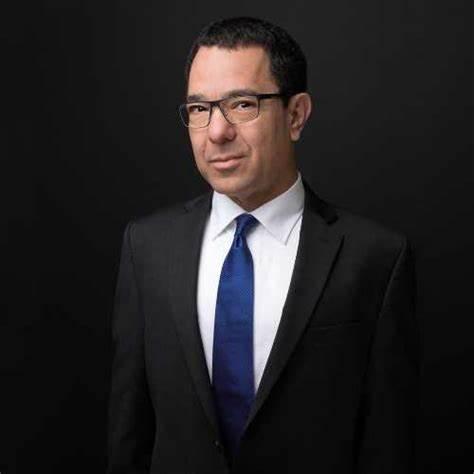
Techno-optimist futurist promoting disruption through scalable clean innovation.
Social media announcement:
🚀 Tony Seba envisions a future powered by tech disruption: lab-grown food, energy superabundance, and efficiency at scale. This path contrasts with the regenerative, relational approach of permaculture.
👉 https://justpaste.it/p2n-o-ts
#TonySeba #Permaculture #TechnoOptimism #PrecisionFermentation #CellularAgriculture #RegenerativeDesign #FoodAsSoftware #SystemsThinking #DisruptiveInnovation #NatureBasedSolutions
---
People To Know About