
A Midwife’s Journey: From Hands-on Care to Maternity Wards
- Exploring the Tradition and Transformation of Midwifery Before and Beyond Institutional Care -
By Catherine Forsayeth - April 2024
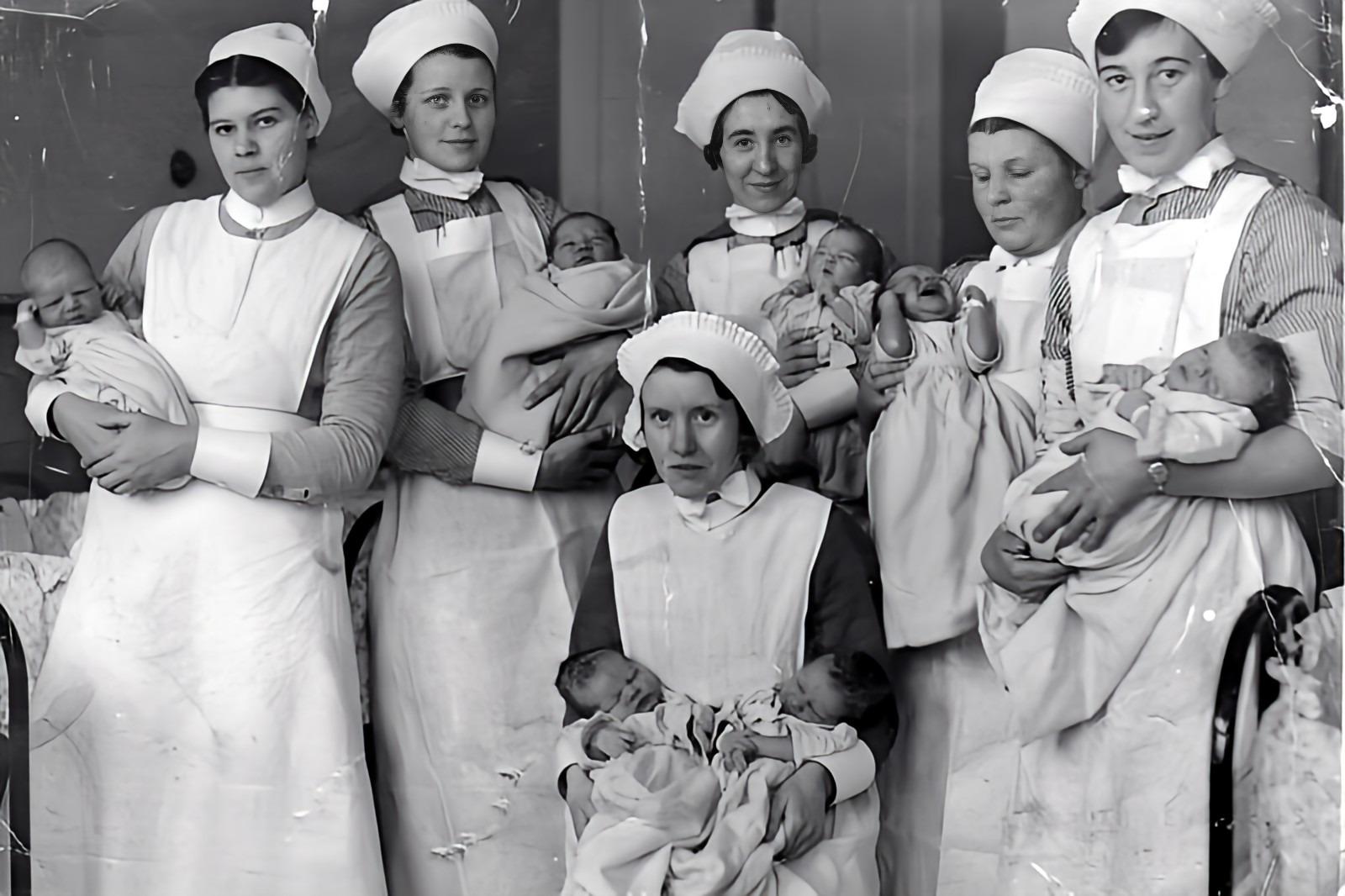
SUMMARY
The story submitted by Catherine Forsayeth recounts the fascinating life of her mother, Margaret Cannon, a district nurse and midwife in the UK during the early 1930s. Working before the NHS was established, her mother navigated a complex landscape of social challenges and medical needs. From delivering babies in impoverished tenements of Plymouth to handling unexpected situations on rural motorbike rides, her experiences showcase both the hardships and the moments of humor and humanity that characterized her career. The narrative is enriched with personal reflections and historical context, painting a compelling picture of resilience and dedication in early midwifery.
A Midwife’s Journey: From Hands-on Care to Maternity Wards
- Exploring the Tradition and Transformation of Midwifery Before and Beyond Institutional Care -
Early Life and Family Background
My mum, Margaret Cannon, who would later become Margaret Forsayeth upon her marriage, was a district nurse and midwife in the UK in the early 1930s up until she met my dad, who was a GP at the beginning of the war. Then, she set up her own natal factory producing 14 babies, 10 of whom lived. She was from a small town just north of Dublin called Ardee where her mother’s family, the Kerrs, thrived and multiplied. It’s jokingly called Kerrsville now! Although my granny’s family were very well off, it was a great stain on the family that my grandmother married a chauffeur/mechanic named John Cannon, and mum remembers her granny being a bit nasty and cold towards them. I saw a picture of her all in black bombazine, and she had no teeth, so her mouth was small and grim. I thought she looked mean and scary, but my cousin says she was nice! Who knows?
Early Work and Training
So they were poor because they were cut off from the family for years, and mum went to work in a button factory at the age of 13. By the time she was 17, it was arranged through family connections for mum to start her nursing training in England. So at 17, she packed her wee brown suitcase and sailed for Liverpool. She was probably both terrified and excited to be out of her situation and independent.
Nursing Training Experiences

She told me a lot about her life in nursing training and how strict and militaristic it was, how many rules they had to follow, and yet it seemed like quite a lot of fun albeit with punishing hours and hard physical work. She was very shy and socially awkward, especially being Irish in 1930s England where the Irish were as discriminated against and often socially persona non grata. She actually trained herself out of having a brogue (1) so that we never heard her speak with one.(1) She did remember some Gaelic though, like the Pater Noster, the Hail Mary, and a few naughty sayings like Póg mo thóin. She told me how they once tried to make caramel toffee in the autoclave—a mess and a failure. How they would get the premmies wrapped up, sometimes literally wrapped in cotton wool, and put in the airing linen cupboard because it was warm in there, but on a couple of occasions, they were forgotten until their little mewlings were heard. (2)
Life as a District Nurse
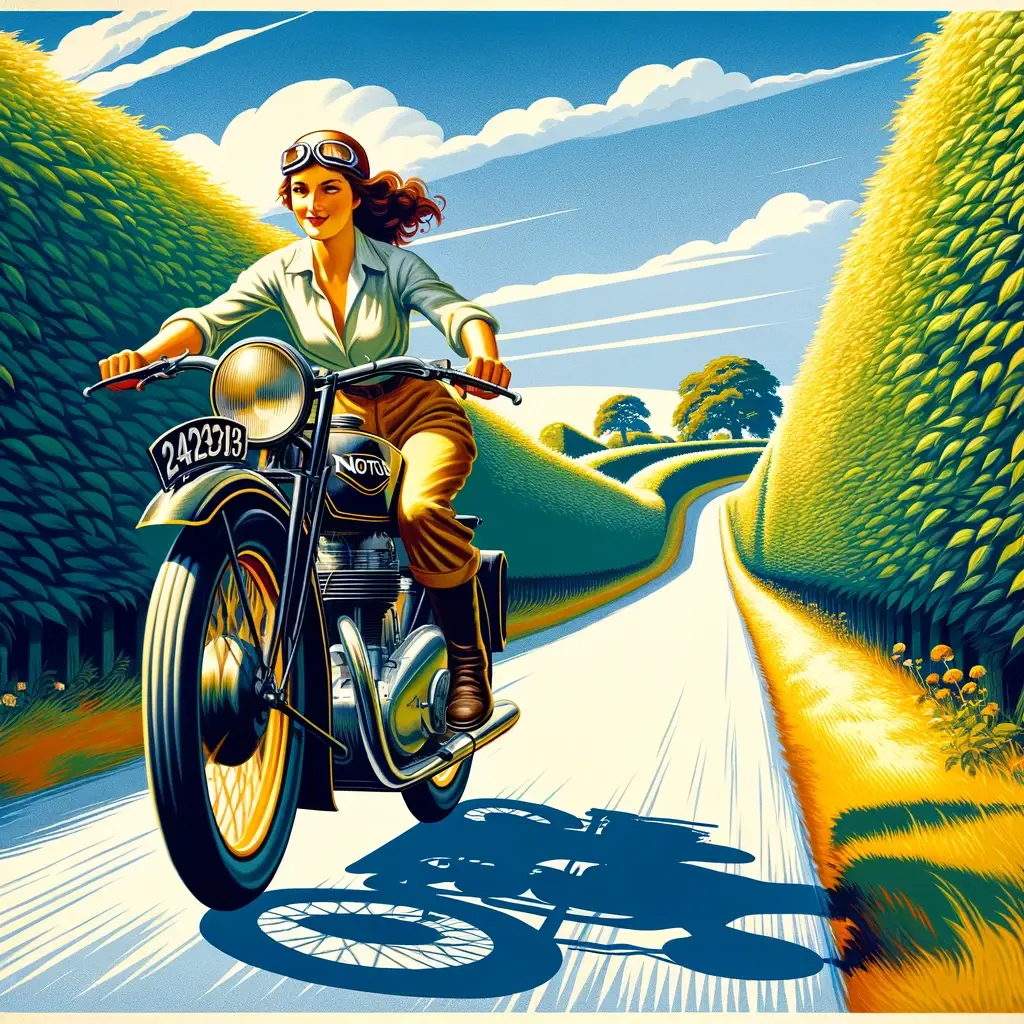
She was very proud to be a district nurse midwife and rode a motorbike, an old Norton, down the country lanes to visit her patients. I can just see her puttering along and loving every moment of it—the calm green patchwork of fields and farms, the sense of purpose, and the freedom. I also rode a motorbike when I lived in Thailand and, like mum, came to grief and broke some ribs and got a concussion. She didn’t break bones, well, not HER bones.
From Independence to Partnership: A Meeting of Minds and Hearts
Challenging Situations
Many of the roads and lanes in the UK are extremely narrow, and in those days the roads weren’t bituminised but were also lined with tall thick hawthorns or other hedges. She described how she came around a bend to be confronted by a farmer leading his Jersey cow from one field to another, but were startled by mum on her Norton, and like a deer in headlights, the farmer spun around to face her still holding the cow, which took up all the room. She had to decide what to do, and feeling sorry for the innocent cow, figured the farmer could jump. Unfortunately, he didn’t, and she rammed the front wheel between the poor man’s legs and carried them both into a hedge while the cow trotted off down the road. I think it was an involuntary vasectomy as she was never called to their farm to assist his wife in giving birth.
Working in Plymouth's Tenements
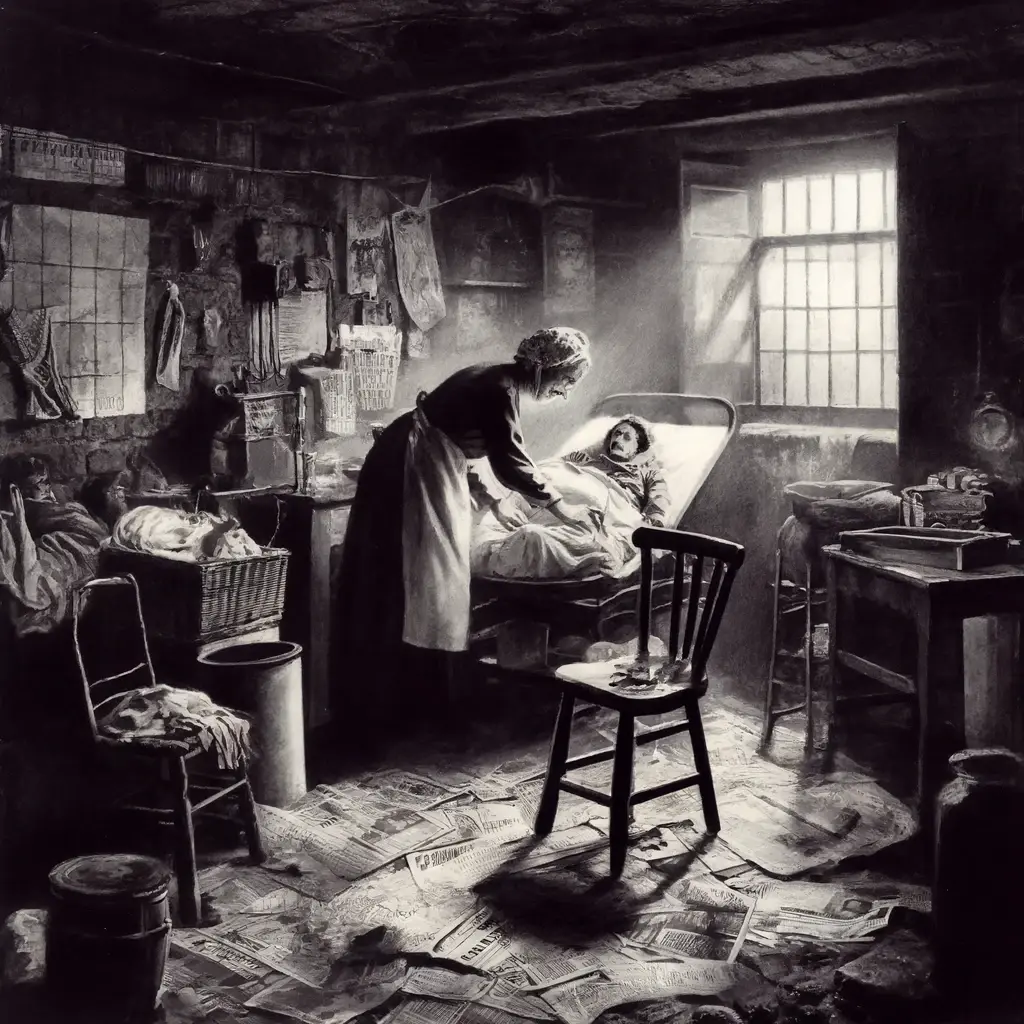
She also worked in Plymouth in the tenements. These were dreadfully poor communities or families living in overcrowded and unsanitary conditions. She described having to deliver babies onto newspapers as they were the only ‘clean’ thing in the place. There would be no furniture sometimes, only a chair and a stool, with water brought in from the single tap outside. She told of many young women, even girls, giving birth, all at home of course, and sometimes their treatment by doctors was appalling. One was notorious for being drunk all the time and brutal with the young women. It made me blanch to hear her stories. Once, this drunken doctor turned up to deliver the baby who was feet presenting and unable to put on the forceps, tied a rope around the feet, put his foot on the bed head, and pulled. You can imagine the damage.
Harsh Realities and Folk Wisdom
She told of a case where a fourteen-year-old girl in labor, very distressed and confused, asked my mother, "But where is it going to come out?" The girl’s grandmother, sitting on a chair by the bed, flatly responded, "Eeee girl, what went up must come down!" There’s sex ed for you in a sentence!
Slum Reform in Plymouth
The tenements in Plymouth were slums. There were single-room flats or flats with two bedrooms, but often they were completely overcrowded. A reform movement began in the 1930s to demolish the slums and build large-scale tenements with interior bathrooms, toilets, and running water. Some were quite successful, and the residents were very proud of their new dwellings, their communities, and facilities. Being a port city meant transient workers, sailors, intermittent work, lots of pubs, rough lives, and poverty.
The Role of Midwives Before the NHS
To have your baby in a hospital was something paid for privately, as the NHS didn’t come into being until 1948. Most women had their babies at home, and the midwives held a very important position in society. They were indispensable to families who couldn’t afford to pay for hospitals or doctors, as doctors usually only delivered babies when they were needed for more difficult births or if the family could afford it. This was how my parents met. The birth my mother attended wasn’t going well, and she needed help. My father said he was called from the opera to go to the home of a woman whose baby was in a transverse lie. Still in his evening dress, he rang the bell to be met by my mother. It was love at first sight, as they say. He wrote a lovely poem about that meeting, where he describes the beautiful brown-eyed Irish girl who opened the door to his heart. I don’t know how the birth went, but Dad was very good and had trained in obstetrics in Edinburgh and had some training with Grantley Dick-Reid, a proponent of natural childbirth. I read the book with great interest at the age of about 11 or 12, I think. I was determined to be a doctor myself, but fate had other plans for me. However, inside, I still think I am one! LOL.
Legacy and Personal Reflections
I don’t know why Mum shared so much with me about it all, and I am very glad she did, as I could probably manage delivering a baby now if it was straightforward! She taught me how to manage labor by having the woman walk about until she HAD to lie down, and that she should be on her side with her legs drawn up, resting on pillows. She said it was less painful that way, and there was free movement for the passage of the baby. Now, of course, we know about the coccyx moving backward in childbirth to give greater room for the baby's head in the pelvic space. It made immediate sense to me; why should women be forced onto their backs or sitting semi-upright? It never made any mechanical sense to me. Mum had clearly loved her job, but in those days, once a woman got married, she was meant to quit being a nurse or a teacher, probably other jobs too. She was quite knowledgeable and opinionated on medical matters, and my father would drily refer to her as ‘Doctor Cannon’. Still, she would help in the surgery now and then, but having many children of her own greatly limited her time, but I did feel she hoped I would go on to be a doctor. Life is not always as we plan it to be.
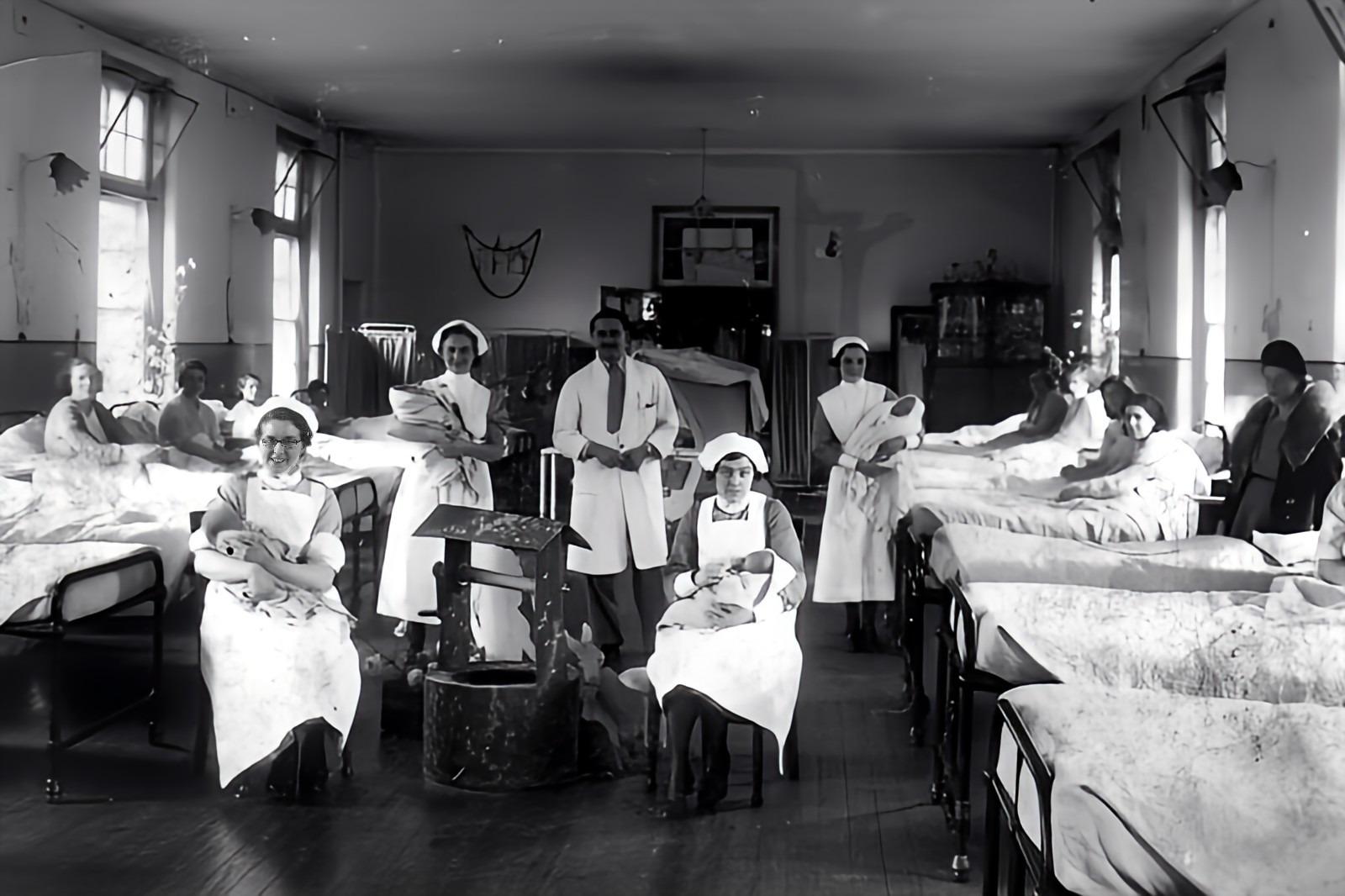 St Mary's Hospital ward 1938 on December 23 1938
*** Call Up For Midwives For The 21st Century And Beyond ***
10 October 2024 - 9 October 2025
- Silent Birthkeeper One Year Immersion -
Palestine Projects [Index] - Includes midwifery projects
The Compassionate Birth Project