
Collective Choices In The Honeybee Colony
https://justpaste.it/ccithc - https://archive.ph/53uec - https://archive.ph/wip/oXgl4 (org)
"Perhaps what the swarm reveals most clearly is that good collective choices carry a cost,
and the cost is time"
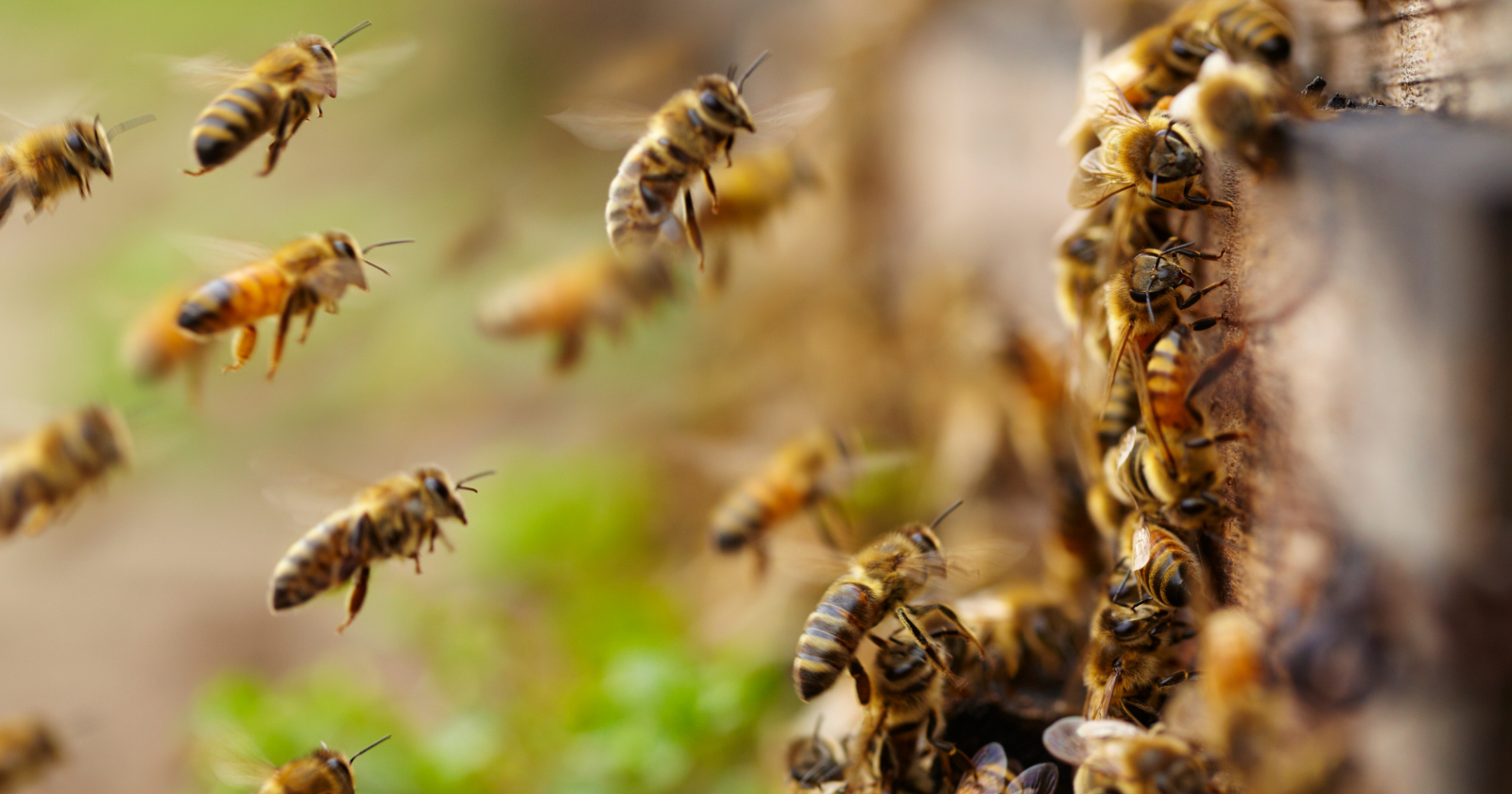
When a honeybee colony outgrows its hive it makes a
genuinely democratic decision: scout bees fly out,
inspect possible new homes, and 'campaign' for their
favourite with waggle dances, lobbying harder for better
sites — and only once enough scouts have converged
on the same spot does the whole swarm lift off together,
almost always choosing well.
It might sound strange but a swarm of bees deciding where to live is perhaps one of the
cleanest examples of a crowd making a good choice without anyone in charge.
There is no leader, no vote-counter, no bee that surveys the options and issues a verdict.
The queen, despite the title, has no say in it. And yet a few hundred bees, working only
with their own senses and a dance, settle on a new home that is more often than not the
best one available.
A note before going further: we are writers reading the work of biologists, not animal-
behaviour researchers ourselves. The findings here come from a small number of careful
field experiments, and the temptation to read bee democracy as a lesson for human
democracy is one to hold lightly. This is reflection on what the research describes, not a
claim that crowds of people work the same way.
The swarm that shouldn’t work
The setup looks like a recipe for chaos. When a hive becomes overcrowded in early
summer, two-thirds of the worker bees leave with the old queen and cluster on a nearby
branch, a temporary camp with no roof and no plan. From there, several hundred scout
bees, often the oldest in the colony, fly off to find somewhere permanent. They might
inspect 10 to 20 candidate cavities scattered across the surrounding countryside.
No single scout visits every option. No scout can compare all the sites and pick a winner.
By any obvious logic, a group of individuals each holding a fragment of the picture should
struggle to agree on anything, let alone the right thing. What’s striking isn’t that bees
manage to choose at all — it’s that they keep choosing the best of the available options,
through a mechanism stranger and simpler than a committee.
What scouts actually do
A scout that likes a cavity comes back and dances. The waggle dance encodes direction
and distance, and crucially, it encodes enthusiasm. Cornell biologist Thomas Seeley puts
the mechanism plainly: “A scout adjusts how long she dances according to the goodness
of the site.”
This is the part that looks like campaigning. A bee returning from a good site lobbies
harder, and her advertising recruits more visitors, who in turn come back and dance for the
same place. What keeps the system from being hijacked by an over-eager scout is that the
bees appear to grade honestly.
The quorum, not the consensus
The popular picture of bee democracy gets one thing slightly wrong. The swarm does not
wait for agreement. It waits for a threshold.
As scouts visit and re-advertise the leading candidate, their numbers at that cavity build.
Once roughly 15 scouts are present at one site at the same time, that site has effectively
won. The bees are not polling the whole crowd for a majority. They are sensing local
density, the moment when enough of them are gathered in one place.
Seeley and P. Kirk Visscher tested this directly by scattering scouts among identical boxes
instead of letting them concentrate; spreading the bees out delayed the signal to leave,
which is what you would expect if the trigger is a quorum at a single spot rather than a tally
across all sites.
Once the quorum is reached, the scouts switch from advertising to mobilising. They
produce piping signals that prime the rest of the swarm to warm their flight muscles toaround 35°C, the temperature a bee needs to fly. Then a buzz-run signal tears through the cluster, and the whole
swarm lifts off at once and heads for the chosen home. The decision and the departure are two
separate acts, and the second only happens when the first is sealed.
Why the crowd gets it right
The honest test of any decision rule is whether it lands on the best option, not just a
tolerable one. Seeley and Susannah Buhrman ran that test on Appledore Island, off the
coast of Maine. They offered swarms one excellent nest box among four mediocre ones,
and in each trial, one or more of the poor sites happened to be discovered hours before
the good one. Even with that head start working against the right answer, the swarms
picked the excellent site in four of the five trials.
What makes the rule work is that quality and persistence are coupled. A better site draws
longer dances, longer dances draw more scouts, more scouts reach quorum faster. The
early lead a mediocre site might enjoy gets overtaken because its dancers give up sooner.
No individual bee weighs the options; the weighing emerges from the population, in the
bookkeeping of who keeps dancing and who stops.
Perhaps what the swarm reveals most clearly is that good collective choices carry a cost,
and the cost is time. The whole process, from clustering on the branch to lifting off toward a
new home, can stretch across two or three days, spent hanging exposed with little shelter
and finite reserves. The colony could probably decide faster by lowering the quorum or
trusting the first site found, but it doesn’t. Those hours and that energy seem to be the
price of getting the answer right.
June 17, 2026
Archived: https://archive.ph/wip/oXgl4
Mentioned links:
Quorum sensing during nest-site selection by honeybee swarms
https://link.springer.com/article/10.1007/s00265-004-0814-5#:~:text=dispersed%20among%20five%20identical%20nest%20cavities
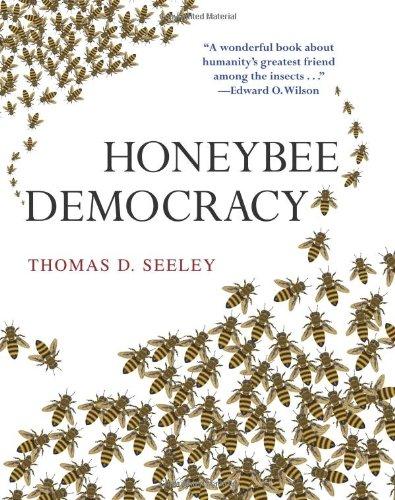
Honeybee democracy
https://news.cornell.edu/stories/2010/09/honeybee-democracies-offer-insights-says-new-book#:~:text=some%20two-thirds%20of%20the%20worker%20bees
Thomas D. Seeley, Neurobiology and Behavior, and his research group discovered the unique decision-making process that a honeybee swarm uses to choose a new home—a process that involves factions within a swarm competing for supporters. Although scientists had known that honeybees “waggle dance” to report food, Seeley’s group confirmed that they also dance to report on potential nesting sites (tree cavities) as part of their group decision-making process. Various scout bees discover diverse sites and report them with their dances. The better the site is, the longer the dances advertising it and the faster the buildup of bees at the site. Nearly always, the scouts build up most rapidly at the site that first acquires the quorum threshold of 15 assembled bees to become the chosen site. Seeley and his colleagues, who have studied this group decision-making process for more than 10 years, reported this plebiscite among bees as a striking example of decision-making within an animal group that is complicated enough to rival the deliberations of any academic department. The bees’ method, based on vigorous competition among options rather than a quick compromise, consistently yields excellent collective decisions. The researchers concluded that the honeybees’ method of decision making, which includes an open forum of ideas, frank “discussion,” and friendly competition, might help human committees achieve collective intelligence and avoid collective nonsense.
https://ras.research.cornell.edu/AR/AR2006/faculty_research/31.htm#:~:text=15%20assembled%20bees
Piping-hot Scout Bees in Swarms
https://www.beelistener.co.uk/bee-behaviour/piping-hot-scout-bees-in-swarms/#:~:text=warmed%20up%20to%20about%2035%C2%B0C
Nest-site selection in honey bees: how well do swarms implement the "best-of-N" decision rule?
---
Essays - Index: https://justpaste.it/esi
Library Meta Index: https://justpaste.it/lmi
Good Reads: https://justpaste.it/greads