

Scapula Shape Index :
It's scapula width/length ratio. Higher score indicates greater muscle attachement on the shoulder joint such as supraspinatus,infraspinatus, subscapularis, as well as greater ability to make certain movements like full-functional upper extremity movement including protraction, retraction, elevation, depression, upward rotation,and downward rotation all else being equal.
P.Leo : 71%
P.Tigris : 80%
Edge : P.Tigris
References :
https://epubs.icar.org.in/index.php/IJAnS/article/view/36503
https://epubs.icar.org.in/index.php/IJAnS/article/view/34768
NOTE: P.Leo has a relatively longer scapula bone as will be proven later on. With this in mind, the increase in relative length will lessen the gap between the two in terms of width. As such, P.Tigris may no longer have a noticeable edge!
SAI :
Surface area of lateral aspect of scapula relative to scapula length ((√Scapula area)/Scapula length). Higher score Indicates greater relative size of muscles involved in the transfer of forces from the trunk to the forelimbs and in stabilizing the shoulder joint.
P.Leo : 80%
P.Tigris : 80%
Edge : Draw
References :
https://www.researchgate.net/publication/298056854_Sexual_selection_on_skeletal_shape_in_Carnivora
NOTE: P.Leo has a relatively longer scapula bone as will be proven later on. By taking it into consideration, an increase in length also means an increase in surface area, hence P.Leo has the edge!
Spina Scapula Index :
Spina scapula/scapula length. Higher score Increases attachment point for several muscles such as trapezius muscles.
P.Leo ( open square) : exact value unknown
P.Tigris (open rhombus) : exact value unknown
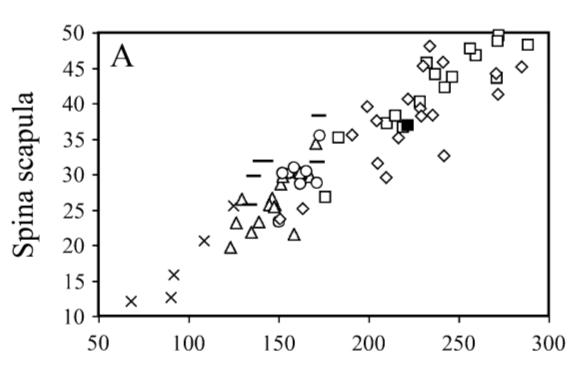
Edge : P.Leo
References :
Infraspinatus Index :
Infraspinatus fossa / scapula length.
Higher score indicates greater muscle force for external rotation of the shoulders.
P.Leo ( open square) : exact value unknown
P.Tigris (open rhombus) : exact value unknown
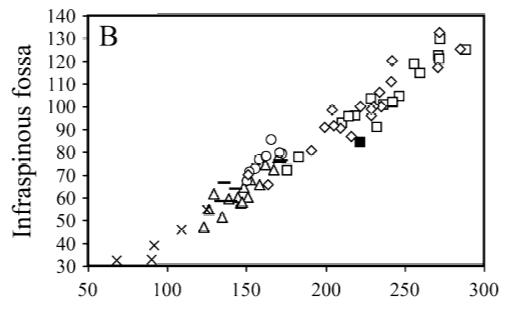
Edge : Draw
References :
NOTE : P.Leo has a relatively longer scapula as will be proven later. If we take this into consideration, P.Leo will definitely have an edge in fossa due to increase in relative length !
Supraspinous Index :
supraspinous fossa / scapula length. Higher score Indicates greater supraspinatus muscle attachement. This muscle helps to resist the gravitational forces which act on the shoulder joint to pull from the weight of the upper limb downward and to stabilize the shoulder joint by keeping the head of the humerus firmly pressed medially against the glenoid fossa of the scapula resulting in exertion of greater force from the forelimb.
P.Leo( open square) : exact value unknown
P.Tigris(open rhombus) : exact value unknown
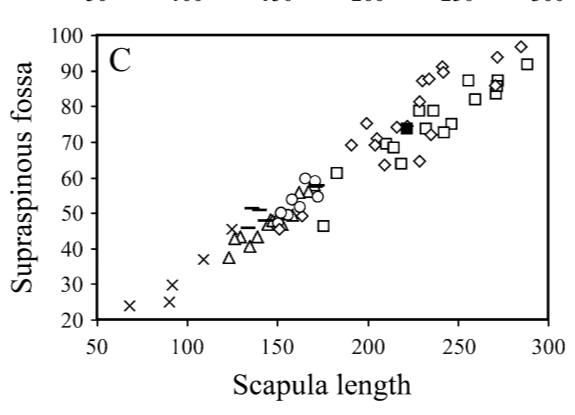
Edge : P.Tigris
References :
NOTE : P.Leo has a proportionally longer scapula as will be revealed later on and if we take it into consideration, P.Tigris will no longer have an edge in fossa due to P.Leo's increase in relative length !
Scapula Length Index :
Scapula length divided by Forelimb length. Higher score Indicates exertion of greater force from the forelimb.
P.Leo : 33%
P.Tigris : 33%
Edge: Draw
References :
Scapula Length Index 2 :
Scapula length divided by presacral column length. Higher score Indicates greater speed of movement via relative proportions of components of the proximal forelimb as well as exertion of greater force from the forelimb.
P.Leo : 22%
P.Tigris : 20%
Edge: P.Leo
References :
Scapula Length Index 3 :
Scapula length divided by humerus length. Higher PC1 score Indicates greater speed of movement via relative proportions of components of the proximal forelimb as well as exertion of greater force from the forelimb.
P.Leo : exact value unknown
P.Tigris : exact value unknown
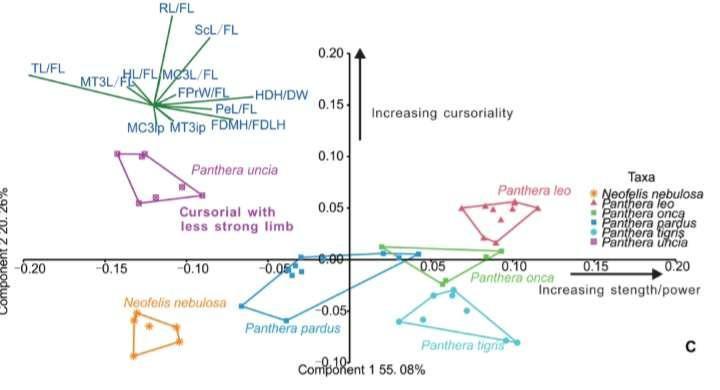
Edge : P.Leo
references :
Girdle Index :
Higher PC1 Score indicates Larger Girdle Bones, allowing for the Greater mechanical advantage of muscles.
P.Leo : exact value unknown
P.Tigris : exact value unknown
Edge : P.Leo
References :
HPWI :
It is Humeral proximal width/Humeral length ratio, correlated with resistance to stresses. A higher score also increases muscle attachement.
P.Leo : 29%
P.Tigris : 34%
Edge : P.Tigris
References :
https://www.researchgate.net/publication/350241590_Anatomical_Features_of_Some_Bones_of_the_Forelimbs_of_Lions_Panthera_leo_Caracteristicas_Anatomicas_de_Algunos_Huesos_de_los_Miembros_Toracicos_de_Leones_Panthera_leo
https://www.ijcmas.com/abstractview.php?ID=1437&vol=6-2-2017&SNo=61
HPCI :
It is Humeral proximal circumference/Humeral length ratio, correlated with resistance to stresses. A higher score also increases muscle attachement.
P.Leo : 59%
P.Tigris : 75%
Edge : P.Tigris
References :
https://www.ijcmas.com/abstractview.php?ID=1437&vol=6-2-2017&SNo=61
HCMI :
It is Humeral uppershaft circumference/humeral length Often-used variable in analyses of bone strengths in locomotion. The higher the ratio is, the thicker the Humeral bone is.
P.Leo : 45%
P.Tigris : 43%
Edge : P.Leo
References :
https://www.researchgate.net/publication/350241590_Anatomical_Features_of_Some_Bones_of_the_Forelimbs_of_Lions_Panthera_leo_Caracteristicas_Anatomicas_de_Algunos_Huesos_de_los_Miembros_Toracicos_de_Leones_Panthera_leo
https://www.ijcmas.com/abstractview.php?ID=1437&vol=6-2-2017&SNo=61
Deltoid Index :
Deltoid crest length divided by humerus articular length. Higher score Displays greater mechanical advantage of deltoid muscles at the shoulder joint.
P.Leo : 54%
P.Tigris : 59%
Edge : P.Tigris
References :
HRI :
It is humerus mediolateral diameter at mid-shaft/humerus length. Robust forelimb bones protect the animal from violent stresses during grappling.
P.Leo : 9%
P.Tigris : 9%
Edge : Draw
References :
HRI2 :
It is humerus anteroposterior diameter at mid-shaft/humerus length. Robust forelimb bones protect the animal from violent stresses during grappling.
P.Leo : 12%
P.Tigris : 11%
Edge : P.Leo
References :
HCSI :
Cross-Section/divided by Length of humerus. A higher score determines a greater Humeral robusticity.
P.Leo : exact value unknown
P.Tigris : exact value unknown
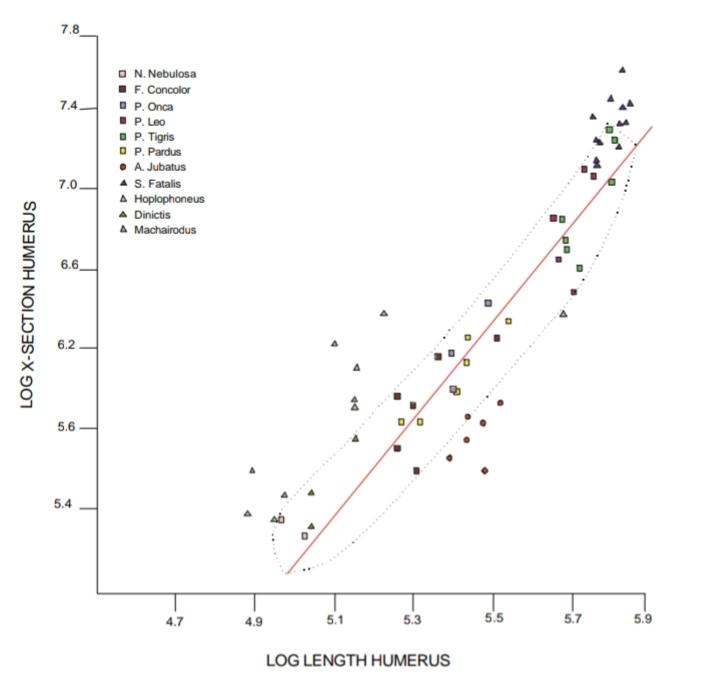
Edge : P.Tigris
references :
https://publikationen.uni-tuebingen.de/xmlui/handle/10900/48480
HCMI2 :
It is Humeral least circumference/articular length Often-used variable in analyses of bone strengths in locomotion. The higher the ratio is, the thicker the Humeral bone is.
P.Leo : 32%
P.Tigris : 30%
Edge : P.Leo
References :
HCMI3 :
It is Humeral midshaft circumference/shaft length Often-used variable in analyses of bone strengths in locomotion. The higher the ratio is, the thicker the Humeral bone is.
P.Leo : 45%
P.Tigris : 47%
Edge : P.Tigris
References :
https://www.researchgate.net/publication/350241590_Anatomical_Features_of_Some_Bones_of_the_Forelimbs_of_Lions_Panthera_leo_Caracteristicas_Anatomicas_de_Algunos_Huesos_de_los_Miembros_Toracicos_de_Leones_Panthera_leo
https://www.ijcmas.com/abstractview.php?ID=1437&vol=6-2-2017&SNo=61
HCMI4 :
It is Humeral lowershaft circumference/Humeral length Often-used variable in analyses of bone strengths in locomotion. The higher the ratio is, the thicker the Humeral bone is.
P.Leo : 36%
P.Tigris : 35%
Edge : P.Leo
References :
https://www.researchgate.net/publication/350241590_Anatomical_Features_of_Some_Bones_of_the_Forelimbs_of_Lions_Panthera_leo_Caracteristicas_Anatomicas_de_Algunos_Huesos_de_los_Miembros_Toracicos_de_Leones_Panthera_leo
https://www.ijcmas.com/abstractview.php?ID=1437&vol=6-2-2017&SNo=61
HDWI :
It is Humeral distal width/Humeral length ratio, correlated with resistance to stresses at the elbow joint. A higher score also increases muscle attachement.
P.Leo : 26%
P.Tigris : 26%
Edge : Draw
references :
HDWI2 :
It is Humeral distal mediolateral diameter/ length ratio, correlated with resistance to stresses at the elbow joint.A higher score also increases muscle attachement.
P.Leo : 26%
P.Tigris : 26%
Edge : Draw
references :
HDWI3 :
It is Humeral distal anteroposterior diameter/ length ratio, correlated with resistance to stresses at the elbow joint.A higher score also increases muscle attachement.
P.Leo : 18%
P.Tigris : 18%
Edge : Draw
references :
HDWI4 :
A more negative PC1 score Indicates a broader humeral distal end which is correlated with resistance to stresses at the elbow joint.A broader end also increases muscle attachement.
P.Leo : exact value unknown
P.Tigris : exact value unknown
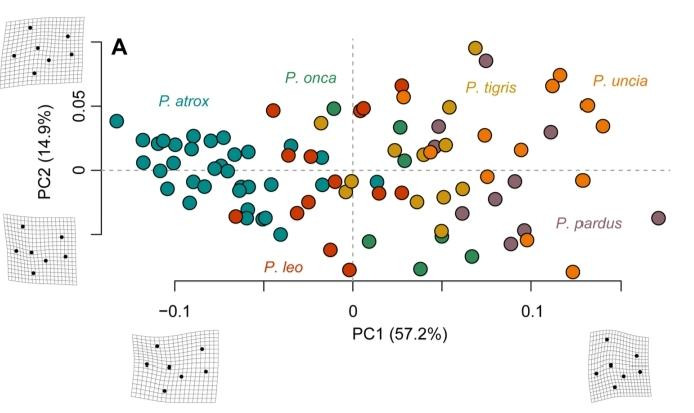
Edge : P.Leo
References :
HDCI :
It is Humeral distal circumference/Humeral length ratio, correlated with resistance to stresses at the elbow joint. A higher score also increases muscle attachement.
P.Leo : 48%
P.Tigris : 81%
Edge : P.Tigris
References :
HEI :
The HEI index measures the relative size of wrist stabilizing muscles and well as several grasping muscles in area which facilitate prey grasping such as m. pronator teres, m.extensor carpi radialis, m. extensor carpi ulnaris, m. flexor carpi radialis,m.flexor carpi ulnaris m. extensor digitorum communis, m. extensor digitorum lateralis, m.flexor digitorum superficialis, m. palmaris longus,and m. flexor digitorum profundus. These muscles also likely help stability, pushing, and agility when legs are on ground.
P.Leo : 26%
P.Tigris : 27%
Edge : P.Tigris
references :
HCI :
This is a measure of the humerus joint surface size near elbow. More positive PC1 scores indicate greater forearm mobility and stability during grappling and also likely when feet are on ground during a struggle as well as an increased ability to better distribute large loads.
P.Leo (n°20) : exact value unknown
P.Tigris(n°23): exact value unknown
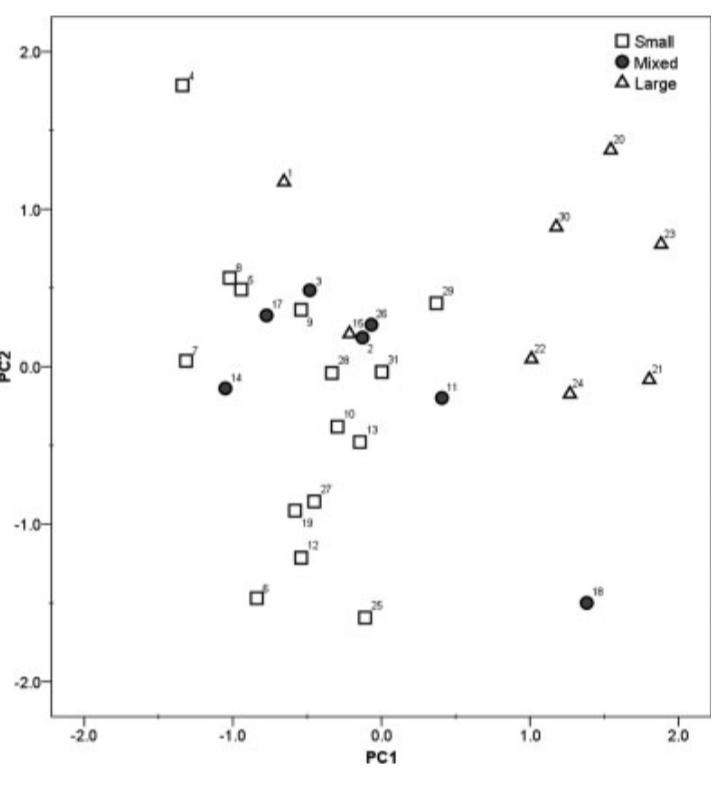
Edge : P.Tigris
references :
HCI2:
Humerus Condylar height ratio. Higher PC1 scores indicate greater forearm mobility and stability during grappling and also likely when feet are on ground during a struggle and the ability to distribute heavier loads.
P.Leo : exact value unknown
P.Tigris : exact value unknown
Edge : P.Leo
references :
HAA :
This is another measure of area of where humerus terminates in elbow. More positive PC1 scores are associated with better grappling and distributing heavier loads.
P.Leo(n°20) : exact value unknown
P.Tigris(n°23) : exact value unknown
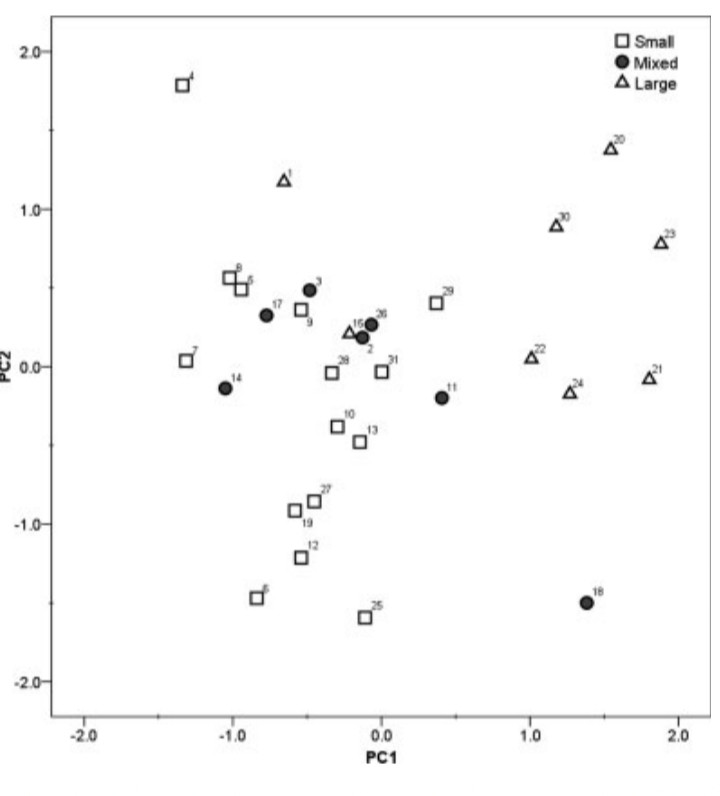 Edge : P.Tigris
references :
Brachial Index :
This measures radius length/humerus length. Lower scores in this ratio indicate greater forelimb muscle mechanical advantage and results in stronger muscles all else being equal.
P.Leo : 91%
P.Tigris : 86%
Edge : P.Tigris
References :
Brachial Index 2 :
This measures ulna length/humerus length. Lower scores in this ratio indicate greater forelimb muscle mechanical advantage and results in stronger muscles all else being equal.
P.Leo : exact value unknown
P.Tigris : exact value unknown
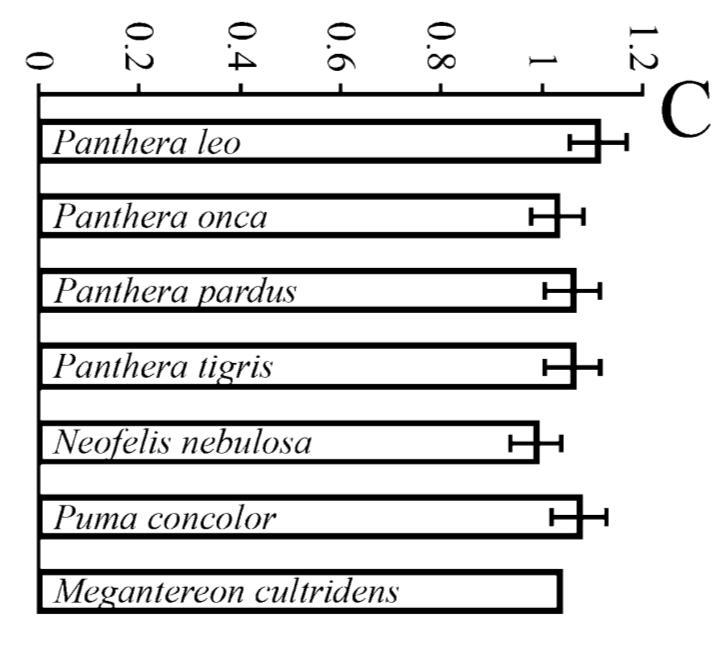
Edge : P.Tigris
References :
Forelimb Proportion Index :
Length of proximal forelimb relative to length of distal forelimb ((Scapula length + Humerus length)/(Radius length + Metacarpal length)). Higher score Indicates greater degree of morphological specialization for producing large out-forces in the forelimb.
P.Leo : 141%
P.Tigris : 148%
Edge : P.Tigris
References :
https://www.researchgate.net/publication/298056854_Sexual_selection_on_skeletal_shape_in_Carnivora
BBL :
The biceps brachii leverage index measures the strength in flexing and supinating the forearm, a behavior crucial to prey grappling.
P.Leo(dark rhombus) : exact value unknown
P.Tigris(open square) : exact value unknown
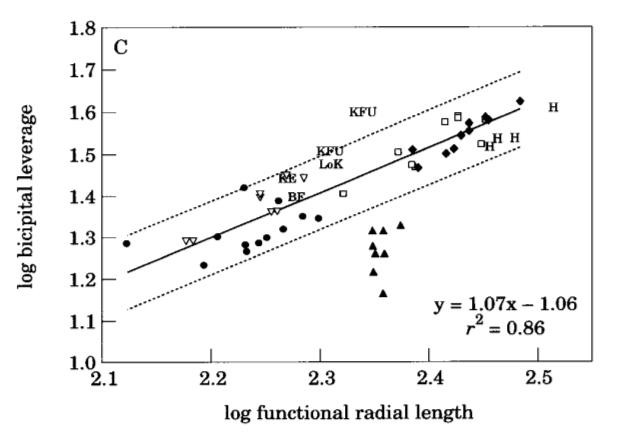
Edge : P.Tigris
References :
https://www.sciencedirect.com/science/article/abs/pii/S0024408200902607
TBI :
Higher score in triceps brachii index is to be expected in species that can extend their forearms to a greater degree at the elbow joint.
P.Leo(dark rhombus) : exact value unknown
P.Tigris(open square) : exact value unknown
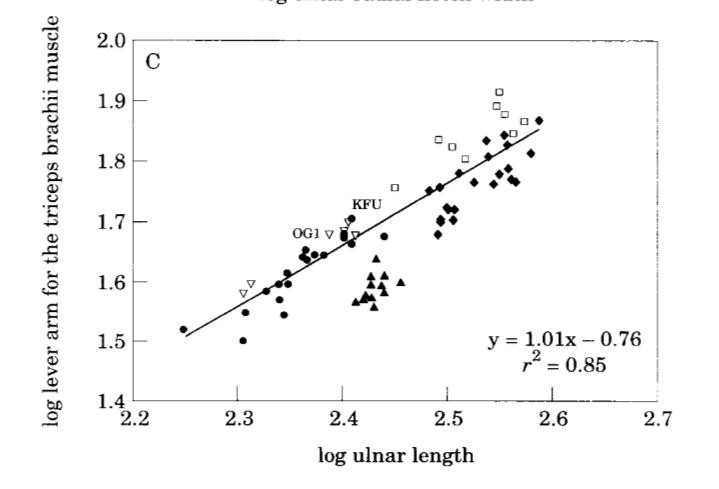
Edge : P.Tigris
References :
https://www.sciencedirect.com/science/article/abs/pii/S0024408200902607
OI :
This metrics estimates tricep muscle strength. High values indicate greater ability to push with arms all else being equal. This helps a grappling cat hold prey and also helps a canid push and knock down an opponent. In addition, higher values may indicate greater stability and ability to change direction in a fight as well as greater relative mechanical advantage of the triceps brachii and dorsoepitrochlearis muscles used in elbow extension
P.Leo : 22%
P.Tigris : 25%
Edge : P.Tigris
references :
https://academic.oup.com/zoolinnean/article-abstract/151/4/833/2607398?redirectedFrom=fulltext
UPCI :
It is ulnar proximal circumference/ulnar length ratio, correlated with resistance to stresses. A higher score also increases muscle attachement.
P.Leo : 31%
P.Tigris : 45%
Edge : P.Tigris
References :
RPCI :
It is radial proximal circumference/radial length ratio, correlated with resistance to stresses. A higher score also increases muscle attachement.
P.Leo : 49%
P.Tigris : 37%
Edge : P.Leo
References :
RPWI :
It is radial proximal width/radial length ratio, correlated with resistance to stresses. A higher score also increases muscle attachement.
P.Leo : 14%
P.Tigris : 18%
Edge : P.Tigris
References :
RRI :
This measures radius mediolateral diameter at midshaft divided by radius length. As mentioned above for humerus robusticity, a robust radius resists stresses on bones during fights and increases resistance to bites to the forelimb.
P.Leo : 9%
P.Tigris : 9%
Edge : Draw
References :
RRI2 :
This measures radius anteroposterior diameter at midshaft divided by radius length. As mentioned above for humerus robusticity, a robust radius resists stresses on bones during fights and increases resistance to bites to the forelimb.
P.Leo : 6%
P.Tigris : 7%
Edge : P.Tigris
References :
RCMI :
Often-used variable in analyses of bone strengths in locomotion. The higher the ratio is, the thicker the radial bone is.
P.Leo : 26%
P.Tigris : 30%
Edge : P.Tigris
References :
URI :
This measures ulna anteroposterior diameter at midshaft divided by ulna length. As mentioned above for humerus and radius robusticity, a robust ulna resists stresses on bones during fights and increases resistance to bites to the forelimb.
P.Leo : 9%
P.Tigris : 10%
Edge : P.Tigris
References :
https://academic.oup.com/zoolinnean/article-abstract/151/4/833/2607398?redirectedFrom=fulltext
RAA :
This is another measure of radius where it terminates at wrist. More positive PC1 scores help to reinforce the forelimbs against the stresses encountered by large, struggling prey and to distribute heavier loads.
P.Leo(n°20) : exact value unknown
P.Tigris(n°23) : exact value unknown
Edge : P.Tigris
references :
RAI :
This is a measure of joint area where radius meets wrist joint. More positive PC1 scores indicate larger forces are put on joints either through larger muscles, or external stresses which helps grappling or ability to fight with feet on ground (i.e. ability to quickly change directions, stability, etc.).
P.Leo(n°20) : exact value unknown
P.Tigris(n°23) : exact value unknown
Edge : P.Tigris
references :
RDCI :
It is radial distal circumference/radial length ratio, correlated with resistance to stresses. A higher score also increases muscle attachement.
P.Leo : 49%
P.Tigris : 51%
Edge : P.Tigris
References :
RDWI :
It is radial distal width/radial length ratio, correlated with resistance to stresses. A higher score also increases muscle attachement.
P.Leo : 14%
P.Tigris : 24%
Edge : P.Tigris
References :
Styloid Width Index :
Styloid width relative to radius length. Higher score indicates greater relative robusticity of distal forelimb.
P.Leo : 30%
P.Tigris : 32%
Edge : P.Tigris
references :
https://www.researchgate.net/publication/298056854_Sexual_selection_on_skeletal_shape_in_Carnivora
UDCI :
It is ulnar distal circumference/ulnar length ratio, correlated with resistance to stresses. A higher score also increases muscle attachement.
P.Leo : 22%
P.Tigris : 22%
Edge : Draw
References :
PMA :
Length of pisiform relative to length of manus. Higher score Indicates greater anatomical mechanical advantage of flexor carpi ulnaris, a wrist flexor.
P.Leo : 33%
P.Tigris : 36%
Edge : P.Tigris
references :
https://www.researchgate.net/publication/298056854_Sexual_selection_on_skeletal_shape_in_Carnivora
PAW :
This is a measurement of paw width on forelimbs and gives us an idea of how well-paws are designed to hold prey. In addition, relatively wider paws likely increase stability while feet are on ground.
P.Leo : 80%
P.Tigris : 80%
Edge : Draw
references :
MCP :
proximal phalanx to metacarpal ratio, more negative PC2 and DF1 scores offer increased surface area for grasping and grappling and greater relative proportions of proximal and distal elements of the manus and size of the palmar surface.
P.Leo(n°20) : exact value unknown
P.Tigris(n°23) : exact value unknown
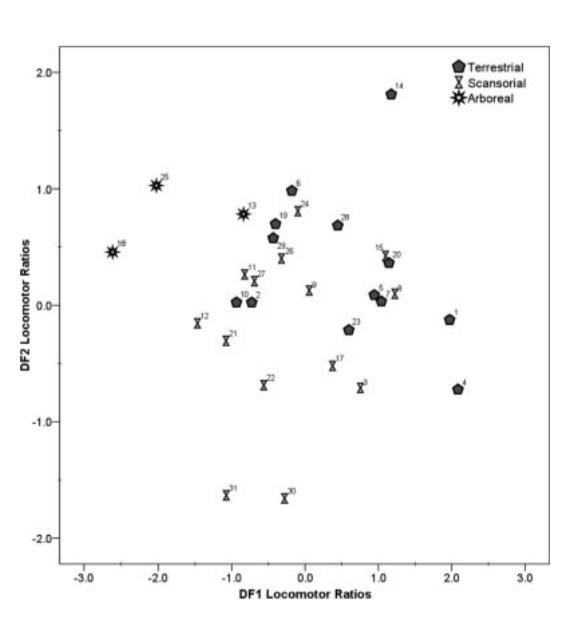
Edge : P.Tigris
references :
MC3RI :
This measures the robusticity of metacarpal 3 or longest finger/digit. More negative PC1 scores may assist with grappling or stresses exerted with feet on ground during a fight.
P.Leo(n°20) : exact value unknown
P.Tigris(n°23) : exact value unknown
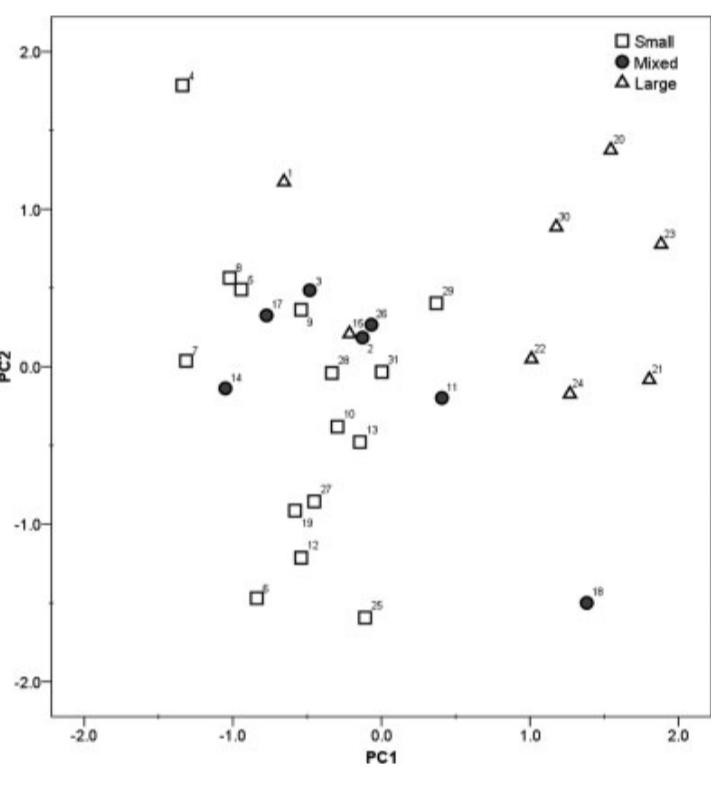
Edge : P.Leo
references :
MC3AA :
This is a measure of size of metacarpal at joints of finger. Higher PC1 Scores help stabilize the metacarpals against stresses from prey and climbing.
P.Leo(n°20) : exact value unknown
P.Tigris(n°23) : exact value unknown
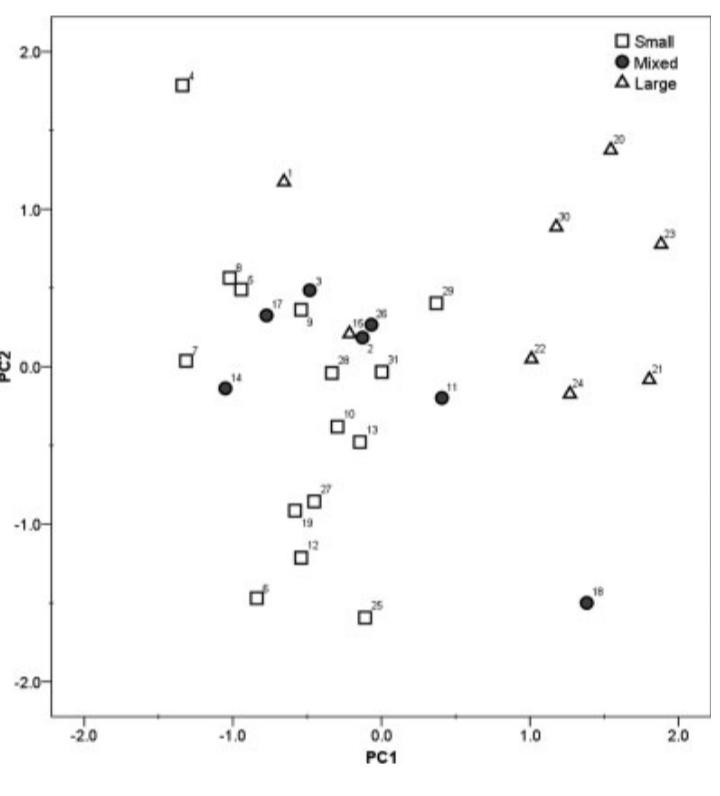
Edge : P.Tigris
references :
The Lion has for a long time been known as the King of Big Cats and while certainly impressive enough in its own right, Mankind has decided for centuries to discuss how it'd fare against its biggest Rival,The Tiger! Most ratios point out to the Striped Felid having overall more powerful Humeral proximal ends,more enlarged deltopectoral crests,larger epicondyles,olecrana as well as overall more robust radial proximal ends,shafts,distal ends,distal articular ends,ulnar proximal ends,stronger biceps,triceps,dorsoepitrochlearis,m. pronator teres, m. extensor carpi radialis, m. extensor carpi ulnaris,shorter forelimbs,wider styloids,more enlarged paws,larger metacarpal articular areas and higher velocity.The Lion on the other hand, has longer scapulae,greater scapulae surface area, infraspinatus fossa bones,larger shoulder girdle bones, as well as longer scapulae spines,more robust humeri shafts and metacarpals.Overall, we can infer that The Largest Cat Of Asia seems to have more powerful and muscular forelimbs whereas the Monarch Of The African Plains owns overall stronger shoulders. the Striped Felid also has more dexterity in its Forelimbs which is scientifically evident from the greater HEI,RAI,OI. It also has other advantages such as joint stiffness, more pelvis stabilization and increased transmission of forces to the spine region due its relatively more tightened iliac wings as evident from the smaller angle :
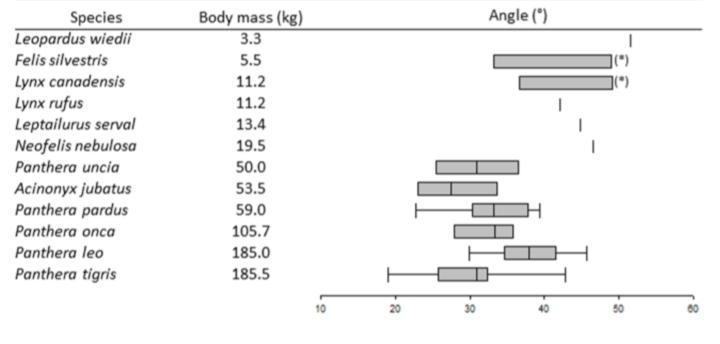
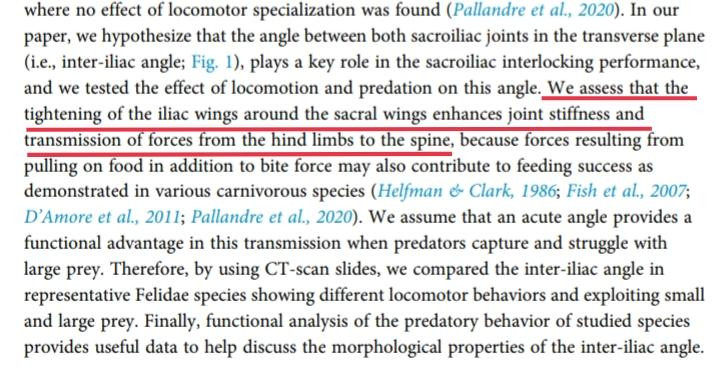
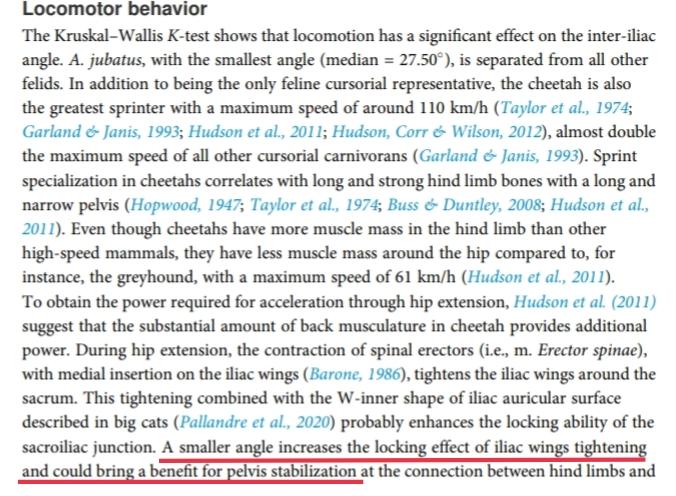
https://www.researchgate.net/publication/351494900_Variation_in_the_sacroiliac_joint_in_Felidae
Lions have an overall more robustly built back as shown in this link :
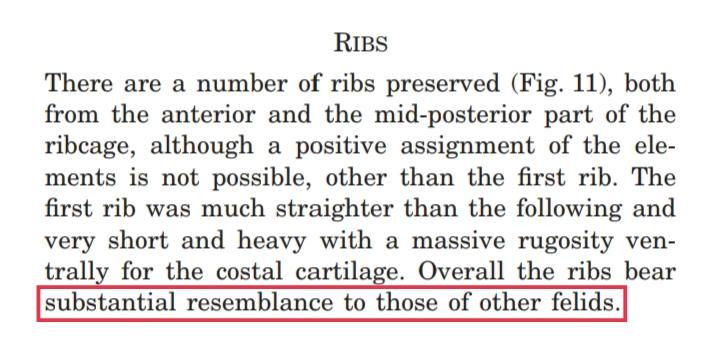
Chest wise, Both Cats are similar in ribs:
But the same source also indirectly states that Large Lions have proportionally more robust manubria than Large Tigers :
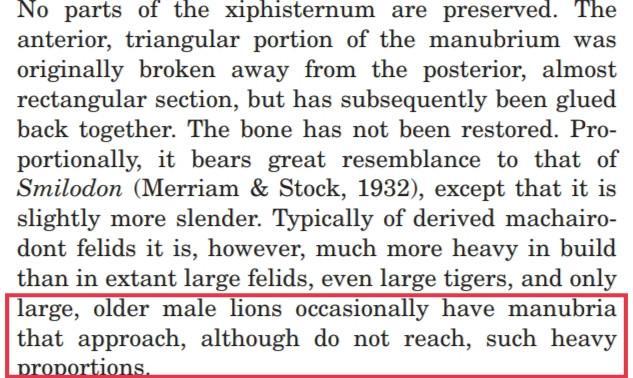
This, combined with the fact that Lions have larger girdle bones as previously mentioned, should point out that overall, they have a more robustly built chest compared to Tigers. But it might not be the case because It's worth mentioning that Panthera Tigris does own relatively wider humeral/ulna proximal ends and more enlarged deltopectoral crests as shown in the above indexes and this would indeed serve as better attachment points for chest muscles. So it might be a toss up. Suffice it to say that both Cats have their respective advantages proportionally speaking with The Tiger having more powerful, more dexterous forelimbs as well as more tightened iliac wings and The Lion having a more robust back morphology and stronger shoulders . If a Lion were to fight a Tiger of similar size, it would be a spectacular Battle but in the end, the Lion might end up winning due to seemingly having more anatomical advantages in this matchup. The Tiger is bigger as evident from the fact that Bengal Tigers (213kg) are on average heavier than South African Lions (196kg) as per these sources :
https://docs.google.com/spreadsheets/d/1a6oj6aWeEfXdlrOFszjJDdjPoyCbxCz7yFABYiHxiyw/edit?usp=sharing
https://docs.google.com/spreadsheets/d/1EFt1Qbb8RF_UJdmmSl00r0eMdRHjABJSCif2h3VC0PE/edit?usp=sharing
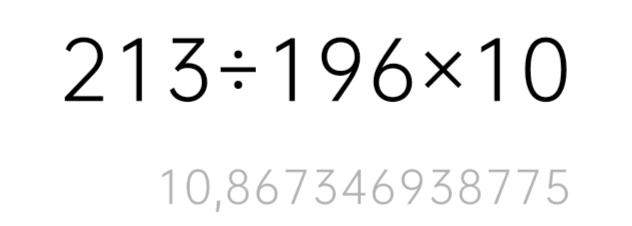
But it's not actually a big difference whatsoever. Such weight gap is, in fact, similar to the gap between 10 and ~11kg:
So The Tiger is only slightly bigger and it's not enough to make up for the disadvantages it has compared to the Lion! In the end, Panthera Leo gets to keep its title of King Of The Big Cats !