
Mmatshilo Motsei, birth, knowledge and the world that receives us
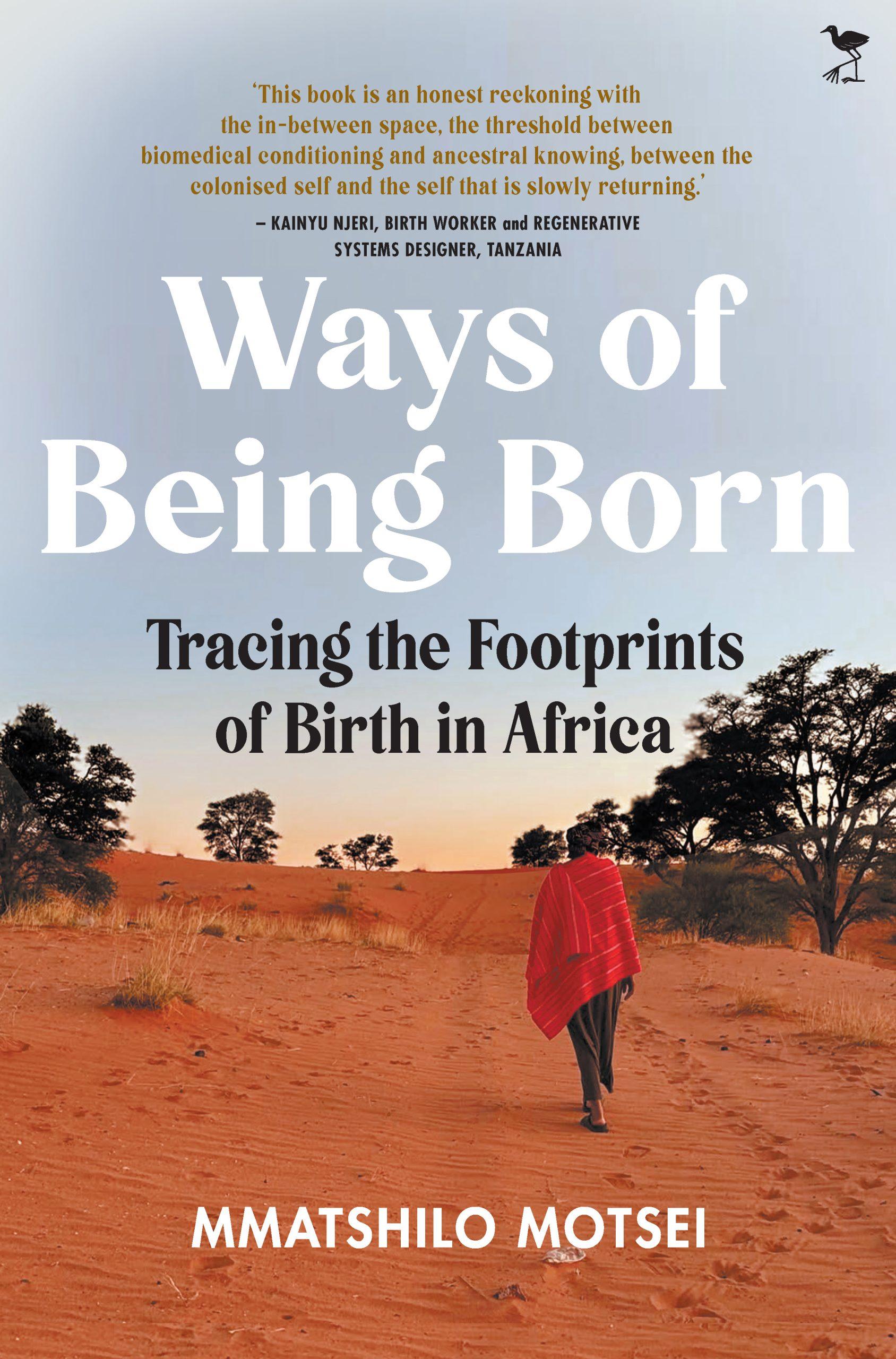
Mmatshilo Motsei's Ways of Being Born: Tracing the Footprints of Birth in Africa opens a conversation about the knowledge, relationships and histories that surround birth. Read alongside The Birthkeeper work, it invites us to look beyond the immediate encounter and ask what has made that encounter possible -- and whose knowledge has been allowed to shape it.
A question that widens the frame
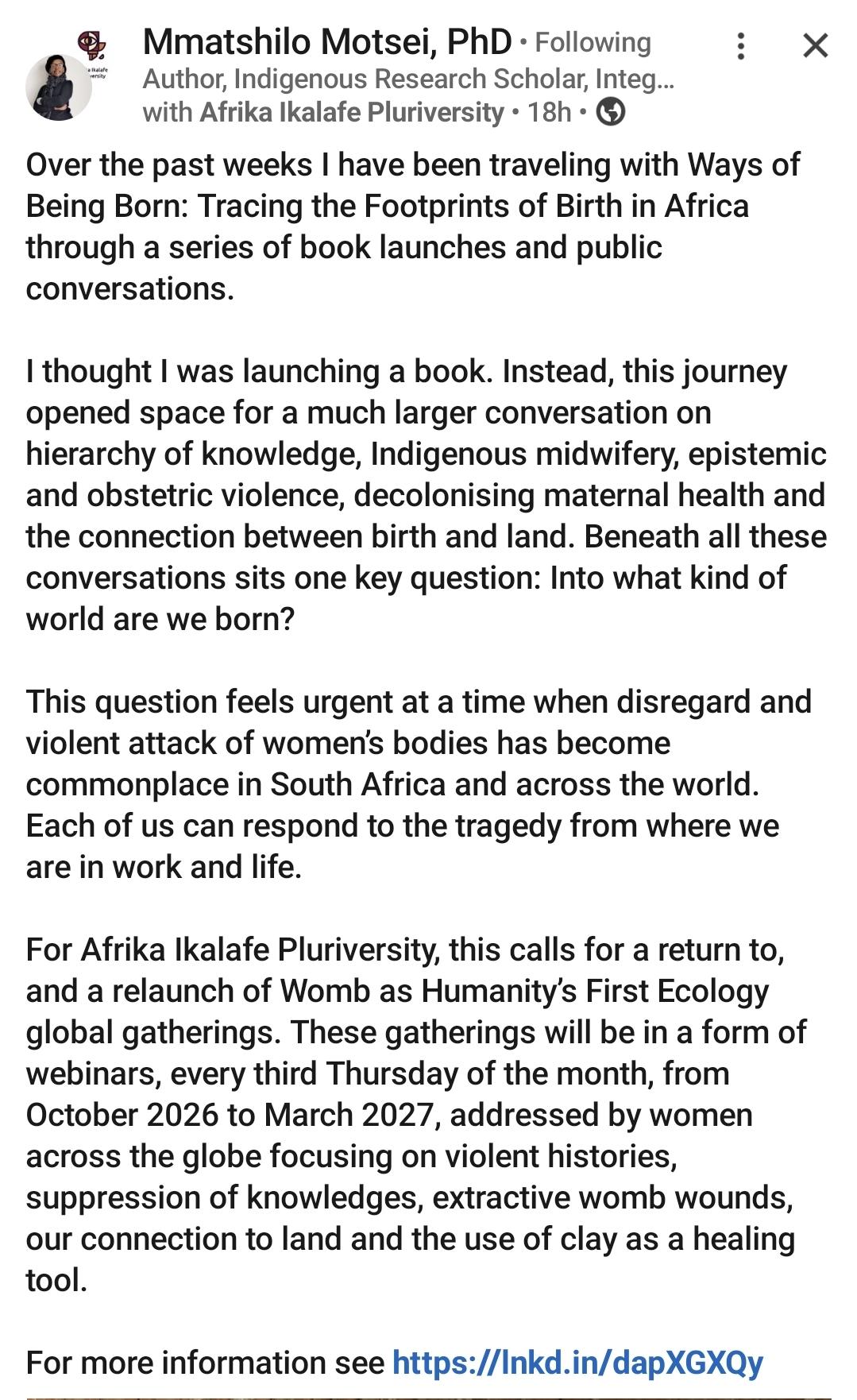
In her September 2026 reflection on the book's launch conversations, Motsei brings together hierarchy of knowledge, Indigenous midwifery, epistemic and obstetric violence, decolonising maternal health, and the connection between birth and land. Beneath them she places a question:
“Into what kind of world are we born?”
That question reaches into the conditions of welcome: whose body is respected, whose experience is heard, what care is available, and what relationships hold a child and family. It also asks us to notice the world already present in the birth room through language, institutions, economic circumstances and inherited assumptions.
Reading alongside The Birthkeeper
The Birthkeeper Package works close to the relationship between Birthkeeper and parent(s). Its agreements, information, commitments and guidance give practical expression to autonomy, responsibility, consent and accountable support. The Companion Guide explores the reasoning behind those documents and their thoughtful use.
Motsei's work brings a wider historical, cultural and ecological field into view. Grounded primarily in South Africa, her book attends to Indigenous midwifery, ancestral knowledge and the consequences of colonialism and the medicalisation of birth. Her discussion of epistemic violence draws attention to harm done when people's knowledge is silenced or discredited.
These concerns meet in an ordinary question: who is assumed to know? A parent may be invited to speak while their account carries little weight. A form may record consent while the surrounding relationship makes refusal difficult. Listening becomes more demanding when we notice how recognition and authority have already been distributed.
The connection can work in both directions. Motsei's questions help us examine the world carried into a Birthkeeper relationship. The Package offers one practical place to ask how a different relationship might be expressed and sustained in everyday encounters. Neither set of materials completes the work of the other.
Keeping the differences visible
The Package describes a particular non-clinical Birthkeeper role. Indigenous midwifery has its own histories, knowledge and responsibilities, which cannot be folded into that definition. Nor should the diversity of African traditions become a general collection of practices to borrow without their people, places and meanings.
Reading these works together may deepen attention to relationship without making them interchangeable. The connections offered on this page are our reading; they do not establish Motsei's work as a source or endorsement of The Birthkeeper.
Womb as Our First Ecology
Afrika Ikalafe's Womb as Our First Ecology gatherings extend this enquiry through African cosmologies, ancestral memory, land, water and collective care. They place gestation and birth within relationships that precede an individual life and continue beyond it.
For Birthkeepers, this offers a question to carry back into practice: how does the support around a birth attend to the family's wider relationships and conditions of life? An ecological understanding of care asks what sustains people, and what makes care difficult, as well as what happens in an immediate encounter.
Motsei's September announcement and the programme heading identify the relaunched series as October 2026–March 2027. Current details and participation information are on the official page.
Follow the connections
The book -- publisher information and editions
Ways of Being Born: Tracing the Footprints of Birth in Africa -- Jacana Media
The gatherings
Womb as Our First Ecology -- Afrika Ikalafe
Motsei's September reflection
Book conversations, knowledge, birth and land
The Birthkeeper Package
Companion Guide for Birthkeepers
Back to the Reading Garden
Back to The Birthkeeper
Reading Garden reflection -- 25 September 2026
Developed through human-AI dialogue with ChatGPT