
The Role of the Wakizashi in Samurai Warfare
The History and Significance of the Wakizashi
By Musashi Swords · 2026-07-30
What weapon was so essential to a samurai that he never left home without it, even when he set aside his katana? The answer lies in the wakizashi, the shorter companion blade that defined the warrior's constant state of readiness. While the katana captured the romance of the battlefield, the wakizashi served as the samurai's everyday tool and last line of defense. Understanding its history reveals how this blade was far more than a mere backup weapon.
The wakizashi first emerged during the Muromachi period (1336–1573), when Japanese warfare shifted from mounted archery to close-quarters infantry combat. Swordsmiths began producing shorter blades that could be drawn quickly in tight spaces—inside castles, narrow corridors, or crowded market streets. By the early Edo period (1603–1868), wearing a wakizashi had become a mandatory part of a samurai's attire, whether he was dressed in armor or civilian clothes. The blade's typical length fell between 30 and 60 centimeters (12–24 inches), placing it between the longer katana (over 60 cm) and the tanto (under 30 cm). When this becomes a priority, sword wakizashi can make a real difference to your results.
Key Takeaways
- The wakizashi was the samurai's constant sidearm, worn indoors and at all times, even when the katana was set aside.
- The daisho custom of pairing a katana and wakizashi was a powerful symbol of samurai rank and honor during the Edo period.
- Authenticating an antique wakizashi requires inspecting the tang signatures, patina, hamon, and structural integrity for signs of age.
- Forging a wakizashi demands precise skill, as the shorter blade length makes errors less forgiving during the quenching process.
- Proper care for a wakizashi involves regular oiling with choji oil and careful inspection for rust due to its size.
Why the Wakizashi Was Never Left Behind
Unlike the katana, which was often stored near the entrance of a home or removed during formal indoor gatherings, the wakizashi remained on the samurai's person at all times. This practice stemmed from both practical necessity and social custom. A samurai entering a building would leave his katana on a designated stand, but the wakizashi stayed tucked in his belt, ready for any sudden threat. The blade also served as a backup if the katana was lost or damaged in combat, a realistic concern given the close melee conditions of medieval Japanese battlefields. In peacetime, the wakizashi was used for daily tasks such as cutting paper, opening sealed containers, or even preparing food—roles that the larger katana was too unwieldy to perform.
The Daisho: Katana and Wakizashi as a Set
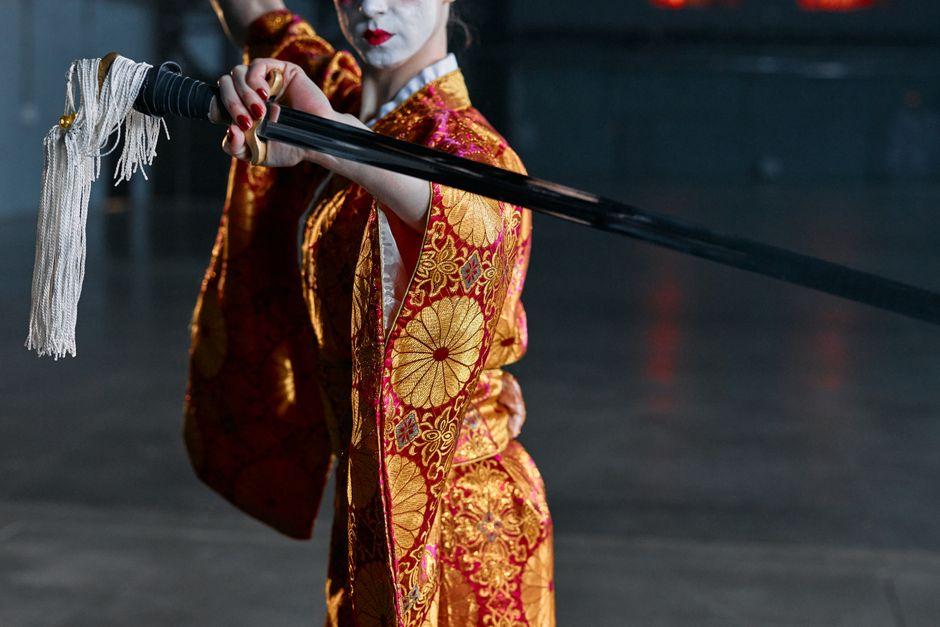
Forming the iconic daisho ("big-little") set, the katana and wakizashi were worn together as a matched pair. The term itself did not become widespread until the 17th century, but the practice was established earlier. Owning a daisho was a privilege exclusive to the samurai class; merchants, artisans, and farmers were forbidden from carrying both blades. The sets were often crafted by the same swordsmith, with matching mountings—same style of tsuba (hand guard), same color of tsuka-ito (handle wrapping), and same aesthetic theme. In the Tokugawa shogunate's strict hierarchy, the daisho visually announced the wearer's rank and authority. A samurai would choose his daisho based on his role: a senior retainer might select a subtle, dignified finish, while a young guardsman might prefer a more ornate set to display his family's wealth. It pays to weigh up wakizashi before you commit to a setup.
How the Length Difference Affected Combat Tactics
The practical interplay between the two blades gave rise to specific fighting techniques. In many ryuha (schools of swordsmanship), the wakizashi was used as a secondary weapon in the off-hand while the katana remained in the dominant hand, allowing for rapid blocks, traps, and follow-up thrusts. Some styles, such as the Niten Ichi-ryu founded by Miyamoto Musashi, advocated using both blades simultaneously—a method that required exceptional coordination. Because the wakizashi was shorter and lighter, it could be maneuvered faster in tight quarters, and its edge could strike vulnerable areas like the wrists and neck that the katana might accidentally overreach. Conversely, the wakizashi's short reach meant the user had to close distance quickly, taking advantage of an opponent's openings.
Forging a Wakizashi: A Different Challenge Than the Katana
Many assume that a wakizashi is simply a smaller katana, but the forging process differs in critical ways. A katana's long blade allows the smith to create a pronounced curve through differential hardening—applying clay slurry thicker on the spine and thinner on the edge before quenching. For a wakizashi, the shorter length means that the clay coating must be applied with even greater precision; a slight inconsistency can cause the entire blade to warp unevenly or even crack when plunged into water. The folding process—used to remove impurities and distribute carbon—remains the same, but the number of folds may be reduced because the blade is smaller. Experienced smiths often say that a wakizashi is actually more difficult to get right: there is less material to absorb the thermal shock, and any flaws in the steel become more obvious in the finished surface. Options such as sword wakizashi help keep everything running smoothly here.
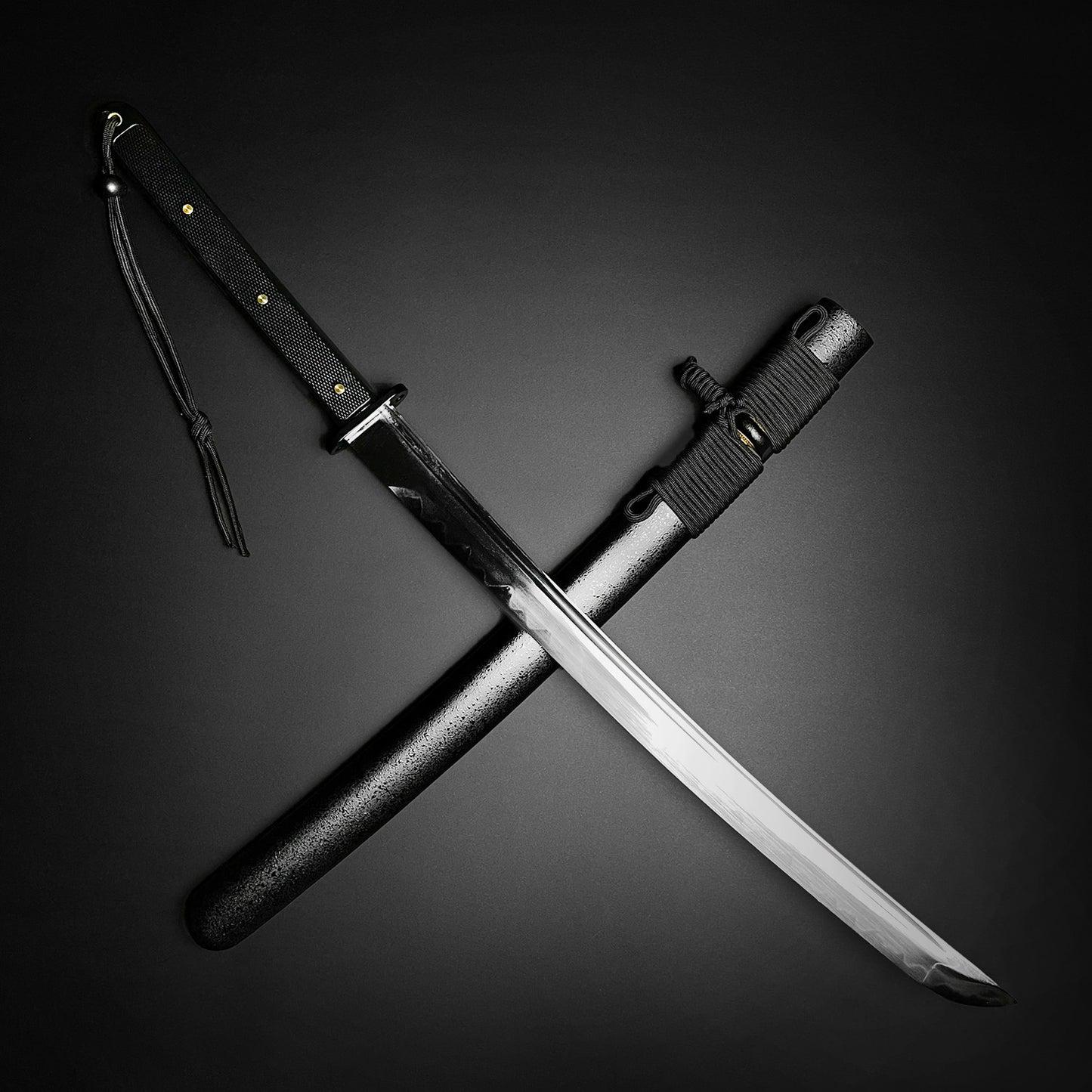
When evaluating a wakizashi for sale, collectors look for several telltale signs of quality. The hamon (hardened edge line) should be crisp and visible, often showing the nioi (small martensite crystals) or nie (larger crystals) structure. The hada (grain pattern) on the blade face should show a consistent jigane (base steel) texture. On the tang (nakago), the file marks (yasurime) and any signature (mei) provide clues about the blade's origin and age. A genuine antique wakizashi will have a natural patina on the tang—dark, slightly rusty—but never active red rust. Modern replicas often have a uniformly bright tang with machine-cut marks, which is a red flag.
Caring for a Wakizashi in the Modern Era
Owners of authentic wakizashi must follow careful maintenance routines to preserve both the blade's value and its cutting ability. Because the blade is shorter than a katana, rust can form more quickly on the exposed edge if neglected. The traditional method involves applying a thin layer of choji oil—a mixture of clove oil and mineral oil—using a soft cloth. Oiling should be done every few months in a dry climate and monthly in humid regions. Before oiling, the blade must be inspected for any remaining moisture or fingerprint residue using a dry cotton cloth. Small specks of rust can be removed with uchiko powder (a fine polishing stone powder) applied on a clean cloth, but deep pitting requires professional restoration.
Authenticating a Wakizashi: What to Look For
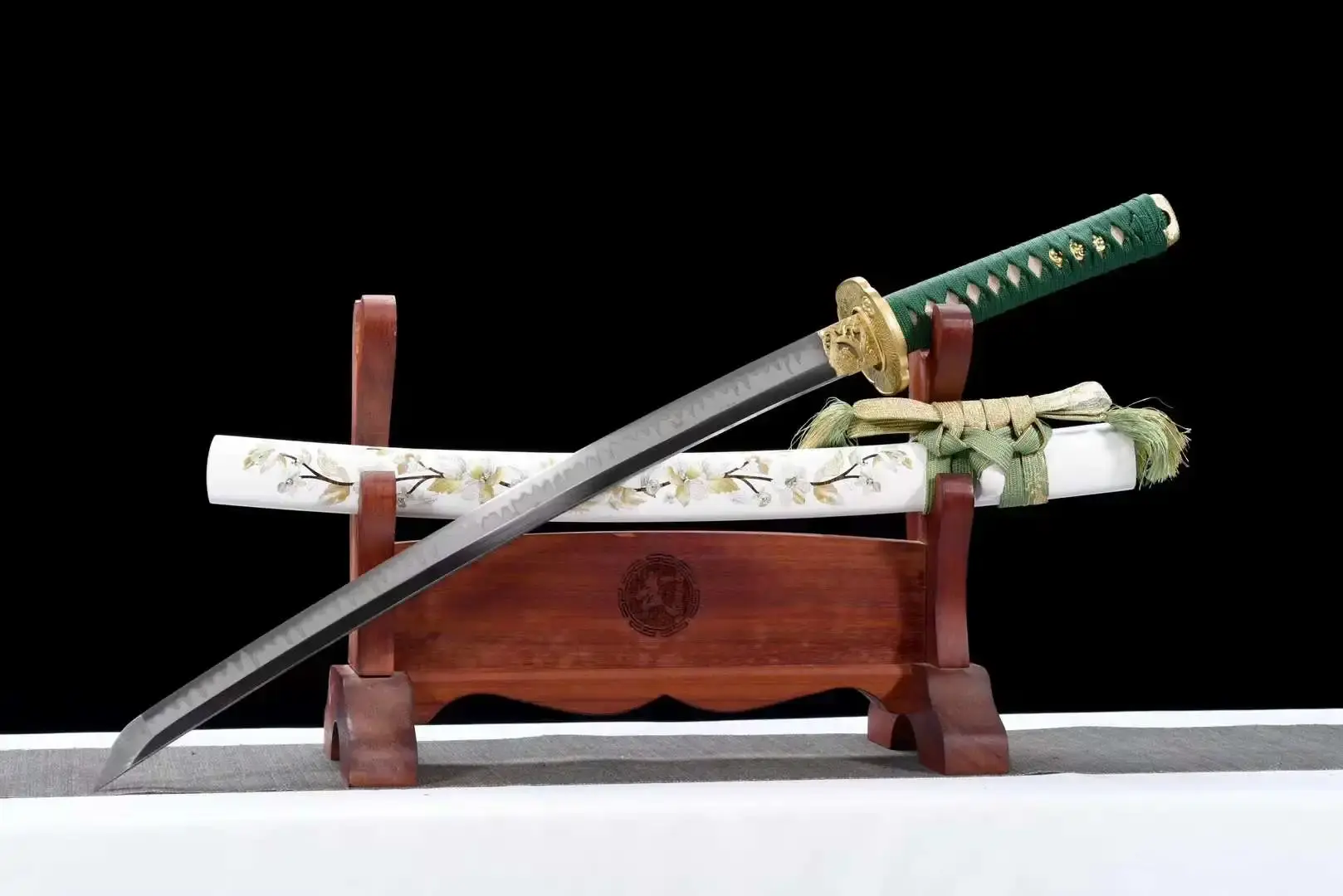
- Tang (nakago) – natural dark patina, visible file marks, genuine signature (mei).
- Blade geometry – subtle taper, correct sori (curvature) for the period.
- Hamon – clear, continuous hardened edge line with nie or nioi.
- Mountings (koshirae) – period-appropriate materials, matching set, no modern screws.
- Verification – papered by Japan's NBTHK or NTHK society for full confidence.
Conclusion: The Enduring Legacy of the Constant Companion
Frequently Asked Questions
How can I tell if an antique wakizashi is authentic without disassembling it?
You can examine the blade's shape, the hamon visibility, and any rust patterns on the exposed tang section if the handle allows. However, full authentication usually requires removing the tsuka (handle) to inspect the nakago. If you cannot disassemble it, request that a certified dealer or collector do so before purchase.
Is it legal to own a wakizashi in the United States or Europe?
In most US states, antique wakizashi made before 1898 are considered antiques and not regulated as weapons. Europe varies by country: the UK requires proof of antique status (pre-1900) and no legal reason to carry in public. Always check local laws, especially for blades with sharp edges.
What is the average cost of a genuine Edo-period wakizashi?
Prices range from $2,000 for a blade with no signature and minor wear, to $15,000 or more for a fully papered wakizashi by a known smith with original mountings. Modern custom forgeries can also cost thousands, so papered certification is crucial for this price range.
Can a wakizashi be used for cutting practice (tameshigiri)?
Yes, but only if the blade is in good structural condition and has been properly sharpened. Because the blade is shorter, you must be closer to the target, increasing the risk of a misalignment. Use only soft targets like rolled wet tatami mats and start with thin bundles.
How often should I oil my wakizashi if I live in a coastal area?
Coastal air contains salt that accelerates rust. In such climates, oil the blade every two weeks during damp seasons and monthly otherwise. Use a high-quality choji oil and wipe the blade thoroughly before each application to avoid trapping moisture under the oil layer.