
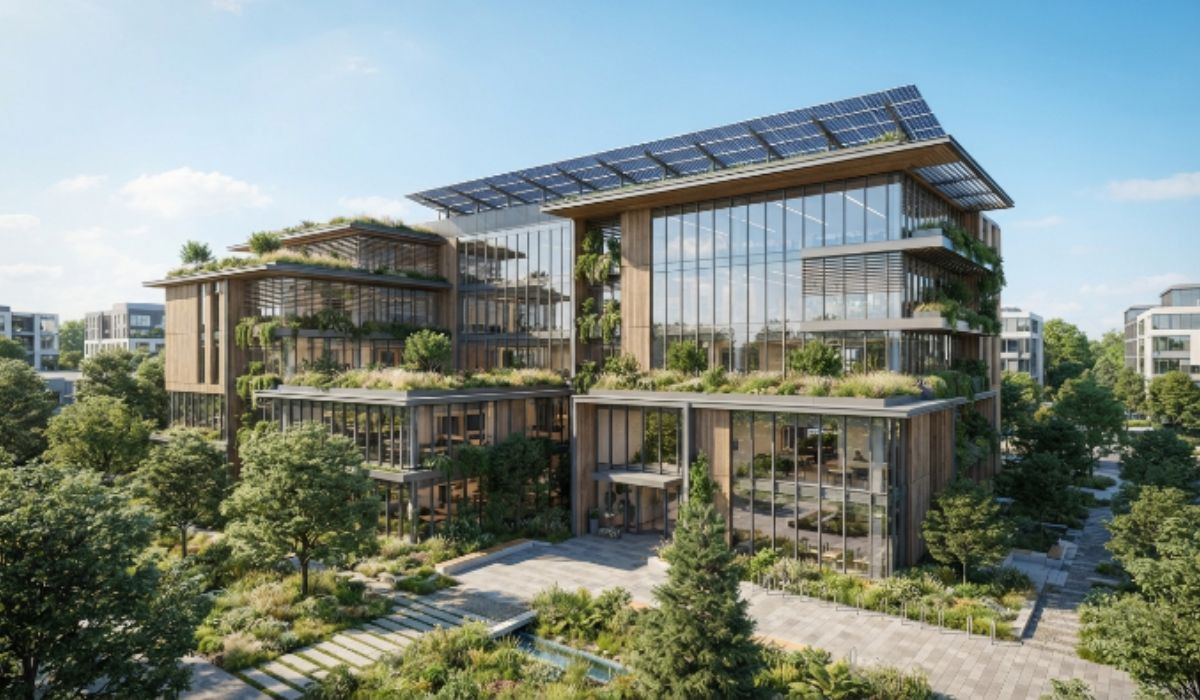
Buildings account for a significant share of global carbon emissions while consuming vast amounts of energy and natural resources.
As governments tighten regulations and organizations pursue ambitious sustainability goals, sustainable architecture has become one of the most important approaches to designing buildings that are efficient, resilient, and environmentally responsible.
This practice transforms how we conceptualize, construct, and operate the built environment, offering solutions that balance ecological integrity with economic viability.
This article explores the principles, technologies, and real-world applications of sustainable architecture, examining why it has become essential for addressing climate challenges while creating lasting value for owners, occupants, and communities. For architects, developers, engineers, and investors, understanding these concepts is critical for leading the industry's necessary transformation.
What Is Sustainable Architecture?
Sustainable architecture, often referred to as green architecture or environmental architecture, is a design philosophy that seeks to minimize the negative environmental impact of buildings throughout their entire lifecycle.
This comprehensive approach considers every stage, from site selection and material sourcing to construction, operation, and eventual deconstruction or adaptive reuse.
At its core, sustainable architecture integrates sustainable building design principles with a conscious effort to conserve energy, water, and ecological resources.
It extends beyond simply adding solar panels or green roofs. Instead, it prioritizes a symbiotic relationship between the built environment and the natural world, aiming to create spaces that are environmentally responsible, healthier, and more efficient for occupants.
Climate responsive architecture plays a crucial role, leveraging local environmental conditions like sunlight, wind patterns, and vegetation to reduce reliance on mechanical systems. This contextual approach ensures buildings work with their surroundings rather than against them, optimizing performance while minimizing resource consumption.
Green building design encompasses these principles within a framework that emphasizes measurable outcomes, often verified through third-party certification systems.
Why Sustainable Architecture Is Becoming Essential
The urgency of adopting sustainable practices stems from the building sector's immense environmental footprint. Globally, the construction and operation of buildings account for nearly 38% of energy-related carbon dioxide emissions. The industry is also a major consumer of land and water and a significant contributor to pollution and waste generation.
Several converging factors are accelerating the shift toward sustainable architecture:
Regulatory Pressure: Governments worldwide are implementing stricter building codes, emissions targets, and disclosure requirements.
Regulations increasingly mandate energy efficiency standards, renewable energy integration, and embodied carbon limits.
Economic Drivers: Rising energy prices, volatile material costs, and growing insurance premiums for climate-vulnerable properties make sustainable buildings financially prudent. Tenants and investors increasingly demand responsible buildings that offer lower operating costs and better risk profiles.
Market Demand: Occupants and communities expect healthier, more comfortable spaces. Employees prefer working in environments that prioritize well-being, and residents increasingly value homes that reduce utility bills and environmental impact.
Climate Adaptation: Buildings must withstand more frequent extreme weather events. Resilient design principles integrated with sustainability strategies ensure structures can endure and recover from climate-related disruptions.
Critical to this transition is addressing both operational and embodied carbon. Operational carbon refers to emissions from building operations, like heating, cooling, and lighting. Embodied carbon encompasses emissions from the manufacture, transportation, installation, and disposal of building materials. Sustainable architecture addresses both, aiming to decarbonize the industry at every stage.
Core Principles of Sustainable Architecture
Effective sustainable architecture is guided by several foundational principles that ensure genuine environmental performance, occupant well-being, and long-term value.
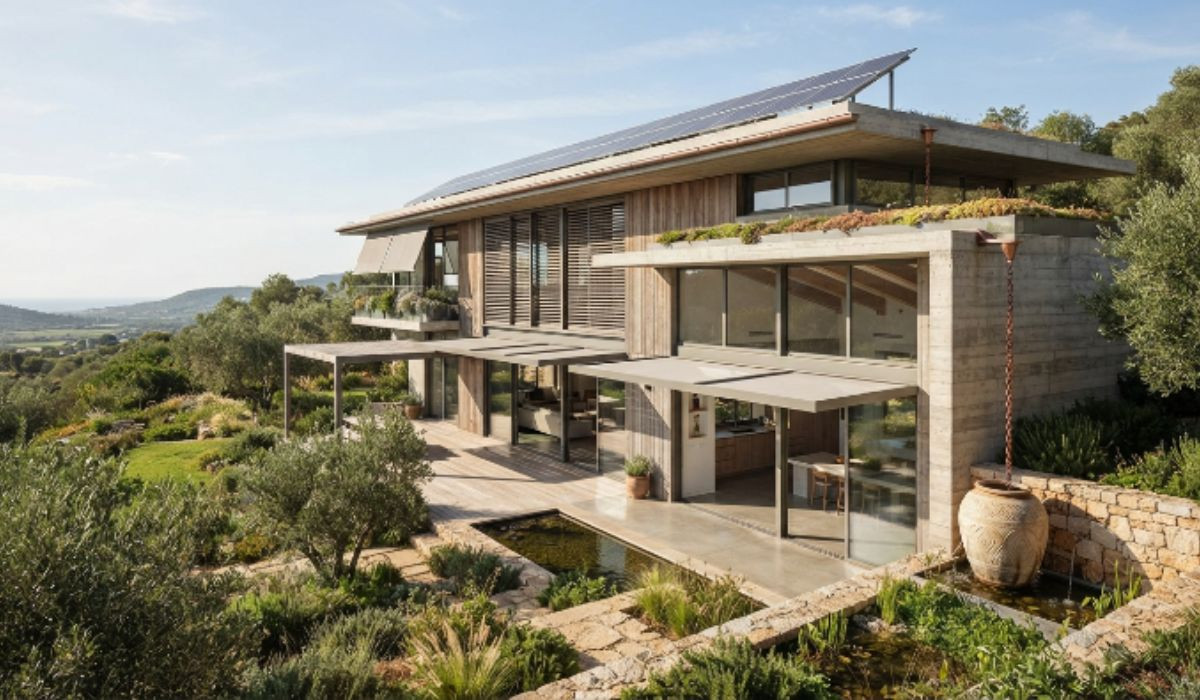
Energy Efficiency and Passive Design: Designing energy-efficient buildings is the highest priority. This involves passive strategies like high-performance insulation, strategic window placement for natural daylight and solar gain, and maximizing natural ventilation.
Building performance simulation tools model these factors during design, optimizing outcomes before construction begins.
Water Conservation and Management: Buildings can significantly reduce water use by implementing rainwater harvesting, greywater recycling for irrigation and toilets, and installing water-efficient fixtures. Climate responsive architecture incorporates local precipitation patterns and water availability into design decisions.
Sustainable Material Selection: Choosing materials with low embodied energy, recycled content, and rapidly renewable resources like bamboo reduces environmental impact. Prioritizing locally sourced materials cuts transportation emissions. Life Cycle Assessment (LCA) evaluates material impacts from extraction to disposal, informing better choices.
Waste Reduction and Circular Economy: Minimizing construction waste and planning for future disassembly allows materials to be reused or recycled. The circular economy approach keeps resources in use, reducing demand for virgin materials and landfill disposal.
Indoor Environmental Quality: Healthy buildings provide excellent indoor air quality, thermal comfort, acoustic performance, and access to natural light. These factors enhance occupant health, productivity, and satisfaction, supported by certifications like WELL.
Site Ecology and Biodiversity: Sustainable architecture protects existing ecosystems, restores degraded sites, and incorporates green infrastructure like vegetated roofs, bioswales, and native landscaping to support local biodiversity and manage stormwater.
Key Benefits of Sustainable Architecture
The advantages extend well beyond environmental compliance, offering a compelling business case and measurable community impact.
Environmental Benefits: Sustainable buildings reduce waste, lower greenhouse gas emissions, preserve natural resources, and protect local biodiversity. Urban sustainability improves as clusters of efficient buildings reduce infrastructure strain and mitigate the urban heat island effect.
Economic Benefits: While initial costs can be higher, sustainable construction generates substantial long-term savings through reduced energy and water bills. High-performance buildings command premium rents, achieve higher occupancy rates, and maintain property values. Net Zero Buildings eliminate energy costs entirely over time.
Operational Efficiency: Integrated building automation and smart systems optimize energy use, lighting, and HVAC based on occupancy and conditions. Renewable energy systems like solar PV and geothermal reduce reliance on grid power, insulating owners from energy price volatility.
Health and Productivity: Improved indoor environmental quality enhances occupant health and cognitive function. Studies consistently link healthy buildings with reduced absenteeism, higher productivity, and better learning outcomes, directly benefiting employers and educational institutions.
Regulatory Compliance and Risk Management: Carbon neutral buildings and low-emission projects meet or exceed current and anticipated regulations, reducing compliance risk. Climate-adaptive designs protect assets from physical climate risks.
Market Differentiation and Brand Value: Demonstrating environmental leadership through LEED, Passive House, or WELL certification strengthens brand reputation and attracts environmentally conscious tenants, investors, and customers.
Technologies Driving Sustainable Architecture
Technological innovation is expanding what sustainable architecture can achieve, making high-performance buildings more accessible, cost-effective, and impactful.
Renewable Energy Integration: On-site renewable energy generation, primarily solar photovoltaic panels and solar water heating, is now mainstream. Geothermal heat pumps and wind turbines are increasingly viable for larger projects. Net Zero Design integrates these systems with high-efficiency envelopes to balance energy consumption with production.
High-Performance Building Envelopes: Advanced insulation materials, triple-glazed windows with low-emissivity coatings, and air-tight construction minimize heat loss and gain. These envelopes are fundamental to achieving Passive House standards and reducing heating and cooling loads dramatically.
Smart Building Systems and Automation: Building automation controls lighting, HVAC, and window shading to optimize energy use based on occupancy, weather forecasts, and utility pricing. Machine learning algorithms continuously refine performance, achieving efficiencies beyond static designs.
Building Information Modeling (BIM) and Simulation: Sophisticated modeling tools simulate energy performance, daylighting, thermal comfort, and airflow. Building performance simulation allows architects to test and optimize strategies virtually, reducing costly design revisions during construction.
Green Roofs and Living Walls: Vegetated roof and wall systems provide natural insulation, manage stormwater, reduce urban heat island effects, and support biodiversity. They also improve air quality and create amenity spaces for occupants.
Sustainable Materials Innovation: Cross-laminated timber (CLT), mass timber, and engineered wood products offer low-embodied-carbon alternatives to steel and concrete. Bio-based materials, recycled aggregates, and low-carbon concrete formulations are increasingly available and cost-competitive.
Building Certification Platforms: Frameworks like LEED, WELL, Passive House, and the Living Building Challenge provide rigorous standards to guide and verify sustainable practices. These certifications enhance market credibility and investment value.
Real-World Applications Across Building Types
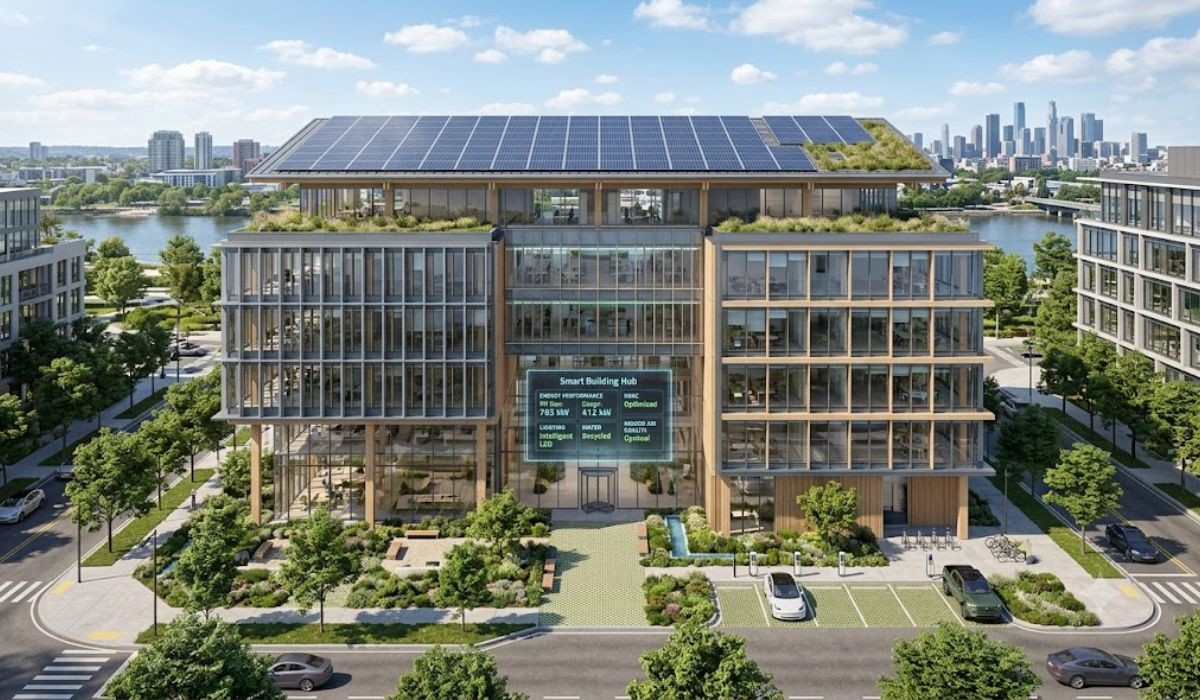
Sustainable architecture is being applied across diverse building sectors, from residential communities to large commercial, healthcare, and institutional projects. Each typology presents unique opportunities and challenges.
Commercial Office Buildings: Corporate tenants increasingly demand high-performance workspaces that lower operating costs, enhance employee well-being, and demonstrate environmental commitment.
Energy-efficient buildings with transparent energy performance data command premium rents. Features like operable windows, abundant daylight, and biophilic design elements improve occupant satisfaction and retention. Smart buildings using IoT sensors and building automation optimize HVAC and lighting while providing occupancy insights for space planning.
Healthcare Facilities: Hospitals and clinics operate around the clock, consuming vast amounts of energy and water. Sustainable architecture in healthcare focuses on infection control, patient healing, and staff efficiency. Natural ventilation, daylighting, and materials with low VOCs improve indoor air quality. Resilient systems ensure continued operation during grid outages or emergencies, critical for patient care.
Hospitality and Mixed-Use: Hotels, resorts, and mixed-use developments integrate sustainability into guest experiences, appealing to environmentally conscious travelers. Energy-efficient operations reduce overhead, and on-site renewable generation provides energy security.
Water conservation is essential in hospitality settings, where guest amenities drive consumption. Mixed-use projects benefit from shared infrastructure, reducing per-building resource demands.
Educational Campuses and Institutions: Schools and universities are adopting green building design to create healthier learning environments, reduce operating budgets, and educate students about sustainability. Daylighting, acoustics, and indoor air quality directly impact student performance. Campuses can serve as living laboratories, demonstrating renewable energy, stormwater management, and regenerative design principles.
Industrial and Warehousing: Large industrial spaces and logistics facilities benefit enormously from energy efficiency, with daylighting strategies reducing lighting loads, and high-performance envelopes cutting heating and cooling costs. Rooftop solar on vast warehouse footprints can generate substantial renewable energy. Sustainable stormwater management is critical given the large impervious surfaces typical of industrial sites.
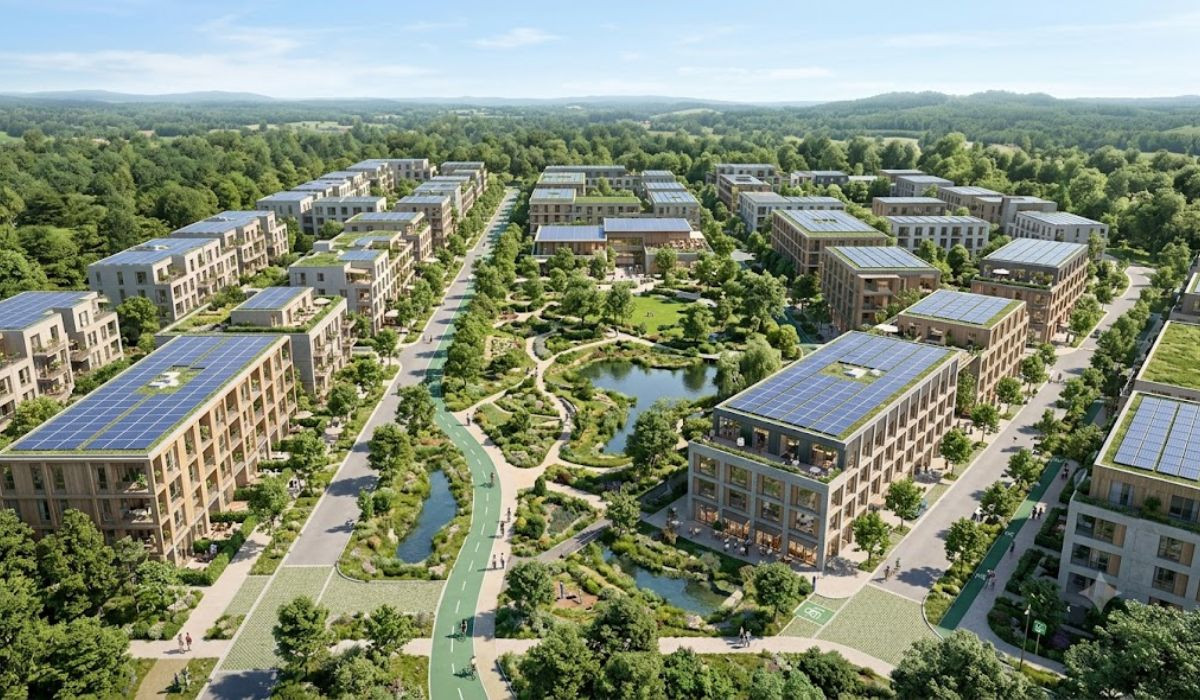
Multifamily Residential and Communities: Beyond single-family homes, sustainable architecture scales to entire communities. Net-zero clustered developments demonstrate how climate responsive architecture can create affordable, high-performance housing. Features like shared renewable systems, district heating and cooling, and community green spaces enhance livability while reducing individual building resource demands.
Retail and Commercial: Retail spaces are embracing sustainability to align with consumer values and reduce operating expenses. Energy-efficient lighting, HVAC, and refrigeration systems cut costs. Sustainable materials and waste-reduction strategies appeal to customers, while electric vehicle charging and bike infrastructure support sustainable transportation.
Challenges Facing Sustainable Architecture
Despite its clear benefits and growing momentum, sustainable architecture faces significant barriers that prevent mainstream adoption.
Higher Upfront Costs: Initial investment for high-performance materials, systems, and certification fees can be higher than conventional alternatives. Developers focused on short-term returns often prioritize first-cost savings over lifecycle value.
Skill Gaps and Expertise Shortages: The industry faces insufficient knowledge to measure, track, and reduce embodied carbon effectively. Architects, engineers, and contractors need continuous education and training to stay current with evolving technologies, materials, and standards.
Regulatory and Permitting Hurdles: Existing building codes often lag behind innovation, restricting novel materials or systems. Permitting processes may not accommodate integrated design approaches, delaying projects and increasing costs.
Short-Term vs. Long-Term Thinking: Many stakeholders in the property industry prioritize immediate returns over long-term lifecycle savings. This mindset slows investment in sustainable features, despite growing evidence of their financial benefits.
Supply Chain Constraints: Sustainable materials may have limited availability, longer lead times, or higher costs due to supply chain immaturity. This can delay projects and complicate procurement.
Performance Gaps and Verification: Buildings may underperform relative to design predictions due to construction quality issues, operational practices, or occupant behavior. Ongoing monitoring and commissioning are essential to close performance gaps.
Future Trends in Sustainable Architecture
Looking ahead, the field is evolving from doing less harm to actively healing the environment and creating net-positive outcomes.
Regenerative Architecture: This forward-looking practice goes beyond sustainability to improve local ecosystems, restore biodiversity, and enrich communities. Regenerative design shifts the mindset from net zero to net positive, creating buildings that give back more than they take.
Embodied Carbon Focus: As operational efficiency improves, the industry is intensifying efforts to reduce embodied carbon through bio-based materials like mass timber, low-carbon concrete, and recycled content. Decarbonization of the entire supply chain is becoming a priority.
Biophilic Design: This trend deepens the connection between building occupants and nature by integrating natural patterns, materials, and light to improve well-being, productivity, and health.
Climate Adaptive Buildings: Future structures will use intelligent technologies to respond actively to changing weather and environmental conditions, becoming more integrated with their surroundings. Resilient design will be inseparable from sustainability.
Policy and Regulatory Evolution: Governments are implementing embodied carbon limits, performance-based codes, and carbon pricing, accelerating the adoption of sustainable architecture. Building owners who act early will be better positioned for compliance.
FAQs
1. What is the difference between sustainable architecture and green building?
While often used interchangeably, green building is a specific practice of creating resource-efficient structures, whereas sustainable architecture is a broader philosophy encompassing design approach, considering long-term ecological, social, and economic impacts.
2. Is sustainable architecture more expensive?
Upfront costs can be higher due to advanced materials and systems. However, lifecycle costs are often lower because of reduced energy and water expenses, lower maintenance requirements, and enhanced asset value. Financial models increasingly demonstrate favorable returns over time.
3. What makes a building truly sustainable?
A truly sustainable building minimizes environmental impact across its entire lifecycle, reduces energy and water consumption, uses healthy and low-impact materials, provides excellent indoor environmental quality, and adapts to its local climate and context.
4. How do sustainable buildings benefit investors?
Investors benefit from lower operating costs, higher tenant attraction and retention, increased property valuation, improved resilience against climate risks, and reduced exposure to tightening regulations and carbon pricing.
5. Can existing buildings become sustainable?
Absolutely. Retrofitting existing buildings with energy-efficient systems, improved insulation, modern windows, smart controls, and renewable energy can transform performance. Adaptive reuse preserves embodied carbon while enhancing functionality.
6. What role does technology play in sustainable architecture?
Technology is essential for optimizing energy use through smart building automation, enabling on-site renewable energy generation, developing high-performance materials, and providing sophisticated modeling tools for climate-responsive and performance-driven design.
Conclusion
Sustainable architecture has become a fundamental necessity for the future of the built environment. By prioritizing energy efficiency, water conservation, healthy materials, and climate resilience, this approach creates buildings that perform better, cost less to operate, and deliver lasting value for occupants, owners, and communities.
The transition to a truly sustainable built environment requires collaboration across the industry. Architects, developers, engineers, contractors, investors, and policymakers must move beyond minimum compliance and adopt a holistic approach that considers a building's entire lifecycle, environmental impact, and long-term performance.
As climate risks intensify and sustainability expectations continue to evolve, organizations that invest in sustainable architecture today will be better prepared for tomorrow's environmental, economic, and regulatory challenges. High-performance buildings are no longer a niche concept—they are becoming the benchmark for resilient and responsible development.
Practical experience plays an equally important role alongside sustainability frameworks and certification systems. Every project presents unique challenges related to climate, site conditions, energy performance, material selection, regulatory requirements, and long-term operational efficiency.
One example is Urban A&O's Hudson Valley Scalable Climate Cluster, a proposed net-zero community development exploring climate-responsive planning, parametric design, renewable energy integration, and high-performance building strategies at a community scale. Projects like this demonstrate that successful sustainable architecture depends on integrating environmental performance, occupant well-being, and long-term resilience from the earliest stages of design—turning sustainability from a design objective into measurable, real-world outcomes.