
Spanish colonial revival gardens in Southern California go far beyond just the visual extension of white stucco walls and red-tiled roofs. These garden designs are deeply rooted in Mediterranean landscape architecture in San Diego, which reflects a thoughtful response to culture, climate, and spatial harmony.
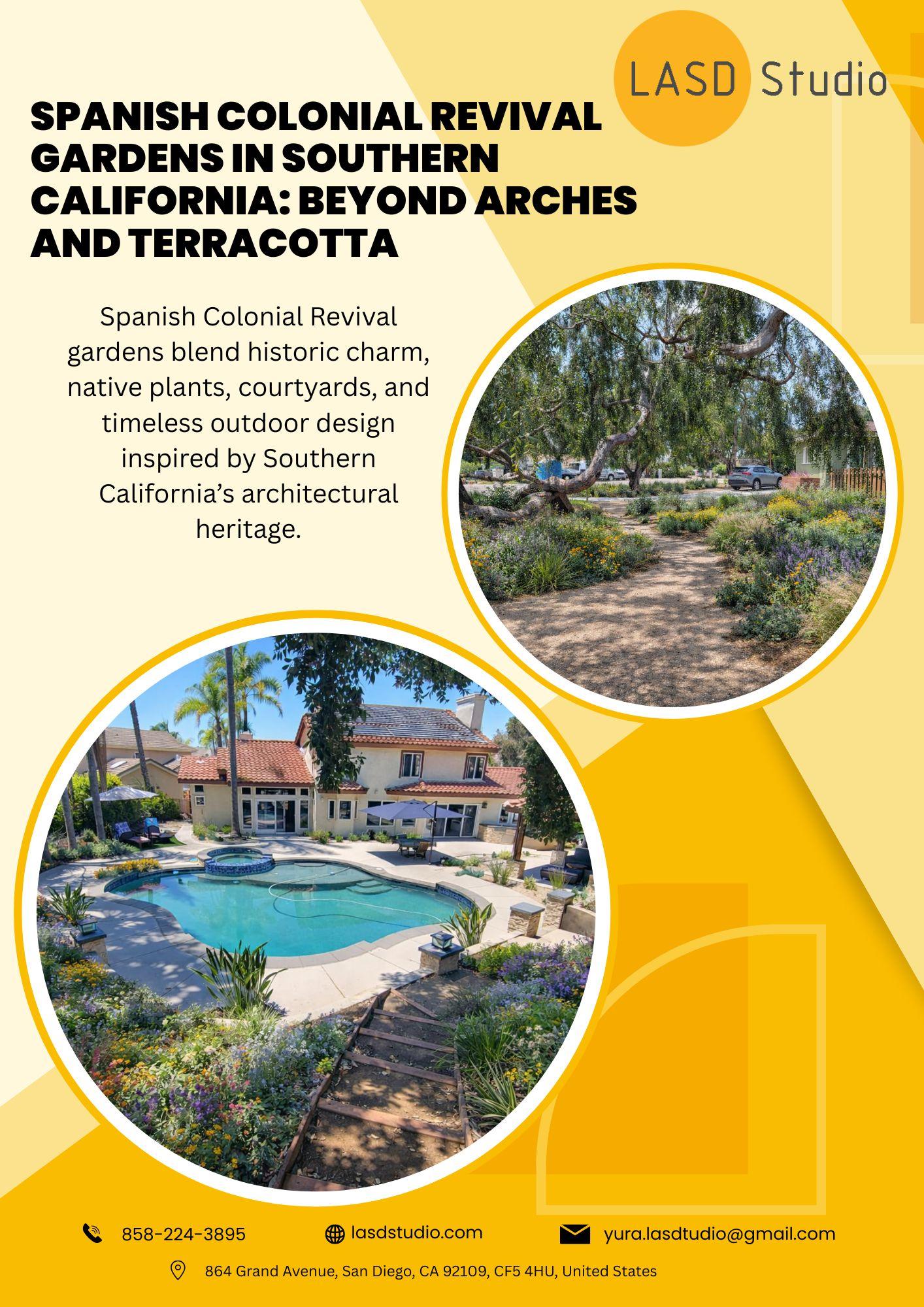
Spanish Revival garden design blends aesthetic traditions with really functional outdoor living. It creates spaces that feel serene, timeless, and deeply connected to nature. This article highlights the key characteristics of Spanish colonial revival gardens. Please check out the article for a detailed and insightful breakdown.
Key Characteristics of Spanish Colonial Revival Gardens
Let’s find it!
Spatial Proportion
One of the most defining characteristics of these gardens is their emphasis on spatial proportion. These landscapes typically rely on the sequence of scaled outdoor rooms that mirror the interior layout of your home rather than expansive lawns. In this garden design, terraces, pathways, and planting beds are carefully measured to maintain symmetry and balance.
Geometric layouts, low walls, and tiled steps guide movement while preserving visual cohesion. The immediate yet structured garden is an essential principle in Mediterranean landscape architecture in San Diego and similar coastal regions.
Courtyard Logic
The courtyard logic lies at the heart of Spanish Revival garden design. This is more than a decorative feature because it functions as a social and climatic hub. It creates a protected microclimate that reduces heat, buffers wind, and supports year-round use.
Courtyards often include clay tile paving, fountains, and built-in seating. These elements foster a sense of community and retreat. In the mild climate of Southern California, this layout supports relaxation, outdoor dining, and quiet reflection while maintaining privacy from the street.
Shade Systems
Shade is essential in Spanish colonial revival gardens in Southern California, particularly in the sun-drenched areas. Some of the traditional shade systems include canvas sails, vine-covered trellises, deep arcades, and pergolas with exposed wood beams. These shading systems can filter sunlight rather than block it entirely by producing dappled shade that provides cooling while preserving brightness and optimal warmth.
Some climbing plants, such as grapevines and bougainvillea, can enhance the cooling effect. All of these elements combine to contribute to the lush and layered aesthetic associated with the Mediterranean landscapes.
Material Authenticity
Authentic materials are central to this garden design. Weathered terracotta pots, hand-painted talavera tiles, wrought iron gates, and surfaces made of natural stones create a tactile richness that cannot be replicated with synthetic substitutes.
These materials age gracefully and reinforce the historical character of your garden. Some locally made clay tiles and reclaimed wood can maintain material authenticity while supporting sustainable practices.
Climate Adaptation
The semi-arid climate in Southern California makes the climate-responsive design essential. This garden design excels in this regard and draws inspiration from Mediterranean regions with similar weather patterns.
Some drought-tolerant plants, such as lavender, olive, agave, and rosemary, provide texture and fragrance while conserving water. Permeable paving and gravel groundcovers reduce runoff and support soil health. It demonstrates how traditional design principles align with modern sustainability goals.
Are you ready to have Spanish colonial revival gardens in Southern California from professional garden designers? If yes, look no further than LASD Studio to get cohesive and resilient outdoor spaces. Visit lasdstudio.com for more details.