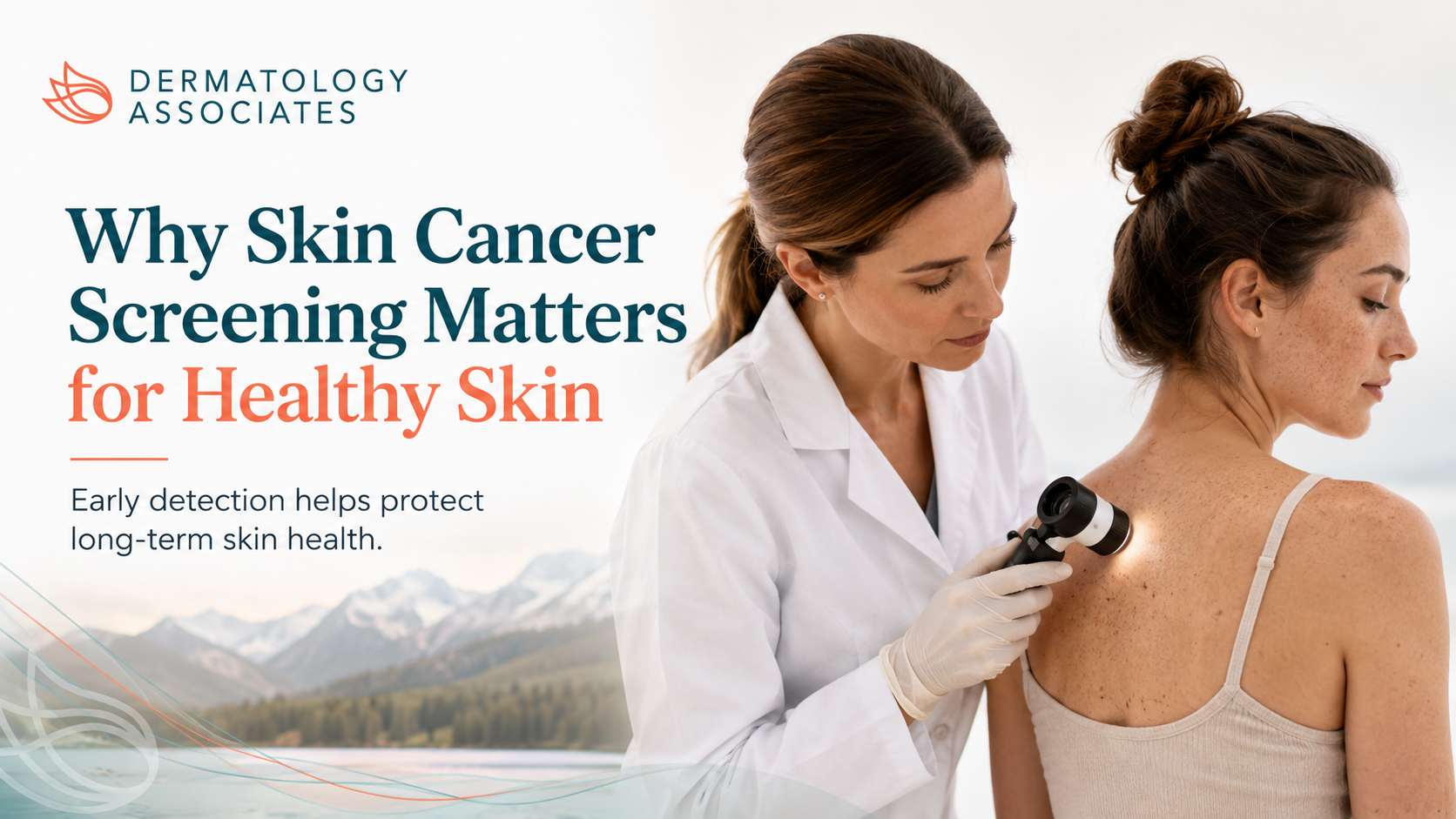
Skin cancer screening is one of the most important steps you can take to protect your long-term skin health. Many people watch for acne, dryness, eczema, or irritation, yet they may overlook new or changing spots on their skin. However, early attention can make a major difference.
The American Academy of Dermatology states that skin cancer is the most common cancer in the United States. It is also one of the most preventable cancers and highly treatable when found early.
For patients in Kalispell, Northwest Montana, and the Flathead Valley, Dermatology Associates provides professional dermatology care for skin cancer screenings, Mohs surgery, and many other skin conditions. Regular skin checks can help patients feel more informed, prepared, and confident about their skin health.
What Is a Skin Cancer Screening?
A skin cancer screening is a professional skin exam that checks for suspicious moles, spots, growths, or lesions. During the exam, a dermatology provider looks for changes that may need closer evaluation.
Not every unusual spot is skin cancer. Still, some changes should not be ignored. A new mole, a spot that changes shape, a sore that does not heal, or a growth that bleeds or itches may need medical attention.
Because many skin concerns can look similar, professional evaluation helps reduce guesswork. It also helps patients understand what is normal for their skin and what may need monitoring or treatment.
Signs You Should Not Ignore
Skin changes happen for many reasons. Some are harmless, while others need prompt care. Therefore, it helps to know what to watch for between appointments.
Schedule a dermatology visit if you notice:
- A new or changing mole
- A spot that bleeds, crusts, or does not heal
- A mole with uneven color or irregular borders
- A growth that becomes painful, itchy, or tender
- A sore that returns in the same area
- A rough, scaly patch that keeps coming back
In addition, patients with a personal or family history of skin cancer should stay especially consistent with skin checks. Outdoor work, frequent sun exposure, tanning bed use, fair skin, and a history of sunburns may also increase concern.
Why Early Detection Is So Important
Early detection gives patients more treatment options and better peace of mind. The American Academy of Dermatology estimates that about one in five Americans will develop skin cancer in their lifetime, and about 9,500 people in the United States are diagnosed with skin cancer every day.
That is why routine skin cancer screening should not be treated as optional, especially for patients who notice changes or have risk factors.
A dermatologist can examine the skin carefully and decide whether a spot should be watched, biopsied, or treated. As a result, patients can take action before a concern becomes more serious.
Sun Protection Supports Prevention
Skin cancer prevention starts with daily habits. The CDC recommends using shade, sunscreen, and protective clothing to reduce sun damage and skin cancer risk. This protection matters even when you are in the shade, because UV exposure can still affect the skin.
In Montana, many people spend time outdoors hiking, fishing, boating, skiing, working, or enjoying the mountains. Therefore, sun protection should be part of everyday skin care.
Helpful habits include wearing broad-spectrum sunscreen, using hats and sunglasses, choosing protective clothing, avoiding tanning beds, and checking your skin regularly. Moreover, patients should schedule professional skin exams when they notice changes or when their dermatologist recommends routine screening.
How Dermatology Associates Helps Patients
Dermatology Associates supports patients with professional skin cancer screening and treatment guidance in Kalispell, MT. The team also provides care for acne, eczema, hives
, itchy skin, pediatric dermatology concerns, Mohs surgery, and other skin conditions.
A skin cancer screening is not only about checking one spot. It is also an opportunity to ask questions, discuss risk factors, and learn how to monitor your skin at home.
For patients who need advanced skin cancer care, Mohs surgery may be recommended in appropriate cases. Mohs surgery is often used for certain skin cancers because it removes cancerous tissue while helping preserve as much healthy skin as possible.
When Should You Schedule a Screening?
You should schedule a skin cancer screening if you notice a suspicious spot, have a history of skin cancer, spend a lot of time outdoors, or have concerns about changes in your skin. In addition, many patients benefit from routine exams as part of their long-term skin health plan.
Even if your skin looks healthy, a professional exam can provide reassurance. Meanwhile, if something does need attention, early care can help you move forward with a clearer plan.
Take the Next Step Toward Healthier Skin
Your skin deserves careful attention. Skin cancer screening helps detect concerning changes early, supports prevention, and gives patients the information they need to protect their skin.
Dermatology Associates proudly serves Kalispell and the Flathead Valley with trusted dermatology care. If you have a changing mole, a non-healing spot, or questions about your skin health, schedule a visit with
Dermatology Associates and take a proactive step toward healthier, more confident skin.