
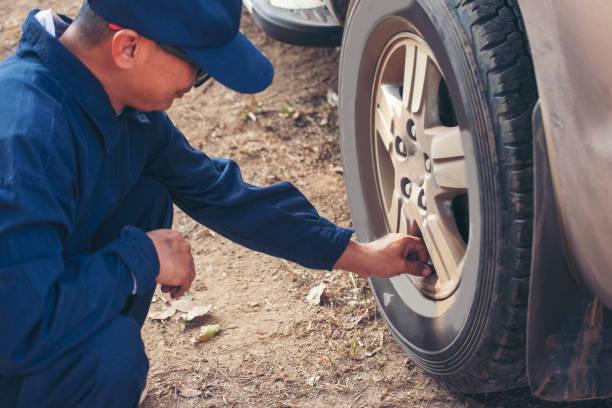
Why do so many roadside and driveway tyre replacements run into avoidable delays before the technician even unpacks a jack? Mobile tyre fitting provides a practical way to replace damaged or worn rubber without driving to a traditional workshop or waiting in a garage reception. Success depends on simple preparations that allow the mobile technician to carry out the replacement safely and efficiently.
Understanding what to prepare beforehand ensures the replacement proceeds without unexpected complications or wasted time. A mobile fitting van operates as a complete workshop on wheels, carrying heavy tyre-changing machinery, wheel balancing rigs, and compressed air systems. By following a few practical guidelines, motorists can avoid the common pitfalls that delay on-site tyre fitting.
What Is Mobile Tyre Fitting?
Mobile tyre fitting brings a qualified technician directly to a chosen location to fit, balance, and replace tyres on site. The van carries tyre bay equipment, including hydraulic jacks, pneumatic bead breakers, and digital balancers. Motorists booking a mobile fitting service can have replacement tyres installed at home, work, or the roadside without driving on unsafe wheels.
The fitting procedure remains identical to workshop standards. The technician removes the old wheel, strips the worn rubber, installs a fresh rubber valve or checks the tyre pressure monitoring system sensor, mounts the replacement tyre, and balances the assembly dynamically. The final step involves securing the wheel to the vehicle hub and tightening the wheel bolts to the exact torque specification stated in the vehicle manufacturer handbook.
How Does Mobile Tyre Fitting Work?
Installation requires adequate space, a firm surface, and clear access to every wheel. Hydraulic jacks need hard, level ground like tarmac or concrete to lift safely without sinking or shifting. Soft ground, gravel, or steep hills prevent jacks from holding the vehicle securely.
When the technician arrives, they begin by confirming that the replacement tyre matches the vehicle's required size and load specifications, then inspect the wheel and valve. Once verified, the technician breaks the bead, the reinforced edge of the tyre that seals against the wheel rim, removes the old rubber, and mounts the new tyre before balancing the wheel on a calibrated spindle.
Key Do's for Preparing the Vehicle
Drivers must complete several practical checks prior to the technician arriving on site to guarantee a smooth fitting process:
- Locate the locking wheel nut key and place it on the passenger seat where the technician can find it immediately.
- Confirm the full tyre size printed on the existing sidewall, including the width, aspect ratio, rim diameter, load index, and speed rating.
- Park the car on a flat, solid tarmac or concrete surface with the handbrake firmly engaged and the gearbox left in gear or park.
- Leave at least one metre of clear working clearance around every side of the vehicle so the technician can operate equipment freely.
- Ensure the vehicle keys remain accessible so the technician can unlock the car, disengage the steering lock if required, and reset the tyre pressure monitoring system (TPMS) once fitting is complete.
Providing accurate sidewall details prevents the arrival of incorrect tyre dimensions. The load index indicates the maximum weight a single tyre can carry safely at speed, while the speed rating represents the maximum service speed the tyre compound can endure. A mismatch in these ratings can compromise handling balance and lead to an immediate MOT inspection failure.
Critical Don'ts to Avoid During Fitting
Drivers frequently make simple oversights that compromise the safety of the technician or delay the completion of the job:
- Do not leave the car parked on loose gravel, soft grass, mud, or steep inclines where lifting equipment cannot gain stable footing.
- Do not attempt to remove rounded, seized, or over-tightened locking wheel nuts with makeshift hand tools before the technician arrives.
- Do not order replacement tyres based solely on an online registration search without visually inspecting the physical markings on the current sidewall.
- Do not leave the vehicle parked on narrow residential streets where passing traffic comes dangerously close to the technician's mobile workspace.
- Do not forget to notify the technician about damaged tyre pressure monitoring system sensors or corroded alloy rims before work begins.
Attempting to force a damaged locking wheel nut key often rounds the security pattern completely. When the security pattern or splines strip, standard removal sockets cannot grip the bolt, requiring specialist extraction tools or destructive removal techniques that add substantial time to the appointment.
How Mobile Fitting Compares to Garage Fitting
Choosing between a mobile service and a fixed tyre bay depends on scheduling requirements, vehicle mobility, and location constraints.
The table below outlines how mobile tyre fitting compares with visiting a traditional tyre workshop:
| Operational Factor | Mobile Tyre Fitting | Traditional Garage Workshop |
|---|---|---|
| Service Location | Driver driveway, workplace, or safe roadside | Fixed garage premises |
| Vehicle Mobility Required | None; ideal for non-drivable punctures | Vehicle must remain completely roadworthy |
| Waiting Environment | Home comfort or office desk | Garage waiting room or reception area |
| Working Space Needed | Minimum one metre clearance on flat ground | Dedicated workshop vehicle lift bay |
| Surface Requirement | Solid, flat tarmac or level concrete | Flat concrete workshop flooring |
| Weather Dependency | Exposed to ambient outdoor conditions | Fully sheltered indoor environment |
Choose mobile tyre fitting if the car cannot be driven safely, if personal schedules prevent travelling to a garage, or if the vehicle is parked on a suitable, level driveway.
Choose a traditional garage workshop if the vehicle is parked on a steep incline, if the fitting requires complex four-wheel laser alignment, or if access around the car is severely restricted.
Limitations and Safety Considerations
While mobile tyre replacement provides unmatched convenience, certain physical limitations apply to off-site fitting operations. Severe roadside locations, such as the hard shoulder of a live motorway or unlit blind corners on rural roads, present extreme safety hazards. Under UK road safety guidance, mobile technicians are strictly prohibited from carrying out tyre fitting on live motorway hard shoulders due to the severe collision risk from passing heavy goods vehicles; stranded vehicles must be recovered to a safe location first.
Additionally, mobile vans cannot perform comprehensive four-wheel chassis alignment adjustments, which require a full-sized drive-on ramp and calibrated optical targets. While mobile technicians check for uneven tyre wear caused by incorrect toe or camber angles, mechanical alignment corrections require a visit to a static alignment centre. Wheel balancing can be completed on site, but steering and suspension geometry adjustments remain limited to static workshop bays.
Who Benefits Most from Mobile Tyre Services?
Mobile tyre fitting serves motorists facing immediate mobility issues, including those who discover a completely flat tyre on their driveway before the morning commute. It proves invaluable for modern cars that lack a physical spare wheel, relying instead on temporary inflation sealant kits that cannot seal large punctures, torn sidewalls, or blowouts. Running a deflated tyre even a few yards can destroy the internal tyre carcass, making on-site mobile replacement the only viable solution.
The service also benefits commercial van drivers, fleet operators, and busy professionals who cannot afford hours spent waiting in tyre bay queues. By booking a scheduled slot at an office car park or home address, fleet vehicles maintain roadworthiness without losing productive working hours. Motorists can have premium, mid-range, or budget tyres fitted while continuing their daily routines uninterrupted.
Conclusion
Mobile tyre fitting provides a dependable and convenient solution for replacing vehicle tyres without disrupting daily routines or driving on unsafe wheels. Ensuring a successful fitting requires only a few basic steps: confirming the precise tyre markings on the sidewall, parking on hard, level ground, and keeping the locking wheel nut key ready for the technician. Verifying these details in advance protects vehicle safety, prevents wasted appointments, and ensures the new tyres are fitted correctly according to manufacturer specifications.
Frequently Asked Questions
What happens if the locking wheel nut key is missing?
Technicians cannot remove modern alloy wheels without the matching security key. If the key is lost or damaged, the technician must use specialist locking wheel nut removal tools to grip and extract the bolt. Drivers should always inform the mobile tyre service in advance if the security key cannot be located.
Can a mobile technician fit tyres on a steep driveway?
Mobile fitters require a flat, stable surface such as concrete or tarmac to jack up the vehicle safely. Hydraulic jacks can slip or tilt on steep inclines, risking severe damage to the car and endangering the technician. On steep properties, vehicles should be moved to a level street location prior to arrival.
Is mobile tyre fitting more expensive than a garage bay?
Mobile fitting charges are generally comparable to workshop prices once travel time, fuel costs, and recovery fees are taken into account. Many providers bundle mobile call-out fees into the tyre purchase price. Replacing a damaged tyre at home avoids costly recovery truck charges for vehicles without a usable spare wheel.
Can run-flat tyres be fitted by a mobile technician?
Qualified mobile technicians carry heavy-duty tyre machines fitted with assist arms specifically designed to mount stiff run-flat tyre beads. Run-flat tyres feature reinforced sidewalls that support vehicle weight after total pressure loss, requiring precise mechanical pressure during installation to prevent damaging the tyre bead or the alloy rim.
Drivers seeking reliable replacement tyres fitted at home or work can book an appointment with Titanium Mobile Tyres for professional on-site service. For motorists searching for professional mobile tyres Preston, professional on-site fitting can be arranged when suitable access is available.