
Keeping flower beds clean and vibrant is one of the most satisfying parts of gardening, but also one of the most frustrating when weeds keep showing up. If you’ve heard about pre-emergent solutions and are wondering whether they actually kill weeds in flower beds, you’re not alone. There’s a lot of confusion around how they work and when to use them.
Let’s break it down in simple terms and help you make smarter choices for a healthier, weed-free garden.
What Is a Pre-Emergent Herbicide?
A pre emergent herbicide is designed to stop weeds before they even appear. Instead of killing weeds you can already see, it works beneath the soil surface by preventing weed seeds from germinating.
Think of it as a protective shield. Once applied, it forms a barrier in the top layer of soil. When weed seeds try to sprout, they fail to grow properly and die off early. That’s why timing is everything when using a pre emergent herbicide.
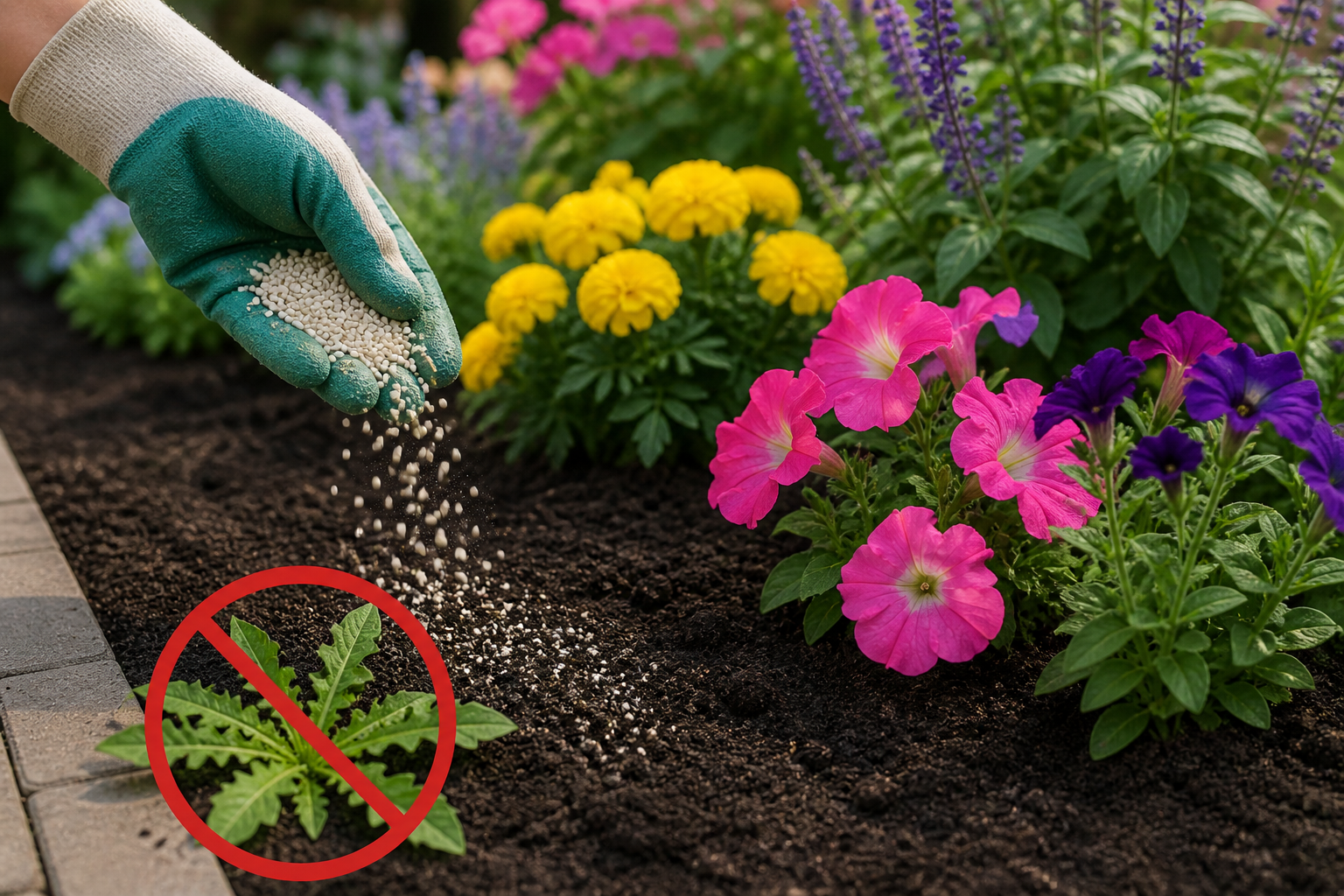
Does Pre-Emergent Kill Existing Weeds?
Here’s the straightforward answer: No, it doesn’t kill existing weeds.
If weeds are already visible in your flower beds, a pre-emergent won’t remove them. For those, you’ll need to:
- Pull them out manually
- Use a post-emergent solution
- Or combine both methods
Pre-emergents are all about prevention, not cure. Once you understand this difference, you’ll use them much more effectively.
Why Use Pre-Emergent in Flower Beds?
Flower beds are delicate spaces. Unlike lawns, they often contain a mix of plants, making weed control more challenging. That’s where pre-emergent weed control becomes valuable.
Here’s what it helps you achieve:
1. Long-Term Weed Prevention
Applying pre-emergent at the right time can stop weeds before they become a problem, reducing the need for constant maintenance.
2. Healthier Flower Growth
When weeds don’t compete for nutrients, sunlight, and water, your flowers grow stronger and look better.
3. Less Manual Work
Fewer weeds mean less time spent bending, pulling, and maintaining your beds.
When Should You Apply Pre-Emergent?
Timing can make or break your results.
For effective weed prevention in flower beds, apply pre-emergent:
- Early spring, before weeds begin to germinate
- Early fall to prevent winter weeds
A good rule of thumb: apply it just before soil temperatures reach the point where weeds typically sprout.
How to Use Pre-Emergent Safely Around Flowers?
Many gardeners worry about harming their plants and rightly so. Not all products are flower-friendly.
Here’s how to stay safe:
- Apply only to established plants (not newly seeded beds)
- Avoid disturbing the soil after application
- Follow label instructions carefully
- Water lightly after application to activate the barrier
Brands like Dhanuka have been known for offering crop protection solutions, and while their focus is often agriculture, the same principles of safe and effective application apply in garden settings too.
Best Pre-Emergent for Flower Beds: What to Look For
Choosing the best pre-emergent for flower beds depends on your specific needs. Here’s what matters:
Selective vs Non-Selective
- Selective products target weeds without harming flowers
- Non-selective options may damage everything
Granular vs Liquid
- Granular is easier for beginners
- Liquid offers a more precise application
Safety Profile
Look for products labeled safe for ornamental plants.
Keeping Flower Beds Weed-Free: Beyond Chemicals
While pre-emergents are effective, they work best as part of a broader strategy for keeping flower beds weed-free.
Mulching
A thick layer of mulch blocks sunlight, making it harder for weeds to grow.
Hand Weeding
Regular checks prevent small problems from becoming big ones.
Soil Health
Healthy soil supports strong plants, which naturally outcompete weeds.
Chemical vs Organic Weed Control
There’s an ongoing debate around chemical vs organic weed control, especially among home gardeners.
Chemical Options
- Fast and effective
- Long-lasting results
- Require careful handling
Organic Methods
- Safer for the environment
- Include mulching, vinegar sprays, and manual removal
- May require more effort and consistency
The best approach often combines both, depending on your garden’s needs.
Common Mistakes to Avoid
Even the best products won’t work if used incorrectly. Here are a few mistakes to watch out for:
- Applying too late (after weeds have sprouted)
- Over-applying, which can harm plants
- Disturbing the soil after application
- Expecting instant results
Remember, pre-emergent weed control is about patience and planning.
Can You Combine Pre- and Post-Emergent Methods?
Absolutely, and it’s often the smartest approach.
Use:
- Post-emergent solutions to remove visible weeds
- Followed by a pre emergent herbicide to stop new ones from growing
This combination gives you both immediate relief and long-term control.
Final Thoughts
So, does pre-emergent kill weeds in flower beds? Not exactly. It doesn’t kill existing weeds, but it’s one of the most effective tools to prevent them from ever becoming a problem.
If you want cleaner, healthier, and more manageable flower beds, using a pre emergent herbicide at the right time can make a huge difference. Pair it with smart gardening practices, and you’ll spend less time fighting weeds and more time enjoying your garden.
Whether you’re a home gardener or someone familiar with agricultural solutions like those from Dhanuka, the key remains the same: prevention is always easier than cure.
FAQs
1. What does a pre-emergent herbicide do in flower beds?
A pre-emergent herbicide prevents weed seeds from germinating in the soil. It creates a barrier that stops weeds before they grow, helping keep flower beds clean and healthy without constant maintenance.
2. Does pre-emergent herbicide kill existing weeds?
No, pre-emergent herbicides do not kill existing weeds. They only stop new weeds from growing. For visible weeds, you need to remove them manually or use a post-emergent solution.
3. When is the best time to apply pre-emergent in flower beds?
The best time is early spring or early fall, just before weed seeds begin to germinate. Applying at the right time ensures better weed prevention and long-lasting results.
4. Is pre-emergent safe for flowers and ornamental plants?
Yes, most pre-emergent herbicides are safe for established flowers if used correctly. Always read the label and follow instructions to avoid harming your plants.
5. How long does pre-emergent weed control last?
Pre-emergent herbicides usually last between 6 and 12 weeks, depending on the product and weather conditions. Reapplication may be needed for continuous weed prevention.
6. Can I apply pre-emergent after planting flowers?
You can apply it after planting established flowers, but avoid using it on newly seeded beds, as it may prevent desired plants from growing.
7. What is the difference between pre-emergent and post-emergent herbicides?
Pre-emergent herbicides prevent weeds before they grow, while post-emergent herbicides kill weeds that are already visible. Using both can give better overall weed control.
8. Are there effective agro solutions from Dhanuka for weed management?
Yes, Dhanuka offers a range of crop protection solutions designed to improve plant health and manage weeds effectively. While primarily used in agriculture, the same principles of proper application and timing can help gardeners achieve better weed control results.
9. Can I combine pre-emergent herbicides with other weed control methods?
Yes, combining pre-emergent herbicides with mulching and manual weeding can significantly improve results and help keep flower beds weed-free for longer periods.
10. How can Dhanuka products support better crop and plant protection?
Dhanuka is known for providing advanced agricultural solutions that support plant growth and protection. By using scientifically developed products and following recommended practices, farmers and gardeners can achieve healthier plants and better yields with effective weed management.