
Walk into any electrical control room at a factory, mall, or large residential complex, and you'll spot rows of steel panels fitted with switches, meters, and thick cable runs. Two names come up again and again in these setups: PDB and SDB. The abbreviations look alike, the panels often sit in the same room, and people frequently use the terms as if they mean the same thing.
They serve two different stages of the power distribution chain. One handles the bulk of the incoming supply, while the other takes that power closer to the areas that actually consume it. Knowing which panel does what affects how safely your electrical system runs, how much you spend on wiring and installation, and how easily you can maintain the system down the line.
This guide from Akshar International covers what PDB and SDB panels actually do, where each one fits into a building's electrical layout, and how project teams decide between them.
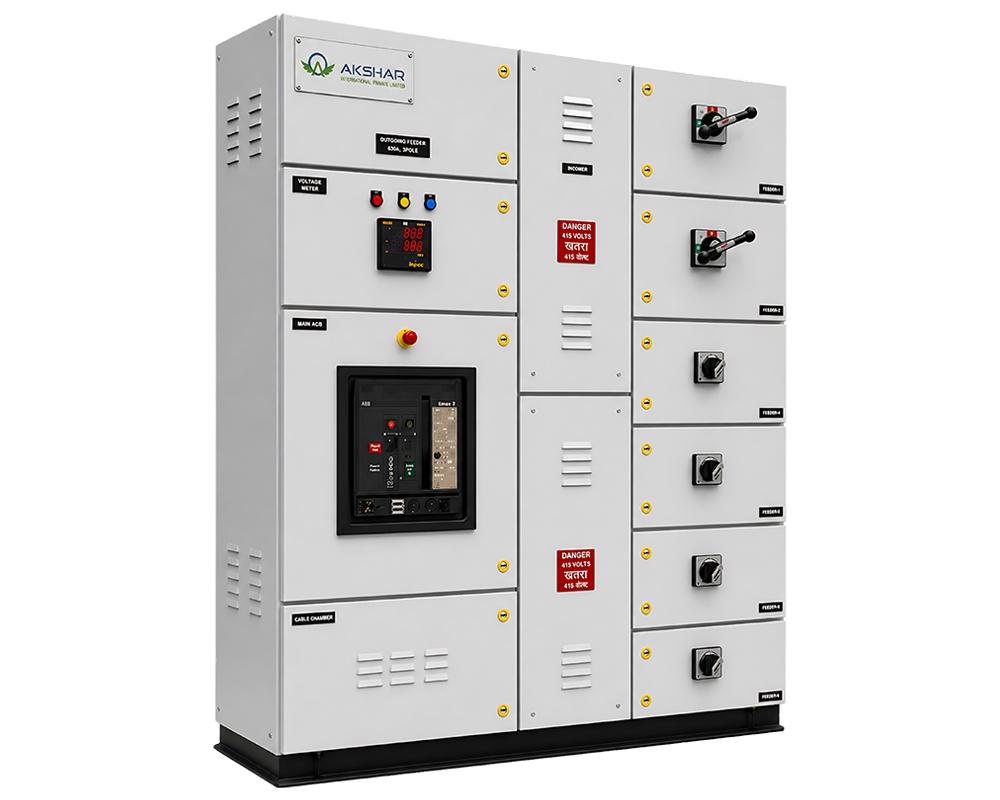
What Is a PDB (Power Distribution Board)?
A Power Distribution Board (PDB) is the panel that sits close to the main power source and takes on the job of splitting the incoming electrical supply into several outgoing circuits. Think of it as the first major "traffic signal" for electricity once it enters a building, plant, or site.
A PDB typically handles:
- Higher current ratings, since it's closer to the main supply
- Circuit breakers, switch-fuse units, and MCCBs/ACBs for protection
- Ammeters, voltmeters, and selector switches for monitoring load
- Busbars made of high-conductivity copper or aluminium to carry heavy current safely
These panels come in metal-clad, powder-coated steel enclosures, built to run continuously under heavy load for years. You'll find PDBs in industrial plants, large commercial buildings, substations, and any site where power gets divided among several major sub-circuits or machines.
Akshar International manufactures PDB panels as per relevant IS and IEC standards, giving you a panel built for genuine long-term industrial duty.
What Is an SDB (Sub Distribution Board)?
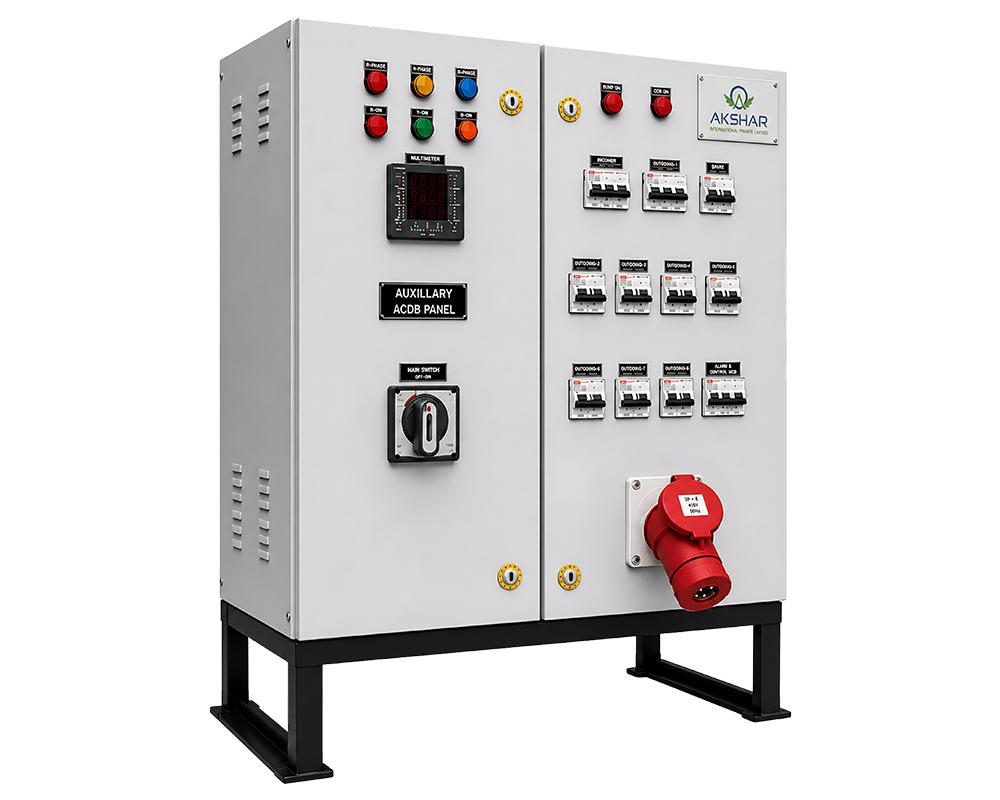
A Sub Distribution Board (SDB), sometimes called a sub-main distribution board, comes one step further down the chain. It receives power from the PDB (or the main distribution board) and divides it further into smaller, localized circuits.
Where a PDB deals with big chunks of power for an entire building or plant, an SDB focuses on a specific zone — a particular floor, department, workshop area, or a set of machines. This localization is what makes SDBs so useful in practice.
Key features of an SDB:
- Lower current ratings compared to a PDB, since it serves a smaller area
- MCBs and RCCBs for fine-grained circuit protection
- Compact enclosure size, since it doesn't need to carry the same load
- Easier isolation, letting you shut down power to one section without affecting the rest of the building
This makes SDBs common in offices, hospitals, hotels, and multi-storey buildings. If a fault occurs on one floor, the SDB for that floor can be isolated while the rest of the building keeps running.
PDB vs SDB: The Core Differences
Here's a side-by-side breakdown:
|
Factor |
PDB (Power Distribution Board) |
SDB (Sub Distribution Board) |
|
Position in system |
Receives power directly from the main supply |
Receives power from the PDB/main board |
|
Current capacity |
Higher built for bulk load |
Lower built for localized load |
|
Coverage area |
Entire building, plant, or large section |
A specific floor, zone, or machine group |
|
Typical protection devices |
MCCB, ACB, switch-fuse units |
MCB, RCCB |
|
Enclosure size |
Larger, heavier-duty |
Compact, easier to install |
|
Common use case |
Industrial plants, substations, large commercial sites |
Offices, individual floors, residential blocks, small workshops |
The PDB handles bulk distribution near the main supply. The SDB handles local distribution near the load.
Power moves from the PDB to one or more SDBs, and from there to individual appliances, lights, or machines through final distribution boards.
Why This Difference Matters on Site
People sometimes treat PDB and SDB as interchangeable terms, and this creates real problems during design and installation:
- Undersized panels: Using an SDB where the load actually calls for a PDB overloads the panel and creates a genuine safety hazard.
- Extra cost: Installing a PDB where an SDB would handle the load fine means paying for capacity the project doesn't need.
- Poor fault isolation: Skipping the SDB layer means a small fault in one area forces a shutdown across the entire building.
Working with a supplier who understands load calculations and building layout helps avoid these mistakes. Akshar International works with clients across industries to configure PDB and SDB panels around actual load requirements and safety standards, rather than pushing a single fixed setup for every project.
How to Choose Between PDB and SDB for Your Project
A few questions guide this decision on most projects:
- What's the total load you're distributing? Large, building-wide loads call for a PDB. Zone-specific loads call for an SDB.
- How many isolation points does the project need? Departments or floors that need independent control each get an SDB, feeding off a central PDB.
- What's the available budget and space? PDBs cost more and take up more room, while SDBs alone can't carry bulk incoming power.
- What's the nature of the site? Manufacturing plants, mining sites, and large commercial complexes typically need both, one PDB for the main supply, and several SDBs spread across zones.
For projects where the load pattern isn't obvious upfront, getting a proper load calculation done saves rework later. The team at Akshar International works through this with clients directly, sizing panels around real numbers instead of estimates.
Conclusion
A PDB brings power in from the main source and splits it into major circuits. An SDB picks up from there and carries power to specific floors, zones, or equipment groups, giving the building better control, safer isolation, and simpler maintenance. Together, the two form the backbone of a properly planned electrical distribution system, one panel handling bulk supply, the other managing it locally.
For an industrial site, commercial building, or infrastructure project that needs reliable, standards-compliant PDB and SDB panels, Akshar International designs and supplies panels built for long-term performance. Reach out to the team to discuss your load requirement and get a panel solution matched to your site.
Frequently Asked Questions (FAQs)
- Can a building work with only a PDB and no SDB? Technically yes, for very small setups, but for anything beyond a single floor or a few circuits, an SDB is recommended for better fault isolation and easier maintenance.
- Is an SDB less safe than a PDB since it's smaller? An SDB is designed for lower current and a smaller coverage area, but safety comes down to correct sizing and component quality, both of which apply equally to PDBs and SDBs.
- How many SDBs can one PDB support? This depends on the total load capacity of the PDB and the number of zones or floors that need independent power. A qualified electrical designer can calculate this based on your building layout.
- Does Akshar International customize PDB and SDB panels? Yes. Akshar International designs PDB and SDB panels based on client-specific load requirements, enclosure ratings, and industry standards, rather than offering only fixed, generic sizes.
- What standards should PDB and SDB panels comply with? Quality PDB and SDB panels are typically manufactured in line with IS and IEC standards for switchgear and enclosures, ensuring safe operation under continuous industrial or commercial use.