
Glass filled polycarbonate is a high-performance engineering plastic used in applications requiring strength, thermal stability, and dimensional accuracy. Reinforcing polycarbonate with glass fibers enhances rigidity and durability, making it suitable for industrial components.
- Combines mechanical strength with precision performance
- Maintains stability under heat and mechanical stress
- Available in various glass fiber compositions
- Used in automotive, electrical, and industrial sectors
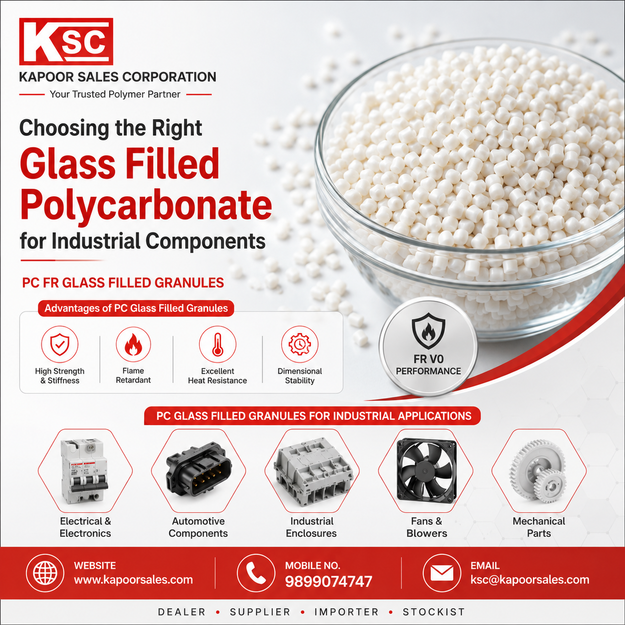
Understanding PC FR Glass Filled Granules
PC FR glass filled granules are polycarbonate resins enhanced with glass fibers. These materials provide higher stiffness, impact resistance, and flame retardancy for critical components.
- Improved structural strength and rigidity
- High impact and heat resistance
- Flame-retardant grades for safety-critical parts
- Consistent quality for large-scale production
Advantages of PC Glass Filled Granules
Glass filled polycarbonate offers benefits that make it ideal for industrial applications.
- Enhanced load-bearing capacity
- Dimensional stability under temperature variations
- Resistance to mechanical stress and abrasion
- Electrical insulation properties in specialized grades
Key Grades of Glass Filled Polycarbonate
Selecting the right grade depends on performance requirements.
- LEXAN 943A/111 (FR Clear) for transparent flame-retardant applications
- PC 10% GF for moderate reinforcement
- PC 20% GF for balanced strength and rigidity
- PC 30% GF for high-strength structural components
- LEXAN 943/701 (FR Black) for electrical housings
- LEXAN 943 Siemens Grey and Dark Grey for industrial use
- LEXAN 940A/111 for railway and high-temperature components
- LEXAN 945U, LEXAN 945, and LEXAN 945A for versatile FR applications
Industrial Applications
Electrical and Electronics
Glass filled polycarbonate is used where insulation and flame resistance are required.
- Switchgear and control panel housings
- Electrical enclosures and connectors
- Components for high-voltage applications
Automotive
PC glass filled granules help manufacture lightweight yet strong vehicle components.
- Interior panels and structural parts
- Under-the-hood housings
- Electrical and electronic vehicle components
Industrial Machinery
These materials support precision and durability in machinery.
- Machine housings and protective casings
- Load-bearing components
- Parts for continuous operation
Railway and Transportation
Specialized grades handle high strength and thermal demands.
- Structural parts for railcars
- Electrical housings for railway systems
- Components exposed to vibration and temperature changes
Benefits of Using Glass Filled Polycarbonate
- High mechanical and thermal performance
- Flame-retardant grades for safety compliance
- Reliable dimensional stability
- Compatible with injection molding and extrusion processes
Conclusion
Glass filled polycarbonate is a versatile and reliable material for industrial components. Grades such as LEXAN 943A/111, PC 10% GF, and LEXAN 945U allow manufacturers to meet diverse requirements in electrical, automotive, railway, and industrial applications, ensuring durability and consistent performance.
Source: https://timtoo.com/choosing-the-right-glass-filled-polycarbonate-for-industrial-components/