
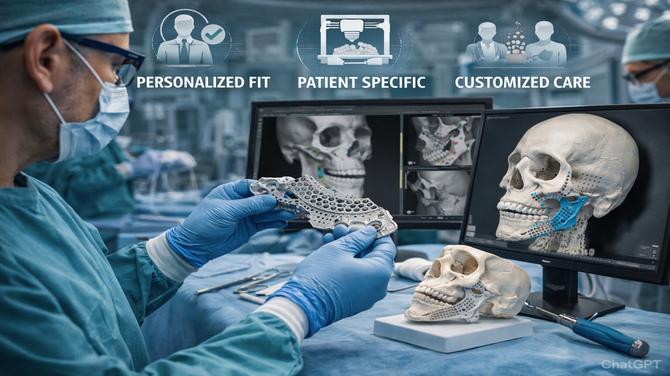
Facial harmony, proper bite alignment, and functional jaw movement are essential for speaking, chewing, breathing, and overall confidence. When jaw discrepancies go beyond what braces can correct, orthognathic surgery planning becomes the cornerstone of successful treatment.
Today, thanks to virtual surgery planning and 3D orthognathic surgery planning, jaw correction procedures have become more precise, predictable, and patient-centered than ever before. At Curewith3D, we leverage advanced digital technologies to redefine how surgeons plan and execute orthognathic procedures — ensuring improved accuracy, reduced surgical time, and enhanced patient outcomes.
This comprehensive guide explores everything you need to know about orthognathic surgery planning, the role of 3D technologies, benefits, workflow, and why digital planning is the future of corrective jaw surgery.
What is Orthognathic Surgery?
Orthognathic surgery, also known as corrective jaw surgery, is performed to correct skeletal and dental irregularities of the jaw. It addresses issues such as:
-
Severe overbite or underbite
-
Open bite
-
Facial asymmetry
-
Difficulty chewing or speaking
-
Chronic jaw pain
-
Obstructive sleep apnea
These procedures are often carried out by an Oral and Maxillofacial Surgeon in collaboration with orthodontists. Surgery repositions the upper jaw (maxilla), lower jaw (mandible), or both to achieve functional and aesthetic balance.
However, the success of these complex procedures heavily depends on meticulous orthognathic surgery planning.
Why Orthognathic Surgery Planning Is Critical
Corrective jaw surgery is not just about moving bones. It requires precise coordination between:
-
Skeletal structure
-
Dental occlusion
-
Soft tissue response
-
Airway considerations
-
Facial symmetry
Traditional planning methods relied on 2D X-rays, plaster dental models, and manual measurements. While effective in the past, these approaches had limitations:
-
Inaccurate depth perception
-
Estimation-based jaw positioning
-
Higher intraoperative adjustments
-
Longer surgery duration
Modern 3D orthognathic surgery planning eliminates these uncertainties through advanced imaging and digital simulation.
The Evolution to Virtual Surgery Planning
The introduction of virtual surgery planning (VSP) has revolutionized maxillofacial surgery worldwide.
Using high-resolution CBCT scans, intraoral scans, and digital facial data, surgeons can now:
-
Visualize patient anatomy in three dimensions
-
Simulate bone cuts (osteotomies) digitally
-
Predict final facial outcomes
-
Design patient-specific surgical splints and guides
At Curewith3D, we integrate AI-assisted software and high-precision modeling tools to enhance planning accuracy and surgical predictability.
What Is 3D Orthognathic Surgery Planning?
3D orthognathic surgery planning is a fully digital workflow that allows surgeons to create a detailed surgical roadmap before entering the operating room.
Step-by-Step Digital Workflow at Curewith3D
1. Data Acquisition
-
CBCT scan
-
Intraoral scanning
-
3D facial photography
2. Digital Model Creation
The patient’s skeletal and dental anatomy is converted into a detailed 3D model.
3. Virtual Surgery Simulation
Surgeons digitally perform osteotomies, reposition jaw segments, and evaluate occlusion in real-time.
4. Outcome Analysis
The software predicts soft tissue changes and facial balance post-surgery.
5. Fabrication of Surgical Guides
Using 3D printing technology, custom splints and guides are created for precise intraoperative execution.
Benefits of Virtual Surgery Planning in Orthognathic Procedures
-
Enhanced Accuracy: Digital simulations reduce human error and allow millimeter-level precision.
-
Reduced Surgical Time: Pre-planned procedures minimize intraoperative guesswork, leading to shorter anesthesia time.
-
Predictable Aesthetic Outcomes: Patients can visualize expected results before surgery.
-
Improved Communication: Orthodontists, surgeons, and lab technicians collaborate seamlessly through shared digital files.
-
Customized Patient Care: Each surgical plan is tailored specifically to the patient's anatomy.
Conditions That Benefit from 3D Orthognathic Surgery Planning
-
Skeletal Class II Malocclusion - Commonly associated with a retruded mandible.
-
Skeletal Class III Malocclusion - Involves a protruding lower jaw.
-
Open Bite Deformities - Facial Asymmetry
-
Obstructive Sleep Apnea - Certain cases require maxillomandibular advancement surgery.
The Role of Technology in Modern Jaw Surgery
Several advanced technologies support orthognathic surgery planning today:
-
CBCT Imaging - Provides 3D visualization of craniofacial structures.
-
CAD/CAM Software - Designs precise surgical guides.
-
3D Printing - Creates splints and patient-specific models.
-
AI-Integrated Planning Systems - Enhance predictive modeling and outcome assessment.
At Curewith3D, we integrate these technologies into a seamless digital ecosystem for improved surgical success rates.
Comparing Traditional vs. 3D Orthognathic Surgery Planning
|
Parameter |
Traditional Planning |
3D Virtual Planning |
|
Imaging |
2D X-rays |
3D CBCT scans |
|
Accuracy |
Manual estimation |
Digital precision |
|
Surgical Splints |
Lab-fabricated manually |
3D printed, patient-specific |
|
Outcome Prediction |
Limited |
Real-time visualization |
|
Collaboration |
Physical model sharing |
Digital collaboration |
The shift toward virtual surgery planning is not just technological advancement—it is a paradigm shift in surgical excellence.
How Curewith3D Elevates Orthognathic Surgery Planning
Curewith3D specializes in advanced digital surgical planning services tailored for maxillofacial surgeons worldwide.
Our Approach Includes:
-
High-resolution 3D anatomical modeling
-
Collaborative case review sessions
-
Precision splint and guide design
-
Integration with orthodontic workflows
-
End-to-end digital support
We focus on minimizing surgical uncertainty while maximizing functional and aesthetic outcomes.
Patient-Centered Advantages of Digital Planning
For patients, the benefits of 3D orthognathic surgery planning extend beyond surgical precision:
-
Better understanding of procedure
-
Reduced anxiety through visualization
-
Faster recovery due to precise execution
-
Improved facial symmetry
-
Long-term functional stability
Patients appreciate seeing a digital preview of their post-surgical facial profile before making a decision.
Orthognathic Surgery Planning and Multidisciplinary Collaboration
Successful jaw correction requires close coordination between:
-
Orthodontists
-
Maxillofacial surgeons
-
Anesthesiologists
-
Digital planning specialists
With virtual surgery planning, team members can collaborate remotely, review simulations, and refine surgical movements before the actual procedure.
This digital collaboration reduces miscommunication and enhances overall treatment quality.
Challenges in Orthognathic Surgery Planning (And How 3D Solves Them)
-
Soft Tissue Prediction - 3D software improves accuracy in predicting facial soft tissue response.
-
Complex Asymmetry Cases - Digital segmentation allows independent manipulation of bone segments.
-
Airway Assessment - Advanced planning enables airway volume analysis, critical in sleep apnea surgeries.
-
Surgical Precision - Custom guides ensure the planned movements translate accurately during surgery.
The Future of Orthognathic Surgery Planning
The next frontier in virtual surgery planning includes:
-
AI-driven predictive algorithms
-
Real-time surgical navigation
-
Augmented reality assistance in the operating room
-
Robotic-assisted jaw repositioning
As technology advances, 3D orthognathic surgery planning will continue to improve safety, efficiency, and aesthetic predictability.
Curewith3D remains at the forefront of this transformation by continuously adopting innovative digital solutions.
Why Surgeons Choose Curewith3D
-
Expertise in digital surgical workflows
-
High-precision planning systems
-
Rapid turnaround time
-
Global collaboration capability
-
Commitment to excellence and innovation
Our mission aligns with modern surgical demands — combining technology with clinical expertise for superior outcomes.
Conclusion
Orthognathic surgery planning has evolved dramatically with the introduction of virtual surgery planning and 3D orthognathic surgery planning technologies. These innovations have transformed corrective jaw surgery from an estimation-based procedure into a highly precise, data-driven discipline.
By integrating advanced imaging, AI-assisted simulation, and 3D printing, Curewith3D empowers surgeons to deliver predictable, safe, and aesthetically superior outcomes.
As patient expectations continue to rise and surgical complexity increases, digital planning is no longer optional — it is essential.
Curewith3D stands committed to advancing the future of orthognathic surgery through cutting-edge technology, collaboration, and unwavering dedication to excellence.