
Principles Of Life
https://justpaste.it/p2n-fc
Fritjof Capra
Principles of life
I am happy to announce that my article on the systemic principles of life, which I developed over the last
two years, has been published in Resurgence magazine, Issue 346, September/October 2024. I found
this new language, summarizing my synthesis of the systems view of life, in conversations with the
students of my online Capra Course. I am very grateful to them for countless stimulating discussions.
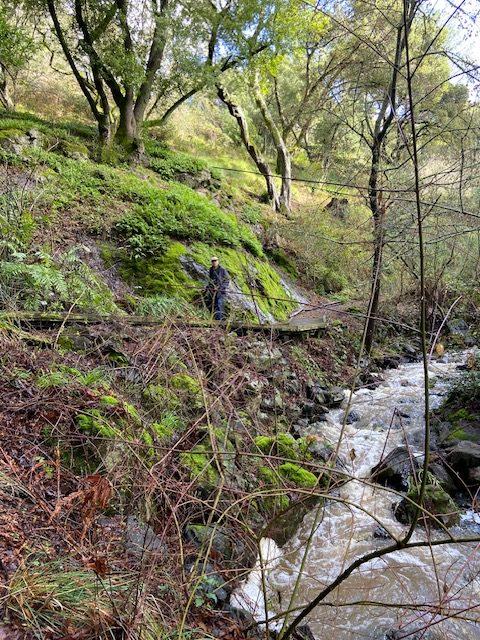
Photo by Elizabeth Hawk
I was trained as a physicist and spent twenty years doing research in theoretical high-energy physics. I
left physics in the mid-eighties and turned towards the life sciences, where a new conception of life has
recently emerged. It involves a profound shift in perspective from seeing the world as a machine
composed of elementary building blocks to understanding that it is a network of inseparable patterns of
relationships.
Over the last few decades, I have developed a synthesis of this new understanding, a conceptual
framework that integrates four dimensions of life: the biological, the cognitive, the social and the
ecological. I have presented summaries of this framework, as it evolved, in several books. My final
synthesis is published in a textbook entitled The Systems View of Life,which is co-authored with Pier
Luigi Luisi (Cambridge University Press, 2014). I call my synthesis a ‘systems view’ because it requires a
new kind of thinking – thinking in terms of relationships, patterns and context. In science this is known as
systemic thinking, or ‘systems thinking’.
What is systems thinking?
Systems thinking emerged in the 1920s from a series of interdisciplinary dialogues among biologists,
psychologists and ecologists. In all these fields, scientists realised that a living system – an organism,
ecosystem, or social system – is an integrated whole whose properties cannot be reduced to those of
smaller parts. The meaning of this statement is actually quite subtle and is often misunderstood. There is
nothing wrong with saying that the structures of all living organisms are composed of smaller parts,
ultimately of molecules. But this does not mean that their properties can be explained in terms of
molecules alone. The systemic properties derive from the processes and relationships in which these
molecules are involved. Systemic properties are properties of the whole, which none of its parts have.
Thus, systems thinking involves a shift of perspective from the parts to the whole. The early systems
thinkers expressed this in the now well-known phrase ‘The whole is more than the sum of its parts.’
Thinking in terms of relationships is crucial for ecology, because the word ‘ecology’, which is derived from
the Greek oikos (‘household’), means the science of the relationships among various members of the
Earth household. I should also mention that systems thinking is not limited to science. Many Indigenous
cultures embody profound ecological awareness and think of Nature in terms of relationships and
patterns.
During the 1980s, systems thinking was raised to a new level with the development of complexity theory,
technically known as ‘nonlinear dynamics’. It is a new mathematical language, involving the use of high-
speed computers, which allowed scientists for the first time to handle the enormous complexity of living
systems mathematically. The new nonlinear mathematics is a mathematics of visual patterns – strange
attractors, fractals, and so on.
During the last forty years, there has been a strong interest in nonlinear phenomena, which has
generated a whole series of new and powerful theories that have dramatically increased our
understanding of many key characteristics of life. They embody what I like to call ‘advanced systems
thinking’, based on complexity theory rather than on the classical systems theories of the 1930s and
1940s. My synthesis of these recent theories is what I refer to as the systems view of life.
Systemic principles of life
Naturally this synthesis involves quite a few technical concepts. However, I recently found a completely
nontechnical way to summarise it in terms of four ‘principles of life’, which, according to the systems view,
constitute its very essence. They are principles of organisation shared by all living systems, from
the smallest bacteria through the wide range of fungi, plants, humans and other animals. In other words,
these four principles are embodied in all forms of life, including social systems and ecosystems.
Principle 1: life organises itself in networks
My first principle is that life organises itself in networks. This actually contains two ideas. One is that the
network is the basic pattern of organisation of all living systems: wherever we see life, we see networks.
This realisation originated in the early 20th century in ecology with the concept of food webs.
Subsequently, network models were used at all systems levels, viewing organisms as networks of cells,
and cells as networks of molecules, just as ecosystems are understood as networks of individual
organisms.
A network, as everybody knows, is a certain pattern of nodes and links, of relationships. Therefore, in
order to understand networks, we need to learn how to think in terms of relationships and patterns, and
this is what systems thinking is all about. Please note also that networks are nonlinear – they go in all
directions – and since all living systems are networks, this means that all living systems are nonlinear, or
‘complex’, systems.
In recent years, social networks have become a major focus of attention, not only in science but also in
society at large and throughout a newly emerging global culture. Indeed, networks are the dominant
social feature of our age. The profound change of metaphor from seeing the world as a machine to
understanding it as a network lies at the very heart of the systems view of life.
The second idea implied in my first principle is that life organises itself: the network pattern is not
imposed on a living system by its environment, but is created by the system itself. The concept of self-
organisation originated in the 1940s and was used in many different contexts and with different meanings
during the subsequent decades. Today, describing living systems as self-organising means that they
create structures and processes organised by the internal rules of the system, rather than by external
imposing forces.
This does not mean that living systems are independent of their environment. On the contrary, they
depend for their survival on continual flows of energy and matter, or food, from the environment. In fact,
these continual flows, known as metabolism, provide a key distinction between living and nonliving
systems. The great microbiologist Lynn Margulis liked to say: “If it metabolises, it’s alive; if it doesn’t
metabolise, it’s not alive.”
Principle 2: life is inherently regenerative
My second principle is that life is inherently regenerative. Living networks continually regenerate
themselves by transforming or replacing their components. In this way they undergo continual structural
changes while preserving their web-like patterns of organisation. This coexistence of stability and change
is indeed a key characteristic of life.
The continual regeneration of life in Nature is, of course, well known. We only have to think of the turn of
the seasons with new growth every spring. That’s regeneration. The novel insight in the systems view is
that regeneration operates at all levels of life, down to the molecular networks in cells. Regeneration is
the very essence of life. When regeneration stops, life stops. In a more philosophical vein, we might even
say that regeneration is the purpose, or the meaning, of life.
The continual process of regeneration, of transforming and replacing components of the system, is only
possible with continual metabolic flows of energy and matter through the living network. Indeed, we all
need to breathe, eat and drink to stay alive. In other words, metabolism – that defining characteristic of
biological life – is an integral part of regeneration.
As I have mentioned, life in the social realm can also be understood in terms of networks, but here we
are not dealing with chemical reactions: we are dealing with communications. Social networks, as
everybody knows today, are networks of communications. Like biological networks, they are
regenerative, but what they generate is mostly nonmaterial. Each communication creates information,
ideas and meaning, which give rise to further communications, and thus the entire network continually
regenerates itself.
As communications continue in a social network, they form multiple feedback loops that eventually
produce a shared system of knowledge, values, and rules of conduct – a common context of meaning,
known as culture, which is continually sustained by further communications.
Principle 3: life is inherently creative
The fact that an organism’s metabolism involves flows through networks of chemical processes has the
important consequence that these metabolic flows include cyclical pathways. These cycles can act as
feedback loops. Because of that feedback, living organisms are able to regulate and organise
themselves. Feedback loops can be either self-balancing, maintaining the organism in a state of dynamic
balance known as homeostasis, or they can be self-amplifying, or ‘runaway’, which may result in the
entire system becoming unstable.
At this point, the system may either break down, or it may break through to a new form of order. This
spontaneous emergence of new order at critical points of instability, often referred to simply as
‘emergence’, is in my opinion the most important discovery of complexity theory. The process of
emergence has been studied in great detail and has been recognised as the dynamic origin of learning,
development and evolution. In other words, creativity – the generation of new forms – is a key property of
all living systems. This is my third principle of life: life is inherently creative.
This means that, as human beings, we are creative not only if we happen to be artists or designers. All of
us are creative simply because we are alive, because life itself is inherently creative.
Principle 4: life is inherently intelligent
My fourth and final principle is that life is inherently intelligent. This is based on a new conception of the
nature of mind, which is one of the most radical philosophical implications of the systems view of life,
since it finally overcomes the Cartesian division between mind and matter that has haunted philosophers
and scientists for centuries.
In the 17th century, René Descartes based his view of Nature on the fundamental division between two
independent and separate realms – that of mind, which he called the “thinking thing”, and that of matter,
the “extended thing”. Following Descartes, scientists and philosophers continued to think of the mind
as some intangible entity and were unable to imagine how this “thinking thing” related to the body. The
decisive advance of the systemic understanding of life has been to abandon the Cartesian view and to
realise that mind is not a thing but a process, known as cognition (the process of knowing).
In the systems view of life, cognition denotes a particular way in which a living organism interacts with its
environment. The organism responds to environmental influences with structural changes, and it does so
autonomously, specifying which influences to notice and how to respond according to its nature and
previous experience. Continual cognitive interactions with the environment are an essential part of an
organism’s metabolism, and thus life and cognition are inseparably linked: life is inherently intelligent.
This is a radical expansion of the concept of cognition and, implicitly, the concept of mind. In the systems
view, cognition manifests at all levels of life, whether or not an organism has a brain and a nervous
system. Plants, for example, and even bacteria, neither of which have nervous systems, are constantly
engaged in cognitive activities involving their sensory apparatus and various self-organising processes.
Another way of describing this situation is to emphasise that all living organisms interact with their
environment through sensory organs. To use an old philosophical term, living beings are sentient beings.
In the systems view, their sentient interactions are identified as cognitive interactions. As the structures of
the sensory organs become more and more complex in evolution, so do the corresponding cognitive
processes. Eventually we have the evolution of brains, nervous systems and human consciousness,
involving self-awareness, language and conceptual thought.
The ability to form abstract concepts, symbols and mental images is a key feature of our consciousness,
and human intelligence today includes the abstractions we associate with mathematics and with
computers – algorithms, mathematical models and the like. However, from the systemic perspective of
life at large, these mathematical abstractions are peripheral to the intelligence inherent in all living
organisms. Living intelligence is tacit and embodied. Its key quality is the ability to be in the world, to
move around in it, and to survive in it.
With the recent rapid development of artificial intelligence (AI), we have overemphasised algorithms and
other mathematical abstractions and have neglected our tacit, embodied, living intelligence. As a
consequence, our ability to be in the world – in other words, our wisdom – seems to have diminished
dramatically. Indeed, a civilisation that sees making money rather than human wellbeing as its main goal
and in the process of doing so destroys the natural environment on which human survival depends can
hardly be deemed very intelligent.
The critical question, in my view, is which uses of AI are helpful and appropriate, and which are
inappropriate because, although they enhance the mathematical aspects of human intelligence, they may
diminish our tacit, embodied intelligence or wisdom of how we should live.
In conclusion, I want to emphasise that advanced systems thinking will be critical in order to solve the
major problems of our time, which are systemic ones – all interconnected and interdependent. In
particular, systems thinking will be essential for building ecologically sustainable communities, designed
in such a manner that their ways of life do not interfere with Nature’s inherent ability to sustain life. The
first step in this endeavour must be to become ecologically literate – that is, to understand the principles
of organisation that ecosystems have evolved to sustain the web of life. These principles of ecology are
grounded in the four principles I have introduced, and so – to summarise the new systemic conception
of life – life organises itself in networks, and these living networks are inherently regenerative, creative and
intelligent.
We urgently need to put life at the centre of our businesses, economy, technologies, physical structures
and social institutions. As the political activist and author David Korten admonishes us, “We will prosper
in the pursuit of life, or we will perish in the pursuit of money. The choice is ours.”
—
Fritjof Capra is a physicist and systems theorist and the author of several international bestsellers,
including The Tao of Physics and The Web of Life. He is co-author with Pier Luigi Luisi of the
multidisciplinary textbook The Systems View of Life, on which his online course is based.
www.capracourse.net
Source:
https://www.fritjofcapra.net/principles-of-life/
---
- Fritjof Capra - Index: https://justpaste.it/p2n-fc
- "Space-Time and Beyond: Toward an Explanation of the Unexplainable" - Bookreview
https://justpaste.it/n-stb