1. The True Maker of a Brahmin
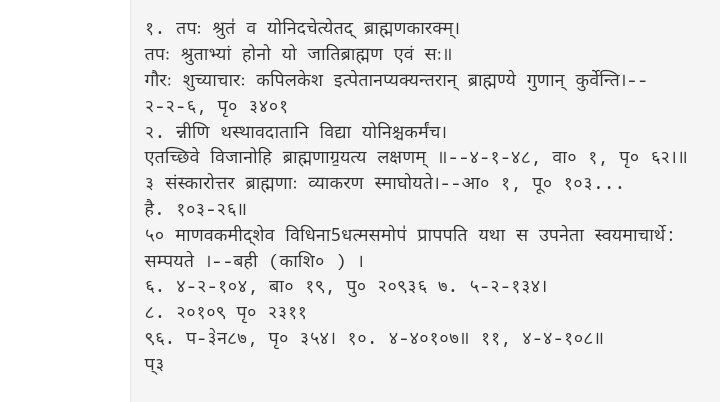
> Sanskrit: तप: श्रुतं व योनिदचेत्येतद् ब्राह्मणकारकम्। तप: श्रुताभ्यां हीनो यो जातिब्राह्मण एवं स:॥
English Meaning: "Austerity (Tapas), Vedic learning (Shruta), and birth (Yoni)—these three together make a Brahmin. One who is devoid of austerity and learning is merely a 'Brahmin by birth' (Jatibrahmana)."
2. Physical Characteristics associated with Brahmins
> Sanskrit: गौर: शुच्याचार: कपिलकेश इत्येतानप्यव्यन्तरान् ब्राह्मणे गुणान् कुर्वन्ति।
English Meaning: "Being fair-skinned (Gaura), pure in conduct (Shuchyachara), and having reddish/brown hair (Kapilakesha)—these are the internal (inherent) qualities that define a Brahmin."
3. The Three Marks of Purity
> Sanskrit: त्रीणि थस्थावदातानि विद्या योनिश्चकर्मच। एतच्छिवे विजانیहि ब्राह्मणाग्र्यत्य लक्षणम् ॥
English Meaning: "Three things are considered pure (bright/white): Knowledge (Vidya), Birth (Yoni), and Conduct (Karma). Know these to be the defining characteristics of a superior Brahmin."
4. Education and Grammar
> Sanskrit: संस्कारोत्तर ब्राह्मणा: व्याकरण स्माघीयते।
English Meaning: "After receiving the sacraments (Samskaras), Brahmins must study Grammar (Vyakarana)."
Summary of the Context:
The text reinforces the idea that in the era of Patanjali (approx. 2nd Century BCE), the term "Brahmin" was not just a label of birth, but a combination of:
• Genetics/Appearance: Fair skin and reddish-brown hair (linked to the Steppe/Indo-Aryan ancestry mentioned in your previous prompt).
• Intellect: Deep knowledge of the Vedas and Grammar.
• Ethics: Extremely pure and disciplined conduct.
The text distinguishes between a "Brahmin by birth" (who lacks knowledge) and a true Brahmin who possesses all these physical and intellectual traits.