
Key Takeaways
-
Injuries on Everest range from frostbite and fractures to life-threatening conditions like HACE and HAPE - knowing the warning signs early is critical to survival.
-
The first response always follows one rule: descend immediately - every 300–500 meters of descent dramatically improves a climber's condition, and Sherpas are the true first responders on the mountain.
-
Helicopter rescue is possible at Base Camp and Camp 2, but above that altitude the air is too thin - meaning rescue above the Death Zone depends almost entirely on human strength and support.
-
Rescue and hospitalization can cost $50,000–$100,000 USD or more, so high-altitude travel insurance covering helicopter evacuation above 6,000m is absolutely essential before any Everest expedition.
Mount Everest stands at 8,848 meters - the highest point on Earth. Every year, hundreds of climbers and trekkers attempt to reach its slopes. But Everest is unforgiving. The extreme altitude, freezing temperatures, and unpredictable weather make it one of the most dangerous places on the planet. So what actually happens if you get injured on Everest? This emergency response guide walks you through everything - from the first moment something goes wrong to your recovery in Kathmandu.
Whether you are planning a full summit expedition or trekking to Base Camp, understanding the emergency response system could one day save your life.
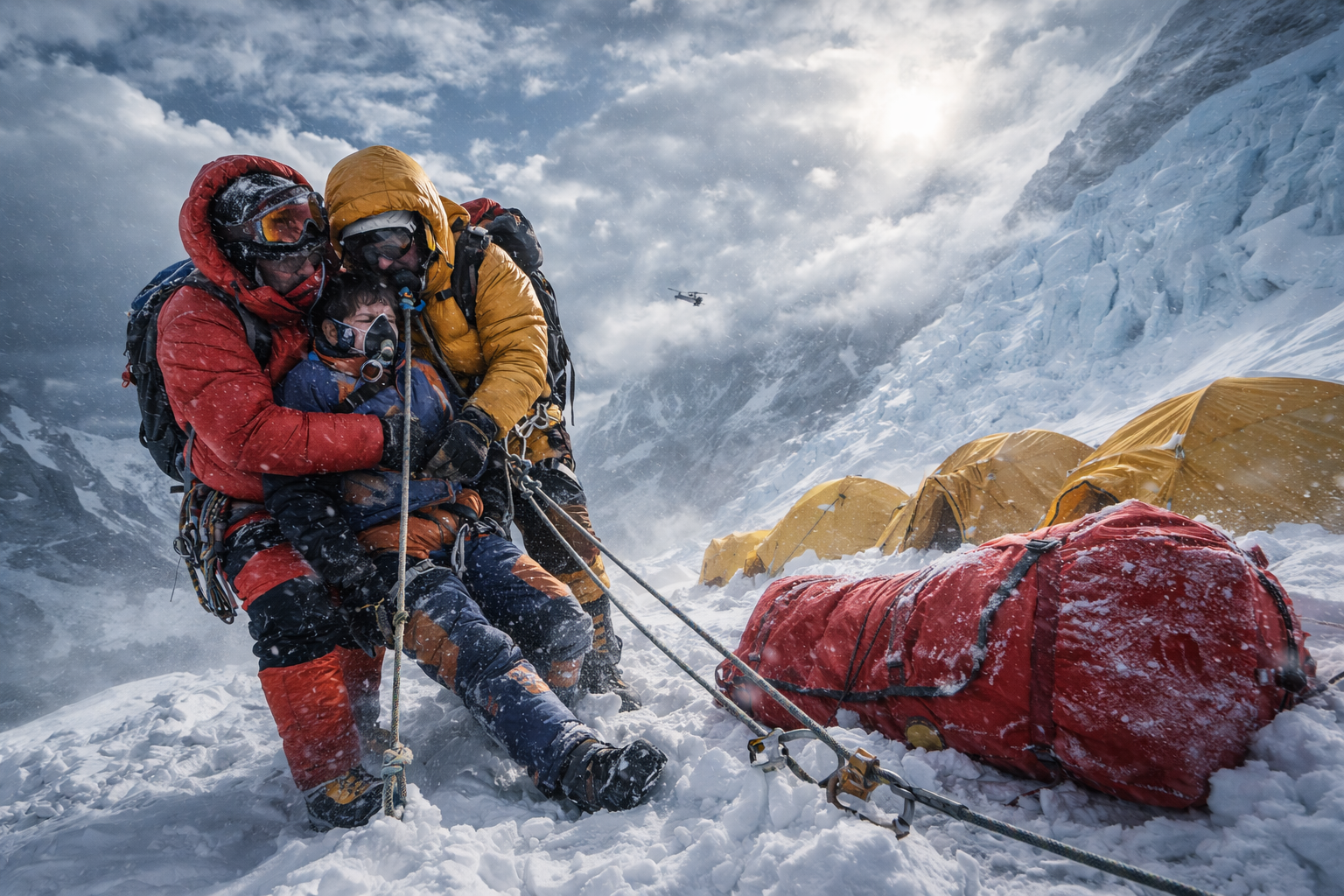
Most Common Injuries and Illnesses on Mount Everest
Before understanding rescue procedures, it is important to know what injuries and medical emergencies climbers face most often on Everest.
1. Acute Mountain Sickness (AMS)
AMS is the most common altitude-related illness. Symptoms include severe headaches, nausea, vomiting, dizziness, and fatigue. It can affect anyone, regardless of fitness level. AMS typically begins above 2,500 meters and worsens without proper acclimatization.
2. High Altitude Cerebral Edema (HACE)
HACE is a life-threatening condition where fluid builds up in the brain. Symptoms include confusion, loss of coordination, hallucinations, and unconsciousness. If untreated, HACE can be fatal within hours. Immediate descent is the only real treatment.
3. High Altitude Pulmonary Edema (HAPE)
HAPE causes fluid to accumulate in the lungs, making it extremely difficult to breathe. It is the leading cause of altitude-related death. Symptoms include a persistent cough (sometimes with pink froth), extreme breathlessness, and weakness. Like HACE, immediate descent is critical.
4. Frostbite
Frostbite occurs when body tissue freezes, most commonly affecting fingers, toes, ears, and the nose. Mild frostbite can be treated, but severe frostbite often results in permanent tissue damage or amputation.
5. Falls and Fractures
Ice, rock, and narrow ridges make falls a constant risk. A broken bone at high altitude is a serious emergency - there is no straightforward way to carry an injured climber down the mountain.
6. Snow Blindness
UV radiation at high altitude is intense. Without proper glacier glasses or goggles, climbers can suffer temporary but painful blindness from UV damage to the corneas.
First Response: What Happens in the First Few Minutes
When a climber is injured or falls ill on Everest, the immediate response is critical. Every minute at high altitude without proper care can mean the difference between life and death.
-
Climbing partners or Sherpas provide first aid immediately
-
Supplemental oxygen is administered if available
-
A Gamow bag (portable hyperbaric chamber) may be used to simulate lower altitude
-
Radio contact is made with Base Camp doctor or expedition leader
-
The decision is made: can the climber descend with help, or is evacuation needed?
The Gamow bag is one of the most important tools in high-altitude emergencies. Pumping it up increases air pressure inside, effectively lowering the simulated altitude by 1,500 to 2,500 meters. This can stabilize a HACE or HAPE patient until descent is possible.
The Critical Decision: Descend or Wait?
At high altitude, the standard rule is simple: when in doubt, go down. Descent is the best medicine for any altitude-related illness. Every 300 to 500 meters of descent significantly improves a patient's condition.
In most cases, the expedition doctor at Base Camp communicates with the team via radio to assess the severity of the situation. Based on symptoms, the doctor advises on whether the climber should:
-
Descend immediately under their own power with support
-
Be physically carried or short-roped down by Sherpas
-
Wait for a helicopter evacuation window
For HACE or HAPE, waiting is almost never an option. These conditions deteriorate rapidly, and descent must begin immediately.
Helicopter Evacuation: When and How It Works
Helicopter rescue is one of the most dramatic and effective tools in Everest emergency response - but it has serious limitations. Helicopters can reliably reach Everest Base Camp (5,364m) and in good conditions can push up to Camp 2 (6,400m). Above that, the air becomes too thin for most helicopters to operate safely.
For a detailed breakdown of helicopter rescue capabilities and limitations on Everest, read our full guide: Can You Be Rescued by Helicopter to Mount Everest?
In 2005, pilot Didier Delsalle made history by landing on the summit - but this was under perfect, rare conditions. Rescue flights to the Death Zone (above 8,000m) remain essentially impossible.
How a Helicopter Rescue Is Activated
-
The expedition leader or Base Camp manager contacts a helicopter company in Kathmandu
-
The insurance company is notified and a guarantee of payment is issued
-
The helicopter waits for a safe weather window before flying
-
A rescue coordinator on the ground guides the pilot to the exact pickup location
-
The injured climber is airlifted to Lukla or directly to Kathmandu
You can also read more about helicopter access to Base Camp here: Can a Helicopter Land at Everest Base Camp?
The Role of Sherpas in Mountain Rescue
Sherpas are the unsung heroes of Everest rescue. When climbers cannot descend on their own, it is almost always Sherpas who carry them - sometimes for thousands of meters - at enormous personal risk.
A Sherpa carrying a sick climber from Camp 3 to Camp 2 may be operating in conditions where every step is life-threatening. Their strength, experience, and knowledge of the mountain are what save lives above the altitude where helicopters cannot reach.
It is a sobering fact: without Sherpas, many injured climbers above Camp 2 simply could not survive.
Medical Facilities at Everest Base Camp
During the main climbing season (April and May), Everest Base Camp is not entirely without medical resources. Several expedition teams bring qualified doctors, and international medical clinics are sometimes established to assist climbers across different teams.
What is available at Base Camp:
-
Basic trauma care and wound treatment
-
Supplemental oxygen supplies
-
Gamow bags for altitude illness
-
Radio and satellite communication with Kathmandu hospitals
-
Medications including dexamethasone (for HACE) and nifedipine (for HAPE)
What is NOT available at Base Camp:
-
Surgery or advanced imaging (X-ray, MRI)
-
Blood transfusions
-
Intensive care unit (ICU) treatment
After Evacuation: Treatment in Kathmandu
Once a climber is evacuated by helicopter, they are typically flown to Lukla and then transferred to Kathmandu, or flown directly if conditions allow. Major hospitals like CIWEC Hospital and Norvic International Hospital in Kathmandu are experienced in treating altitude-related illnesses and mountaineering injuries.
Recovery timelines:
-
AMS: Full recovery typically within 24–48 hours at lower altitude
-
HAPE: Hospitalization for several days; full recovery possible in weeks
-
HACE: May require weeks of recovery; in severe cases, permanent neurological damage
-
Severe frostbite: May require surgery and months of rehabilitation; amputation is possible
-
Fractures: Depends on severity; recovery can take weeks to months
Everest Rescue Insurance: Who Pays for All This?
Helicopter rescue and hospitalization on Everest is extraordinarily expensive. A single helicopter rescue flight can cost between $5,000 and $20,000 USD. Combined with hospital treatment, the total bill can easily reach $50,000 to $100,000 or more.
This is why travel insurance for Everest must specifically cover:
-
High-altitude helicopter rescue (above 6,000m - some policies exclude this)
-
Emergency medical evacuation
-
Hospitalization costs abroad
-
Trip cancellation and curtailment
Popular insurers for Himalayan expeditions include World Nomads, Global Rescue, and IMG Global. Always read the fine print - many standard travel policies do not cover activities above 4,000 or 6,000 meters.
Before your trek, also make sure to check our guide on permits and documentation: Everest Base Camp Trek Permit Guide 2025
Everest Base Camp Trek Cost and Rescue Preparedness
Many trekkers researching the Everest Base Camp trek cost, EBC trek cost, or Everest Base Camp trek price focus primarily on permit fees, accommodation, and guide costs. But rescue insurance must be treated as a non-negotiable part of your total budget.
When calculating your mount Everest Base Camp trek cost, include these rescue-related expenses:
-
High-altitude rescue insurance: $100–$400 USD depending on provider and coverage
-
Emergency fund: Minimum $2,000–$5,000 USD accessible cash or credit
-
Satellite communicator rental (e.g., Garmin inReach): $50–$150 USD
The best time for Everest Base Camp trek is pre-monsoon (March–May) or post-monsoon (September–November). These windows offer the most stable weather - which also means better helicopter rescue windows if an emergency occurs. Avoid the monsoon season (June–August) and winter months when weather makes rescue significantly harder.
For a complete breakdown of trek costs and itinerary options, explore our tours:
How to Prevent Injuries on Everest: The Best Rescue Is No Rescue
The most effective emergency response is prevention. Thousands of trekkers and climbers complete Everest expeditions safely every year by following these principles.
Acclimatize Properly
Never rush your ascent. Follow the "climb high, sleep low" principle. Take rest days. Allow your body to adjust before moving to the next camp. Proper acclimatization is the single most effective way to prevent AMS, HACE, and HAPE.
Know the Warning Signs
Learn to recognize the early symptoms of altitude illness. Headache, unusual fatigue, and nausea are warning signs - not things to push through. Descend at the first sign of serious symptoms.
Never Climb Alone
Always trek or climb with an experienced guide or Sherpa, especially above Base Camp. They know the mountain, the weather patterns, and emergency protocols far better than any first-time visitor.
Carry the Right Equipment
Essential emergency gear includes supplemental oxygen, a pulse oximeter, a Gamow bag (for expedition teams), a satellite communicator, and a well-stocked first aid kit with altitude medications.
Choose a Reputable Operator
The quality of your expedition company directly affects your safety. A reputable operator will have experienced guides, proper emergency protocols, and strong relationships with helicopter rescue services.
Conclusion
Getting injured on Everest is a terrifying prospect - but the mountain has a rescue system in place. From Sherpa first responders and Gamow bags at high camps, to helicopter evacuations from Base Camp and world-class hospitals in Kathmandu, survival is possible when the right preparation is in place.
The key is this: come prepared, acclimatize properly, carry the right gear, choose the right team, and purchase proper rescue insurance. The mountain rewards the prepared and punishes the reckless.
Thinking of trekking to Everest Base Camp? Contact Himalaya Hub Adventure today. Our expert guides know the mountain and are trained to keep you safe every step of the way.