
When a Valve Fails in a Refinery, the Consequences Are Never Small
In an oil refinery, every component in the process flow chain carries a burden of consequence. But few components are as frequently underspecified and as consequentially misapplied as the control and isolation valves that govern high-pressure, high-temperature process streams. A significant proportion of that downtime traces back to valve failures: fugitive emissions, seat leakage, actuator incompatibility, or material degradation under cyclic thermal stress. For project consultants and operations directors working across the GCC's refining sector, valve selection is not a procurement decision it is an engineering discipline.
The Operational Challenge: Pressure, Temperature, and Process Variability
Oil refineries are not uniform environments. Across a single facility, process conditions can range from atmospheric crude storage to superheated steam at 600°C and pressures exceeding 2,500 psi in hydrocracking and catalytic reforming units. Each unit imposes distinct demands on valve performance: tight shutoff under differential pressure, resistance to erosive or corrosive media, sustained seat integrity across thousands of thermal cycles, and compatibility with actuation systems tied to distributed control infrastructure.
The challenge is that many facilities, particularly those operating assets commissioned in the 1980s and 1990s are running valve inventories that were not designed for current throughput levels or feedstock compositions. Heavier crude slates, increased hydrogen partial pressures in hydrotreating units, and the processing of opportunity crudes with elevated sulphur content are placing legacy valve bodies and trim materials under stress they were not originally rated to endure. According to the European Industrial Gases Association (EIGA) and broader process industry data, valve and fitting failures account for a disproportionate share of process safety incidents in hydrocarbon facilities underscoring the gap between installed base capability and current operational demand.
Process engineers, instrumentation specialists, and integrity managers are the professionals most directly exposed to this gap. When a globe valve in a high-pressure steam header begins to pass allowing leakage across a nominally closed seat the consequences cascade: energy loss, process instability, accelerated erosion of downstream trim, and in worst cases, a safety event. The question is not whether valve selection matters in these environments. It is whether the selection process is being approached with adequate technical rigour.
What Engineers and Specification Teams Get Wrong
Several recurrent errors appear in valve specification practice across GCC refinery projects, and they tend to cluster around a few predictable blind spots.
The most common mistake is defaulting to gate valves for isolation duty in high-pressure, high-temperature lines where a globe valve would be the technically correct choice. Gate valves offer full bore flow with low pressure drop, which makes them appropriate for certain applications but their wedge-disc design is not suited to throttling duty, and their seating geometry makes them vulnerable to wire drawing erosion when operated in partially open positions under high differential pressure. In steam applications and high-pressure hydrocarbon service, globe valves for steam applications provide superior throttling control and more reliable shutoff due to the perpendicular relationship between the disc and seat.
A second error involves material specification. Specifying carbon steel bodies for services involving wet hydrogen sulphide, high-chloride environments, or elevated hydrogen partial pressure creates conditions for stress corrosion cracking and hydrogen-induced cracking failure modes that may not manifest immediately but will compromise valve integrity over a three-to-five-year service window. Forged globe valves in alloy steels F11, F22, F91 chrome-moly grades, or austenitic stainless are the correct specification for these services, and the API 600 and ASME B16.34 standards provide the framework for making those material decisions defensibly.
Third, many specification teams underestimate the importance of end-to-end fugitive emission performance. In an era of tightening environmental regulation across the GCC including alignment with international frameworks such as ISO 15848 specifying valves without requiring fugitive emission certification is an increasingly untenable position. High temperature valves in particular require packing systems that maintain seal integrity across the full thermal cycle, not just at ambient conditions.
The Modern Solution: Engineered High- Pressure Globe Valves
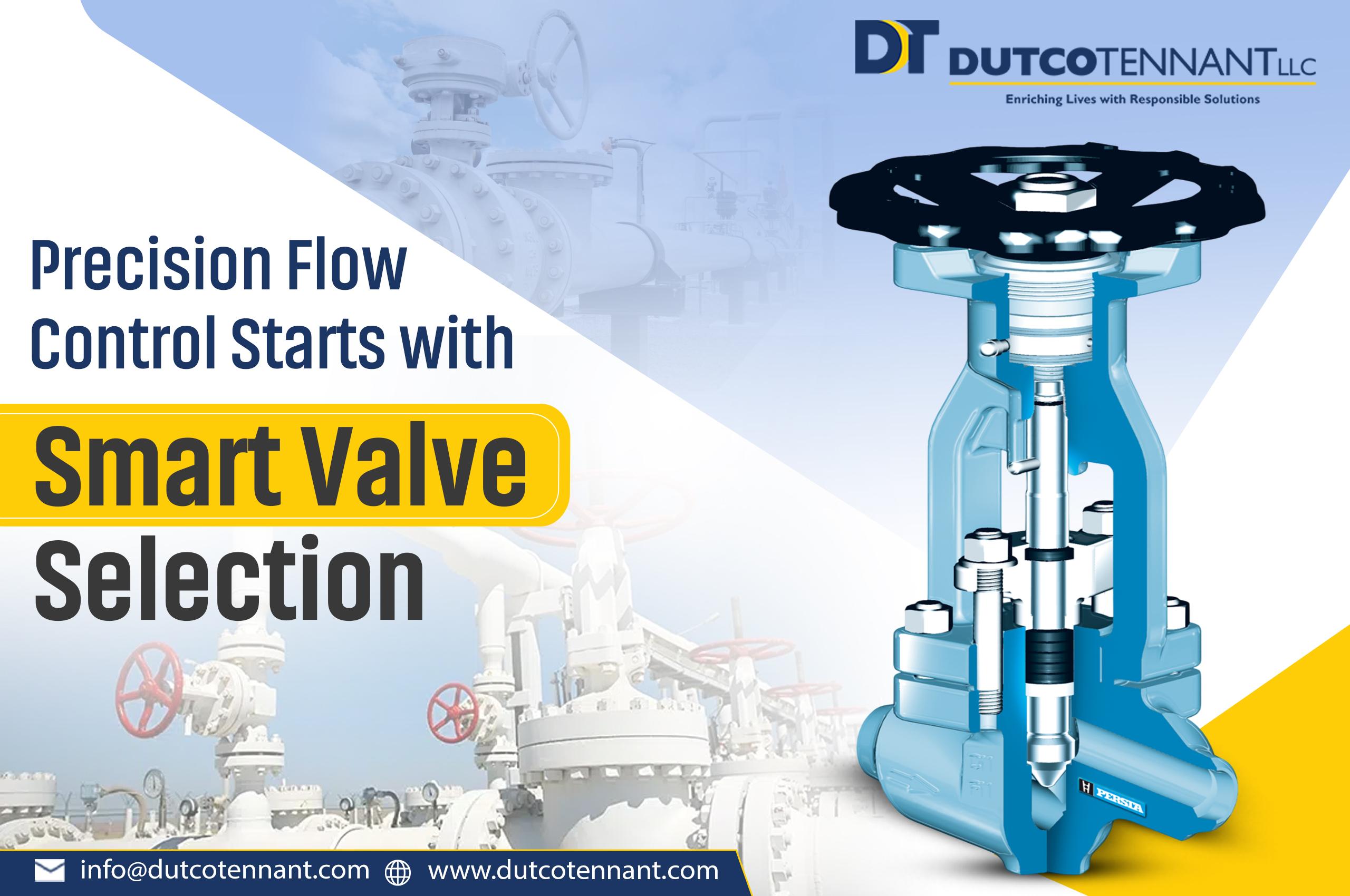
The industrial High Pressure globe valves now available through specialist suppliers serving the GCC market represent a substantial advance over the commodity valve products that populated many legacy refinery inventories. A properly engineered high pressure globe valve for refinery service will be manufactured to ASME B16.34 pressure-temperature ratings, constructed from a forged body in the appropriate alloy grade, and tested to API 598 or API 600 leakage standards before leaving the factory.
The design principle of the globe valve a linear-motion disc that closes against a machined seat in a direction perpendicular to flow gives it inherent advantages in throttling and modulating service. Seat geometries can be specified as flat-faced, plug-type, or needle configuration depending on the required flow characteristic and the severity of the service. For high-temperature valve applications in steam headers, heat exchange circuits, or process letdown stations, the ability to maintain a repeatable, verifiable shutoff under differential pressures that would cause a gate valve seat to erode is a measurable operational advantage.
Dutco Tennant LLC supplies a technically curated range of high pressure globe valves and shut off globe valves from manufacturers whose products are documented to international standards, supporting GCC refinery and petrochemical project teams through specification, material traceability, and compliance documentation.
Practical Guidance for Refinery Valve Specification
For project consultants and operations directors working through valve selection for refinery units, the following technical checkpoints are worth embedding in your standard specification process:
-
Map valve duty to the correct valve type first. Isolation-only duty, throttling duty, and control duty each imply different valve designs. Globe valves are the correct default for throttling and modulating service in high-pressure lines; confirm this against your process data sheet before specifying.
-
Specify body material against the actual corrosion and cracking mechanisms in service. Use API 941 (Nelson curves) for hydrogen service and NACE MR0175/ISO 15156 for wet H₂S service as your primary references.
-
Require pressure-temperature ratings to ASME B16.34. Valves rated only to manufacturer tables without ASME traceability introduce uncertainty in high-cycle or safety-critical applications.
-
Insist on fugitive emission certification for packing. For high temperature globe valves in environmental compliance zones, specify ISO 15848-1 Class B or API 641 as a minimum requirement.
-
Validate lead times against your project schedule. Forged globe valves in exotic alloys can carry manufacturing lead times of 16–24 weeks. Late specification changes in this product category have a disproportionate impact on project delivery.
Looking Forward: Digitalisation, Regulatory Pressure, and Valve Intelligence
The GCC's refining sector is navigating a convergence of pressures: decarbonisation commitments, tightening process safety regulations aligned with international frameworks, and the progressive digitalisation of asset management through Industrial IoT and predictive maintenance platforms. In this context, the valve is no longer simply a mechanical component it is a data source, a compliance asset, and a contributor to overall plant efficiency. Smart valve positioners, acoustic leak detection integrated at the valve body, and digital valve controllers that feed real-time performance data into asset management systems are moving from pilot applications to standard specification in new GCC refinery projects. The forged globe valves and high-pressure shut off globe valves being specified today will need to be compatible with this digital infrastructure for the duration of their asset life.
For expert guidance on selecting and specifying the correct high pressure globe valves for your refinery unit whether for steam service, hydrogen service, or general high-pressure hydrocarbon duty contact Dutco Tennant LLC to engage with a specialist who understands both the technical requirements and the regional supply landscape.