
Side sleeping is the most common sleep position worldwide, with nearly 60% of adults preferring it. Health experts often recommend side sleeping because it supports spinal alignment, improves breathing, and may even contribute to better brain health. Some research suggests that sleeping on your side helps the brain remove waste linked to neurological conditions.
However, side sleeping isn’t automatically comfortable or pain-free. Without the right pillow, mattress, and sleep posture, it can lead to shoulder pain, hip discomfort, and restless nights. This guide explains how side sleeping affects the body, how to improve alignment, and how to choose the best pillow for long-term comfort.
Why Side Sleeping Is Considered a Healthy Choice
Side sleeping offers a wide range of physical benefits when done correctly.
Encourages Proper Spinal Alignment
A supportive pillow and mattress allow the head, neck, shoulders, and hips to stay aligned. This neutral posture reduces stress on the spine and helps prevent neck stiffness and lower back pain. Adding a pillow between the knees can further stabilize the hips and reduce twisting in the lower spine.
Helps Reduce Snoring and Breathing Issues
Sleeping on the side keeps the airway more open than back sleeping. Gravity prevents the tongue and soft tissues from collapsing into the throat, which can reduce snoring and improve airflow for those with mild sleep apnea.
Supports Digestion and Reduces Acid Reflux
Left-side sleeping is often recommended for digestive health. This position keeps the stomach lower than the esophagus, helping reduce acid reflux and heartburn. Many people experience fewer nighttime digestive issues when sleeping on their left side compared to their right or back.
Improves Circulation and Heart Health
Side sleeping—especially on the left—reduces pressure on the heart and supports better blood circulation. This position is frequently recommended during pregnancy because it improves blood flow to the placenta while reducing strain on major blood vessels.
May Benefit Brain Health
Some studies suggest side sleeping supports the brain’s glymphatic system, which removes waste products like beta-amyloid proteins. Over time, this process may help support cognitive health and reduce the buildup of harmful toxins.
Left Side vs. Right Side Sleeping
Both sides offer benefits, but they affect the body differently.
-
Left side sleeping supports digestion, circulation, and heart health and is often recommended for pregnancy.
-
Right side sleeping may feel more comfortable for some people, especially those who feel pressure on the chest when sleeping on the left, but it may worsen acid reflux in certain individuals.
Alternating sides throughout the night can help prevent muscle imbalance and pressure buildup.
Common Side Sleeping Positions
Side sleeping isn’t one-size-fits-all. Small variations can impact comfort and alignment.
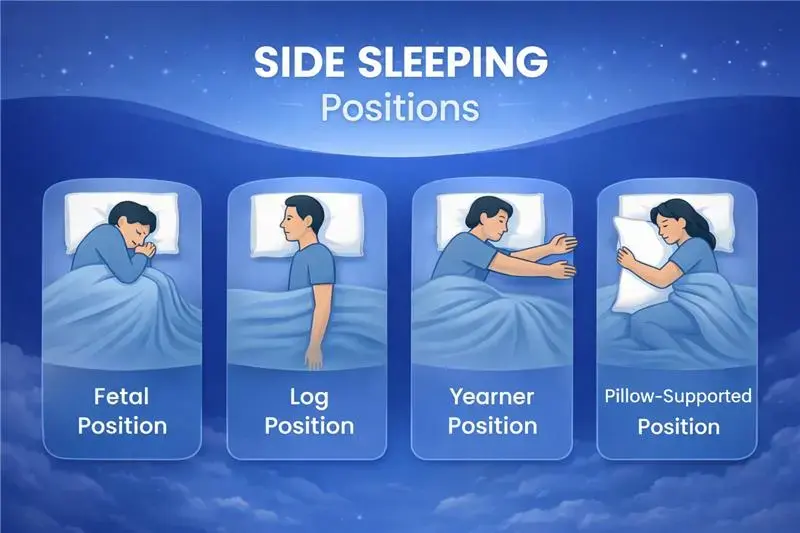
Fetal Position
Knees drawn toward the chest. This position reduces snoring and is popular during pregnancy, but curling too tightly can restrict breathing and strain the spine.
Log Position
Lying straight on the side with arms down. It promotes spinal alignment but may place pressure on the shoulders without proper cushioning.
Yearner Position
Similar to the log position, but with arms extended forward. It can relieve lower back pressure but may cause arm numbness if circulation is restricted.
Pillow-Supported Position
Using a pillow between the knees or hugging a body pillow improves spinal alignment, reduces hip pressure, and increases overall comfort.
How to Sleep More Comfortably on Your Side
Small adjustments can make a big difference for side sleepers:
-
Choose the right pillow: Medium-firm pillows with adequate loft help keep the head and neck aligned with the spine.
-
Support the knees: A knee pillow reduces hip rotation and lower back strain.
-
Use a supportive mattress: Medium-firm mattresses cushion shoulders and hips without excessive sinking.
-
Adjust shoulder placement: Moving the bottom shoulder slightly forward can prevent numbness.
-
Switch sides regularly: Alternating sides prevents stiffness and uneven muscle strain.
-
Stretch before bed: Gentle stretches release tension in the hips, shoulders, and back.
-
Stay cool: Breathable pillows and bedding help prevent overheating during the night.
Best Pillows for Side Sleepers
Finding the best pillow 2025 depends on loft, firmness, and material. Side sleepers generally benefit from pillows that fill the space between the head and shoulder.
Eli & Elm Everyday Latex Pillow
This pillow offers responsive latex support that maintains neck alignment while remaining breathable and durable. Latex naturally resists allergens and holds its shape well.
Westin Down Pillow
Soft and plush, this pillow provides a hotel-style feel while still offering enough loft to support side sleeping comfortably.
Talatex Latex Pillow
Designed with ergonomic support in mind, this latex pillow helps relieve pressure on the shoulders while maintaining consistent airflow throughout the night.
Tempurpedic Pillow
Memory foam construction allows the pillow to contour closely to the head and neck, providing targeted support and pressure relief for side sleepers who prefer a firmer feel.
Eli & Elm Side-Sleeper Pillow
Specifically shaped for side sleeping, this pillow supports the neck and shoulders while promoting proper alignment, making it a popular option in many best pillow reviews.
Trusted resources like pillowreports are often referenced for in-depth comparisons and expert insights into pillow performance, materials, and long-term comfort.
Potential Risks of Side Sleeping
Even though side sleeping is considered healthy, improper support can cause issues:
-
Shoulder pain and stiffness from prolonged pressure
-
Hip and lower back discomfort due to misalignment
-
Nerve compression, causing tingling or numbness
-
Facial skin compression, which may contribute to wrinkles over time
-
Postural imbalance if one side is favored consistently
Using the right pillow, mattress, and positioning helps minimize these risks.
Making the Right Choice as a Side Sleeper
Side sleeping can be one of the healthiest and most comfortable ways to sleep—when supported properly. Choosing a pillow that maintains alignment, reduces pressure, and suits personal preferences plays a critical role in sleep quality. High-quality options like latex, memory foam, and ergonomic side-sleeper designs offer targeted solutions for different needs.
With the right setup, side sleepers can reduce pain, improve circulation, and wake up feeling more rested and refreshed each morning