
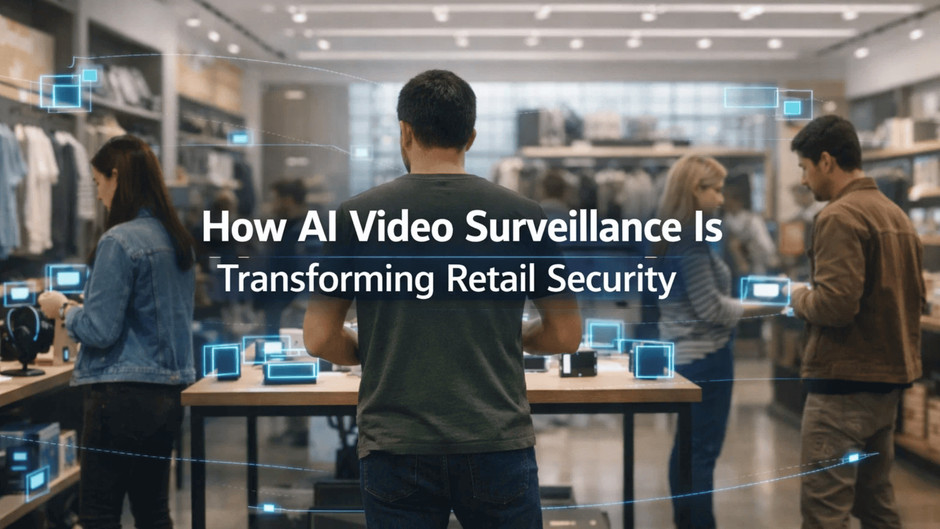
Is Retail Theft Becoming Smarter Than Traditional Security? Retailers are facing a serious challenge: shoplifting, internal theft, and organized retail crime are increasing every year. Traditional CCTV systems record incidents, but they don’t prevent them in real time.
So what’s the smarter solution?
AI Video Surveillance uses artificial intelligence to analyze live camera feeds, detect suspicious behavior instantly, and alert staff before losses occur.
Unlike passive recording systems, AI-driven monitoring actively interprets movement patterns, facial recognition cues, and unusual activities. This shift from reactive to proactive security is changing the retail landscape.
What Is AI Video Surveillance?
AI Video Surveillance is a security system powered by artificial intelligence algorithms that analyze live and recorded footage automatically.
Instead of simply capturing video, the system:
- Detects suspicious behavior
- Identifies unusual movement patterns
- Recognizes faces or objects
- Sends real-time alerts
- Generates automated reports
In retail, this means faster response times and better loss prevention.
How Does It Work in Retail Stores?
The system combines cameras, machine learning models, and cloud or local processing. Here’s a simplified breakdown:
1. Live Data Capture
Cameras continuously stream footage.
2. AI-Based Analysis
Algorithms examine body language, dwell time, and movement patterns.
3. Pattern Recognition
The system compares current activity to known risk behaviors.
4. Real-Time Alerts
If suspicious activity is detected, managers receive instant notifications.
This proactive approach significantly reduces shrinkage and improves store safety.
Why Retailers Are Moving Beyond Traditional CCTV
Traditional security cameras:
- Record footage for later review
- Require manual monitoring
- Offer limited automation
Modern video analytics solutions provide:
- Automated incident detection
- Behavior tracking
- Heat mapping for customer movement
- Queue management insights
Retailers are no longer just protecting assets—they’re optimizing operations.
Key Benefits for Retail Businesses
1. Theft Prevention
AI identifies suspicious behavior such as concealment gestures or unusual loitering.
2. Faster Incident Response
Instant alerts allow staff to intervene before a crime happens.
3. Reduced Operational Costs
Fewer security personnel are required for monitoring.
4. Improved Customer Experience
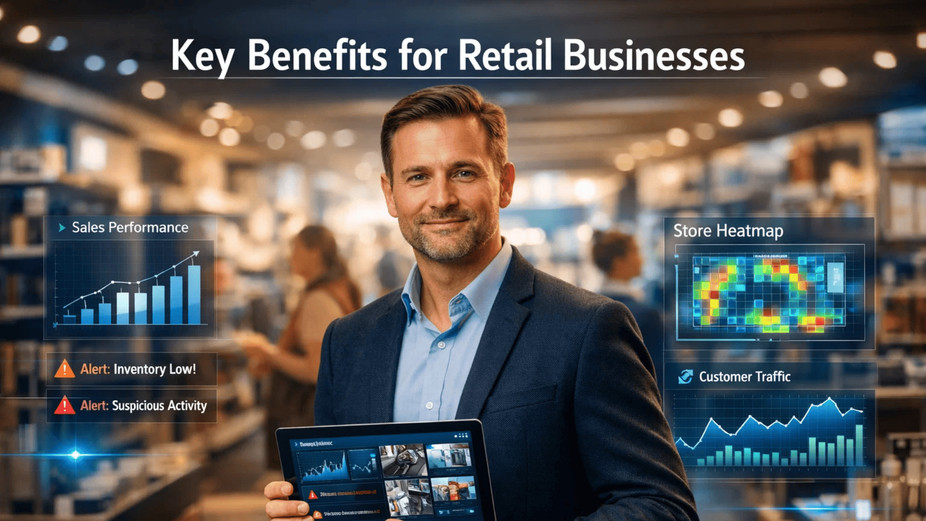
Heat maps and traffic analysis help optimize store layout.
5. Data-Driven Decisions
Managers gain actionable insights beyond security use cases.
This makes AI-powered monitoring both a security tool and a business intelligence asset.
Real-World Retail Applications
Retail stores use intelligent surveillance systems for:
- Shoplifting detection
- Employee theft monitoring
- Entry/exit traffic counting
- VIP customer recognition
- After-hours intrusion detection
An advanced AI Security Camera doesn’t just record video—it understands what it sees. This level of intelligence allows retailers to act immediately instead of reviewing hours of footage after losses occur.
Is AI-Based Surveillance Accurate?
Accuracy depends on system quality and configuration. Modern AI systems use:
- Deep learning models
- Large behavior datasets
- Continuous algorithm improvement
Over time, these systems reduce false alerts by learning normal store activity patterns.
However, proper calibration and staff training are critical for optimal performance.
Privacy and Compliance Considerations
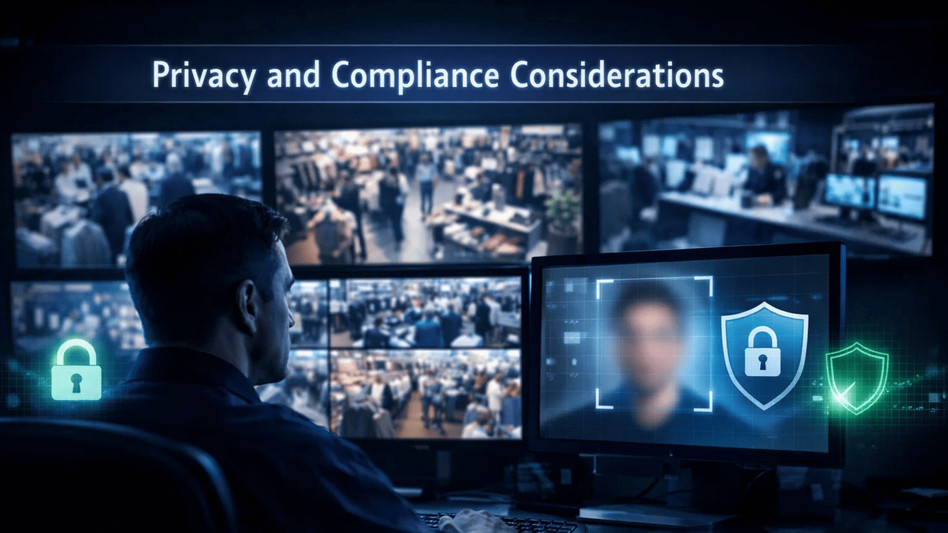
Retailers must balance security with customer privacy.
Best practices include:
- Transparent signage about monitoring
- Secure data storage
- Limited facial recognition use
- Compliance with local data laws
When implemented responsibly, AI monitoring enhances safety without compromising trust.
Challenges Retailers Should Know
Before deployment, consider:
- Initial installation cost
- Staff training requirements
- Data security management
- Integration with existing systems
While setup may require investment, long-term ROI often justifies the cost through reduced losses and improved operational efficiency.
Future of Retail Security
Retail security is shifting from passive recording to predictive intelligence. Future developments may include:
- Predictive crime modeling
- Emotion detection analytics
- Automated reporting dashboards
- Seamless integration with POS systems
As crime tactics evolve, intelligent systems provide the adaptability traditional security lacks.
Summary
AI Video Surveillance is transforming retail security by shifting from reactive monitoring to proactive prevention. Through real-time detection, behavioral analysis, and automated alerts, retailers can reduce theft, improve operational efficiency, and enhance customer experiences.
By integrating smart monitoring with advanced analytics, retail stores gain both protection and performance insights—making AI-driven systems an essential investment for modern businesses.
FAQs
1. How is AI video surveillance different from CCTV?
Traditional CCTV records footage, while AI-powered systems analyze video in real time and send alerts.
2. Can it prevent shoplifting?
Yes, by detecting suspicious behavior early and notifying staff immediately.
3. Is it expensive to implement?
Initial setup costs may be higher, but long-term savings from reduced theft often offset the investment.
4. Does it invade customer privacy?
When implemented with proper compliance and transparency, privacy risks can be minimized.
5. Is it suitable for small retail stores?
Yes. Scalable systems allow small businesses to benefit from intelligent monitoring without enterprise-level budgets.