
Introduction
In the current AI-driven landscape, the chasm between a high-performing model in a Jupyter Notebook and a reliable system in production is where most projects falter. While data science focuses on model accuracy, MLOps engineering focuses on system longevity, reliability, and scale. As enterprises transition from AI experimentation to full-scale deployment, the demand for professionals who can bridge this gap has reached a critical inflection point.
Why Production ML Systems Fail
The "it works on my machine" phenomenon is particularly dangerous in machine learning. Unlike traditional software, ML systems are uniquely fragile because they rely on both code and data. A model might perform perfectly during validation but fail silently in production due to data drift, infrastructure bottlenecks, or broken upstream data pipelines. Without robust automation, the manual effort required to retrain and redeploy models creates a "technical debt trap" that stalls innovation and wastes resources.
Understanding MLOps Engineering in Production Systems
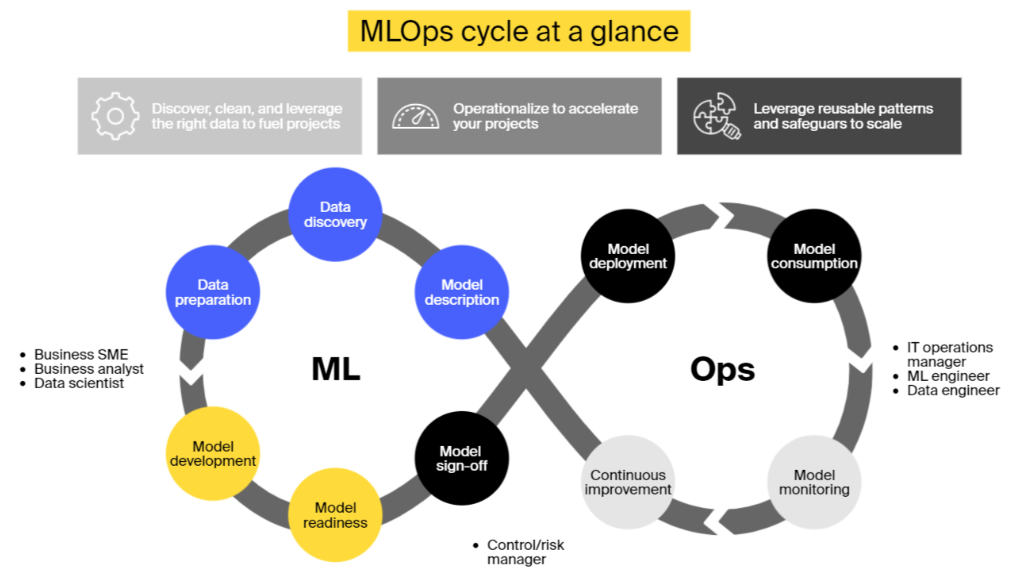
MLOps engineering is the discipline of applying DevOps principles—CI/CD, automation, and observability—to the unique lifecycle of machine learning. While research focuses on finding the best algorithm, MLOps ensures that the algorithm operates correctly in a dynamic real-world environment.
Automation is the bedrock of this process. By implementing CI/CD pipelines, engineers replace manual, error-prone deployment steps with automated gates that validate data, test models, and deploy artifacts consistently. This transition transforms ML from a static research task into a living, evolving system.
Why MLOps Engineers Are in High Demand
As AI moves into core business functions like fraud detection, supply chain optimization, and personalized recommendations, the cost of downtime is exponential. Organizations are aggressively hiring MLOps specialists who can build fault-tolerant infrastructure. The market is shifting away from pure-play data scientists toward "full-stack" ML engineers who can own the entire lifecycle: from pipeline orchestration to model serving and infrastructure monitoring.
About the Certified MLOps Engineer Certification
The Certified MLOps Engineer credential is a mid-level certification designed to validate the practical skills required to design and maintain production ML systems. It moves beyond theory, focusing on the "how-to" of modern AI infrastructure. By covering everything from CI/CD for ML to container orchestration, it provides a structured roadmap for engineers to demonstrate their competency in managing the complexities of real-world AI.
Certification Ecosystem Comparison
| Certification | Level | Focus Area | Best For | Skills Covered | Career Value |
| MLOps Foundation | Entry | Concepts | Beginners | Basics, Terminology | Baseline knowledge |
| Certified MLOps Engineer | Mid | Production Systems | Practitioners | CI/CD, Pipelines, Serving | High - Practical Hires |
| Certified MLOps Professional | Advanced | Strategy/Optimization | Leads | Advanced Orchestration | Leadership roles |
| Certified MLOps Architect | Expert | Enterprise Design | Architects | System Design, Cloud | Strategic advisory |
Core Skills Covered in Certified MLOps Engineer
The certification curriculum emphasizes the practical engineering skills necessary to navigate the complexities of production environments.
CI/CD for Machine Learning Pipelines: You will learn to construct automated pipelines that treat data and model code as first-class citizens. This includes implementing automated testing gates that prevent "bad" models from reaching production, ensuring that every deployment is reproducible and auditable.
Model Serving and Feature Stores: Moving beyond basic REST APIs, the curriculum dives into scalable model serving strategies using frameworks like TorchServe or Triton. You will also master the use of feature stores to manage data consistency between training and inference, effectively eliminating the risk of training-serving skew.
Containerization and Orchestration: Production ML is increasingly cloud-native. The certification covers packaging models into Docker containers and managing their lifecycle using Kubernetes. This involves handling GPU resource scheduling and horizontal auto-scaling to maintain performance under varying traffic loads.
Monitoring, Drift Detection, and Workflow Orchestration: A model in production is never "finished." You will learn to implement robust monitoring systems that track both system metrics (latency, throughput) and data metrics (drift, distribution shifts). Using orchestration tools, you can automate retraining triggers that kick in when performance degrades, ensuring the model remains accurate over time.
Real-World MLOps Engineering Use Cases
-
Recommendation Systems: Managing real-time feature updates in a high-concurrency environment.
-
Fraud Detection: Implementing low-latency, high-throughput inference pipelines that process thousands of transactions per second.
-
Predictive Analytics: Designing automated retraining pipelines that adapt to seasonal data changes.
Career Growth in MLOps Engineering
An MLOps Engineer is more than an operator; they are a force multiplier for data science teams. While an ML Engineer may focus on the algorithm, the MLOps Engineer ensures that the algorithm provides business value at scale. This role often acts as the nexus between DevOps, Data Engineering, and Data Science, offering a unique career trajectory into Platform Engineering and AI Leadership.
MLOps Engineering vs. Traditional ML Workflow
-
Manual vs. Automated: Moving from manual notebook exports to automated, version-controlled deployment pipelines.
-
Research vs. Production: Shifting focus from "what is the best AUC" to "what is the most reliable, maintainable architecture."
-
Static vs. Evolving: Understanding that models are not static files but systems that require continuous maintenance and monitoring.
Challenges Solved by MLOps Engineering
The core value proposition of MLOps is the mitigation of risk. By automating the lifecycle, teams resolve deployment failures before they reach users, detect model drift before it impacts business outcomes, and scale infrastructure to match user demand—all while maintaining full visibility into the system's state.
Future of MLOps Engineering
As we move toward a future defined by AI-native products, the convergence of AutoML and MLOps will become standard. MLOps engineers will increasingly act as architects of self-healing AI systems, leveraging cloud-native platforms to manage the massive scale required by generative AI and large-scale predictive models.
Who Should Take This Certification
This certification is ideal for ML Engineers looking to solidify their production skills, Data Engineers wanting to move into model infrastructure, Backend Engineers transitioning into AI systems, and Cloud Architects building the foundation for corporate AI initiatives.
Frequently Asked Questions
What programming languages are required?
The focus is on Python for pipeline development and YAML for infrastructure configuration.
Are these concepts specific to one cloud provider?
No. The certification focuses on cloud-agnostic tools like Kubernetes and Docker, ensuring your skills are transferable across AWS, GCP, and Azure.
Does this focus more on theory or practice?
The curriculum is heavily weighted toward practice, including scenario-based exams and a capstone project.
How does this certification impact salary?
MLOps engineers currently command premium salaries due to the scarcity of professionals who can effectively manage production AI infrastructure.
Can I take this if I am a Data Scientist?
Absolutely. If you want to take your models beyond the research phase, this is the logical next step in your career.
Conclusion
The transition from experimental AI to production-grade systems is the defining engineering challenge of our time. By mastering the principles of CI/CD, pipeline automation, and cloud-native infrastructure, you move from being a user of tools to an architect of systems. The Certified MLOps Engineer certification is not just a credential; it is a commitment to the rigor, reliability, and engineering excellence required to power the next generation of production AI.