
Introduction: Why Most ML Projects Never Reach Scale
The journey from a successful model training script in a Jupyter notebook to a high-performance, production-ready system remains the most significant bottleneck in the artificial intelligence landscape. Many machine learning projects succumb to what engineers call "notebook drift"—code that performs flawlessly in an isolated environment fails catastrophically when exposed to real-world data, fluctuating traffic, and infrastructure instability. The industry has reached a tipping point where manual, ad-hoc deployment practices are no longer viable. The future of AI relies on the shift toward robust, automated, and scalable machine learning operations (MLOps).
As organizations transition from experimental AI to mission-critical applications, the demand for professionals who can architect the "production backbone" has surged. This is the realm of the MLOps engineer, who acts as the vital link between data science and software engineering, ensuring that models are not just accurate, but also maintainable, secure, and performant.
Understanding MLOps Engineering
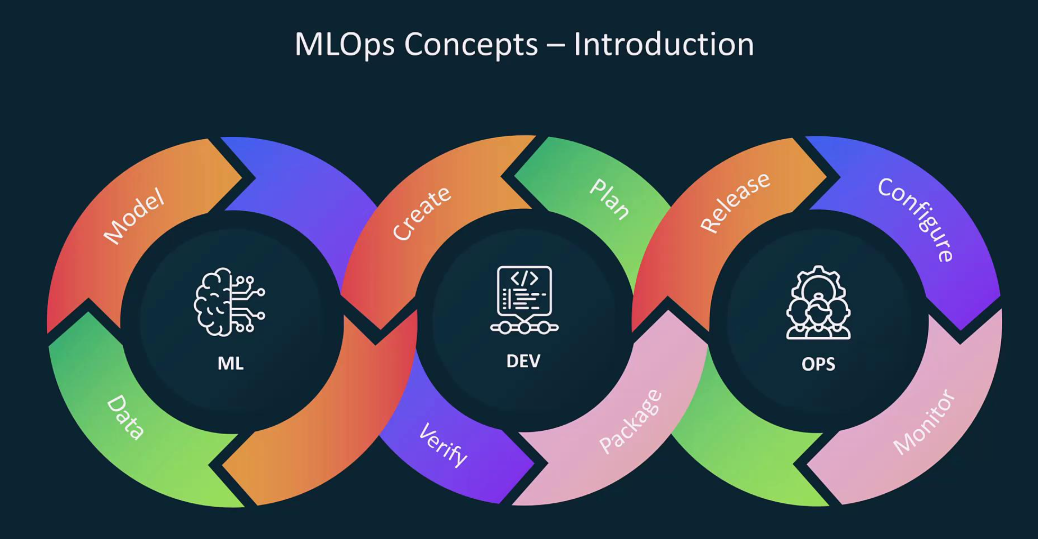
MLOps engineering is the systematic application of DevOps principles, agile methodology, and rigorous software engineering to the entire lifecycle of machine learning. While traditional machine learning development focuses on model training and performance metrics, MLOps engineering shifts the focus to the "operations" layer: reproducibility, reliability, and automated delivery.
In a production environment, an ML model is merely one component of a complex software ecosystem. An MLOps engineer is responsible for the surrounding infrastructure that facilitates data versioning, automated model retraining, and robust deployment pipelines. By moving from "ML as a science project" to "ML as a product," MLOps engineering achieves the production readiness necessary for modern business demands.
Why MLOps Engineers Are in High Demand
The massive scale of enterprise AI adoption has created a critical talent gap. Companies are investing heavily in Large Language Models (LLMs), predictive analytics, and real-time computer vision, yet they often lack the technical teams capable of sustaining these assets in production. Traditional software engineers often lack the domain-specific knowledge of ML-specific challenges—such as data skew and model drift—while data scientists frequently lack the infrastructure expertise required for large-scale container orchestration and CI/CD pipelines.
MLOps engineers occupy this high-value intersection. Industry demand is driven by the clear realization that infrastructure complexity is the primary inhibitor to scaling AI initiatives. Organizations now prioritize engineers who can reduce the time-to-market for models and mitigate the significant technical debt often accumulated during rapid, manual prototyping.
About the Certified MLOps Engineer Certification
The Certified MLOps Engineer credential is built for practitioners who want to formalize their expertise in designing and maintaining production-grade ML systems. It serves as a comprehensive validation of an engineer’s ability to move beyond theoretical ML and address the complex, technical reality of production deployment.
The certification focuses on the practical systems that make machine learning reliable. It covers the full engineering journey: designing CI/CD pipelines that incorporate data validation gates, implementing scalable model serving strategies, and managing feature stores to ensure training-serving consistency. By utilizing vendor-neutral, cloud-native tools, the certification ensures that the skills acquired are immediately applicable across diverse enterprise technology stacks.
Certification Ecosystem Comparison
| Certification | Level | Focus Area | Best For | Skills Covered | Career Value |
| MLOps Foundation | Entry | Fundamental concepts | Beginners to MLOps | Terminology & lifecycle | Foundational understanding |
| Certified MLOps Engineer | Mid | Infrastructure & pipelines | Practicing engineers | CI/CD, Serving, Scaling | Industry recognition for roles |
| Certified MLOps Professional | Senior | Advanced strategy & scale | Experienced leads | Governance, Global architecture | Leadership & technical growth |
| Certified MLOps Architect | Expert | Enterprise system design | Architects/Principals | Enterprise-wide AI strategy | Executive technical leadership |
Core Skills Developed Through Certified MLOps Engineer
The path to certification requires mastery over several domains essential for modern ML infrastructure. You will gain deep experience in CI/CD for ML, which involves creating automated pipelines that trigger retraining when data drift is detected. This ensures that models remain performant long after their initial deployment.
Model serving and inference are equally central. You will learn to architect systems that handle high-throughput, low-latency requests using modern serving frameworks. Furthermore, the certification covers the implementation of feature stores—a critical component for managing feature versioning and preventing training-serving skew—and the use of container orchestration tools like Kubernetes to manage compute resources efficiently. Finally, you will learn to construct data pipelines that incorporate data quality checks, ensuring that only validated data ever reaches your training models.
Real-World MLOps Engineering Use Cases
The practical application of these skills is seen in high-stakes environments. For instance, in fraud detection systems, MLOps engineers build real-time inference pipelines that must analyze thousands of transactions per second, requiring sub-millisecond model responses and automated rollback mechanisms.
Similarly, in recommendation engines for e-commerce, the infrastructure must handle continuous retraining as user preferences evolve. MLOps engineers ensure that feature stores are updated in real-time, allowing the model to adapt to user behavior within seconds. Whether it is predictive maintenance in industrial manufacturing or AI-powered customer support chatbots, the underlying MLOps principles—automation, observability, and scalability—remain the standard for success.
MLOps Engineer Career Growth Path
The career trajectory for an MLOps engineer is dynamic and highly rewarding. Many begin as Junior MLOps Engineers, focusing on maintaining existing pipelines and learning the underlying tooling. With experience, they progress into mid-level and senior roles where they become responsible for architecting entire systems and mentoring junior staff.
As one gains further expertise, the path often diverges into either Platform Engineering—designing the internal "developer platforms" that enable data science teams to self-serve their ML needs—or ML Infrastructure Architecture, where the focus shifts to designing massive, global, multi-cloud AI environments. This progression offers both vertical mobility and the opportunity to impact enterprise-level AI strategy.
MLOps vs Traditional Machine Learning Workflow
The traditional machine learning workflow often resembles a "hand-off" model: data scientists build models in isolation, then transfer them to IT or DevOps teams for deployment. This usually results in massive friction and frequent failure. In contrast, the MLOps approach replaces these silos with integrated, automated pipelines.
While traditional workflows rely on manual deployment steps and ad-hoc monitoring, MLOps mandates continuous integration, continuous deployment (CI/CD), and rigorous automated monitoring. Governance is built directly into the pipeline, ensuring that every model version is tracked, audited, and reproducible. This shift allows for unprecedented scalability, as infrastructure becomes as programmable and testable as the software it runs.
Common Production Challenges Solved by MLOps
Production machine learning faces unique challenges that traditional software rarely encounters. Model drift, for instance, occurs when the statistical properties of the target variable change over time, rendering the model inaccurate. MLOps solves this by implementing proactive monitoring systems that trigger automated retraining cycles.
Deployment failures, often caused by dependencies that differ between training and production environments, are mitigated by using consistent containerization strategies. Scaling issues are addressed by designing elastic inference endpoints that can automatically spin up resources based on real-time traffic, while data inconsistencies are tackled through rigorous validation pipelines that catch "dirty data" before it can contaminate a model.
Future of MLOps Engineering
The future of MLOps is moving toward fully autonomous, intelligent operations. We are seeing a shift toward "Platform Engineering," where the complexity of the underlying infrastructure—like Kubernetes clusters and cloud-specific GPU scheduling—is abstracted away from the data scientists.
As cloud-native ML becomes the default, MLOps engineers will increasingly focus on orchestrating complex AI agents. The ability to manage automated retraining and policy-driven governance in real-time will be the defining trait of next-generation infrastructure, making MLOps expertise more vital than ever.
Who Should Pursue This Certification
This certification is designed for a broad range of technical professionals. If you are a machine learning engineer looking to move beyond notebook development, this credential is your pathway to operational mastery. Data engineers will find it highly relevant for expanding their skill set into the world of ML pipelines, while backend and DevOps engineers will find that it provides the domain-specific knowledge needed to transition into the high-growth AI infrastructure space.
Frequently Asked Questions
What programming languages are primarily used for this certification?
Python is the core language for ML pipeline development and automation scripting, while YAML is extensively used for infrastructure-as-code and container orchestration configurations.
Are there prerequisites for the Certified MLOps Engineer exam?
While the MLOps Foundation Certification is highly recommended, it is not mandatory. Candidates with at least one year of professional experience in ML systems or data infrastructure are well-positioned to take the exam directly.
Does the certification focus on a specific cloud provider?
No. The curriculum uses vendor-neutral, industry-standard tools like Docker, Kubernetes, and open-source frameworks. These skills are fully transferable across AWS, GCP, Azure, and on-premise environments.
How does the practical scenario portion of the exam work?
The exam includes real-world, scenario-based questions that test your architectural decision-making. You will be asked to troubleshoot pipeline issues, optimize resource management, or select the best deployment pattern for a given business requirement.
What is the role of the capstone project in the learning journey?
The capstone is a guided, end-to-end project where you build a complete ML infrastructure. It is designed to bridge the gap between theory and practice, and it provides a strong foundation for your portfolio by allowing you to present your architecture to peers.
How does MLOps differ from traditional DevOps?
While both prioritize automation, MLOps includes specific workflows for handling non-deterministic components like ML models, including data versioning, experiment tracking, and model monitoring to detect drift.
Conclusion
The transition from a working machine learning model to a sustainable production system is the defining challenge of modern software engineering. By focusing on automation, CI/CD, and scalable infrastructure, MLOps engineers ensure that AI projects deliver tangible business value rather than remaining as theoretical experiments. The Certified MLOps Engineer credential provides the structured path needed to master these disciplines, equipping you with the practical skills to thrive in an increasingly AI-centric economy. Whether you are an engineer looking to specialize or a data professional aiming to scale your impact, formalizing your expertise in MLOps is the most effective way to secure your position at the forefront of the AI revolution.