
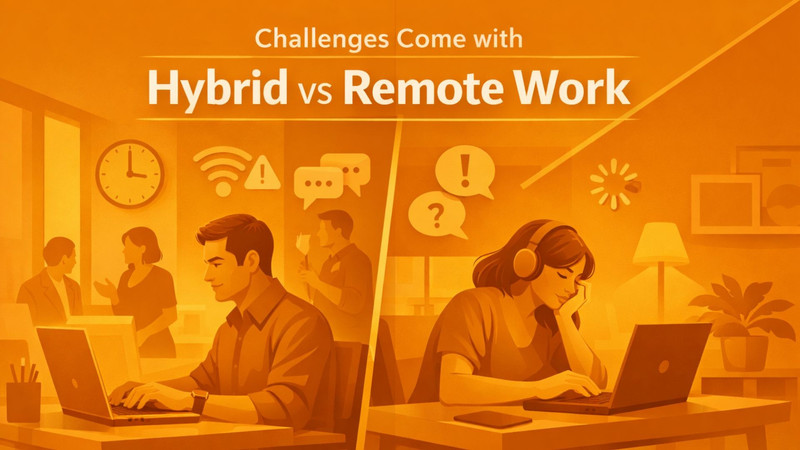
What challenges come with Hybrid vs Remote Work, and which model actually works best?
The short answer: both models offer flexibility, but they introduce different operational, cultural, and productivity challenges. While hybrid work blends office and remote environments, fully remote work removes the office entirely, each creating unique hurdles in communication, accountability, and team cohesion. Understanding these challenges early helps businesses design smarter workflows, improve employee satisfaction, and avoid costly inefficiencies.
Key Differences Between Hybrid and Remote Work
Before diving into challenges, it's important to understand how these models differ:
Hybrid Work
- Employees split their time between the office and home
- Requires coordination of schedules and space
- Offers in-person collaboration opportunities
Remote Work
- Employees work entirely from home or from distributed locations
- Relies heavily on digital tools
- Eliminates commute and office dependency
While both models aim to increase flexibility, their execution brings distinct challenges.
Communication Barriers and Collaboration Gaps
One of the biggest challenges across both models is communication.
In Hybrid Work
- Information gaps can arise between in-office and remote employees
- “Proximity bias” may favor those physically present
- Meetings often exclude or disadvantage remote participants
In Remote Work
- Lack of face-to-face interaction can lead to misunderstandings
- Delayed responses slow down decision-making
- Over-reliance on messaging tools creates communication fatigue
Solution Tip:
Organizations must establish clear communication protocols and ensure equal participation regardless of location.
Productivity Tracking and Accountability Issues
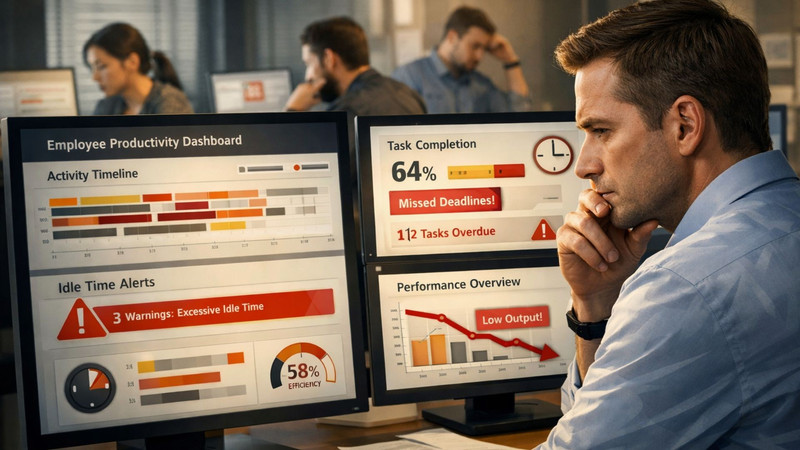
Maintaining productivity without micromanaging is a common struggle.
- Managers may find it difficult to assess output fairly
- Employees may feel either over-monitored or unsupported
- Lack of visibility can reduce accountability
To effectively manage remote employees, businesses need structured performance metrics, regular check-ins, and outcome-based evaluation rather than time-based tracking.
Work-Life Balance Challenges
Flexibility can sometimes blur boundaries.
In Remote Work
- Employees may overwork due to a lack of clear boundaries
- Difficulty disconnecting leads to burnout
In Hybrid Work
- Switching between environments disrupts routines
- Commute days can create inconsistency in schedules
Best Practice:
Encourage defined work hours, promote breaks, and build a culture that respects personal time.
Technology and Infrastructure Limitations
Both models rely heavily on technology, but challenges differ:
- Remote workers may face unreliable internet or inadequate home setups
- Hybrid environments require seamless integration between office and remote systems
- Security risks increase with distributed access points
Investing in secure, scalable tools is essential for maintaining workflow continuity and data protection.
Team Culture and Employee Engagement
Building a strong company culture becomes harder when teams are not always together.
Common Issues:
- Reduced informal interactions
- Difficulty building trust among team members
- New employees struggle with onboarding and integration
This is especially critical when handling distributed teams through remote contractor management, where alignment and engagement directly impact performance and consistency.
Scheduling and Coordination Complexity
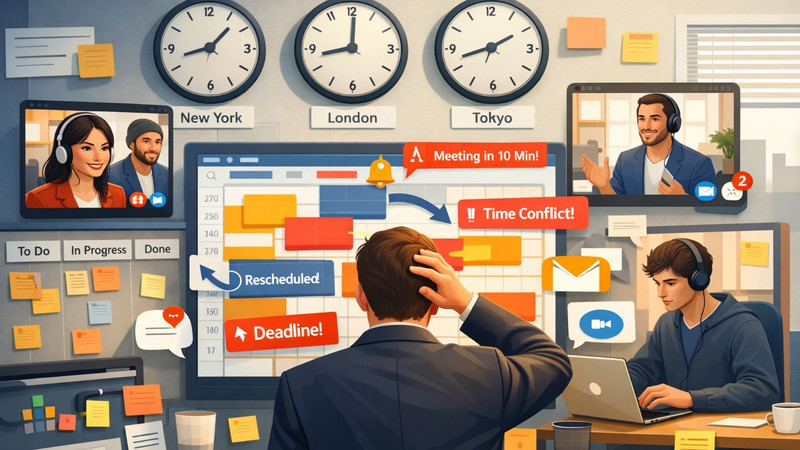
Hybrid work introduces a unique logistical challenge:
- Aligning office days across teams
- Avoiding empty offices or overcrowding
- Managing time zone differences in remote setups
Without proper planning, hybrid schedules can become chaotic and counterproductive.
Leadership and Management Challenges
Managers must adapt their leadership style significantly.
- Traditional supervision methods no longer apply
- Leaders must focus on outcomes, not presence
- Emotional intelligence becomes more important in remote settings
Tools like Empmonitor help organizations gain visibility into workflows while maintaining transparency and trust among teams.
Cost and Resource Allocation
Both models impact operational costs differently:
Hybrid Work
- Requires maintaining office space
- Increased utility and infrastructure costs
Remote Work
- Savings on office expenses
- Potential increase in employee support costs (equipment, stipends)
Balancing cost efficiency with employee experience is key.
Also watch this video - Manage Remote Work Easily With Powerful Monitoring Software: EmpMonitor
Conclusion
There is no one-size-fits-all answer when comparing remote vs hybrid work. Each model presents its own set of challenges, from communication gaps and productivity concerns to cultural and technological hurdles.
The best approach depends on the business goals, team structure, and nature of work.
Organizations that succeed are those that proactively address these challenges, invest in the right tools, and create flexible policies that prioritize both performance and employee well-being.
FAQs
Q1. Which is more productive: hybrid or remote work?
Productivity depends on implementation. Remote work offers fewer distractions, while hybrid work supports collaboration. A balanced structure often delivers the best results.
Q2. What is the biggest challenge in hybrid work?
Coordination and communication gaps between in-office and remote employees are the most common issues.
Q3. Is remote work sustainable long-term?
Yes, but only with strong communication systems, clear expectations, and proper employee support.