
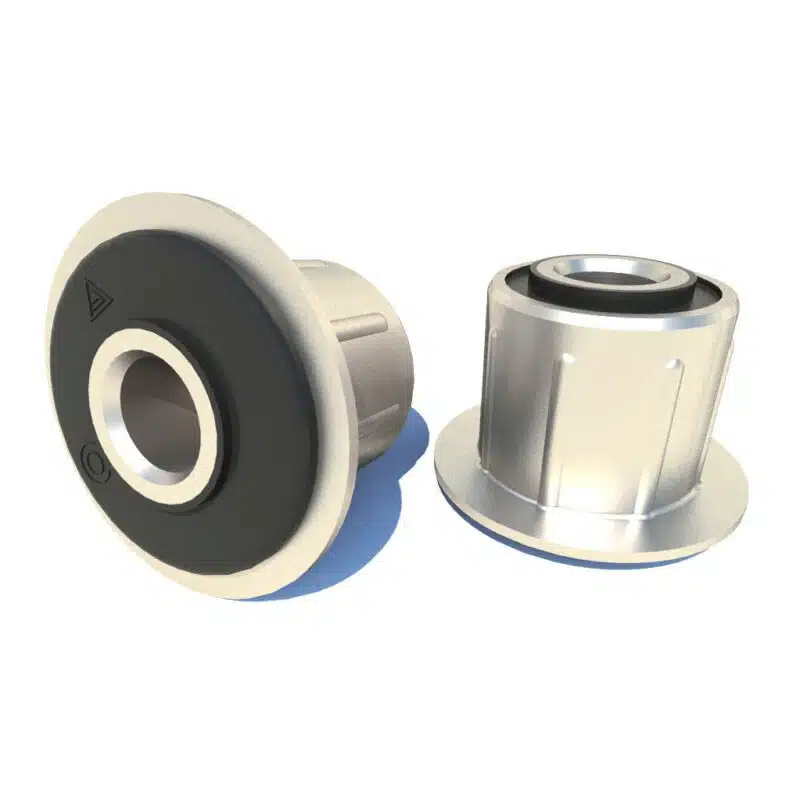
What Are Anti Vibration Rubber Bushes?
Rubber bushes play a vital role in reducing the transmission of vibration, shock, and noise between components. Designed using bonded rubber and metal, these products act as isolators within mechanical systems. The rubber absorbs energy, while the metal sleeve provides structural support, enabling the component to handle axial, radial, and torsional loads without deforming or failing.
Although often discussed alongside anti-vibration mounts, rubber bushes serve a different function. Mounts typically support equipment or machinery in a static position, helping to isolate entire assemblies from vibration. Bushes, on the other hand, are placed within joints or pivot points to dampen motion and protect mechanical linkages from damage due to wear or excessive vibration.
Common Types of Rubber Bushes for Vibration Control
Cylindrical Bushes
These are the most frequently used type. The rubber is bonded between an inner and outer metal sleeve, forming a basic cylindrical profile. They’re suited for high-frequency vibration and light to moderate dynamic loading. Cylindrical bushes are often used in automotive suspension systems and smaller industrial assemblies.
Flanged Bushes
Flanged bushes feature an extended outer edge, improving axial positioning and making them easier to mount. The flange can also help prevent over-compression and provide additional surface area for load distribution. These are ideal in applications where component alignment is critical.
Conical Bushes
Conical designs provide progressive stiffness characteristics, which helps manage both light and heavy loads efficiently. Their shape allows for greater flexibility under compression, making them a good choice in systems subject to variable loading conditions or misalignment.
Spherical Bushes
Designed to allow for slight angular movement, spherical bushes combine vibration damping with rotational flexibility. They are often seen in off-road vehicles, rail bogies, and heavy-duty steering systems, where articulation and durability are essential.
Custom-Engineered Options
Where conditions are highly specific, custom rubber bushes can be manufactured to meet strict dimensional and performance standards. This is common in sectors like rail, marine, and specialised machinery, where vibration levels or environmental factors vary considerably. With the right development support, these custom parts can address challenges that standard products cannot.
Typical Applications by Industry
Automotive Suspension and Engine Mounting
In passenger and commercial vehicles, anti vibration rubber bushes are fitted in suspension arms, engine cradles, and gearbox assemblies. These bushes reduce noise and vibration from road inputs and driveline components, contributing to smoother handling and better passenger comfort.
Agricultural Machinery and Tractors
Farming equipment operates in harsh conditions where vibration and shock loads are constant. Bushes in the pivot points of linkages and suspension help preserve the lifespan of expensive equipment by isolating sensitive components.
Railway Bogies and Carriages
Rubber bushes in rail systems dampen vibration between the chassis and bogies, improving passenger comfort while protecting the structural components from long-term fatigue.
Marine Engines and Equipment
In marine environments, vibration control is essential to avoid mechanical damage and maintain crew comfort. Rubber bushes are used in engine mounts, shaft bearings, and auxiliary machinery to reduce vibration transfer through the hull.
Construction and Earthmoving Machinery
Heavy-duty vehicles and tools like excavators, backhoes, and drilling rigs rely on vibration isolators to protect both the machinery and the operator. Bushes in jointed arms and cabs help reduce vibration-related fatigue and structural stress over time.
Key Benefits of Using Anti Vibration Rubber Bushes
Noise Reduction
Rubber bushes act as acoustic insulators, absorbing vibrations before they translate into audible noise. This is particularly useful in environments where operator comfort or residential noise limits are a concern, such as in public transport or construction near occupied buildings.
Enhanced Component Lifespan
Vibration accelerates wear. By fitting anti vibration rubber bushes at key junctions, mechanical assemblies avoid fatigue cracks, loosened fasteners, or seal failures. This directly contributes to longer service intervals and reduced downtime, especially for mobile machinery.
Improved Ride Comfort and Safety
In vehicles and equipment where human operators are exposed to constant movement, rubber bushes reduce physical stress and contribute to a more stable experience. This supports health and safety compliance in high-vibration working environments, including rail, marine, and heavy construction sectors.
Anti-Vibration Mounts vs Rubber Bushes: When to Use Each
Static vs Dynamic Load Handling
Anti-vibration mounts are typically used where an entire unit such as a generator, pump, or HVAC system requires isolation from its mounting base. These mounts handle static loads with low-to-medium-frequency vibration. Bushes, by contrast, are placed within moving joints or rotating assemblies to handle dynamic loading and movement in multiple directions.
Installation Considerations
Mounts often come with threaded studs or base plates, allowing straightforward integration onto machine frames. Bushes require press-fitting or bonding into housings, meaning their installation tends to be more integrated into the design of a component. The location, load direction, and available space often determine which solution is best suited.
Maintenance and Replacement Cycles
Bushes tend to last longer when properly sized and fitted, as they are less exposed to environmental damage. Mounts, especially those under high compression or constant exposure to contaminants, may require more frequent inspection and replacement. Each product has different tolerances, so using the right type in the right place can reduce long-term maintenance costs.
Material Selection and Custom Design Support
Natural vs Synthetic Rubber
Natural rubber offers excellent damping and resilience for most indoor applications. In contrast, synthetic rubbers like EPDM or nitrile offer better resistance to temperature, ozone, or oil exposure. The selection depends on the operating environment and expected loading cycles.
Environmental and Load Factors
Factors such as exposure to saltwater, temperature fluctuations, UV, and chemical contact must be considered when selecting a bush or mount. For example, marine applications benefit from corrosion-resistant metal sleeves paired with non-absorbent elastomers.
Working with Suppliers for Tailored Solutions
Fibet provides full in-house support for customers needing non-standard designs. Whether for low-volume prototypes or high-volume OEM parts, their technical team manages the design, validation, and manufacturing processes to ensure reliable performance across multiple industries.
Final Thoughts on Product Suitability
Choosing between anti-vibration mounts and rubber bushes depends on the load type, installation environment, and motion characteristics of the equipment. Both products have a clear place in vibration isolation strategies. Correct application ensures longer machine life, less downtime, and improved safety across sectors. Understanding the role of anti vibration rubber bushes helps manufacturers and operators maintain efficient, resilient systems, especially in high-impact industries.