
Flattering Hairstyles for Triangle Face Shapes
Have you ever noticed that a sleek, chin-length bob makes your jawline look surprisingly wide? It isn’t your features at fault, but rather the visual geometry of the haircut. A true triangle face shape features a narrow forehead that gradually widens down to a prominent jawline. According to top stylists, recognizing this specific proportion is the first step to discovering a look you love.
While popular beauty magazines heavily cater to wider-forehead structures, understanding the pear face shape vs heart face shape requires the exact opposite approach. In daily styling practice, we frequently witness the "ponytail trap." Pulling your hair tightly back minimizes your upper face while overexposing a strong jaw. Picture tracing your reflection in a steam-covered mirror; if the bottom half carries the width, you possess this striking facial foundation.
Balancing this ratio relies entirely on the scale analogy. Because the bottom of your face naturally carries weight, we must add visual weight—through targeted volume and texture—to the top. Applying this rule widens your forehead, making your jaw appear narrower by comparison. The most flattering hairstyles for triangle faces use these smart proportions to create effortless, everyday symmetry.
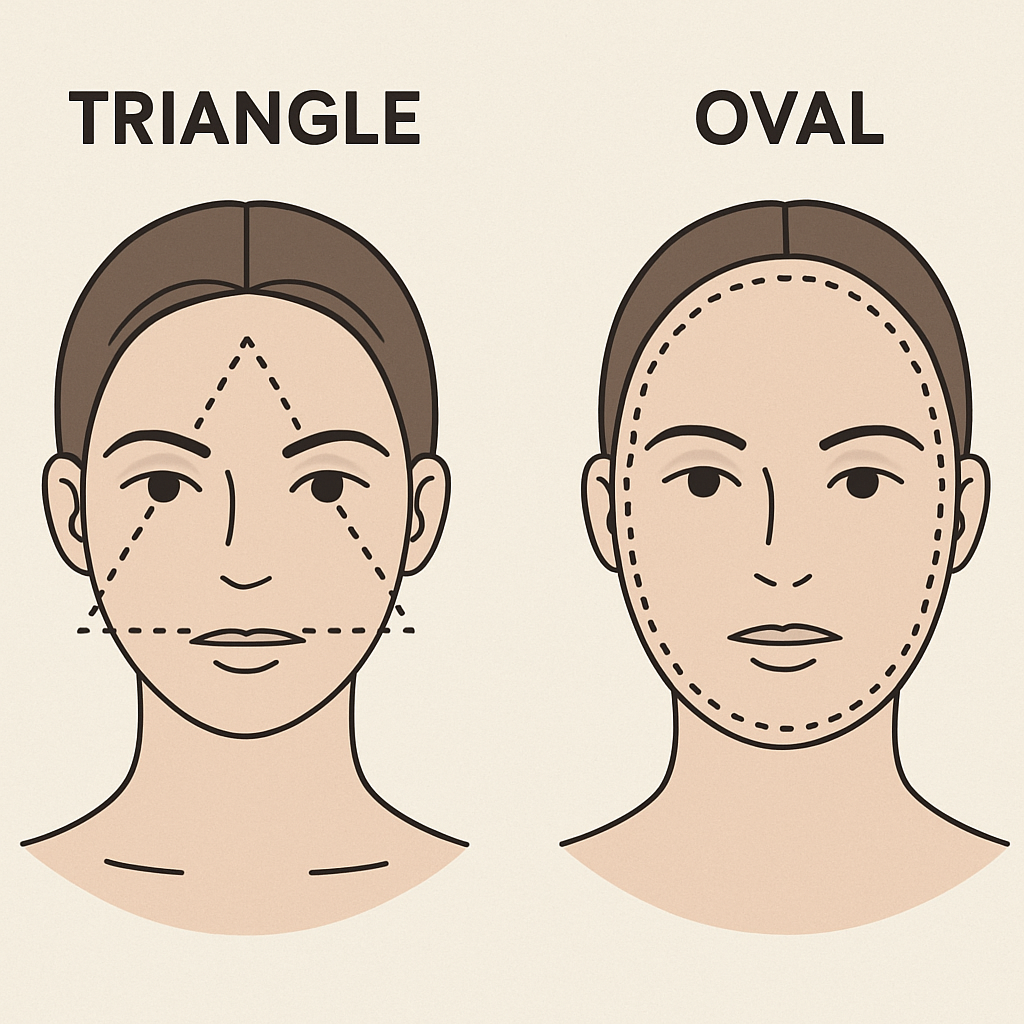
The Trace Test: How to Confirm You Have a Triangle Face Shape
Certain haircuts can make the bottom of your face feel overly prominent. Learning exactly how to identify triangle face shapes is your first step toward styling success. Often called a pear shape, this beautiful facial structure features a narrow forehead that gradually expands down to a strikingly wide jawline. Because the bottom naturally carries more visual weight, our ultimate goal is to use your hair to optically widen the forehead and create perfect harmony.
Confirm your shape with a quick 60-second self-assessment right out of the shower.
-
Pull your hair back completely to expose your face.
-
Trace the outline of your reflection on a steam-covered mirror.
-
Compare the top and bottom widths to find your widest point.
If your drawing clearly widens at the jaw, you are ready to apply the golden rule of balance: widening the top to soften the jaw.
The Golden Rule of Balance: Widening the Top to Soften the Jaw
Think of your face like a scale; adding visual "weight" up top lifts and lightens the bottom. This is the secret behind optical narrowing, a styling trick that explains how to balance a wide jawline with hair. Instead of hiding your lower face behind flat, heavy locks, building soft volume around your temples makes your jaw instantly appear narrower by comparison.
Achieving this relies on the "Arrow Concept," where the ends of your haircut act as visual pointers. Every layer should function like a subtle arrow directing attention upward toward your cheekbones, rather than resting heavily at your chin. You can easily visualize this using the "Rule of 3" for volume placement: concentrate your hair's fullness strictly at the crown, the temples, and the upper cheekbones.
Sweeping details perfectly execute these geometric principles. For example, the best bangs for narrow forehead shapes will sweep diagonally rather than falling straight down. Adding a side swept fringe for facial symmetry breaks up the hairline, creating an illusion of width that beautifully anchors your look. Strategic volume shifts focus upward, beautifully complementing shorter styles.
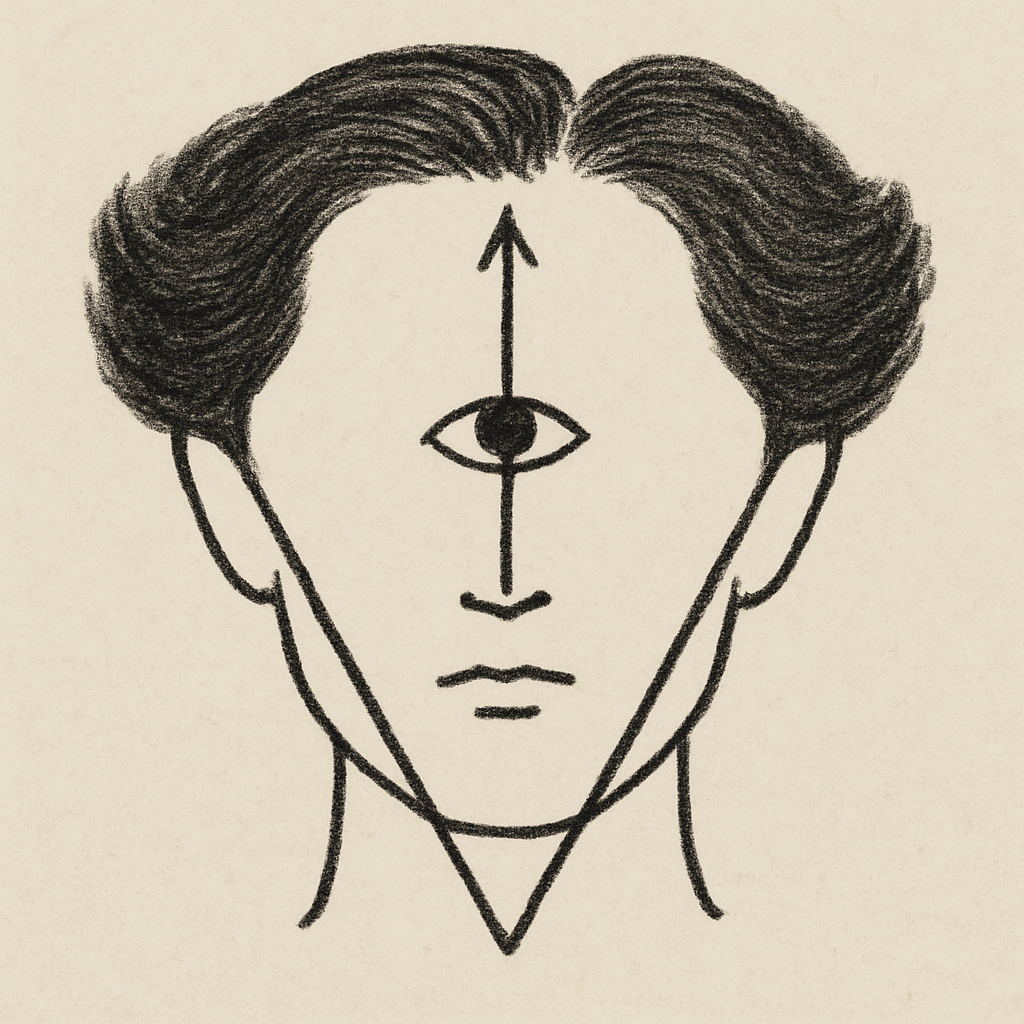
Short and Textured: Chin-Length Bobs and Shags for Strong Jawlines
A sleek bob ending exactly at your chin often acts as a heavy underline highlighting your widest point. To avoid this blunt A-line trap, we need to bypass this zone entirely. By keeping the length slightly above the jaw or dropping it lower, we instantly start softening strong facial features with layers rather than highlighting their width.
Building that necessary top-heavy balance relies on two specific salon techniques: graduation—stacking layers to build weight and fullness toward the crown—and texturizing, which thins out the bottom ends to remove bulky heaviness. Together, they create beautifully proportioned short styles. Consider asking your stylist for one of these three options:
-
Textured shag for heavy jawlines: Keeps the ends light and flicky while maximizing crown volume.
-
Long pixie with volume: Concentrates all visual weight directly at the temples.
-
Off-center bob: A graduated, asymmetrical shape—like a chin-length bob with side fringe—that effortlessly breaks up the lower face.
Chopping your hair short using these techniques provides the perfect geometric lift to harmonize your proportions. Yet, if you prefer leaving a bit more length, these volume-shifting rules easily adapt to mid-length styles.
Mid-Length Magic: Layering Techniques to Narrow a Wide Lower Face
Letting your hair grow past the chin opens new possibilities but requires strategic placement to avoid pulling the eye downward. The secret to beautifully layered cuts for wide jawlines lies in "temple-width expansion"—adding fullness beside your forehead to balance the scale. When planning face-framing layers for wider lower face proportions, ask your stylist to begin the shortest pieces exactly at the cheekbone. This uses internal layering, where hidden shorter hair pushes the top layers outward, effortlessly securing crucial temple volume.
Shifting how you divide your locks provides another simple way to redirect visual attention. A deep side part for face shape correction works perfectly because asymmetry instantly breaks up the solid width of a prominent jawline. Sweeping your hair over one eye creates a diagonal flow, softening the bottom half while maximizing top height. Extending this geometry past the shoulders requires adjusting the technique to maintain an oval illusion.

Long Layers for Pear Shapes: Creating the Illusion of an Oval
While growing your hair out offers beautiful versatility, its natural weight acts like an anchor, flattening the crown and exposing a narrower forehead. The secret to long layers for pear face shapes is managing this gravity to keep our visual scale balanced. Enter the "Collarbone Rule."
This guideline dictates that your shortest layer must never start higher than the collarbone. Layers ending at the jawline act like arrows pointing directly to your widest point. Dropping them lower preserves top-heavy fullness, achieving flawless hair contouring for balanced proportions.
-
Schedule regular trims to keep layers bouncy and lightweight.
-
Apply targeted root lifters for adding volume at the temples.
-
Avoid heavy, blunt ends that widen the bottom half of the face.
-
Always enforce the Collarbone Rule to maintain your structural framework.
Sustaining this specialized silhouette prevents long lengths from dragging your features downward over time. These geometric rules apply equally to men's styling, shifting the focus to vertical height.
Triangle and pear shapes need visual weight shifted upward. HairPick scores jaw width, temple narrowness, and hair texture together, then proposes ten realistic cuts—women's or men's—with clear "why it fits" notes and a guide for your barber.
For the Gentlemen: Flattering Haircuts for Men with Triangle Faces
Men manage this balancing act using vertical height rather than flowing layers. Building volume directly on top with a classic pompadour or textured quiff draws the eye upward, visually lengthening the face. Successful hairstyles for triangle shaped faces male rely on this shared secret: structured top height beautifully counterbalances a wider jaw.
Be careful with traditional barbershop staples like the tight fade, though. Buzzing the sides completely down without maintaining weight near the temples leaves the jawline looking wider by comparison. Instead, the most flattering haircuts for pear shaped faces keep enough length around the upper sides to seamlessly blend that geometric transition.
Facial hair also heavily influences this visual scale. A bulky, squared beard adds unnecessary weight to an already strong lower face, so always ask your barber to taper the edges toward the chin. Maintaining this crucial top-heavy shape requires a solid daily routine and the right tools.
From Flat to Full: Essential Tools and Products for Temple Volume
Pulling hair back tightly creates a sleek silhouette but removes crucial upper width, upsetting the delicate visual scale. When creating flattering updos for narrow foreheads, always leave soft tendrils loose around your cheekbones. This effortless hair contouring beautifully softens the jawline while adding volume at the temples.
Securing that top-heavy shape requires basic root lift chemistry. Quality volumizers use lightweight polymers that wrap around individual strands, creating microscopic spacing that physically props the hair upward. Activate this formula using the "Up-and-Away" blow-drying method. Simply pull sections straight up toward the ceiling, directing warm airflow directly at the base before letting it cool.
Maintaining this architectural hold throughout the day relies on three essential styling tools:
-
Volumizing Mousse: Provides airy support without heavy residue.
-
Round Brush: Creates necessary tension for maximum lift.
-
Dry Shampoo: Adds texture and grip so fresh hair won't fall flat.
A perfectly balanced daily routine sets the foundation for a highly successful salon visit.
Your 3-Step Plan for Your Next Salon Visit
You no longer have to guess why certain styles feel heavy at the bottom. You now understand the visual geometry of flattering haircuts and how to balance your features by adding volume to the top. To unlock the best hairstyles for triangle faces, treat your next salon visit as a partnership. Rather than asking for a generic face shape correction, guide your stylist with these exact phrases:
-
'I want to widen my temple area'
-
'Can we start layers at the cheekbones?'
-
'I need texture to soften my jawline'
Equipped with this professional vocabulary, you are ready to take control of your look. Step into the salon chair with confidence, knowing exactly how to guide your stylist to beautifully balance your natural shape.