
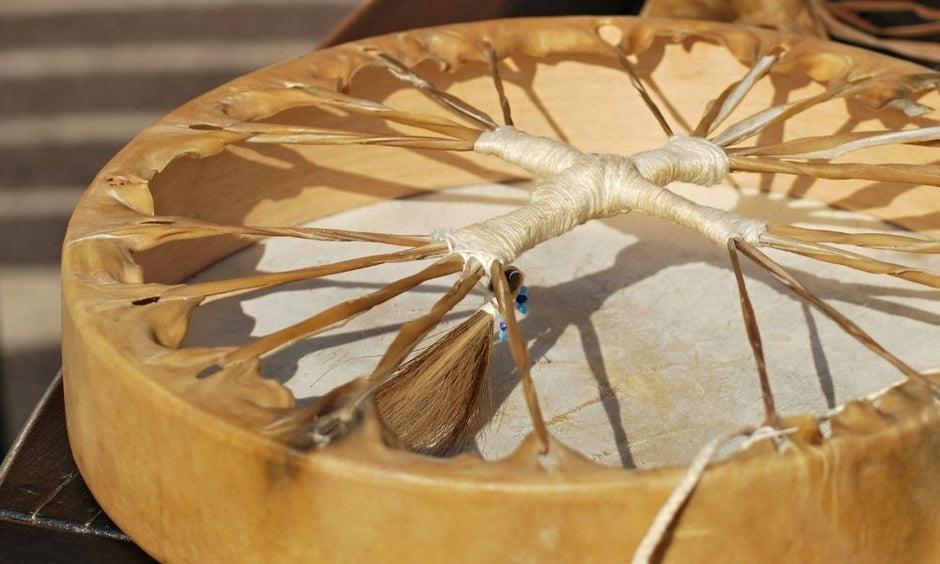
There are few environments as demanding on a drum as the sweat lodge. Heat. Steam. Darkness. Prayer. Intention. Everything inside the lodge is intensified, and the tools brought into that space must be prepared for it. A sweat lodge drum is not something to buy lightly, and it is certainly not interchangeable with a standard hand drum.
Over the years, we’ve spoken with many people searching for sweat lodge drums for sale or asking about Native American sweat lodge drums. Some had already purchased a drum that failed after a few rounds. Others were unsure how to tell the difference between a drum built for ceremony and one built for display.
This guide is meant to share what we’ve learned through hands-on experience — not just how sweat lodge drums are made, but why quality matters so much, and what to look for when choosing a drum that will truly serve the ceremony.
Why Sweat Lodge Drums Are Different
Before discussing what to look for, it’s important to understand why sweat lodge drums are in a category of their own.
The sweat lodge creates conditions that challenge every part of a drum:
-
Extreme heat
-
Rapid temperature changes
-
High humidity and steam
-
Extended periods of moisture
-
Repeated tightening and loosening of rawhide
A drum that performs beautifully in a dry room can become unplayable in the lodge within minutes if it isn’t built specifically for that environment.
Sweat lodge drums must be designed from the start to withstand these conditions.
1. Purpose Comes Before Appearance
One of the most common mistakes people make when buying a sweat lodge drum is focusing on how it looks rather than how it’s built.
Inside the lodge, no one sees painted designs or decorative features. What matters is:
-
Stability
-
Sound consistency
-
Durability
-
Reliability
A good sweat lodge drum may appear simple, even plain, but that simplicity is intentional.
When looking at sweat lodge drums for sale, be cautious of drums that emphasise decoration over construction.
2. Rawhide Quality Is the Foundation
Rawhide is the heart of the drum, and for sweat lodge use, it must be chosen with extreme care.
What to Look For in Rawhide
A proper sweat lodge drum uses rawhide that is:
-
Thick enough to resist over-stretching
-
Even in density across the surface
-
Free from weak spots or thin areas
-
Naturally prepared, not overly processed
-
Responsive but resilient
Common Hide Choices
While different traditions prefer different hides, the most common include:
-
Buffalo rawhide – Highly durable with a deep, grounding tone
-
Elk rawhide – Flexible and warm, often used with careful tuning
-
Cow rawhide – Only suitable when high-quality and properly prepared
Thin or decorative hides may sound fine at first, but they rarely survive repeated lodge use.
3. Frame Strength Matters More Than Size
The frame holds everything together. In a sweat lodge drum, frame failure can happen slowly or suddenly — often after repeated exposure to heat and moisture.
A strong frame should be:
-
Made from quality hardwood
-
Evenly bent without cracks or weak points
-
Properly sealed or treated
-
Matched to the hide thickness
Frames that are too thin or improperly bent may warp over time, pulling the hide unevenly and ruining the drum’s voice.
4. Lacing Must Be Functional, Not Decorative
Lacing is one of the most overlooked elements of sweat lodge drum quality.
For lodge use, lacing must:
-
Hold tension evenly
-
Resist loosening in humidity
-
Allow for adjustments if needed
-
Maintain balance across the drum
Traditional lacing patterns are not about aesthetics — they distribute stress and help the drum respond naturally to environmental changes.
If the lacing looks rushed, uneven, or purely decorative, that’s a warning sign.
5. Proper Drying Is Non-Negotiable
Many drum failures happen not in the lodge, but during the drum’s early life because it wasn’t dried properly during construction.
A quality sweat lodge drum is:
-
Dried slowly
-
Allowed to rest before use
-
Tuned gradually
-
Checked for weak spots as it cures
Fast drying methods, especially those involving artificial heat, weaken the hide and shorten the drum’s lifespan.
Ask the maker how the drum was dried. A knowledgeable maker will be able to explain their process clearly.
6. Sound Should Be Steady, Not Sharp
Inside a sweat lodge, sound behaves differently. Sharp or brittle tones can become uncomfortable, while overly loose drums lose clarity.
A good sweat lodge drum produces a sound that is:
-
Grounded
-
Steady
-
Even across the surface
-
Supportive rather than overpowering
The goal is not volume — it’s consistency.
7. Experience of the Maker Matters
One of the most important factors when buying a sweat lodge drum is who made it.
An experienced maker:
-
Understands the lodge environment
-
Builds drums specifically for the ceremony
-
Knows how different hides behave in humidity
-
Can explain proper care and use
-
Respects the cultural responsibility of the drum
Someone who has never used a drum in a lodge cannot fully understand what it needs to survive there.
8. Ask About Testing and Use
Quality sweat lodge drums are often tested before being offered for sale.
This might include:
-
Controlled exposure to humidity
-
Repeated tuning checks
-
Trial use in lodge settings
-
Long-term observation
A maker who builds sweat lodge drums should be able to speak confidently about how their drums perform over time.
9. Proper Care Is Part of the Purchase
A responsible maker will not sell you a sweat lodge drum without explaining how to care for it.
You should expect guidance on:
-
Drying the drum after lodge use
-
Safe storage between ceremonies
-
What to avoid (cars, heaters, sunlight)
-
When and how to adjust tension
-
How often can the drum be used?
If care instructions aren’t offered, it’s likely the drum wasn’t built with longevity in mind.
10. Quality Protects the Ceremony
This may be the most important point of all.
In the sweat lodge, the drum is not just an instrument — it’s part of the ceremony. A drum that fails mid-ceremony can disrupt the flow, distract participants, and shift focus away from prayer.
Quality matters because:
-
It supports the integrity of the ceremony
-
It honours the people present
-
It respects the spiritual space
-
It prevents unnecessary distractions
-
It allows the drum to serve its role fully
A well-made sweat lodge drum becomes a reliable helper — one that supports many ceremonies over many years.
Why Cheap Sweat Lodge Drums Cost More in the Long Run
It’s understandable to want to save money, especially when searching online for sweat lodge drums for sale. But cheaper drums often come with hidden costs:
-
Short lifespan
-
Frequent repairs
-
Unstable sound
-
Disappointment
-
Replacement purchases
A high-quality sweat lodge drum may cost more upfront, but it will last longer, perform better, and ultimately serve the ceremony as intended.
Final Thoughts: Choose With Intention
Buying a sweat lodge drum is not a casual decision. It’s an investment in ceremony, community, and responsibility.
Take your time. Ask questions. Learn about materials and construction. Choose a maker who understands the cultural weight of the drum — not just its market value.
At Tachini Drums, we build sweat lodge drums with the understanding that they will enter sacred spaces. Every decision we make reflects that responsibility.
If you’re seeking a drum that will truly serve in the lodge, quality isn’t optional — it’s essential.