
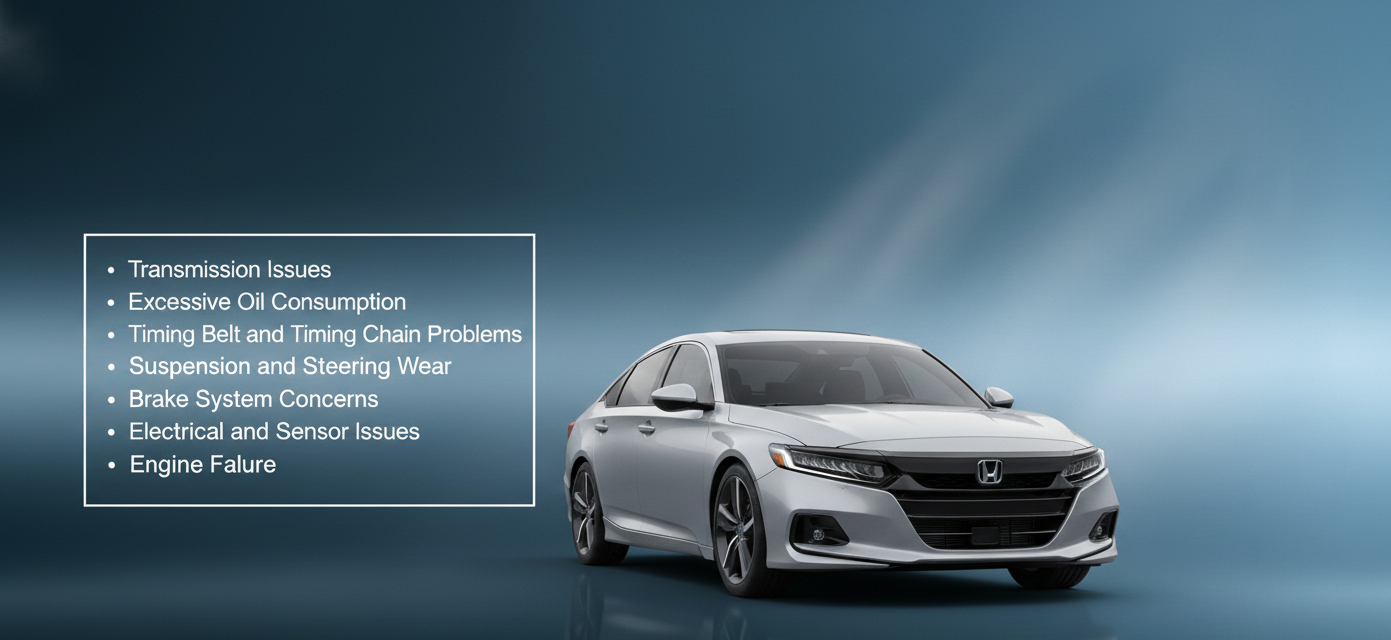
The Honda Accord has long been one of the most popular midsize sedans, valued for its comfort, fuel efficiency, and reliability. However, like any vehicle that has been produced for decades across multiple generations, the Accord is not without its issues. Understanding the most common Accord problems can help current owners maintain their vehicles properly and assist potential buyers in making informed decisions. Below is a detailed look at frequently reported concerns, their causes, and how they can be managed.
Transmission Issues in Certain Model Years
One of the most talked-about problems in older Honda Accord models involves transmission reliability. Some early automatic transmissions, especially in models from the late 1990s and early 2000s, were known to experience premature failure. Symptoms often include slipping gears, delayed shifting, or sudden loss of acceleration.
Regular transmission fluid changes and early diagnosis can help extend transmission life. For vehicles already experiencing severe issues, replacement may be necessary to restore drivability.
Excessive Oil Consumption
Oil consumption is another common concern reported in certain Accord generations. Some engines tend to burn oil faster than expected, requiring frequent top-offs between oil changes. This issue is often linked to piston ring wear or valve seal problems.
Failing to monitor oil levels can result in low lubrication, which increases engine wear. Owners should check oil levels regularly and follow proper maintenance schedules to prevent serious damage.
Timing Belt and Timing Chain Problems
Depending on the model year and engine type, Honda Accords may use either a timing belt or a timing chain. Timing belts require periodic replacement, and failure to do so can cause engine damage. Timing chains, while generally more durable, can still stretch or develop tensioner issues over time.
Rattling noises during startup or poor engine performance can indicate timing-related problems. Addressing these issues early helps avoid costly repairs.
Suspension and Steering Wear
Suspension components such as ball joints, control arm bushings, and struts can wear out over time, especially in higher-mileage Accords. Worn suspension parts often cause clunking noises, uneven tire wear, and reduced handling stability.
Regular inspections and timely replacement of worn components help maintain ride comfort and steering control.
Brake System Concerns
Some Accord owners report premature brake wear, including warped rotors and worn brake pads. These issues can lead to vibrations during braking or reduced stopping power.
Using quality brake components and ensuring proper installation can improve braking performance and extend component life.
Electrical and Sensor Issues
As Accords become more technologically advanced, electrical and sensor-related problems have become more common. Issues with oxygen sensors, mass airflow sensors, or infotainment systems may trigger warning lights or cause performance irregularities.
While often less severe than mechanical failures, electrical issues should be addressed promptly to avoid further complications.
Engine Failure in High-Mileage Vehicles
Although Honda engines are known for reliability, neglect or prolonged oil consumption issues can eventually lead to engine failure. High-mileage Accords that have not been properly maintained may experience knocking noises, overheating, or complete engine breakdown.
When major engine damage occurs, repair costs can be high. In such cases, replacing the engine may be more cost-effective than extensive repairs.
Replacement Solutions with Turbo Auto Parts
For owners facing major mechanical issues, Turbo Auto Parts offers practical solutions. Turbo Auto Parts provides quality used engines and transmissions that are thoroughly tested for reliability and performance. These options allow Accord owners to restore their vehicles at a fraction of the cost of new components.
Choosing a trusted supplier ensures compatibility, warranty coverage, and dependable performance.
Preventive Maintenance Tips
To minimize common Accord problems, owners should:
-
Follow recommended service intervals
-
Monitor oil and fluid levels regularly
-
Address warning lights promptly
-
Use quality replacement parts
-
Have inspections performed by experienced technicians
Preventive maintenance is the most effective way to extend vehicle life and reduce unexpected repair costs.
Final Thoughts
While the Honda Accord is widely regarded as a reliable and long-lasting vehicle, it is not immune to problems. Common issues such as transmission concerns, oil consumption, suspension wear, and electrical faults can arise, particularly in older or high-mileage models. Staying informed and proactive with maintenance can greatly reduce the impact of these issues.
For severe engine or transmission problems, working with a trusted supplier like Turbo Auto Parts can provide cost-effective and reliable replacement options. With proper care and smart repair decisions, Accord owners can continue to enjoy dependable performance and long-term value from their vehicles.