
When planning a construction or engineering project in the United States, understanding professional engineering requirements is essential. Two common terms are PE stamping and SE stamping. Although both involve licensed professionals reviewing and approving engineering documents, they differ in specialization, scope of practice, and project requirements. Choosing the right type of stamp helps ensure compliance with applicable building codes and safety standards.
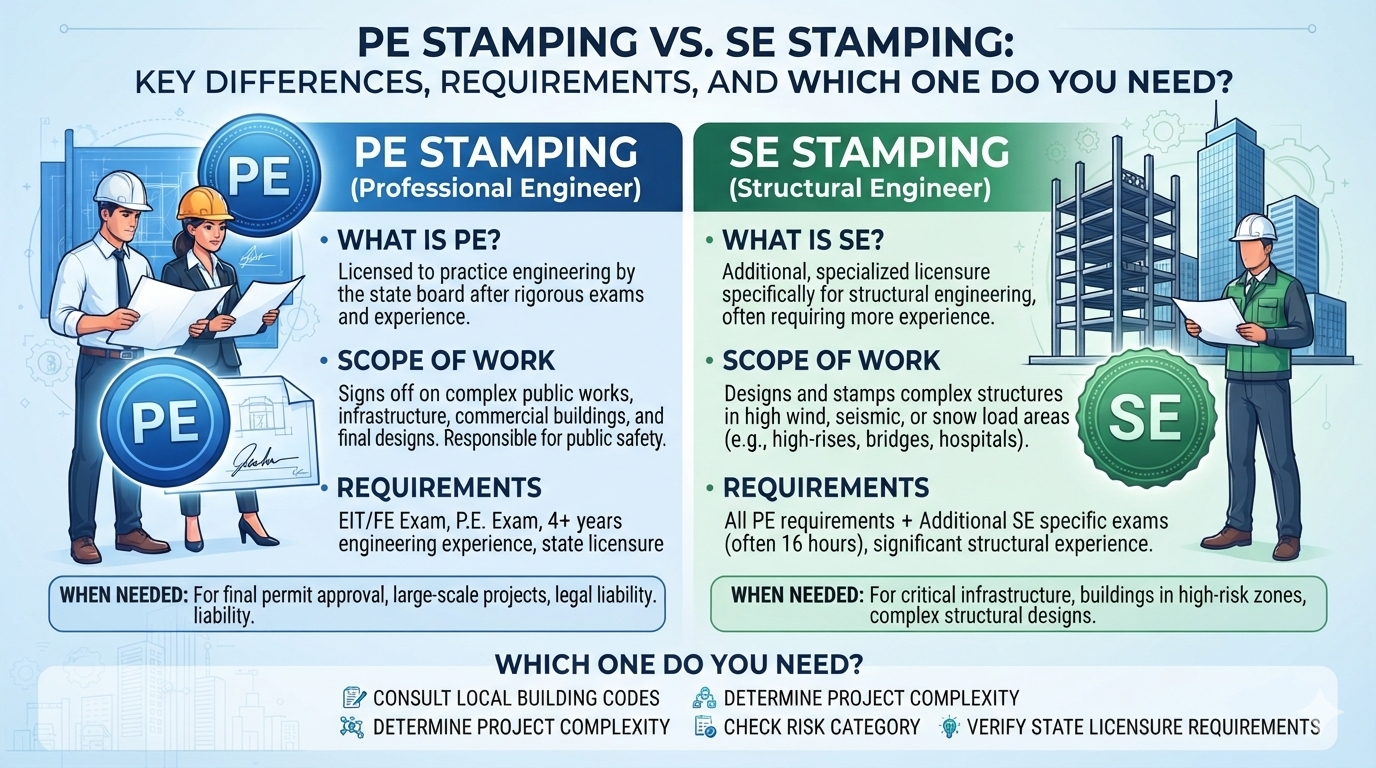
What Is PE Stamping?
PE stamping refers to the seal or stamp applied to engineering drawings and documents by a licensed Professional Engineer (PE). A PE demonstrates that the engineer meets the licensing requirements established by the relevant state licensing board.
PEs may specialize in various engineering disciplines, including civil, mechanical, electrical, environmental, and structural engineering. Depending on their qualifications and the laws of the jurisdiction, they can review, prepare, and approve engineering documents within their authorized area of competence.
PE stamping is commonly required for commercial buildings, electrical systems, mechanical installations, site development plans, and other projects that require professional engineering approval. The exact requirements depend on the project type, local regulations, and permitting authority.
What Is SE Stamping?
SE stamping refers to a seal applied by a licensed Structural Engineer (SE). In jurisdictions that recognize a separate structural engineering license, SEs must meet additional qualification requirements beyond those typically required for general PE licensure.
Structural engineers focus on the safety, stability, and strength of structures. Their work may include analyzing loads, designing structural systems, evaluating foundations, and verifying that buildings can withstand forces such as wind, seismic activity, and gravity.
SE stamping may be required for high-rise buildings, complex structural systems, significant public structures, and projects located in jurisdictions with specific structural engineering licensing requirements. However, the legal requirements vary by state and project.
Key Differences Between PE and SE Stamping
The primary difference lies in professional specialization and licensing requirements.
- Scope of expertise: A PE may work across multiple engineering disciplines, while an SE specializes in structural engineering.
- Licensing requirements: PE licensure generally requires qualifying education, examinations, and professional experience. Separate SE licensure, where applicable, may involve additional examinations and experience.
- Project suitability: PE stamping may be sufficient for many engineering projects, whereas certain structural projects may require an SE stamp.
- Regulatory compliance: Both stamps must comply with the applicable state licensing laws, building codes, and permitting requirements.
Importantly, a PE who specializes in structural engineering may be authorized to stamp certain structural documents in some states, while other states require an SE for particular projects.
Which One Do You Need?
The right choice depends on your project's location, complexity, and engineering requirements. For routine engineering work, a qualified PE may be sufficient. For complex structures or projects subject to specific structural licensing laws, an SE may be necessary.
Before beginning design work, consult the local building department or permitting authority to confirm the applicable requirements. You should also verify that your engineering professional is licensed in the project jurisdiction and competent to perform the required work.
Conclusion
Understanding PE stamping vs. SE stamping helps property owners, contractors, architects, and developers make informed decisions. While both support engineering safety and regulatory compliance, their authorization and requirements can differ significantly.
Working with a qualified engineering professional early in the project can help prevent permitting delays, reduce costly revisions, and ensure that engineering documents meet applicable standards.