
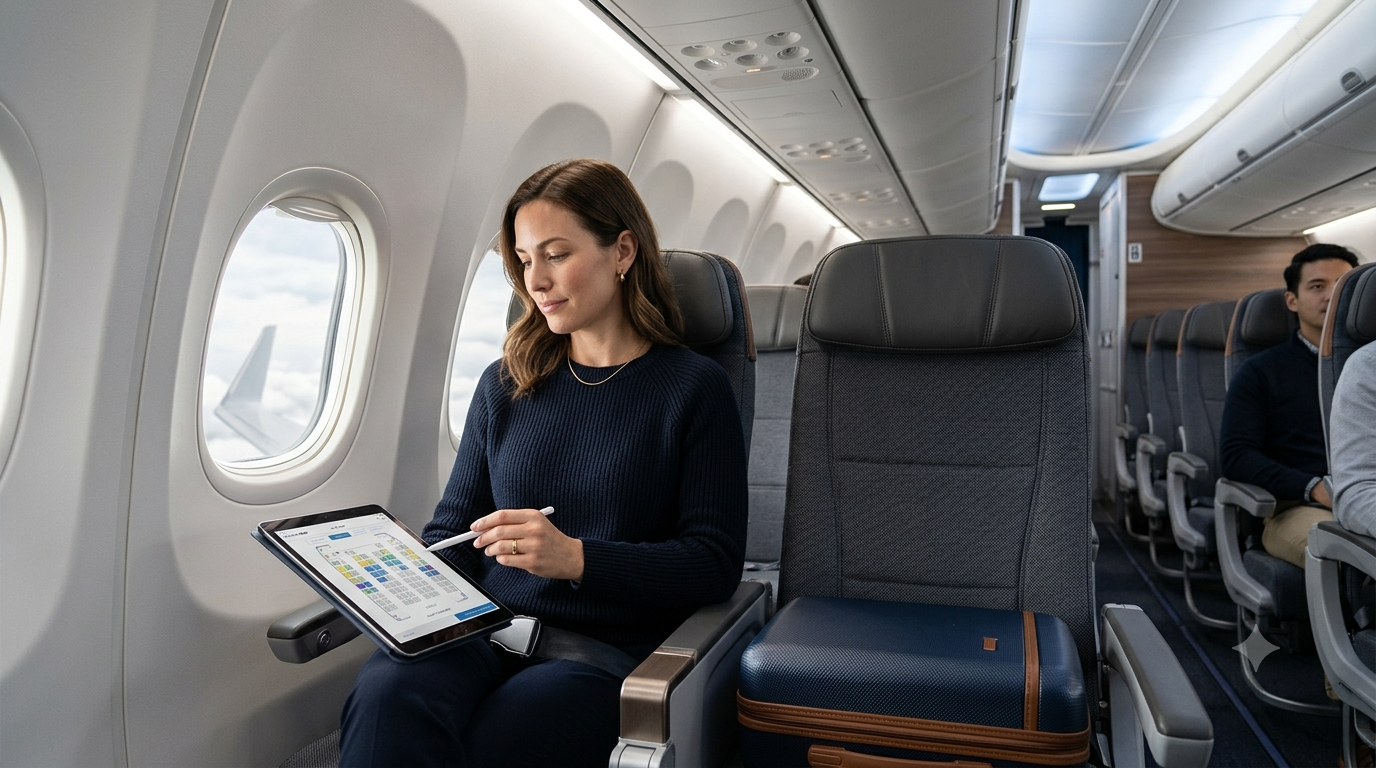
Choosing your airplane seat after booking can make your journey more comfortable, whether you are taking a short domestic flight or traveling internationally. The best seat depends on your priorities: extra legroom, easy aisle access, a window view, sitting with family, or avoiding certain areas of the cabin.
If you have already purchased your ticket, you may still be able to select or change your seat through the airline's website, mobile app, or customer service team. The available options depend on the airline, your fare type, the aircraft, and how close you are to departure. Understanding the process of seat selection after booking a flight can help you make an informed choice without paying for features you do not need.
This guide explains how to select a seat after booking, compare seat types, understand possible fees, and check your selection before departure.
1. How Can You Choose a Seat After Booking a Flight?
The simplest way to choose your seat is usually through the airline that operates your flight. Keep your booking confirmation or reservation reference nearby before you begin.
Follow these steps:
-
Open the airline's official website or mobile app.
-
Find the section labeled “Manage Booking,” “My Trips,” or a similar option.
-
Enter your booking reference and the passenger's last name if requested.
-
Open your itinerary and look for the seat selection option.
-
Review the available seats on the cabin map.
-
Select your preferred seat and check whether a fee applies.
-
Confirm your choice and save the updated itinerary.
If you booked through a travel agency or third-party booking platform, you may be able to select your seat through that provider. However, some reservations require you to use the operating airline's website.
If the seat map is unavailable, contact the airline or booking provider for assistance. Seat selection may be restricted by the fare, aircraft, operational requirements, or timing.
2. Which Airplane Seat Is Best for Your Needs?
There is no single best seat for every traveler. Think about what matters most during your flight before making a selection.

Window seat
Ideal if you enjoy looking outside, taking photographs, or leaning against the cabin wall to rest. However, you will generally need other passengers to move if you want to leave your row.
Aisle seat
A practical choice if you prefer easier access to the aisle, need to stand up periodically, or want to avoid climbing over other passengers.
Extra-legroom seat
Worth considering if you want more space for your legs. Availability, location, and fees vary, and some seats have additional restrictions.

Seats together
Useful for families, couples, and friends who want to sit beside one another. Check the seat map early, since adjacent seats may become limited as the flight fills.
Before choosing, consider the length of your flight and whether you have any personal preferences that affect comfort. A window seat may be appealing for a short daytime journey, while an aisle seat might be more convenient on a long flight.
3. What Should You Check on the Airline Seat Map?
An airline seat map shows the available seats and their positions within the aircraft cabin. It can help you compare rows, proximity to exits, and the location of facilities.
However, a seat map does not always show every comfort detail. Review the aircraft and seat information provided by the airline before making a final choice.
Pay attention to these factors:
-
Front of the cabin: May allow a quicker exit after landing, depending on the aircraft and airport procedures.
-
Seats near lavatories: Convenient for access, but foot traffic and door noise may be noticeable.
-
Galley areas: Useful to know about because nearby activity can create noise or movement.
-
Exit-row seats: May offer additional legroom, but eligibility requirements and restrictions apply.
-
Seats that do not recline: Some rows have limited or restricted recline.
-
Bulkhead seats: May offer additional space in front, but armrests, storage, and bassinet arrangements can differ.
Aircraft layouts can change, even for flights operating on the same route. If a particular seat feature is important to you, confirm it with the airline rather than relying solely on a generic seat map.
4. Does Seat Selection Cost Extra?
Sometimes. Airlines may include standard seat selection with certain fares, while other tickets require an additional payment. Preferred seats, extra-legroom seats, and some seats near the front of the cabin may have separate fees.
Your options can depend on:
-
The airline and route
-
Your fare class or ticket type
-
Frequent-flyer status or other applicable benefits
-
When you choose the seat
-
Whether the flight is domestic or international
Before paying, compare the cost of selecting a seat with the benefits it provides. If you are comfortable with an automatically assigned seat, paying extra may not be necessary.
Also, check the conditions attached to your selection. Airlines may change seat assignments for operational or safety reasons, and the process for requesting a refund of a seat fee varies by carrier.
5. When Is the Best Time to Select Your Seat?
In general, checking seat availability soon after booking gives you more opportunities to choose from the available options. Popular seats and groups of adjacent seats can become harder to find as departure approaches.
A practical approach is to review your seat options as soon as your reservation is confirmed.
If you cannot select a seat immediately, check your booking again later or contact the airline. Some fares limit advance seat selection, while other airlines open additional options during online check-in.
Keep these points in mind:
-
Immediately after booking: Check which seats are available and whether selection is included.
-
Before online check-in: Revisit the seat map if you have not chosen a seat.
-
During check-in: Review any remaining seats or assignment options.
-
At the airport: Ask airline staff about available alternatives if your assigned seat does not meet your needs.
Do not assume that waiting will guarantee a better seat or a lower fee. Availability and pricing depend on the airline and flight.
6. Can You Change Your Seat After Selecting It?
Many airlines allow passengers to change seats after an initial selection, provided other seats are available and the ticket conditions permit the change.
To request a change, open your reservation through the airline's website or app, revisit the seat map, and check the cost of the replacement seat. If the online option is unavailable, contact the airline.
Before confirming a change, verify:
-
Whether the new seat has an additional fee
-
Whether your original seat fee is refundable
-
Whether the replacement seat offers the feature you want
-
Whether other passengers in your booking will be affected
Remember that a seat change is not always guaranteed. Airlines may reassign seats because of aircraft substitutions, safety requirements, or operational changes. Check your boarding pass after check-in and again if the airline notifies you of an itinerary change.
7. What Should Families, Students, and Frequent Travelers Consider?
Different travelers have different seating priorities, so consider your circumstances before choosing.
Families traveling with children
Look for adjacent seats as early as possible and review the airline's family seating policies. Do not assume that every booking automatically guarantees that all family members will sit together. Contact the airline if you need help finding suitable arrangements.
Students traveling on a budget
Students may prefer to avoid unnecessary seat fees, particularly on longer trips where airfare and baggage already make up a significant part of the travel budget. Explore flight options for students and compare the included benefits and restrictions before purchasing.
Domestic travelers
For shorter journeys within the United States, you may decide that a standard assigned seat is sufficient. Compare your ticket options using this domestic flight booking resource and consider whether paying extra for a particular seat is worthwhile for your trip.
Travelers with multiple destinations
If your journey includes several stops, check seat assignments for every flight segment. Choosing a seat on one leg does not necessarily select seats for the rest of your itinerary. A guide to planning multi-city flights can help you understand the different segments of a complex trip.
If you are still planning your overall itinerary, this resource on choosing and booking flights from the USA can help you review your options before finalizing your travel arrangements.
8. Common Seat Selection Mistakes to Avoid
A few small oversights can lead to disappointment or unexpected costs. Avoid these common mistakes:
-
Assuming every seat is free: Check the fee displayed before confirming.
-
Choosing based only on row number: Review legroom, recline, and nearby facilities.
-
Ignoring seat restrictions: Exit-row and other special seats may have eligibility requirements.
-
Expecting companions to be seated together automatically: Check the actual seat assignments.
-
Forgetting to verify the final assignment: Recheck your boarding pass and itinerary after changes.
-
Relying on an old seat map: Confirm the current aircraft layout when possible.
A little research can help you select a seat that better suits your needs without spending unnecessarily.
Final Thoughts
The best time to consider seat selection is soon after booking, when you can review the available options and decide whether paying for a preferred seat makes sense. Think about your comfort, budget, travel companions, and flight duration before making your choice.
Once you have selected a seat, save the updated itinerary and check your assignment again during check-in. Although airlines can make operational changes, understanding your options helps you prepare for a more comfortable journey.
Frequently Asked Questions
Q 1. Can I choose my seat after booking a flight?
Yes. Many airlines let you select a seat through their website, mobile app, or customer service team after booking. Availability and fees depend on your ticket and airline.
Q 2. Is seat selection free after booking?
Not always. Some fares include standard seat selection, while others charge for specific seats or extra legroom. Check the terms of your ticket before paying.
Q 3. Which airplane seat is best for comfort?
It depends on your preferences. Window seats offer views and a place to lean, aisle seats provide easier access, and extra-legroom seats may offer more space.
Q 4. When should I select my airplane seat?
Check availability soon after booking. Selecting early may give you more choices, although some airlines restrict seat selection until online check-in.
Q 5. Can I change my seat after selecting it?
Often, yes. You can check the airline's website or app for other available seats. Fees or restrictions may apply, and changes are subject to availability.
Q 6. Will I be charged for changing my seat?
It depends on the airline, fare conditions, and replacement seat. A more desirable seat may cost extra, so review the displayed price before confirming a change.
Q 7. How can I make sure my family sits together?
Check the seat map during or soon after booking and select adjacent seats if available. Contact the airline if you need assistance, as seating together is not always guaranteed.
Q 8. Are exit-row seats a good choice?
They can provide additional legroom, but eligibility restrictions apply. Some exit-row seats have limited recline or other features that may affect comfort.
Q 9. What happens if the airline changes my assigned seat?
Airlines may reassign seats for operational, aircraft, or safety reasons. Review your updated itinerary and contact the airline if the new assignment creates a problem.
Q 10. Can I select a seat during online check-in?
Many airlines allow seat selection or changes during online check-in, depending on availability and fare rules. Check your airline's instructions for the applicable check-in window.