
When the sun goes down, the real test of your CCTV camera begins. Whether you're monitoring a commercial property, parking lot, warehouse, or home, poor nighttime visibility can compromise your entire security setup. That’s why night vision and low light performance are key features to understand before choosing a CCTV camera.
In this guide, we’ll break down the technologies behind night vision, what affects low light performance, and how to choose the right camera for 24/7 surveillance.
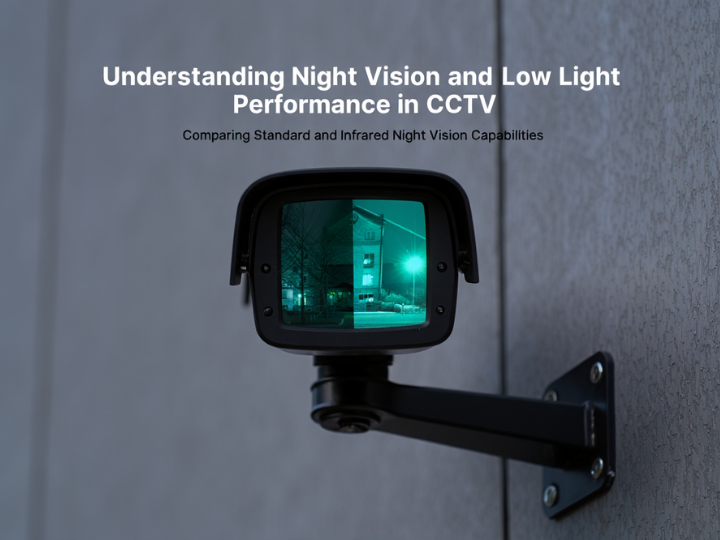
Why Night Vision Matters in CCTV
Most security incidents—like break-ins or trespassing—occur at night. If your camera can't capture clear footage in the dark, it’s essentially blind during critical hours. Night vision ensures around-the-clock visibility, helping capture movement, faces, and license plates even in low- or no-light conditions.
Types of Night Vision in CCTV Cameras
1. Infrared (IR) Night Vision
The most common type, IR night vision uses infrared LEDs to illuminate the scene without visible light.
-
Monochrome (black & white) footage
-
Effective in total darkness
-
Range varies based on LED power (e.g., 20m, 40m, 100m)
-
Works automatically with built-in IR cut filters
Ideal for indoor and outdoor environments needing full darkness surveillance.
2. Low-Light / Starlight Technology
These cameras perform well in extremely low-light conditions without relying heavily on IR.
-
Uses large image sensors and wide apertures
-
Produces color video in low light
-
Often branded as Starlight, Ultra Low Light, or ColorVu (depending on manufacturer)
Best for areas with ambient lighting—like streetlights or building entrances—where color detail is important.
3. Thermal Imaging
Instead of relying on light, thermal cameras detect heat signatures.
-
Works in complete darkness and adverse weather
-
No lighting needed
-
Used in high-security, industrial, and perimeter monitoring
Ideal for critical infrastructure, border security, and locations where stealth detection is required.
Key Factors That Affect Low Light Performance
1. Sensor Size
Larger sensors (e.g., 1/1.8", 1/2.5") capture more light, improving performance in dark conditions. A larger sensor = better low-light visibility.
2. Aperture (F-Number)
A wider aperture (e.g., f/1.2 or f/1.0) allows more light to enter the lens, resulting in brighter images at night.
3. IR LED Range & Quality
The number and quality of built-in IR LEDs determine how far the camera can “see” in the dark.
4. WDR (Wide Dynamic Range)
WDR balances exposure in high-contrast scenes (e.g., a person standing in front of a light source), which is crucial for identifying objects in mixed lighting.
5. Image Processing Algorithms
Advanced cameras use noise reduction, light enhancement, and motion detection algorithms to refine images in low light.
Choosing the Right Night Vision CCTV Camera
When selecting a camera, consider:
-
Application area: Indoor vs outdoor, wide area vs entry point
-
Lighting conditions: Total darkness, low light, or ambient light
-
Color or black-and-white preference: Forensic needs may require color footage
-
Distance of coverage: Required range in meters (e.g., 30m, 60m, 100m)
-
Resolution: Higher resolution improves detail but may need better lighting
Real-World Use Cases
-
Residential Security: IR cameras monitor driveways and backyards at night
-
Retail Stores: Low-light color cameras offer detailed footage with minimal lighting
-
Warehouses: Long-range IR cameras cover large open areas
-
Perimeter Protection: Thermal or starlight cameras detect movement at fences and boundaries
Final Thoughts
Don’t overlook night vision when choosing a CCTV camera. The best surveillance systems are built for 24/7 visibility, not just daytime clarity. By understanding how different technologies perform in low light, you can select a solution that keeps your property protected—even in the darkest hours.
For serious security coverage, investing in high-performance night vision cameras is no longer optional—it’s essential.