
Dental emergencies can happen unexpectedly, whether you develop a sudden toothache, break a tooth while eating or experience swelling around your gums. Knowing what to do can help you protect your teeth, manage discomfort and get the right treatment as soon as possible.
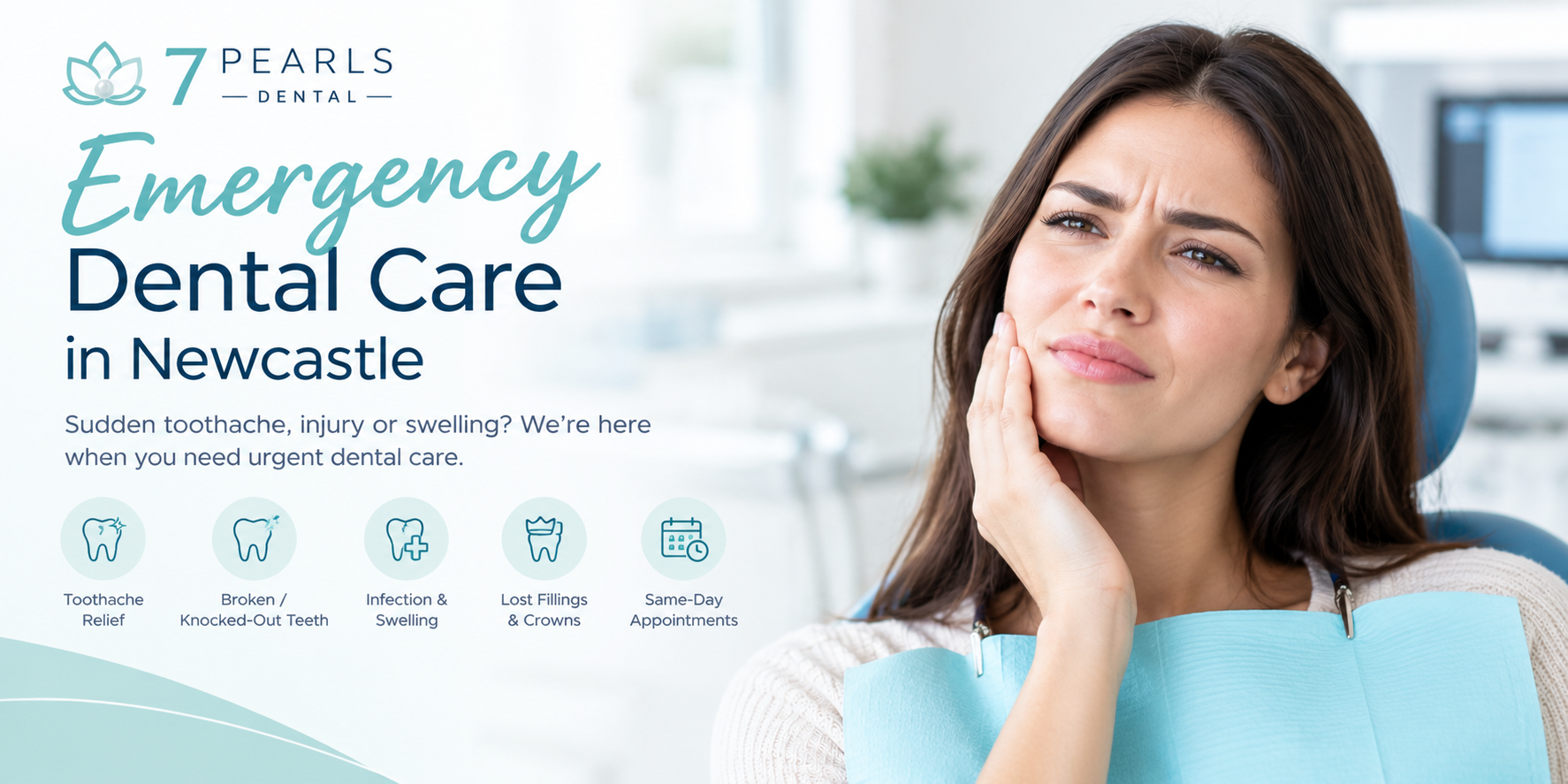
If you experience sudden dental pain or damage, contacting a Newcastle dentist promptly can help you understand the cause of the problem and determine the next steps.
What Counts as a Dental Emergency?
Not every dental problem requires immediate treatment, but some symptoms should never be ignored. Common dental emergencies include:
-
Severe or persistent toothache
-
A broken, cracked or knocked-out tooth
-
Swelling around the teeth, gums or face
-
A lost filling or crown causing significant discomfort
-
Dental injuries following an accident
-
Bleeding that does not stop after an injury
-
Signs of a dental infection, such as pain and swelling
If you are experiencing these symptoms, contacting an emergency dental clinic can help you determine how urgently you need to be seen.
Facial swelling accompanied by difficulty breathing or swallowing requires emergency medical attention. Call 000 in Australia if breathing is affected or the situation is life-threatening.
What Should You Do Before Seeing a Dentist?
Taking appropriate steps while arranging dental treatment may help prevent further damage.
For a severe toothache: Gently rinse your mouth with warm water and carefully clean around the affected tooth. Avoid placing aspirin directly against the tooth or gums, as this can damage the tissue.
For a broken tooth: Rinse your mouth gently with warm water. If possible, keep any broken fragments in a clean container and take them to your appointment.
For a knocked-out permanent tooth: Hold the tooth by its crown, not the root. If it is dirty, rinse it gently with milk or saline without scrubbing. If possible, place it back into its socket carefully. Otherwise, keep it in milk and seek immediate dental care. Do not reinsert a baby tooth.
For swelling: Apply a cold compress to the outside of your cheek and arrange prompt dental assessment. Do not attempt to drain a swelling yourself.
These measures are temporary and do not replace professional treatment.
How to Arrange an Emergency Dentist Appointment
When a dental problem occurs, contacting a practice promptly is often the best way to determine the appropriate level of care.
When requesting an emergency dentist appointment, explain your symptoms clearly. Let the dental team know when the problem started, how severe the pain is, whether you have swelling and whether an injury has occurred.
This information can help the practice assess the urgency of your situation and advise you about the next available appointment.
If you have severe pain, facial swelling, a knocked-out permanent tooth or significant dental trauma, make this clear when you call. Some conditions require immediate attention rather than waiting for a routine appointment.
What Happens During Emergency Dental Treatment?
The treatment you receive depends on the cause and severity of your dental problem.
When you attend an emergency dental service, the dentist will generally assess your symptoms, examine the affected area and may recommend dental X-rays if clinically appropriate.
Treatment may involve relieving pressure, managing pain, repairing a damaged tooth, replacing a lost restoration or treating an infection. In some cases, further treatment or a referral may be necessary.
Your dentist should explain the findings and discuss suitable options before proceeding with treatment.
The main priority is to address the immediate problem, protect your oral health and determine whether additional treatment is needed.
How Can You Reduce the Risk of Dental Emergencies?
Although not every dental emergency can be prevented, a few simple habits can reduce your risk of dental injuries and unexpected problems.
-
Attend regular dental check-ups.
-
Brush twice daily with fluoride toothpaste.
-
Clean between your teeth every day.
-
Avoid chewing ice or very hard objects.
-
Wear a mouthguard during contact sports.
-
Seek advice about persistent tooth sensitivity or discomfort.
-
Follow your dentist's recommendations for existing dental problems.
Early assessment of a damaged tooth or developing toothache may help prevent the problem from becoming more complicated.
Finding the Right Dental Emergency Care in Newcastle
When dental pain or an injury disrupts your day, knowing where to seek help can make the situation less stressful. Look for a dental practice that can assess your symptoms, explain your treatment options and advise you on the urgency of your condition.
At 7 Pearls Dental, we encourage patients to seek advice when they experience unexpected dental problems rather than ignoring symptoms or waiting for pain to worsen.
If you need dental emergency care, contact the practice to discuss your symptoms and ask about appointment availability. The dental team can advise you on the appropriate next steps based on your situation.
Dental emergencies can be uncomfortable and worrying, but prompt assessment can help you understand the problem and receive appropriate care.