
Deciding on a martial arts discipline in Singapore is a major choice that often depends on whether you are prioritising character development for children, tactical protection for adults, or a sustainable form of household fitness. For many local families, this decision frequently narrows down to two distinct options: the traditional, disciplined world of Taekwondo and the modern, hard-hitting practicality of Krav Maga. While one discipline offers a journey through ancient forms and gradual progression, the other focuses on instantaneous, real-world reaction with military precision. If you are searching for a comprehensive guide to help you choose between these systems, understanding these core differences represents the crucial first step toward your family's empowerment journey. This article dissects the philosophies, techniques, physical demands, and ideal audiences for both arts to help you make an informed decision for yourself and your loved ones.
Key Takeaways:
-
Krav Maga focuses on rapid, real-world self-defence for adults in urban Singapore environments.
-
Taekwondo offers a structured path for character building through belt progression and traditional discipline.
-
Both disciplines significantly boost mental confidence and physical fitness across all age groups.
-
OP Academy provides expert instruction for both systems across convenient locations, including Yishun and Marine Parade.
-
Families can adopt a hybrid approach by enrolling children in Taekwondo while adults focus on Krav Maga.
Exploring foundational philosophies and historical origins
The fundamental difference between these two martial arts lies deep within their historical origins and their ultimate training objectives for the practitioner. Taekwondo, which translates roughly to the way of the foot and fist, emerged from Korea over two thousand years ago, evolving from ancient martial traditions into a modern Olympic sport. It is a holistic discipline that seeks to harmonise body and mind, promoting timeless values like integrity, perseverance, and self-control through rigorous, repetitive practice. The journey through the Taekwondo belts—from pristine white to coveted black—represents a long-term pursuit of personal mastery that can span decades and fundamentally transform a student's character.
In stark contrast, Krav Maga, which means contact combat in Hebrew, was developed in the 1930s and 1940s specifically for the Israeli military. It is defined as a tactical self-defence system rather than a traditional martial art with spiritual pretensions or aesthetic goals. Its sole purpose is neutralising threats as quickly and efficiently as possible, with no sporting element or focus on form beyond what proves effective in life-or-death situations. When comparing tactical self-defence and Taekwondo classes for Singaporean families, you are essentially choosing between a lifelong character-building path rich with tradition and a practical survival skillset born from battlefield necessity.
Physical techniques and training methodology
The physical expression of each art differs markedly in execution and the intention behind every movement taught in the academy. A typical Taekwondo class Singapore is recognisable by its high, dynamic kicks and fluid patterns, known as poomsae or teul depending on the specific federation. Students spend considerable time perfecting the 6 basic stances of Taekwondo, which include the attention stance (charyeot), ready stance (junbi), front stance (ap kubi), back stance (dwit kubi), horse-riding stance (annun sogi), and walking stance (ap sogi). These foundational positions build powerful bases for all subsequent movements, from basic blocks to explosive spinning hook kicks, emphasising speed, balance, and precision.
Krav Maga training, however, follows an entirely different philosophy rooted in scenario-based realism and instinctive reactions. You will learn to defend against common, real-life attacks like chokes from behind, wrist grabs, headlocks, and even armed assaults involving knives or sticks. The movements are instinctive, economical, and deliberately direct, targeting vulnerable points like the eyes, throat, and groin without hesitation to ensure a rapid escape. Classes are high-intensity by design, simulating the adrenal stress of a genuine attack to condition you to react effectively when fear might otherwise paralyse you. While Taekwondo for adults provides a comprehensive full-body workout and improves flexibility, Krav Maga pursues purely functional survival patterns that work regardless of your initial fitness level.
Progression systems and motivational milestones
One of the most visible differences between these disciplines lies in their structured progression systems and how students track their growth. The Taekwondo belts system provides a clear, motivational roadmap that students of all ages find compelling and easy to follow. Beginning at white belt, symbolising purity and the start of the journey, students progress through yellow, green, blue, red, and finally black belt, with multiple degrees beyond the initial black rank. Each promotion requires demonstrating specific techniques, forms, and sometimes sparring ability, creating tangible milestones that build confidence steadily over many months. For children, especially, this structure proves invaluable for learning how to set long-term goals and work persistently to achieve them.
Krav Maga organisations typically employ a different approach, using a graded system of practitioner levels, often ranging from P1 through P5, followed by expert grades. However, the emphasis remains firmly on capability and survival skills rather than ceremony or ritual, and there are no forms to memorise for display. Instead, advancement requires demonstrating proficiency in an expanding repertoire of defence scenarios under increasing levels of physical and mental pressure. Some practitioners appreciate this no-nonsense approach to skill assessment, while others might miss the ritual and tradition that make martial arts for kids Singapore programmes so effective at teaching patience. Both systems offer clear paths for growth, but they cater to very different preferences for learning and personal recognition.
Character building and Taekwondo for kids Singapore
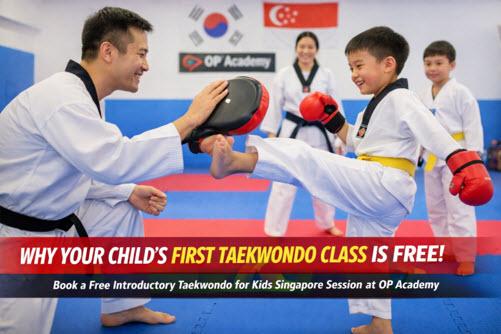
For children aged four to twelve, the structured, values-driven environment of a children Taekwondo class proves exceptionally beneficial for their growth. A quality Taekwondo for kids Singapore programme teaches far more than physical self-defence; it instils focus, respect for instructors, and the ability to work toward long-term goals through consistent effort. The belt system provides tangible evidence of progress, which works wonders for building healthy self-esteem and resilience in developing minds. For parents searching Taekwondo classes near me on behalf of their children, the documented benefits extend well beyond the training hall, often impacting social skills and emotional maturity.
Regular practice in this discipline improves classroom concentration, teaches emotional regulation through breathing techniques, and provides a healthy physical outlet for excess energy. Many Singaporean parents report dramatic improvements in their children's behaviour and academic performance after just a few months of consistent training. Because the art is rooted in respect and etiquette, students learn to handle both success and failure with grace, developing an indomitable spirit that serves them well in the competitive school system. This makes the art a cornerstone of youth development for families seeking a balance between physical activity and character engineering.
Adult security and senior fitness considerations
For adults in Singapore, the choice often aligns with personal safety or long-term cardiovascular fitness goals. Beginner Taekwondo for adults programmes are specifically designed to accommodate absolute beginners with no prior experience, offering supportive environments to improve flexibility and relieve work-related stress. Even those wondering if they can start Taekwondo at 18 or later will find that the social dimension and structured learning are very welcoming. However, adults whose primary concern revolves around personal safety in the urban environment may find themselves leaning toward tactical systems.
The techniques learned in a Krav Maga session translate directly to common urban threat scenarios, such as snatch thefts, elevator confrontations, or late-night transport situations. Remarkably, Krav Maga for seniors has also gained popularity in Singapore, with specially adapted programmes focusing on mobility preservation, balance improvement, and techniques suitable for different physical capabilities. This ensures that even those with physical limitations can acquire practical focus and self-protection skills. Whether choosing a traditional art for fitness or a tactical system for security, adults benefit from the heightened situational awareness and physical conditioning these programmes provide.
Selecting the right academy for your family
A discerning Singaporean family may not need to choose exclusively between these two worthy options, as many find success with a combined approach. A thoughtful household can adopt a hybrid strategy, enrolling younger members in a children Taekwondo class at OP Academy to build character and discipline. At the same time, parents can join adult Krav Maga sessions for practical, real-world self-defence capability and stress relief. This comprehensive strategy ensures every family member engages in physical activity perfectly suited to their developmental needs and personal safety concerns.
OP Academy stands uniquely positioned to facilitate this approach, offering expert instruction in both disciplines across multiple convenient Singapore locations, including Yishun Sunshine and Marine Drive Gardens. They exemplify institutional excellence by providing a consistent quality standard for both traditional Taekwondo and rigorously taught tactical programmes under one organisational roof. When searching for your first class, honestly assess your personal goals to decide if you seek the beauty and gradual progression of a traditional art or a hard-hitting skillset designed for modern realities. By thoroughly understanding these meaningful distinctions, you position yourself to confidently select the path that aligns perfectly with your family's journey toward health, safety, and lasting personal excellence.
Read another Article: Elevate Your Personal Safety and Defensive Skills Today