
When a UK business faces severe financial pressure, "administration" is a term that often surfaces. But what does it actually mean for the business, its creditors, and its staff? At the heart of this process is the insolvency administrator.
In the UK, administration is a formal procedure designed to protect a Limited Company or Limited Liability Partnership (LLP) from legal action while a rescue plan is put in place. Here is a breakdown of the role and what to expect during the process.
Key Takeaway: An insolvency administrator acts as a neutral, licensed third party whose primary goal is to rescue a business or, if that isn’t possible, ensure creditors receive the best possible financial outcome.
Signs Your Business Might Need an Insolvency Administrator
Recognising the warning signs early can be the difference between saving a company and total liquidation. You may need professional advice if:
- You are consistently unable to pay VAT or PAYE on time.
- Creditors are threatening a statutory demand or a winding-up petition.
- The business has reached its borrowing limits and lacks the cash flow to operate.
What is an Insolvency Administrator?
An insolvency administrator is a professional appointed to take over the management of a company that can no longer pay its debts. By law, only a Licensed Insolvency Practitioner (IP) can fulfill this role. Once appointed, they officially take control of the business from the directors.
The Administration Timeline
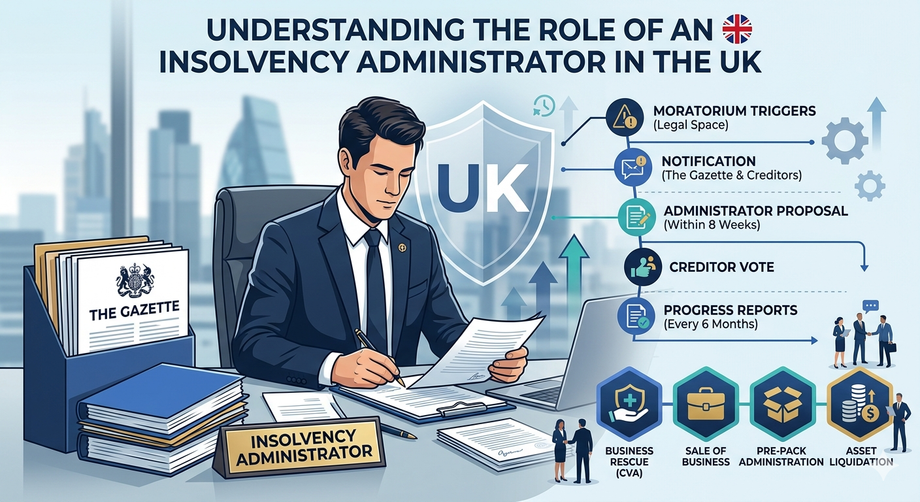
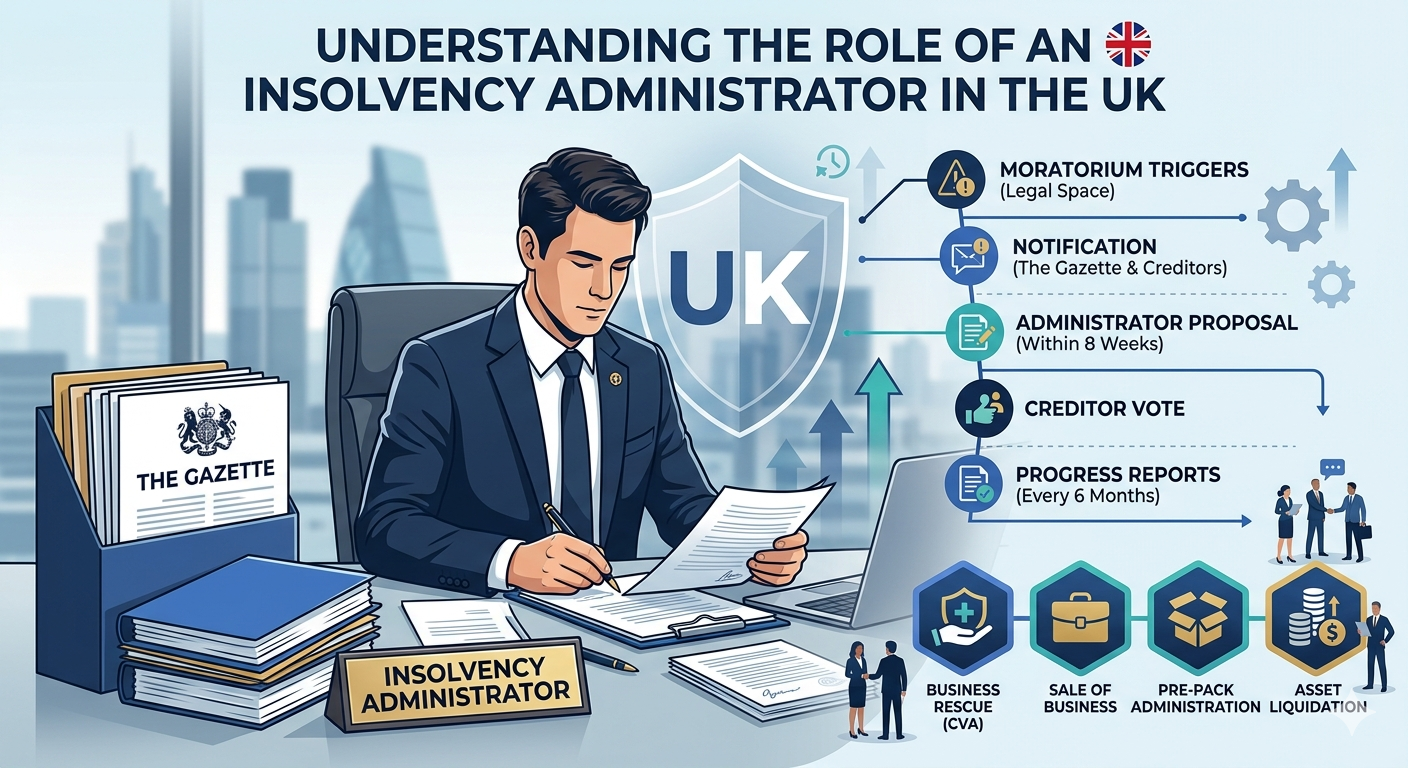
- The Moratorium: Once the process begins, a legal "breathing space" is created. This prevents creditors from taking legal action or seizing assets without court permission.
- Notification: The administrator notifies Companies House and creditors, and places a notice in The Gazette.
- The Proposal: Within 8 weeks, the administrator must prepare a statement setting out their plans for the company.
- Creditors’ Meeting: Creditors review and vote on the administrator’s proposals.
- Reporting: The administrator provides progress updates every 6 months.
Key Duties and Outcomes
The administrator has wide-ranging powers to protect business value, including renegotiating contracts or selling assets. They generally target one of three outcomes:
- Rescue as a Going Concern: Restructuring the company (often via a CVA) to keep it trading.
- Sale of the Business: Finding a new buyer to take over the operations.
- Pre-Pack Administration: A sale negotiated before the administrator is appointed, allowing for a seamless transition that often saves jobs and brand reputation.
Frequently Asked Questions (FAQ)
How long does administration last? Typically, administration is designed to be a swift process and lasts for 12 months, though this can be extended by the court or with creditor consent if more time is needed to sell assets or finalise a rescue.
What happens to the employees? In many cases, if the business is sold as a "going concern," employee rights are protected under TUPE (Transfer of Undertakings Protection of Employment) regulations, meaning their contracts transfer to the new owner. If the administrator cannot save the business, they may unfortunately have to make redundancies.
Does the administrator work for the directors? No. While they may be introduced by the directors, the administrator’s legal duty is to the creditors as a whole. They must
act ethically and transparently throughout the process.
Next Steps
If your business is facing financial distress, the most important thing is to act quickly. Seeking advice from a licensed professional early provides the widest range of options for recovery.