
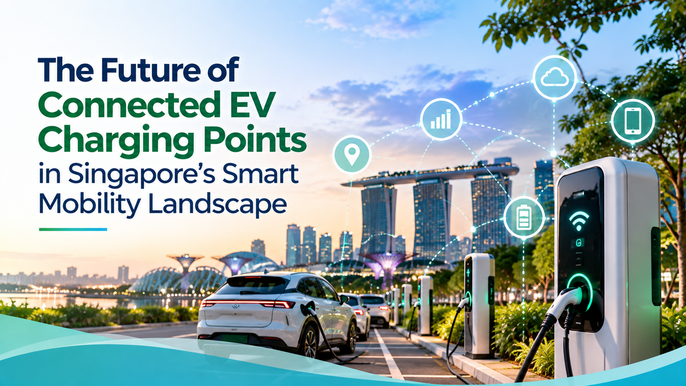
Singapore's shift towards electric vehicles is changing how drivers think about everyday mobility. As EV adoption grows, charging needs to become more convenient, connected and responsive. Modern charging points in Singapore are increasingly supported by digital platforms, real-time information and smarter management systems. These developments can make charging easier for drivers while helping property owners manage infrastructure more effectively.
From Basic Chargers to Connected Infrastructure
An EV charger is no longer simply a point where a vehicle receives electricity. Connected charging infrastructure can communicate with mobile applications, provide information about availability and monitor charging activity.
Drivers can use digital platforms to locate chargers, check whether a station is available and manage their charging sessions. Real-time status information can also show whether a charger is available, occupied, charging or experiencing a fault. This gives drivers greater visibility before they arrive at a charging location.
This type of connectivity is particularly useful in busy residential developments, commercial buildings and other locations where demand for charging can change throughout the day.
Smarter Charging for Growing Demand
As more EVs share the same buildings and electrical infrastructure, managing power demand will become increasingly important. Smart charging systems can help property owners understand usage patterns and plan available power more effectively.
For property managers, useful capabilities may include:
-
Monitoring charger utilisation
-
Understanding peak charging periods
-
Managing available electrical capacity
-
Reviewing charging trends and usage data
-
Planning additional chargers as demand grows
Cloud-based management can provide utilisation data for trend analysis and help property owners make more informed decisions about charging infrastructure.
Convenience Is Becoming Part of the Charging Experience
Technology can also reduce the number of steps required to start a charging session. Traditional charging may require users to locate a charger, scan a QR code and start the session through an application. Newer systems are moving towards more seamless experiences.
For example, vehicle-based authentication can allow compatible EVs to be recognised automatically when connected to an enabled charger. This type of technology can reduce dependence on phone connectivity and make charging feel more like a normal part of driving rather than a separate digital task.
As connected charging points in Singapore continue to develop, convenience, reliability and ease of access are likely to become increasingly important factors for EV drivers.
Supporting Residential and Commercial Mobility
The future of EV charging will not depend only on public charging locations. Residential developments, workplaces, retail properties and commercial buildings can all play a role in creating a more accessible charging network.
AC chargers can be suitable for longer parking periods, while DC chargers can provide faster charging when drivers need to get back on the road sooner. The appropriate solution depends on factors such as parking duration, building capacity, traffic patterns and user requirements.
Property owners therefore need to think beyond simply installing chargers. Infrastructure should be planned around expected demand, available power and future expansion.
Making Cross-Border EV Travel Easier
Connected charging networks can also support travel beyond Singapore. Integrated charging access across Singapore and Malaysia can give drivers greater confidence when planning longer journeys.
A connected network can help users locate charging locations and access charging services across borders through a common digital experience. This can reduce some of the uncertainty associated with finding compatible charging infrastructure during a trip.
As EV ownership increases, this type of connectivity could become increasingly valuable for drivers who regularly travel between Singapore and Malaysia.
A More Connected Road Ahead
The future of electric mobility will involve more than increasing the number of chargers. It will depend on how effectively charging infrastructure connects vehicles, buildings, energy systems and digital platforms.
For drivers and property owners, charging points in Singapore that offer better visibility, smarter management and easier access can help create a more practical EV ecosystem. As technology develops, connected charging can become an important part of Singapore's wider smart mobility landscape.