
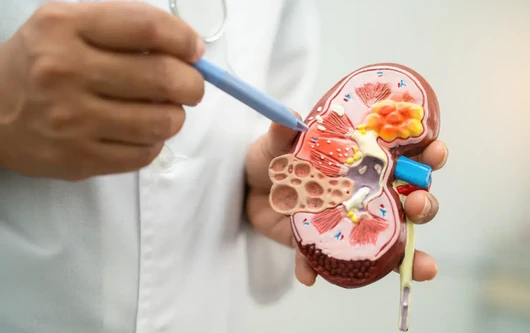
A diagnosis of a kidney tumour can raise important questions about cancer treatment, kidney function, and recovery. For suitable patients, robotic partial nephrectomy mumbai may be an option that removes the tumour while preserving as much healthy kidney tissue as possible. Dr. Vivek Venkat, Consultant Uro-Oncologist and Robotic Urologist at Jewel Urology Center, provides evaluation and treatment planning for patients with kidney tumours, with a focus on appropriate cancer control and kidney preservation.
Not every kidney tumour requires removal of the entire kidney. The right approach depends on the tumour’s size, position, complexity, suspected cancer characteristics, kidney function, and the patient’s general health. A specialist consultation helps determine which treatment options are suitable.
What Is Robotic Partial Nephrectomy?
Partial nephrectomy, also called nephron-sparing surgery, is an operation in which the surgeon removes a kidney tumour while leaving the remaining healthy kidney tissue in place. When performed with robotic assistance, the surgeon controls specialised instruments from a console using a magnified, three-dimensional view of the surgical area.
The robotic system does not operate independently. The surgeon directs its movements throughout the procedure.
For appropriately selected kidney tumours, this minimally invasive approach may help remove the tumour through small incisions while reconstructing the kidney and preserving healthy tissue. The goal is to achieve effective treatment without sacrificing more kidney tissue than necessary.
Who May Be Suitable for Kidney-Sparing Surgery?
Partial nephrectomy is commonly considered for small, localised kidney tumours and may also be appropriate for selected larger or more complex tumours. The decision requires careful assessment rather than relying on tumour size alone.
A urologist may evaluate partial nephrectomy as an option for people who have:
- A localised kidney mass that can be safely removed while preserving healthy tissue.
- A tumour in a kidney when maintaining renal function is especially important.
- Tumours affecting both kidneys.
- A solitary kidney.
- Existing kidney disease or medical conditions, such as diabetes or hypertension, that make long-term kidney health an important consideration.
Imaging studies, often including CT or MRI, help assess the tumour’s location and relationship to blood vessels and the urinary collecting system. Kidney function tests and other investigations may also be needed.
Partial nephrectomy is not appropriate in every case. If the tumour’s extent, location, or other clinical factors make kidney preservation unsafe or unlikely to achieve adequate cancer control, removal of the entire kidney may be recommended instead.
Benefits of Robotic Partial Nephrectomy
The potential benefits depend on the patient’s condition, tumour characteristics, and the surgeon’s assessment. For suitable patients, robotic surgery may offer:
Preservation of kidney function: Removing only the tumour can leave more functioning kidney tissue intact than removing the whole organ.
Smaller incisions: Robotic surgery is performed through small incisions rather than the larger incision typically associated with open surgery.
Magnified visualisation: A three-dimensional view can help the surgeon identify delicate structures during tumour removal and kidney reconstruction.
Precise surgical movements: Flexible robotic instruments can assist with work around blood vessels and the urinary collecting system.
Recovery considerations: Compared with open surgery, minimally invasive robotic surgery often involves less postoperative discomfort, reduced blood loss, and a shorter hospital stay. Individual results vary, and complications can still occur.
The primary objective is safe tumour removal with appropriate cancer control. Robotic technology is a tool that supports the surgeon; it does not guarantee a particular result.
How Is the Procedure Performed?
The surgical plan is personalised to the tumour’s anatomy and the patient’s medical needs. In general, the process involves the following stages:
- Preoperative assessment: The surgeon reviews scans, kidney function, medications, medical history, and fitness for anaesthesia.
- Robotic access: Small incisions are made to introduce the camera and surgical instruments.
- Tumour removal: The surgeon carefully separates and removes the tumour while aiming to preserve healthy kidney tissue.
- Kidney reconstruction: Blood vessels and any affected part of the urinary collecting system are repaired as needed.
- Recovery and monitoring: The patient is monitored for pain, bleeding, urine leakage, kidney function, and other possible complications.
In some cases, blood flow to the kidney must be temporarily controlled while the tumour is removed. The surgeon aims to manage this step carefully to protect the remaining kidney tissue.
Occasionally, unexpected findings or bleeding may make it necessary to change the planned operation, including conversion to removal of the entire kidney. The surgical team discusses this possibility as part of informed consent.
Why Consult Dr. Vivek Venkat?
Dr. Vivek Venkat is a Consultant Uro-Oncologist and Robotic Urologist with advanced training in urological cancer care and robotic surgery. His qualifications include an MBBS from B. J. Medical College, Pune; an MS in General Surgery from Seth G. S. Medical College and K. E. M. Hospital, Mumbai; and an M.Ch. in Urology from Christian Medical College (CMC), Vellore, where he received a gold medal.
He completed fellowship training in Uro-Oncology and Robotic Surgery at the University of Miami Miller School of Medicine in the United States, where he participated in more than 800 robotic cases. He has also served as an Assistant Professor of Urology and Renal Transplantation at CMC Vellore and as a clinical instructor in Urologic Oncology and Robotic Surgery at the University of Miami Hospital.
His areas of expertise include kidney, prostate, and bladder cancer; robotic surgery; minimally invasive urology; and complex urological procedures. Patients considering robotic kidney surgery can discuss the potential benefits, limitations, and alternatives with a specialist who has focused training in this field.
At Jewel Urology Center, consultation and treatment planning are centred on understanding the patient’s diagnosis, reviewing relevant investigations, and discussing suitable options. The centre is associated with Jewel Hospital in Vile Parle West, Mumbai. Hospital facilities, the operating location, and the exact treatment plan should be confirmed with the clinic before scheduling surgery.
Patients researching Robotic Adrenalectomy Surgery in Mumbai may also find it helpful to ask about the surgeon’s experience with robotic procedures relevant to their diagnosis. For kidney cancer, look for a Best Uro Surgeon in Mumbai who explains both cancer treatment and long-term kidney function, without promising guaranteed outcomes.
Recovery, Follow-Up, and Possible Risks
Recovery varies depending on the complexity of surgery, the patient’s general health, and whether complications occur. Patients are usually encouraged to start walking as advised by their clinical team and gradually resume normal activities. The surgeon will provide specific instructions about wound care, lifting restrictions, driving, work, and exercise.
Follow-up may include review of the final pathology report, kidney function tests, and imaging at intervals determined by the treating specialist. Additional treatment is not always required, but recommendations depend on the tumour’s pathology and stage.
As with any major operation, risks may include bleeding, infection, blood clots, anaesthesia-related complications, urine leakage, injury to nearby structures, and temporary or lasting changes in kidney function. Rarely, delayed bleeding can occur after discharge. Severe flank pain, visible blood in the urine, dizziness, or fainting after surgery warrants urgent medical assessment.
Book a Consultation at Jewel Urology Center
If you or a family member has been diagnosed with a kidney tumour, a specialist assessment can help clarify whether kidney-sparing surgery is possible and which approach best fits the clinical situation. For robotic partial nephrectomy mumbai, Dr. Vivek Venkat can review your scans and medical history, explain the available options, and discuss the expected recovery and potential risks.
📧appointments@drvivekvenkat.com
Frequently Asked Questions
1. What is the main advantage of partial nephrectomy?
It removes the tumour while preserving as much healthy kidney tissue as possible. Whether this is suitable depends on the tumour’s location, complexity, and the patient’s health.
2. Is robotic partial nephrectomy suitable for every kidney tumour?
No. Some tumours are better treated with another approach, including removal of the entire kidney. Imaging, kidney function, tumour characteristics, and overall health guide the decision.
3. How long does recovery take after robotic partial nephrectomy?
Recovery differs from person to person. Many patients resume routine activities gradually over the following weeks, but the timing depends on the complexity of surgery and the treating surgeon’s advice.
4. Will I need further treatment after surgery?
Not every patient needs additional treatment. The final pathology report and the tumour’s stage help determine whether surveillance or further care is recommended. Regular follow-up remains important.