
What happens when a village road ends where the power lines stop? Families walk home in the dark. A clinic worker crosses a field with only a phone torch. Rural planners face this problem often, and grid extension can take years and a large budget. Rural Providers Of Solar Public Lighting offer another route, since each pole makes and stores its own power. This article covers grid-free options, designs for remote roads, and long-term costs.
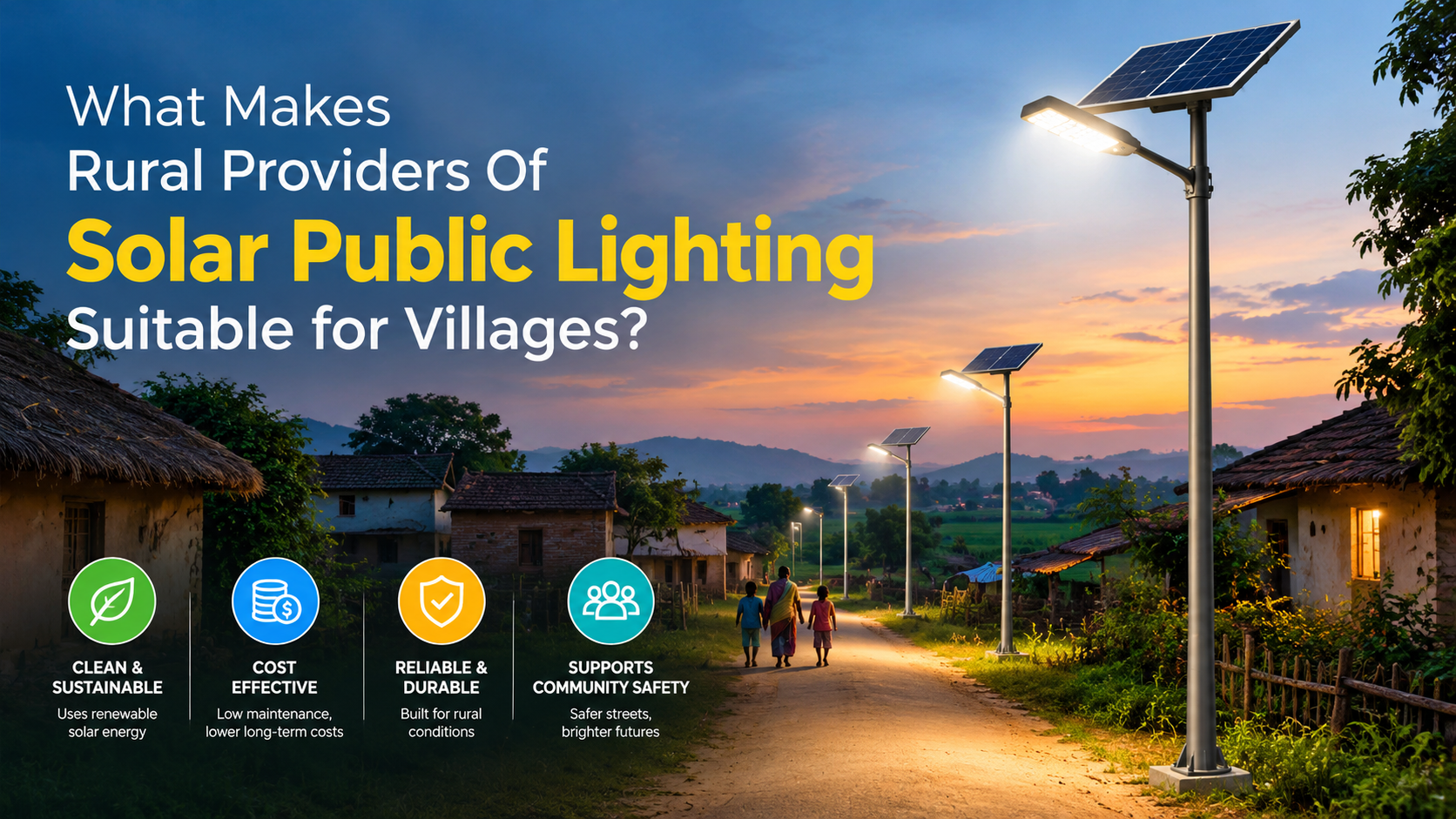
How Can Rural Areas Install Street Lighting Without Grid Connections?
Poles that generate power on site remove the two biggest hurdles in remote work: distance from the network and the digging that follows. Three ideas make this possible, and each one shortens the path from planning to a lit road.
-
Self-powered poles: Each pole carries its own panels and battery, so no cable has to reach it. Lights run on stored energy after dark.
-
No digging: The system needs no trenching or cabling, so crews leave fields and roadsides untouched. Installation moves faster, and remote areas get light sooner.
-
Retrofit for old poles: The wrap-around design fits new or existing poles without replacing them. Villages can upgrade what already stands instead of starting over.
What Solar Lighting Works Best for Remote Rural Roads?
Remote roads test equipment hard. Wind sweeps across open land, dust settles on panels, and repair crews sit hours away. Rural providers of solar public lighting look for three design traits that help lights cope.
Upright Wrap-Around Panels
Panels that wrap upright around the pole shed dust, dirt, and snow by themselves. The round shape also keeps wind load low, while flat panels can catch gusts like a sail.
Protected Battery Storage
The battery sits inside the pole, away from harsh conditions. Stored energy keeps lights glowing through the night, and battery sizes range from 1.44 to 5.28 kilowatt-hours.
Remote Health Checks
A built-in controller manages charging and blocks overloads and short circuits. A dashboard and mobile app let crews check each light from a distance, so long drives happen only when something needs fixing.
Together, these traits mean fewer surprises on roads that few people visit. Panel output runs from 260 to 1,140 watts and LED power from 30 to 160 watts, so systems can match each road.
How Do Rural Providers Evaluate the Long-Term Cost of Solar Public Lighting?
Low power bills mean little if lights fail early. Rural providers of solar public lighting look at the full picture: what a system costs to install, run, and maintain over its life. A few simple questions make offers easier to compare.
-
Installation: Skipping trenching and cabling cuts digging, materials, and labor.
-
Power bills: The poles draw no grid electricity, and the maker states savings of 70 to 100 percent against traditional street lighting.
-
Maintenance: Upright panels clean themselves, and remote checks cut needless trips to far-off poles.
-
Lifespan: The maker states a life of 25 years or more, with a 10-year warranty.
-
Payment options: A lighting-as-a-service plan offers no upfront cost and one monthly payment with upkeep included, and owners can take over the system after the term.
-
Track record: The maker has 15 years in the field, and state transportation departments, utilities, and government agencies number among its customers.
Conclusion
Reliable roads at night change how rural communities live, work and travel. Rural Providers Of Solar Public Lighting offer systems that need no grid, no trenching, and little upkeep. Planners can compare features, costs, and warranties, then test one small pilot road first.