
Energy crises must accelerate the fight against climate change
Editorial
Le Monde
Breaking free from dependence on fossil fuels is, beyond the climate benefits a crucial issue of national sovereignty and the only way to protect ourselves against geopolitical shocks, such as those caused by the war in the Middle East.
As the US-Israeli war against Iran enters its third week, hopes for a short, contained crisis without major consequences for the global energy market have faded. Tehran's response to Israeli airstrikes, which on Thursday, March 19, targeted the world's largest liquefied natural gas production site in Qatar, marked a new stage in the ongoing escalation.
Beyond the blockade of the Strait of Hormuz described by Fatih Birol, executive director of the International Energy Agency, as the "greatest global energy security threat in history," there has been a growing number of attacks on production facilities and strategic transport infrastructure. Repairs will take time, sometimes years. Oil and gas prices are likely to remain high for a prolonged period. Far longer than initial forecasts had suggested.
This shock, however, is not a repeat of the crisis triggered by the invasion of Ukraine and the forced withdrawal from Russian gas. For now, there is no immediate risk of shortage. And unlike in 2022, France has a largely decarbonized electricity generation fleet, nuclear and renewable, that is functioning.
Long-term choices
But the absence of supply disruptions should not obscure the main point. The structural vulnerability of our economies to imported crises remains, now manifesting through price volatility, strategic uncertainty and the weakening of industrial supply chains.
This is precisely what makes this crisis different and politically decisive. It must be seized as an opportunity to accelerate the fight against climate change, not as an excuse to delay it. Improving energy efficiency, developing local low-carbon production and embracing responsible consumption are the most effective ways to guard against further inevitable geopolitical shocks.
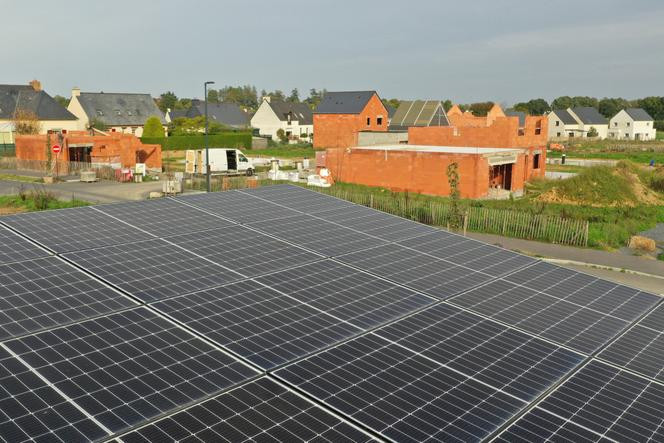 Photovoltaic panels in a solar canopy in Hede-Bazouges, western France, October 29, 2022. DAMIEN MEYER/AFP
The third multi-year energy plan, presented in February, set out the country's energy roadmap, pending the announcement of a major electrification plan later in the spring. The crisis in the Middle East only amplifies the urgency of its implementation. Oil and gas account for tens of billions of euros in imports. Ending this dependence, beyond the climate imperative, is a crucial issue of sovereignty.
The mistake would be to respond to this situation with broad subsidies for fossil fuels, as was done in 2022. At the time, the urgency justified massive price controls. Today, France no longer has the budgetary means, and Europe cannot afford to indefinitely subsidize its dependency.
Every euro of public funding must be directed toward measures that structurally reduce fossil fuel consumption: thermal renovation of buildings, electrification of uses and support for low-carbon industrial sectors. Targeted aid for certain vulnerable professions may still be necessary, but it must remain temporary and conditional.