
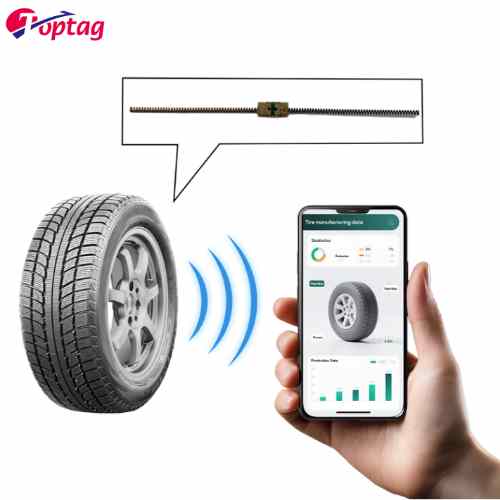
The clever part is the design. A metal-mount tag places a spacer or shielding layer between the chip and the surface, which isolates the antenna from the metal. Some designs even use the metal as part of the antenna, which boosts range. In practice, a well-built RFID metal tag reads reliably on:
-
Tools and moulds
-
Gas cylinders and pressure vessels
-
Server racks and IT equipment
-
Pallets, cages and steel shelving
-
Vehicles and heavy machinery
You scan quickly, and you scan the right item.
Manufacturing RFID Tags That Survive Heat, Rust and Rough Handling
Metal environments are tough on electronics. Paint shops, foundries and outdoor yards expose tags to high temperatures, chemicals, moisture and constant knocks. That is why manufacturing RFID tags for metal use takes more than a good chip. The housing matters just as much, and materials such as ABS, PPS and epoxy are chosen to suit the conditions on site.
Our process for manufacturing RFID tags follows a strict sequence:
-
The chip is bonded securely to the antenna
-
The antenna is tuned for strong signal performance on metal
-
Each tag is encoded for its specific application
-
A protective casing seals the unit against wear
-
Every tag is tested before it ships
Skip any of these steps and the problem usually shows up later as dead tags in the field.
Where Do Businesses Actually Use Metal-Mount Tags Every Single Day?
The uses are wide. Manufacturers tag tooling and moulds so nothing goes missing between shifts. Logistics firms track steel cages and returnable containers. Gas suppliers tag cylinders for safety checks and refill records. Waste companies even tag steel bins to log collections. In each case, an RFID metal tag cuts manual checks, reduces errors and gives teams live data on location and condition.
Simple Things Worth Checking Before You Order Metal-Friendly Tags
A few questions now can save money later:
-
Frequency: UHF suits long-range scanning, while HF and NFC suit close-range tasks
-
Size: Will the tag fit the surface, including small or curved areas?
-
Fixing method: Adhesive, screws, rivets or welding?
-
Environment: Heat, chemicals or outdoor exposure?
-
Volume and lead time: How many do you need, and by when?
Get these right and your RFID metal tag works first time instead of needing a costly re-order. A supplier experienced in manufacturing RFID tags at scale will ask about every one of them.
Who Can Help You Get Custom Tags Made Exactly to Your Needs?
Off-the-shelf tags do not suit every job. Our team offers custom shapes, materials and functions in any quantity, backed by technical support and a responsive sales team. Five dedicated production lines keep quality high and lead times short, and we work with several factories to keep prices fair. If your equipment has an awkward shape, we design around it, and our engineers can advise on manufacturing RFID tags to your exact specification.
FAQs:-
Can an RFID metal tag work on non-metal surfaces too?
Yes. It reads perfectly well on plastic, wood or glass, although a standard label costs less for those jobs.
How far can a metal tag be read?
Range depends on frequency, tag size and reader. UHF versions can reach several metres, while HF and NFC work over a few centimetres.
Can the tags be customized?
Yes. Shape, size, material, frequency and printing can all be tailored to your equipment.
How long do metal tags last?
With the right housing, many last for years outdoors. Actual lifespan depends on heat, chemicals and handling.
Final Words
Tracking metal equipment requires tags designed to perform reliably on conductive surfaces. On-metal RFID tags use specialised designs to reduce interference from metal, helping businesses identify equipment, monitor inventory and maintain accurate asset records. When selecting a tag, consider the mounting surface, reading distance, operating environment and compatibility with your RFID reader. Top Tag RFID offers custom design options and technical guidance to help businesses find a tag that suits their equipment and tracking requirements.