
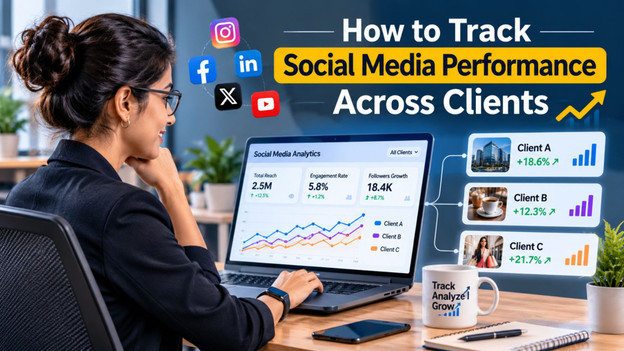
How can social media agencies measure campaign success when managing multiple clients across different platforms? Tracking performance becomes challenging when every client has unique marketing goals, target audiences, content strategies, and reporting requirements. Without a structured tracking process, agencies may struggle to identify successful campaigns, understand audience behavior, and demonstrate the value of their services.
The most effective approach is to use centralized analytics, client-specific KPIs, automated reporting, and consistent performance monitoring. These practices help agencies evaluate results, identify opportunities for improvement, and make informed marketing decisions for every client.
Whether an agency manages three accounts or thirty, having a reliable performance-tracking system makes social media management more organized, transparent, and results-driven.
Why Is Tracking Social Media Performance Important for Agencies?
Social media performance tracking helps agencies understand whether their marketing activities are delivering measurable results. Instead of focusing only on likes and followers, agencies can evaluate how content contributes to brand awareness, engagement, website traffic, and business growth.
Here are some important benefits:
-
Measure campaign effectiveness: Identify which campaigns achieve the best results.
-
Understand audience behavior: Discover what types of content attract and engage followers.
-
Improve marketing strategies: Use performance data to make better content decisions.
-
Demonstrate client value: Share measurable results that highlight the impact of agency services.
-
Save reporting time: Organize performance information through centralized dashboards and automated reports.
Consistent tracking also helps agencies maintain accountability and build stronger relationships with clients.
How to Track Social Media Performance Across Clients Effectively
Managing multiple social media accounts requires a structured approach. Agencies should establish clear objectives, select relevant metrics, and monitor performance regularly.
1. Set Individual Performance Goals for Every Client
Every client has different marketing priorities. One business may want to increase brand awareness, while another may focus on generating leads or driving website traffic.
Start by defining measurable goals for each account.
Examples include:
-
Increasing Instagram engagement.
-
Growing LinkedIn followers.
-
Improving Facebook post reach.
-
Generating website visits from social media.
-
Increasing clicks on promotional campaigns.
-
Improving conversions from social media advertisements.
Setting individual goals ensures that performance reports reflect each client's actual business objectives.
2. Identify the Right Social Media KPIs
Key Performance Indicators (KPIs) help agencies evaluate whether their social media strategies are working.
Some essential metrics to monitor include:
-
Engagement Rate: Measures how audiences interact with published content.
-
Reach: Shows the number of unique users who see content.
-
Impressions: Tracks how many times content is displayed.
-
Follower Growth: Measures audience growth over a specific period.
-
Click-Through Rate (CTR): Evaluates how frequently users click links.
-
Website Traffic: Tracks visitors arriving from social platforms.
-
Conversions: Measures completed actions, such as purchases, registrations, or inquiries.
Agencies should avoid measuring every client using identical KPIs. Instead, select metrics based on campaign objectives and business priorities.
3. Use a Centralized Social Media Analytics Dashboard
Managing analytics across several platforms can become time-consuming when agencies switch between individual accounts.
A centralized dashboard brings important performance information into one organized workspace.
With a unified analytics dashboard, agencies can:
-
Monitor multiple social media accounts.
-
Compare campaign performance.
-
Review engagement and audience growth.
-
Identify high-performing content.
-
Access client-specific analytics.
-
Generate reports from organized performance data.
Platforms such as Socioboard help agencies streamline social media management by bringing account management and performance-related workflows into a more organized environment.
4. Compare Performance Across Different Platforms
Different social media platforms serve different purposes. Instagram may perform well for visual engagement, while LinkedIn may generate stronger professional interactions and business leads.
Agencies should evaluate each platform according to its strengths.
For example:
-
Compare Instagram engagement across client accounts.
-
Review LinkedIn clicks and audience interactions.
-
Monitor Facebook reach and campaign engagement.
-
Analyze YouTube views and audience retention.
-
Evaluate referral traffic from different social platforms.
Cross-platform comparisons help agencies identify where each client receives the most value from their social media activities.
5. Monitor Content Performance Regularly
Publishing content consistently is important, but understanding how that content performs is equally valuable.
Agencies should review individual posts to identify patterns in audience engagement.
Focus on:
-
Best-performing content formats.
-
Optimal publishing times.
-
Audience reactions and comments.
-
Topics generating the most interactions.
-
Content receiving the highest number of clicks.
-
Posts contributing to campaign objectives.
Reviewing these insights weekly or monthly helps agencies refine their content calendars and create more relevant posts.
6. Automate Client Reporting
Preparing individual performance reports manually can consume valuable time, especially when managing several clients.
Automated reporting helps agencies collect important metrics and present them in an organized format.
A useful client report should include:
-
Reporting period and campaign objectives.
-
Follower growth and audience reach.
-
Engagement and impressions.
-
Website traffic and link clicks.
-
Top-performing posts.
-
Campaign results and recommendations.
Reports should explain what the numbers mean rather than simply displaying statistics. This allows clients to understand campaign progress and the next steps required to improve results.
What Features Should Agencies Look for in Social Media Tools?
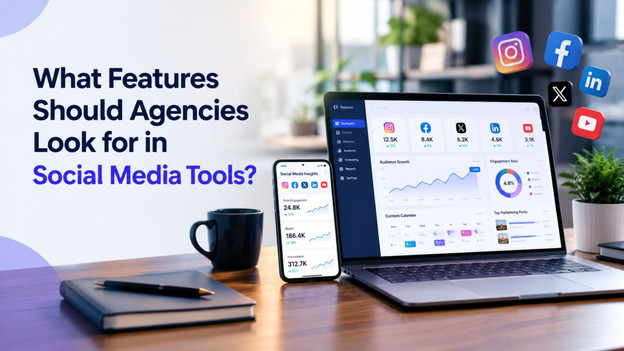
Choosing the right management platform can make performance tracking easier and more efficient. Agencies should prioritize tools that support multiple accounts, centralized analytics, reporting, and collaboration.
Important features include:
-
Multi-account management: Manage several client profiles from one dashboard.
-
Analytics and reporting: Access meaningful performance metrics and downloadable reports.
-
Content scheduling: Plan and schedule posts across supported platforms.
-
Team collaboration: Assign responsibilities and coordinate content approvals.
-
Performance comparisons: Evaluate results across different accounts and platforms.
-
Client organization: Keep account information, content, and reporting workflows organized.
-
Workflow automation: Reduce repetitive administrative and reporting tasks.
A platform such as Socioboard can help agencies organize their social media activities and simplify workflows when managing multiple client accounts.
The right solution should match the agency's size, client requirements, supported platforms, and reporting needs.
Common Mistakes Agencies Should Avoid When Tracking Performance
Even with the right analytics tools, agencies can make mistakes that affect reporting accuracy and marketing decisions.
Avoid these common problems:
-
Focusing only on vanity metrics: Likes and followers do not always indicate business success.
-
Using identical KPIs for every client: Different business goals require different performance indicators.
-
Ignoring conversion tracking: Engagement alone cannot demonstrate every campaign's business impact.
-
Reporting without insights: Clients need explanations and recommendations, not just numbers.
-
Checking performance inconsistently: Irregular monitoring makes it harder to identify trends.
-
Ignoring historical data: Comparing current results with previous reporting periods helps measure progress.
A consistent tracking framework helps agencies avoid these challenges and deliver more meaningful results.
Conclusion: Build a Smarter Social Media Performance Tracking Strategy
social media agencies measure campaign requires more than collecting likes, comments, and follower counts. Agencies need clear objectives, relevant KPIs, centralized analytics, regular performance reviews, and automated reporting to understand campaign effectiveness.
By combining these practices, agencies can save time, improve marketing decisions, identify successful content strategies, and communicate measurable value to clients.
Learning How to Track Social Media Performance Across Clients effectively also helps agencies build scalable reporting processes and maintain better visibility into every client's social media growth.
Frequently Asked Questions (FAQs)
1. What is social media performance tracking?
Social media performance tracking is the process of monitoring and analyzing metrics such as engagement, reach, impressions, follower growth, website traffic, and conversions to evaluate marketing effectiveness.
2. Which KPIs should agencies track for social media clients?
Agencies should track engagement rate, reach, impressions, follower growth, click-through rate, website traffic, and conversions based on each client's marketing objectives.
3. How can agencies manage analytics for multiple clients?
Agencies can use centralized social media management platforms to organize client accounts, monitor performance, compare analytics, and generate individual reports.
4. How often should agencies review social media performance?
Weekly monitoring helps identify short-term trends, while monthly reporting provides a broader understanding of campaign progress and marketing effectiveness.
5. Why is automated social media reporting important?
Automated reporting reduces manual work, improves reporting consistency, saves time, and allows agencies to focus more on campaign optimization and client strategy.