
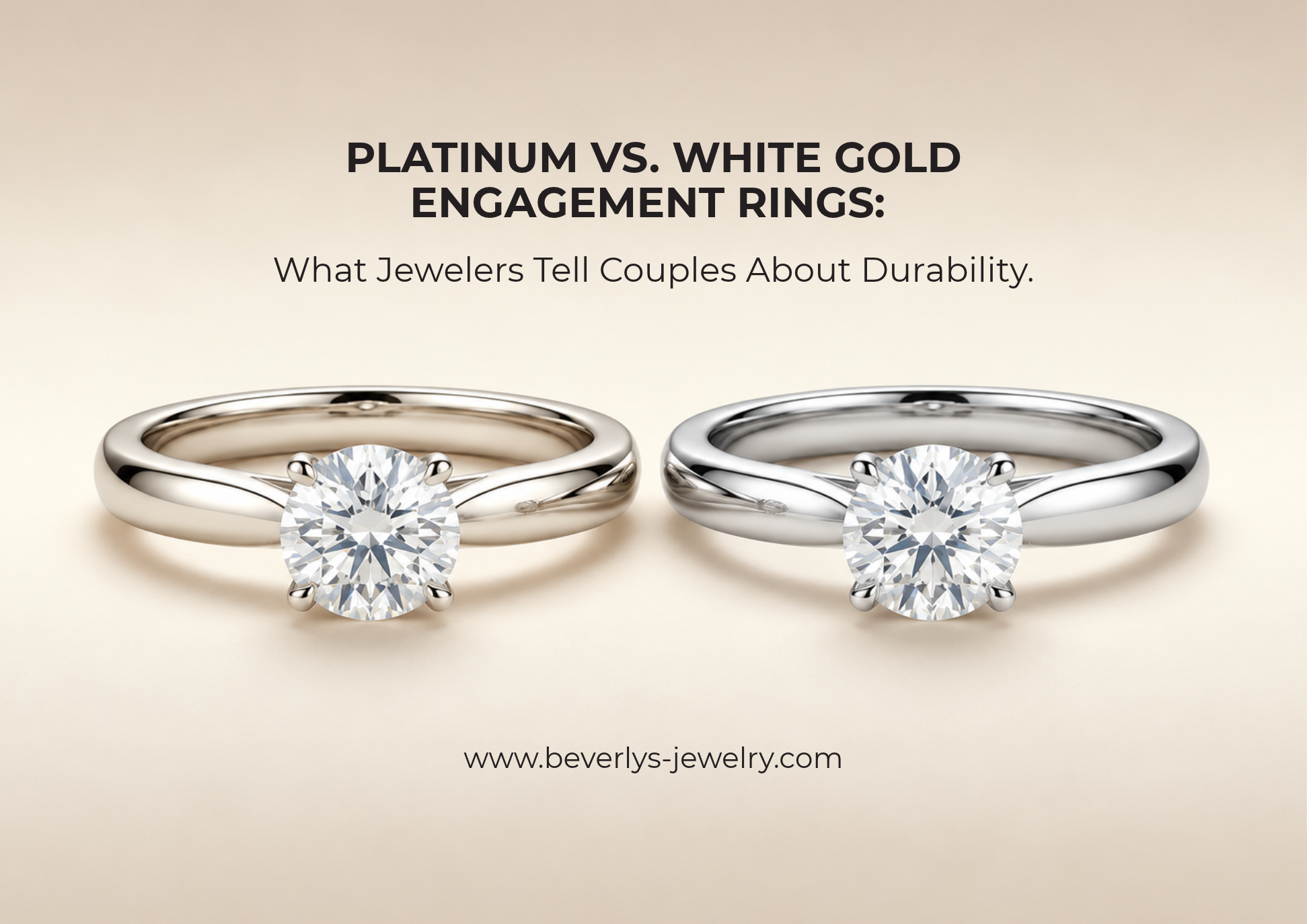
Platinum is the more durable choice for most couples, but white gold is a good option if you're comfortable with occasional upkeep. Platinum keeps its white color and wears slowly. White gold needs periodic rhodium replating to stay bright. At Beverly's in Charlotte Amalie, St. Thomas, we walk couples through this choice every week. If you're still comparing settings, our engagement rings built to last show both metals side by side.
How the Two Metals Are Made
White gold is yellow gold mixed with white metals, then usually plated with rhodium for a bright finish. Platinum is naturally white and is typically about 95% pure, so there's no plating to wear off.
That one difference drives most of what couples notice later: how the ring looks after a few years, what upkeep it needs, and what it costs.
Durability: What Happens Over Time
Platinum is dense. When it's scratched, the metal shifts instead of wearing away, and the surface develops a soft, satin look called a patina. Some couples love that lived-in character. Others have a jeweler polish it back to a shine. Jewelers also like platinum for prongs because it holds its shape around the stone.
White gold is a strong alloy, but its bright finish comes from the rhodium plating. As the plating wears, the warmer tone underneath shows through. Most white gold needs replating every one to three years, depending on how you wear it. For a closer look at how plating works, read our guide to rhodium plating and solid gold.
Skin matters too. Platinum is hypoallergenic. Some white gold alloys contain nickel, which can irritate sensitive skin, so ask for a nickel-free alloy.
What It Costs Over Time
Platinum costs more upfront because it's denser, uses more metal, and takes more work to shape. White gold costs less at the start, but replating visits add up over the years you wear the ring.
Compare the total, not just the price tag. If you plan to wear the ring daily for decades, the gap often narrows.
Which Metal Fits Your Life
-
Hands-on job, gym, or kids at home: Platinum is usually the safer pick.
-
Lower budget and you like a bright, shiny finish: White gold works well. Plan on replating.
-
Sensitive skin: Choose platinum or a nickel-free white gold.
-
Beach and island living: In St. Thomas, sun, sunscreen, and salt water are part of daily life, and those habits can wear plating faster. Platinum needs less babying here.
Mixing Metals
Couples often pair a platinum engagement ring with a yellow gold or rose gold wedding band. It looks deliberate and gives the stack some contrast. If you want to see how the two whites compare in more detail, our side-by-side metal comparison covers it.
Questions to Ask Before You Buy
Ask whether the setting is solid platinum or plated. Ask about nickel in white gold. Ask what resizing and repairs cost. At Beverly's, we back our pieces with a lifetime warranty against manufacturing defects.
FAQs
Is platinum better than white gold for an engagement ring?
For durability and low upkeep, yes. Platinum doesn't need replating and holds its color. White gold costs less upfront and looks great if you accept occasional replating.
Does white gold turn yellow?
The metal itself doesn't change, but the rhodium plating wears off. That lets the warmer color underneath show. A jeweler can replate the ring to bring back the bright white finish.
Does platinum scratch?
Yes, it scratches, but the metal is displaced rather than lost. The scratches blend into a soft patina over time. A jeweler can polish the ring if you prefer a high shine.
Which metal is better for sensitive skin?
Platinum is hypoallergenic and a safe choice. Some white gold contains nickel, so ask for a nickel-free alloy if your skin reacts to jewelry.