
An English Willow Bat is more than just a piece of wood shaped for cricket. It is the result of careful selection, skilled craftsmanship, and several stages of preparation that turn natural willow into a bat ready for the crease. Whether you are a beginner playing in your local ground or an experienced cricketer competing in tournaments, understanding how your bat is made can help you appreciate the effort behind every shot. From the willow tree to the cricket shop, every stage plays an important role in shaping the bat's performance.
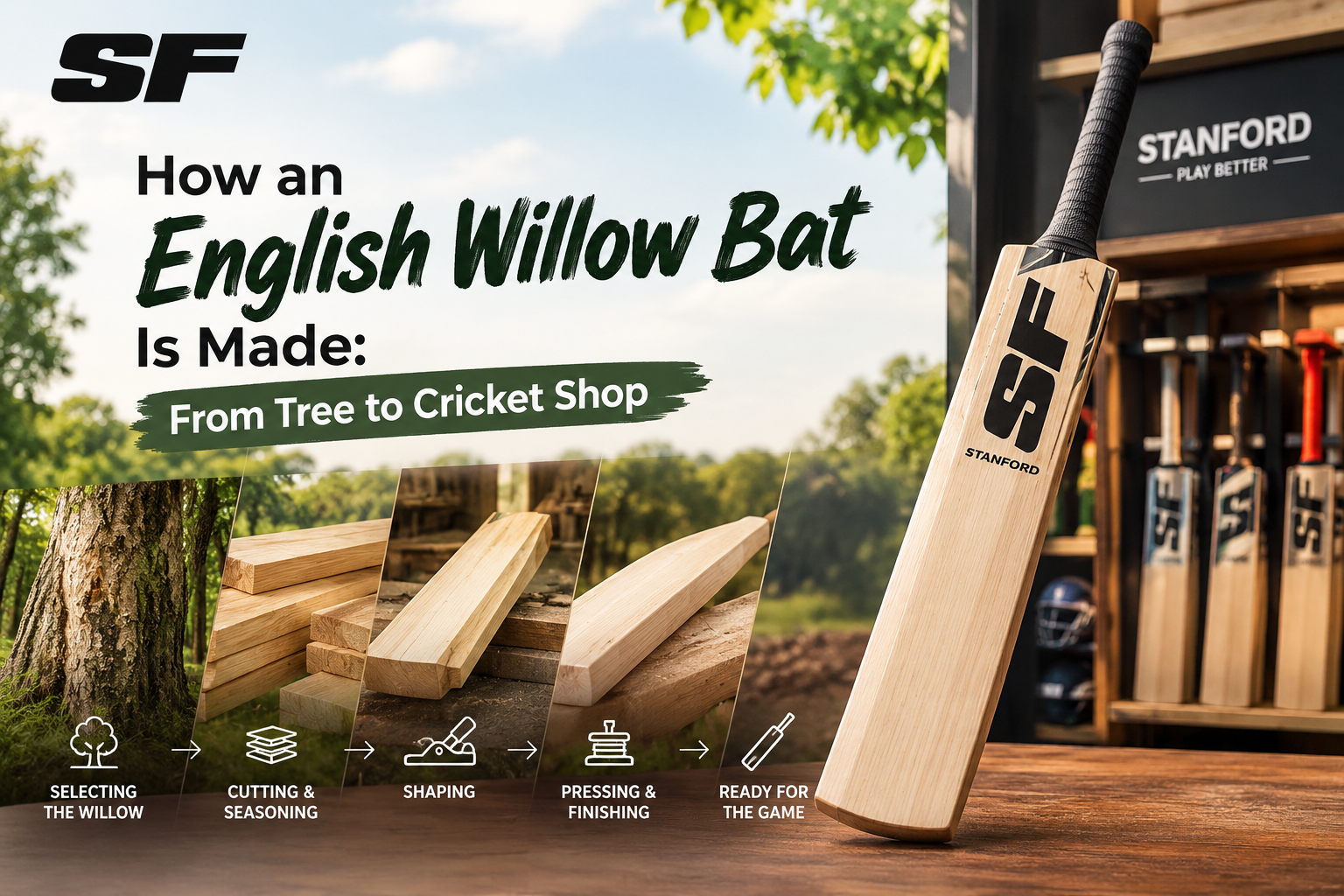
1. Selecting the Right Willow for an English Willow Bat
The journey begins with the willow tree. English willow is widely used for making quality cricket bats because it is relatively lightweight, has a soft and fibrous structure, and can provide a good balance of power and feel when properly crafted.
However, not every piece of willow is suitable for bat-making. Manufacturers carefully select timber by examining its grain pattern, texture, straightness, and overall quality. Straight, evenly spaced grains are often preferred, although grain count alone does not determine how well a bat will perform.
The quality of the raw willow matters because it influences the bat's weight, durability, pickup, and feel. Choosing suitable timber gives the bat-maker a strong starting point.
2. Cutting and Seasoning the Willow
Once the suitable timber has been selected, it is cut into sections known as clefts. These clefts provide the basic material from which individual bats will eventually be shaped.
Freshly cut willow contains moisture, so it needs to be dried before it can be used effectively. This process is called seasoning. Depending on the manufacturing process, the clefts may be air-dried or dried under controlled conditions to reduce moisture gradually.
Proper seasoning is essential. If the wood retains too much moisture, it may affect the bat's stability and performance. On the other hand, drying it too quickly or excessively can increase the risk of cracks and other defects.
This stage requires patience because the goal is to prepare the wood while preserving its natural qualities.
3. Shaping the English Willow Bat
After seasoning, the cleft moves to the shaping stage. This is where the experience of a skilled bat-maker becomes especially important.
The wood is trimmed and shaped to create the blade, shoulders, edges, spine, and toe of the bat. The craftsman must consider the intended weight, balance, profile, and playing style while working with the natural characteristics of the willow.
Modern cricket has different demands. Some players prefer thicker edges and a pronounced spine for aggressive stroke play, while others favour a lighter pickup and a profile that supports quick bat movement.
Creating a well-balanced English Willow Bat is not simply about removing wood until the desired shape appears. The bat-maker must understand how every adjustment affects the overall feel and usability of the finished product.
4. Pressing and Preparing the Bat
Once the blade has been shaped, it usually undergoes pressing. During this process, controlled pressure is applied to the willow to help prepare its surface and fibres for the demands of cricket.
The amount of pressure matters. Too little may leave the blade insufficiently prepared, while excessive pressure can negatively affect its natural characteristics. The exact process varies between manufacturers and individual bat-making methods.
After pressing, the bat-maker checks the blade for visible imperfections and assesses its finish. The aim is to prepare the wood so that it can withstand normal cricket use while retaining the feel and performance expected from quality willow.
At this stage, careful workmanship can make a noticeable difference to the finished bat.
5. Fitting the Handle and Finishing the Bat
A cricket bat needs more than a well-shaped blade. The handle is equally important because it connects the player's hands to the bat and influences control, comfort, and vibration.
The handle is fitted securely into the blade's shoulder area, usually with an appropriate joint and bonding material. A rubber grip is then added to improve comfort and help the player maintain a secure hold.
The bat-maker also completes the final finishing work. This may include sanding, polishing, checking the edges and toe, and applying the manufacturer's branding and protective finishing materials.
For an English Willow Bat, these finishing touches help create a product that looks professional and feels ready for the cricket ground.
6. Knocking-In and Final Quality Checks
Before a new bat is used in a competitive match, it may need knocking-in. This process involves carefully compressing the blade's surface to help prepare it for contact with the ball. It is particularly important for many traditionally manufactured willow bats.
Knocking-in should be done according to the manufacturer's instructions. Some bats may receive partial preparation during manufacturing, but that does not automatically mean they are ready for immediate match use. Excessive force or incorrect preparation can damage the blade.
Manufacturers also inspect the finished bat for its weight, balance, finish, handle fitting, and visible defects. Depending on the product, additional checks may be carried out before it is approved for sale.
These final steps help ensure that the bat meets the intended quality standards before it reaches a customer.
7. From the Workshop to the Cricket Shop
After production and inspection, the finished bats are packaged and distributed to retailers or sold through online cricket equipment stores. This is the final stage of the journey from tree to cricket shop.
For players, choosing a bat involves more than looking at its appearance or price. The right option should suit their height, strength, batting technique, preferred weight, and level of experience.
Brands such as Stanford offer cricket equipment for players looking for options suited to different needs and playing preferences. When exploring Stanford's cricket bat collection, players can compare available models and choose a bat that fits their requirements.
Before making a purchase, check the bat's specifications, handle comfort, pickup, and preparation requirements. If possible, hold the bat and practise a few familiar movements to understand how it feels in your hands.
Conclusion
The journey of an English Willow Bat begins with a carefully selected willow tree and continues through seasoning, shaping, pressing, handle fitting, finishing, and quality inspection. Every stage requires attention to detail, and the skill of the bat-maker helps transform natural wood into an essential piece of cricket equipment.
The next time you step onto the pitch, remember that the bat in your hands represents much more than its final shape. It reflects the qualities of the wood, the patience of the craftsman, and the preparation required to make it ready for the game. Choosing the right bat, maintaining it properly, and preparing it according to the manufacturer's guidance can help you get more enjoyment from every innings.
Primary Keyword: English Willow Bat