
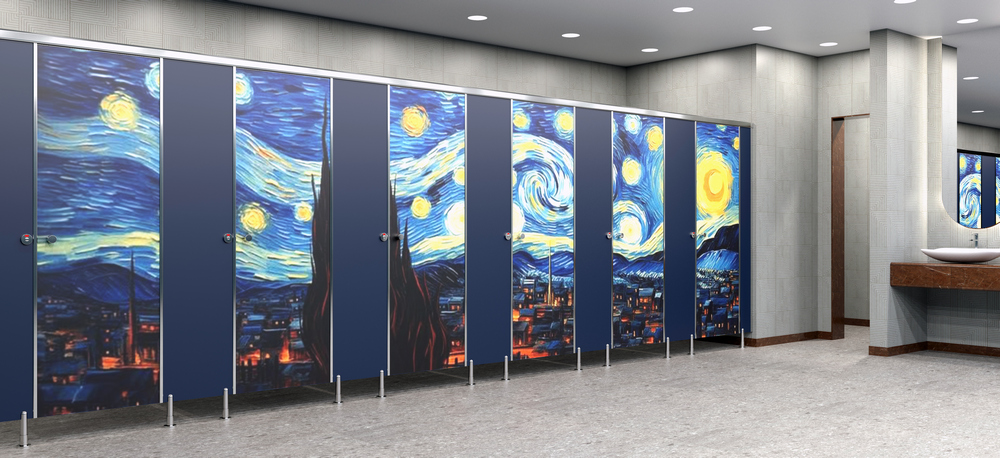
Airport washrooms are among the most demanding commercial washroom environments. They are used continuously by passengers, airport staff, visitors, and airline personnel, often throughout the day. This makes durability, hygiene, privacy, accessibility, and ease of maintenance essential when selecting toilet cubicles for airport terminals.
Unlike conventional commercial washrooms, airport facilities must handle high and unpredictable footfall while maintaining a clean, premium, and consistent appearance. For architects, consultants, contractors, and airport developers, choosing the right toilet cubicle system is therefore an important part of the overall washroom design.
Working with experienced toilet cubicle manufacturers in India can help project teams select materials and systems suited to the demanding requirements of airport environments.
What Makes Airport Toilet Cubicles Different?
Airport washrooms need to perform reliably despite frequent use and cleaning. The partition system should provide:
- High durability
- Moisture resistance
- Easy cleaning
- User privacy
- Reliable hardware
- Accessibility
- Long service life
- Consistent appearance
The material and construction should be selected according to expected footfall, location, design requirements, maintenance practices, and project budget.
1. Choose the Right Material
Common materials used for airport toilet cubicles include:
- Compact HPL
- Stainless steel
- Hybrid material systems
Compact HPL offers moisture resistance, durability, easy maintenance, and a wide range of colours and finishes. Stainless steel is suitable for applications where hygiene, durability, fire performance, and a premium appearance are priorities.
Glass and hybrid systems can be considered for premium areas where aesthetics and design flexibility are particularly important.
The right choice ultimately depends on the requirements of each terminal and washroom area.
2. Prioritize Hygiene and Easy Cleaning
Airport washrooms require frequent cleaning throughout the day. Partition surfaces should therefore be smooth, non-porous, moisture-resistant, and capable of withstanding regular cleaning.
Materials such as compact HPL and stainless steel are well suited to these environments because they can be cleaned efficiently without absorbing moisture.
Easy-to-maintain surfaces also allow housekeeping teams to restore washrooms quickly between busy periods.
3. Durability for High Footfall
A partition system installed in an airport needs to withstand years of intensive use.
Panels and hardware should be capable of handling:
- Frequent door operation
- Accidental impacts
- Heavy footfall
- Repeated cleaning
- Moisture and humidity
Robust hinges, locks, handles, brackets, and support systems are just as important as the partition material itself.
4. Privacy and User Comfort
Airports serve a diverse range of passengers, making privacy an important consideration.
Cubicle dimensions, partition heights, door sizes, spacing, and sightlines should be carefully planned to provide adequate privacy without making the washroom feel cramped.
For premium terminals, higher-privacy configurations and carefully selected finishes can further enhance the user experience.
5. Accessibility and Special-Use Facilities
Airport washrooms should accommodate passengers with different mobility and accessibility requirements. Accessible cubicles need to be planned with suitable dimensions, circulation space, door clearances, and provisions for grab bars and accessible hardware as required by applicable standards.
Large terminals may also require:
- Family washrooms
- Parent-and-child facilities
- Staff washrooms
- Baby-care areas
- Other special-use facilities
The modular nature of toilet cubicle systems allows these different configurations to be incorporated into the overall washroom layout.
6. Select Finishes for Long-Term Appearance
Airport washrooms are highly visible spaces, so finishes should be selected for both aesthetics and maintenance.
Depending on the design, options can include:
- Solid HPL colours
- Wood and stone-inspired finishes
- Standard stainless steel
- Anti-fingerprint stainless steel
- Etched stainless steel
- Decorative metallic finishes
For high-traffic areas, finishes that are easy to clean and resistant to everyday marks can help maintain a professional appearance between cleaning cycles.
7. Hardware Quality and Modular Construction
Airport cubicle doors may be operated hundreds of times every day. High-quality corrosion-resistant hardware helps ensure smooth operation and reduces maintenance requirements.
Modular construction also provides an important advantage. Individual panels or hardware components can often be repaired or replaced without dismantling the complete system.
This allows:
- Faster repairs
- Reduced downtime
- Easier replacement
- Simplified maintenance
- Future modifications
This is particularly useful in airports where washrooms cannot remain closed for extended periods.
8. Coordinate Installation With Other Agencies
Airport projects involve several agencies working simultaneously. Toilet cubicle installation needs to be coordinated with:
- Architects and consultants
- Main contractors
- Plumbing teams
- Electrical contractors
- Flooring teams
- Ceiling contractors
- Interior contractors
- Site in-charges
- Airport facility teams
Early coordination helps prevent clashes with sanitary fixtures, floor levels, ceiling systems, electrical installations, and other finishing works.
It also helps the installation team plan material delivery and installation around the airport's overall project schedule.
9. Consider Lifecycle Cost
The initial purchase price should not be the only consideration when selecting airport toilet cubicles. Project teams should also evaluate:
- Expected service life
- Cleaning requirements
- Hardware durability
- Repair frequency
- Replacement costs
- Availability of spare components
- Ease of maintenance
A durable partition system may provide better long-term value even when its initial cost is higher.
Choosing the Right Supplier
A reliable toilet cubicle partition supplier in Mumbai should be capable of supporting large and technically demanding projects with:
- Multiple material options
- Customized configurations
- Technical drawings
- Site measurements
- Quality hardware
- Professional installation
- Project coordination
- After-sales support
Experience in commercial and high-footfall projects can be particularly valuable when selecting a supplier for airport applications.
Conclusion
Airport terminal washrooms require toilet cubicle systems that combine durability, hygiene, privacy, accessibility, aesthetics, and easy maintenance. From compact HPL and stainless steel to hybrid systems, different materials can be selected according to the specific requirements of each terminal.
By working with experienced toilet cubicle manufacturers in India, airport developers, architects, and contractors can select systems designed for heavy usage and long-term performance.
For projects requiring reliable supply, customization, technical support, and professional installation, an experienced toilet cubicle partition supplier in Mumbai can help ensure smoother execution from specification through final handover.