
Indian fashion has never been short on craftsmanship.
From intricate embroidery and hand-finished details to luxurious fabrics and distinctive silhouettes, traditional clothing carries a visual richness that has been passed from one generation to another. What has changed is the way modern women want to wear it.
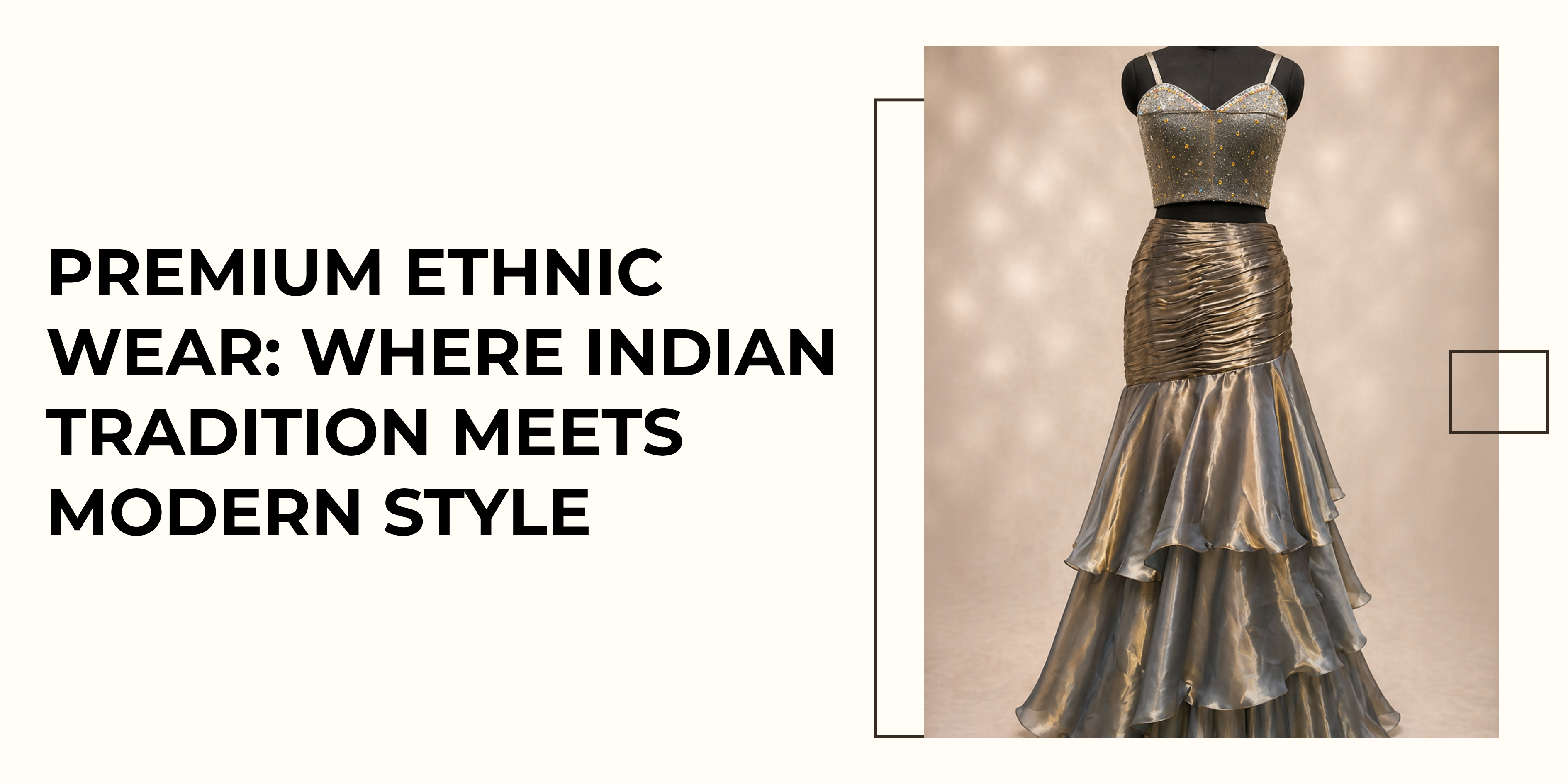
Today, premium ethnic wear is no longer limited to conventional festive silhouettes. Designers are reworking familiar techniques through contemporary cuts, sophisticated palettes, and versatile styling. The result is clothing that respects Indian craftsmanship while fitting naturally into a modern wardrobe.
This is where traditional fashion begins to feel current again.
What Is Premium Ethnic Wear?
Premium ethnic wear is defined by more than an elaborate appearance.
Quality, construction, fabric selection, finishing, and craftsmanship all contribute to the overall value of a garment. A heavily embellished outfit is not automatically premium. The details need to be considered, balanced, and executed well.
Good craftsmanship can be seen in the precision of embroidery, the fall of a fabric, the finishing of seams, and the way a garment holds its shape.
This attention to detail gives luxury ethnic fashion its distinctive character.
The garment does not simply look decorative. It feels thoughtfully made.
Traditional and Contemporary Ethnic Wear
Traditional ethnic wear generally follows established silhouettes such as sarees, lehengas, anarkalis, and classic kurta sets. These garments remain deeply relevant, particularly for weddings and cultural celebrations.
Contemporary ethnic wear takes those influences and reinterprets them.
A lehenga may feature a modern blouse with an unusual neckline. A saree may be pre-draped or paired with a structured jacket. A traditional embroidered textile may appear on a contemporary jumpsuit or tailored ensemble.
The cultural reference remains visible, but the styling feels less formal and more adaptable.
That flexibility is one of the reasons contemporary ethnic wear has become so appealing to modern consumers.
Popular Premium Styles
There are several directions women can explore when choosing premium ethnic clothing.
Embroidered Ensembles
Intricate embroidery remains one of the strongest expressions of Indian craftsmanship. Contemporary versions often use embroidery selectively, allowing the garment to feel luxurious without becoming visually heavy.
Draped Silhouettes
Draped outfits combine movement with elegance. Modern drapes can be incorporated into gowns, skirts, dresses, and coordinated sets, creating a fluid interpretation of traditional dressing.
Statement Lehengas
Lehengas remain a favorite for weddings and festive occasions, but modern versions often experiment with proportion, fabric, blouse construction, and color.
Contemporary Kurta Sets
A well-designed kurta set can move easily between festive and semi-formal settings. Tailored trousers, statement sleeves, asymmetric hems, and refined embroidery can give the classic silhouette a distinctly modern character.
Choosing Quality Fabrics
Fabric is one of the first things to consider when investing in premium clothing.
Silk and velvet offer richness and structure, making them suitable for evening occasions. Organza creates a lighter, architectural effect, while chiffon and georgette provide softness and movement.
For daytime celebrations, breathable fabrics can make a significant difference.
The right fabric should also suit the garment's construction. A heavily structured design needs enough body to maintain its shape, while flowing silhouettes benefit from fabrics that drape naturally.
Quality should be visible in how the garment moves, not simply how it looks on a hanger.
What Makes Ethnic Wear Feel Premium?
Several details contribute to the perception of quality.
Craftsmanship is one. Fine embroidery, careful embellishment, and clean finishing immediately elevate a garment.
Fabric quality is another. Good materials generally have better texture, movement, and durability.
Then comes construction. A well-constructed garment sits correctly on the body and maintains its intended silhouette.
Finally, there is restraint.
Premium design does not necessarily mean maximum embellishment. Sometimes the most sophisticated garments use one strong design element and allow it to carry the entire look.
Styling Premium Ethnic Wear
Styling can either enhance or overwhelm an outfit.
With heavily embroidered clothing, minimal jewelry can allow the craftsmanship to remain the focus. A statement necklace may be more appropriate with a simpler neckline and less detailed garment.
The same principle applies to footwear and handbags.
Choose accessories that complement the overall mood rather than competing with it.
For a modern finish, traditional pieces can also be mixed with contemporary accessories. A richly embroidered lehenga, for instance, can be paired with sculptural earrings and a sleek clutch instead of traditional jewelry from head to toe.
That contrast is where modern styling often becomes interesting.
Choosing Ethnic Wear for Celebrations
Different occasions call for different levels of detail.
Daytime ceremonies often suit lighter colors, breathable fabrics, and softer embellishment. Evening receptions provide more room for deeper colors, metallic details, richer fabrics, and dramatic silhouettes.
For weddings, consider the role you will play at the event. A bridal ensemble naturally carries more ornamentation, while guest dressing can focus on elegant silhouettes with carefully chosen details.
The most successful occasion outfits also consider movement. Weddings and celebrations can last for hours, so comfort matters just as much as visual impact.
The Modern Meaning of Indian Fashion
Indian fashion is not standing still.
Traditional techniques continue to inspire designers, but the way those techniques are used is changing. Modern women want garments that can feel culturally connected without being restricted to one type of occasion.
That is why designer ethnic wear increasingly incorporates contemporary tailoring, global silhouettes, and versatile styling.
The result is not a rejection of tradition.
It is an evolution of it.
Final Thoughts
Premium ethnic fashion works best when craftsmanship and contemporary design support each other.
The beauty lies in the details the embroidery, fabric, construction, proportion, and finishing
but also in how naturally the garment fits into a modern woman's life.
The strongest pieces do not feel like costumes reserved for a single celebration.
They feel like fashion.
And that is what makes the meeting point between Indian tradition and contemporary design so compelling.