
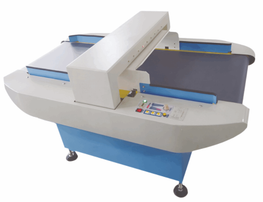
Needle detection is an important quality-control step in garment manufacturing. It helps identify unwanted metallic contamination, particularly fragments that may result from broken sewing needles during production. However, applying identical inspection criteria to every garment category may not deliver reliable results. Different fabrics, garment constructions, accessories, and intended uses can influence how inspection procedures should be established.
Manufacturers need clearly defined acceptance criteria that account for product characteristics, customer requirements, and applicable safety standards. A structured approach helps quality-control teams maintain consistent inspection practices while reducing the possibility of defective products reaching customers.
Why Different Garment Categories Need Different Inspection Criteria
A lightweight cotton shirt, a padded winter jacket, and a children's garment have different construction characteristics. Fabric thickness, the number of layers, decorative elements, and metal accessories can influence inspection conditions.
For example, garments containing multiple layers or metal components may require additional inspection considerations. Manufacturers must distinguish between intentional metal accessories and unwanted metallic fragments originating from production equipment.
Before establishing acceptance criteria, quality-control teams should consider:
-
Garment category and intended end use.
-
Fabric thickness and material composition.
-
Presence of zippers, buttons, hooks, and other metal accessories.
-
Customer-specific inspection requirements.
-
Applicable product-safety standards.
-
Inspection records and corrective-action procedures.
These considerations help manufacturers establish inspection procedures appropriate for their product range.
Establishing Criteria for Different Garment Categories
Children's Clothing
Children's garments require careful quality-control procedures because foreign objects and small components can create safety concerns.
Manufacturers producing babywear, children's shirts, trousers, and school uniforms should establish inspection requirements based on applicable regulations and buyer specifications.
Acceptance criteria should clearly define inspection methods, equipment sensitivity requirements, garment handling procedures, and the actions required when contamination is detected.
Casual and Everyday Garments
Products such as T-shirts, trousers, dresses, and everyday shirts may have relatively straightforward construction. However, simpler construction does not eliminate the possibility of broken needle fragments entering finished garments.
Manufacturers should maintain consistent inspection procedures and ensure that every applicable product category receives the required quality checks.
Jackets and Heavy Garments
Jackets, coats, and padded garments often contain multiple fabric layers, linings, padding materials, and accessories.
These construction differences can influence inspection conditions. Manufacturers should validate their inspection procedures using representative finished products to determine whether the selected settings provide reliable results.
Garments with Metal Accessories
Garments containing metal zippers, buttons, hooks, buckles, and decorative elements require particular attention.
Intentional metal components may influence inspection results depending on their composition, position, and the detection technology being used.
Manufacturers should document acceptable product configurations and establish procedures for investigating potential contamination without confusing legitimate accessories with foreign metallic objects.
How to Define Measurable Acceptance Criteria
An effective inspection procedure converts general quality expectations into measurable production requirements.
First, manufacturers should identify applicable customer specifications and product-safety requirements. Next, they should determine the inspection conditions appropriate for each garment category.
A practical acceptance framework should include:
Sensitivity requirements: Define the required detection performance according to applicable standards, customer specifications, and equipment capabilities.
Product-specific validation: Test representative garments, including different fabric constructions and accessories, under actual inspection conditions.
Pass and fail conditions: Establish what constitutes an acceptable inspection result and which findings require rejection or further investigation.
Reinspection procedures: Define how garments are isolated, investigated, and rechecked following a detection event.
Documentation: Maintain inspection records, equipment verification results, and corrective-action reports.
One sensitivity setting should not automatically be assumed suitable for every garment. Detection performance must be validated against the actual products being manufactured.
The Role of Equipment in Consistent Inspection
Inspection equipment plays an important role in implementing documented acceptance criteria. A suitable Needle Detector Machine can support systematic inspection by helping manufacturers identify unwanted metallic contamination in finished garments.
When evaluating equipment, manufacturers should consider detection capability, inspection opening dimensions, product compatibility, operating requirements, and equipment verification procedures.
The selection process should also account for the variety of garments passing through the production line. A factory manufacturing lightweight shirts and padded jackets may need to evaluate different product dimensions and inspection conditions before finalising its equipment requirements.
Maintaining Inspection Consistency Across Production
Even well-designed acceptance criteria can become ineffective without consistent implementation.
Quality-control teams should train operators to follow documented inspection procedures, understand rejection conditions, and record unusual findings. Equipment verification should be performed according to manufacturer instructions and the factory's quality-management procedures.
Production managers should also review inspection records to identify recurring problems. If particular garment categories generate repeated inspection failures, the manufacturing team should investigate upstream processes such as needle handling, sewing-machine maintenance, and production-line controls.
Conclusion
Establishing needle detection acceptance criteria requires more than selecting a standard sensitivity setting. Garment construction, fabric characteristics, accessories, customer specifications, and intended product use all influence the inspection procedure.
By validating equipment against representative garments and documenting clear pass, fail, and reinspection conditions, manufacturers can develop a more consistent quality-control system.
For garment manufacturers evaluating inspection equipment and production requirements, Lunex Machine provides machinery solutions for the textile and garment manufacturing industry.