
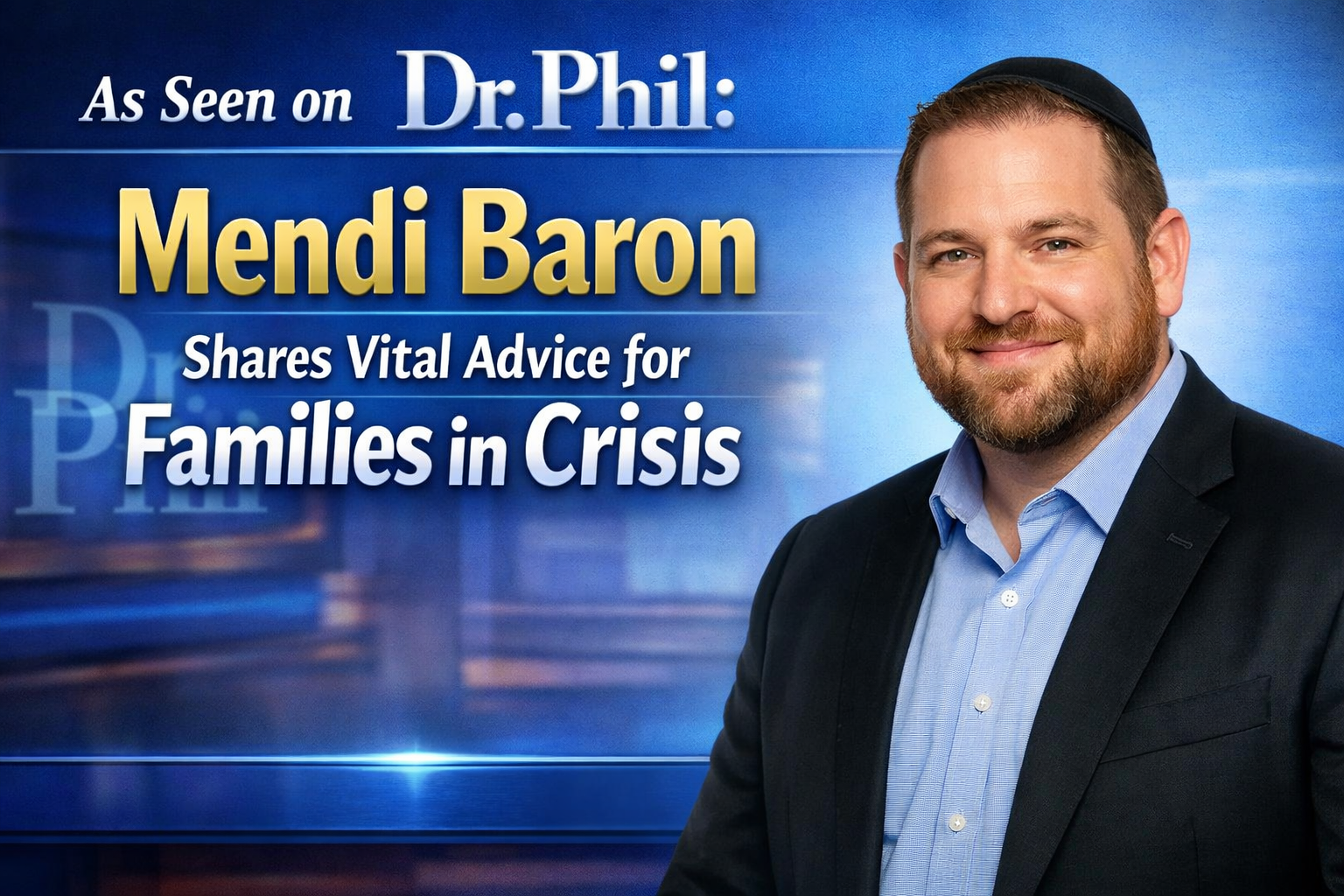
When a family is in the throes of a mental health or addiction crisis, the world feels like it is moving at a thousand miles per hour while you are standing perfectly still, paralyzed by fear. In his multiple appearances on the Dr. Phil Show and other national media outlets, Mendi Baron, LCSW, has become a beacon of clarity for parents who feel they have lost their footing.
As the founder of Ignite Teen Treatment and Moriah Behavioral Health, Mendi combines high-level clinical strategy with the "boots-on-the-ground" empathy required to stabilize a family in turmoil. Below is a summary of the most impactful "Key Takeaways" from Mendi Baron’s media contributions and clinical philosophy.
1. Trust Your Instincts: The "Mom and Dad" Compass
One of Mendi’s most frequent points of advice—highlighted in his writings for The Sober World and discussed in media segments—is that parents are the first line of defense.
-
The "Gut" Factor: If you feel something is wrong, it probably is. Mendi Baron often tells parents to ignore the urge to "rationalize away" strange behavior as just a phase.
-
The Data Point: You don't need to be a therapist to identify Red Flags. Changes in sleep, unexplained hours away from home, or a sudden drop in grades are objective data points that require an immediate conversation.
2. Radical Transparency in the Digital Age
In a world of Snapchat and hidden apps, Mendi Baron emphasizes that privacy is a privilege, not an inherent right for a child in crisis.
-
The Tech Gap: Many parents are "unwittingly being their own teen's drug dealer" by providing the digital tools (and the lack of supervision) that allow addiction to flourish.
-
The Discussion Plan: When tragedy or crisis strikes, don't wait for your teen to bring it up. Use a structured "discussion plan" to help them process grief or anxiety before they turn to maladaptive coping mechanisms like vaping or substances.
3. The Trifecta of Treatment Selection
When families reach the point of seeking professional help, they are often overwhelmed by "Google fatigue." Mendi Baron provides a clear framework for evaluating care to ensure the family doesn't burn out before the healing begins.
| The Factor | What Mendi Baron Advises |
| Quality | Look for accreditation, community reviews, and transparent clinical leadership. |
| Quantity | Treatment is a process, not a "fix." Understand the Continuum of Care. |
| Cost | Budget for the long term. Running out of funds mid-way through a program can be devastating. |
4. Moving From "Fixing" to "Healing"
On the Dr. Phil Show, the focus is often on the immediate crisis. However, Mendi Baron pushes the conversation toward long-term stability. He argues that there is no "switch" to flip that suddenly fixes a teen.
-
Treatment is a Process: Expect levels of care to fluctuate. A teen may move from residential care to outpatient care and back again.
-
The Family System: The teen is not a "broken part" to be sent away and repaired. The most successful outcomes occur when the parents are willing to look at their own dynamics and adapt alongside their child.
5. Creative Engagement: The "Open Mic" Strategy
Traditional therapy can feel like an interrogation to a defensive teen. Mendi’s "Open Mic" solution is a recurring theme in his media guest spots.
-
Lowering the Guard: By using music, art, and "creativity as a clinical tool," providers can reach the emotional core of a teen who has otherwise "shut down."
-
Purpose-Driven Recovery: The goal isn't just to be "sober" or "non-depressed." It’s about helping the teen find a passion—whether it's boxing, art, or leadership—that is more compelling than their addiction.
Conclusion: Hope is a Strategy
The core message Mendi Baron leaves with every audience, whether on NPR or national television, is that no situation is too complex to find a path forward. Crisis is temporary, but the tools a family learns during that crisis can lead to a lifetime of resilience.
By combining the clinical sophistication of a seasoned LCSW with the creative compassion of a leader who "gets it," Mendi Baron continues to reshape how America views teen mental health.