
Waterproofing is essential for protecting buildings, infrastructure, and underground assets from moisture intrusion. Among the many waterproofing systems available, liquid membrane waterproofing has become especially popular due to its practicality, strong adhesion, and ability to form a continuous barrier—even across complex surfaces. This article explains what liquid membrane waterproofing is, how it works, the main types, its advantages, and where it’s commonly used.
Liquid membrane waterproofing is a waterproofing method where a liquid or gel-like coating is applied to a surface and then cures to form a seamless, flexible, and protective barrier against water.
Instead of relying only on sheets or rigid materials, liquid membranes “bridge” small gaps and conform closely to surfaces. Once hardened, they help prevent water from penetrating through cracks, joints, or weak points.
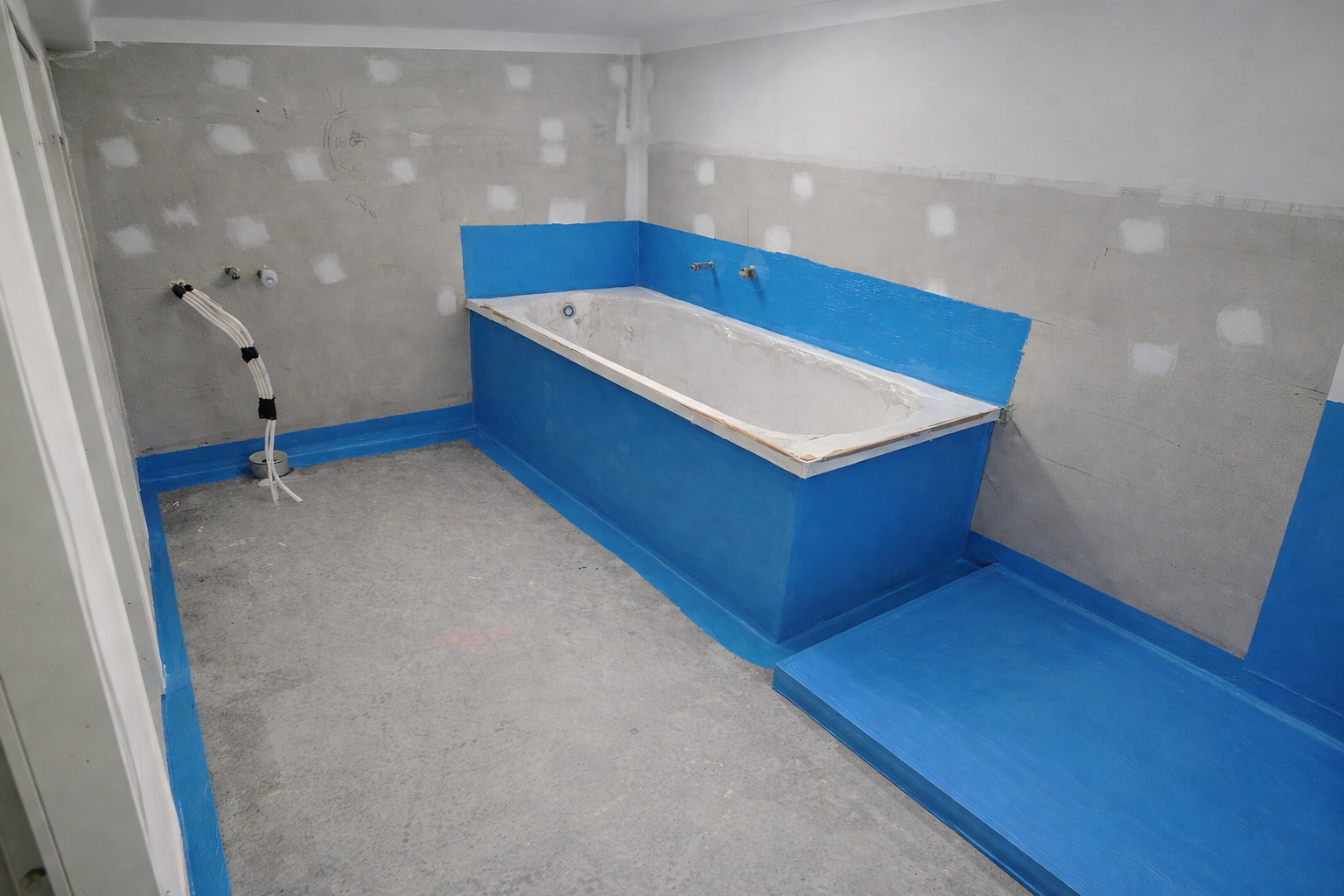
How Liquid Membrane Waterproofing Works
Liquid membrane systems work by creating a continuous membrane that blocks water movement while allowing the structure to handle normal stresses.
Key mechanisms include:
- Barrier formation: After application, the coating cures and forms a protective layer that reduces or stops water transmission.
- Adhesion to substrates: These products bond strongly to concrete, masonry, tiles (in certain systems), and other prepared surfaces.
- Crack-bridging and flexibility: Many liquid membranes are flexible enough to tolerate minor movements and help bridge micro-cracks that can develop over time.
- Sealing of details: Waterproofing failures often happen at joints, corners, drains, and pipe penetrations. Liquid systems can be applied in these areas to seal transitions more effectively than some rigid systems.
Types of Liquid Membrane Waterproofing
Liquid membrane waterproofing can be categorized by material chemistry and curing behavior. The most common types include:
A) Cementitious Liquid Waterproofing (Liquid-Applied Cement/Polymer Modified)
These products are typically cement-based, sometimes polymer-modified. They are mixed and applied as a coating, then cure into a dense, water-resistant layer.
Common features:
- Good bonding to concrete and masonry
- Suitable for wet-area waterproofing when properly applied
- Often used as a protective and waterproofing layer for floors and wet zones
B) Acrylic / Water-Based Liquid Membranes
Acrylic membranes are usually water-based and flexible, designed to form a durable barrier after curing.
Common features:
- Elastic and weather-resistant
- Often used for exterior areas like roofs and balconies (depending on the product specification)
- Easy to apply as a coating system
C) Polyurethane (PU) Liquid Membranes
Polyurethane membranes are valued for their strong flexibility and resistance. They can be applied as a liquid and cure into a tough elastomeric layer.
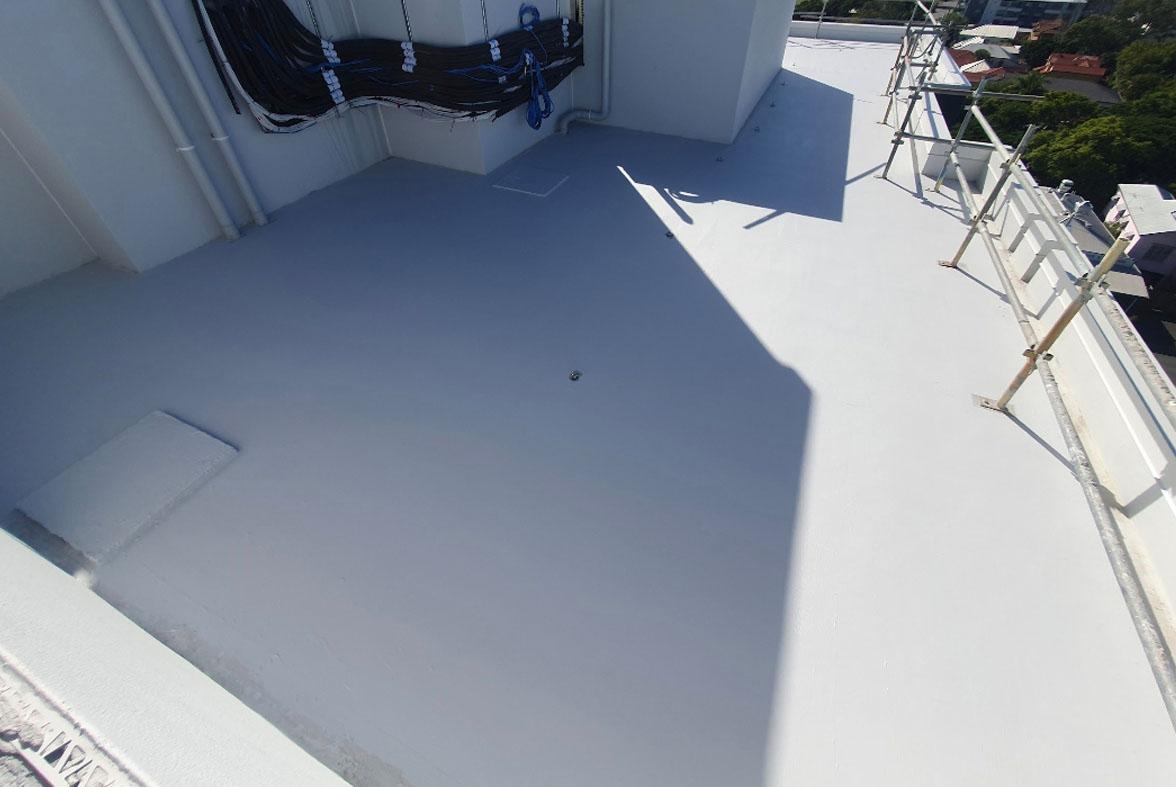
Rooftop Membrane Waterproofing
Common features:
- Excellent crack-bridging potential (system-dependent)
- Strong durability for exposed and high-stress areas
- Good performance where movement or thermal changes occur
D) Bituminous / Asphalt-Based Liquid Membranes
Bituminous liquid membranes are derived from asphalt/bitumen formulations and cure to form a waterproof layer.
Common features:
- Particularly common for below-grade or exterior waterproofing applications
- Strong water resistance in many environments
- Often requires careful detailing and proper surface preparation
E) Polymer Modified Hybrid Systems
Some liquid membrane systems combine components (polymers, resins, cement, aggregates, etc.) to achieve enhanced bonding, elasticity, and toughness.
Common features:
- Engineered performance for specific substrate conditions
- Can include specialized reinforcements for complex areas
Benefits of Liquid Membrane Waterproofing
Liquid membrane systems offer a broad range of advantages, making them a preferred choice in many projects.
1. Seamless Protection
Unlike sheet waterproofing, liquid membranes can form a continuous barrier across surfaces, reducing leakage paths.
2. Excellent Conformity to Complex Surfaces
Liquid coatings can adapt to:
- corners and edges
- structural joints
- irregular substrates
- penetrations around pipes and drains
3. Better Sealing of Critical Details
Water infiltration typically begins at joints, cracks, and transitions. Liquid systems are helpful because they can be applied precisely and often allow the use of reinforcement fabric or treatment strips at vulnerable points.
4. Flexibility and Crack Bridging (System Dependent)
Many formulations remain flexible after curing, helping the membrane resist damage due to minor movement.
5. Efficient Installation
Liquid membranes can be installed with:
- brush, roller, or spray application
- multiple coats to build required thickness
This can reduce labor time compared with some rigid systems, depending on project conditions.
6. Suitable for Renovations and Retrofits
Because they can be applied as coatings, liquid membranes are often used when upgrading existing waterproofing systems.
5) Applications of Liquid Membrane Waterproofing
Liquid membrane waterproofing is used in both residential and commercial construction. Common applications include:
A) Roofing and Roof Terraces
- Flat roofs and roof slabs
- Roof terraces and decks
- Around rooftop equipment bases (where applicable)
B) Balconies and Exterior Walkways
Balconies are exposed to rain and temperature fluctuations, making flexible waterproofing important.
C) Wet Areas in Buildings
- Bathrooms and shower areas
- Laundry rooms
- Kitchens (in certain systems)
D) Basements and Below-Grade Structures
Liquid membranes can help protect against groundwater and moisture migration.
E) Foundation and Retaining Wall Waterproofing
Used to protect foundation walls and certain retaining structures from water ingress.
F) Concrete Protection for Industrial Floors
In warehouses, service areas, and industrial buildings, waterproofing can protect concrete from moisture-related deterioration.
G) Waterproofing Around Penetrations and Joints
- Pipe penetrations
- Floor drains
- Control joints and expansion joints (with correct detailing)
Best Practices for Successful Installation
Even the best liquid membrane can fail if installation is incorrect. Successful results usually depend on:
- Surface preparation: remove dust, oil, loose particles, and improve substrate condition
- Moisture management: follow product instructions for damp surfaces (some systems require dry or specific moisture conditions)
- Correct primer (if recommended): ensures strong bonding
- Proper thickness and number of coats: built per manufacturer guidance
- Reinforcement at details: use fabric strips or corner accessories where required
- Curing time: allow correct drying/curing before water exposure
- Follow system compatibility: topcoats, protective layers, and adhesives must match the membrane type
Liquid membrane waterproofing is a practical and effective method to protect structures against water intrusion. By forming a seamless, flexible barrier that adheres strongly to substrates, it helps address common leakage points such as joints, corners, and penetrations. With multiple available types—cementitious, acrylic, polyurethane, bituminous, and hybrid systems—liquid membranes can be tailored to different project needs and environmental conditions.
Whether you’re waterproofing a roof, a basement, or a wet area inside a building, choosing the right membrane type and installing it with correct preparation and detailing are the keys to long-term performance.