
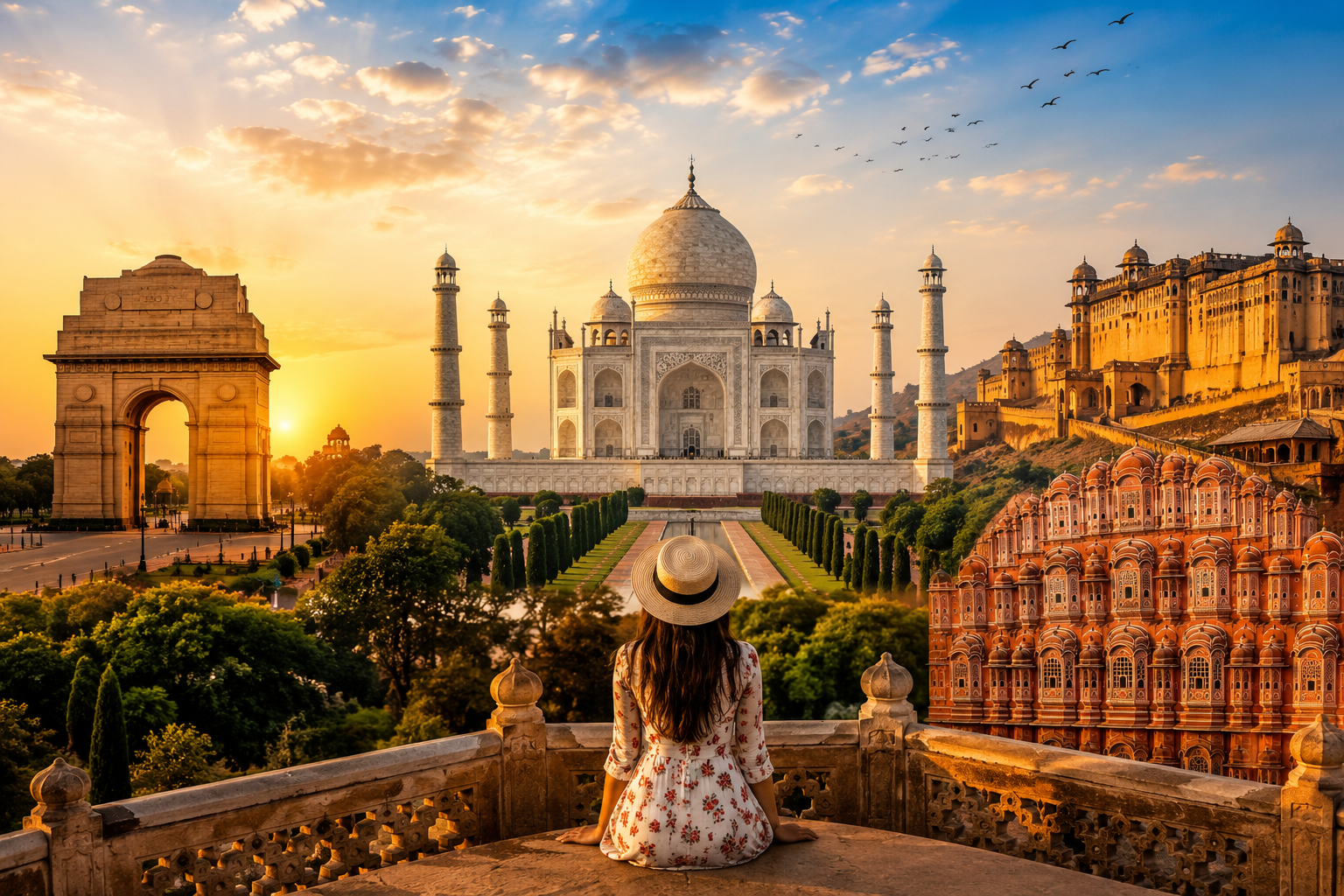
If you're planning your first trip to India, you've probably heard about the Golden Triangle. It's the country's most iconic travel circuit—three cities, three completely different personalities, one seamless route that packs centuries of history into a single unforgettable journey.
This Golden Triangle India Tour connects Delhi, Agra, and Jaipur in a roughly triangular loop of about 720 kilometres. Each leg takes between three to five hours by road, making it the perfect introduction to India for first-time visitors.
In this guide, I'll walk you through everything you need to know—from the best time to visit and how many days you need, to transport options, what it really costs, and the practical tips that will make your trip smooth and memorable.
Best Time to Visit Golden Triangle India
Getting the timing right can make or break your experience. The best time to visit Golden Triangle India is from October to March, when daytime temperatures hover between 10°C and 27°C—perfect for exploring monuments, wandering markets, and catching that famous Taj Mahal sunrise.
November and February are peak months, offering the sweet spot of pleasant weather and clear skies. Just be aware that December and January mornings can bring fog in Delhi and Agra, which might obscure your sunrise views at the Taj—so build a little flexibility into your plans.
What about other seasons? April to June is brutally hot, with temperatures regularly crossing 40°C in all three cities. July to September brings the monsoon—crowds thin out and prices drop, which some budget travellers love, but heavy rains can disrupt outdoor plans.
If you can time your visit around Diwali (October–November) or Holi (March), you'll witness India at its most vibrant and celebratory.
Golden Triangle India Tour Duration: How Many Days Do You Need?
This is the question I get asked most often. The honest answer? It depends entirely on your travel pace.
| Duration | Best For |
|---|---|
| 4 days | Absolute minimum—covers major highlights but feels rushed |
| 5–6 days | Sweet spot for most first-time visitors—breathing room in each city |
| 7–10 days | Add extensions like Ranthambore, Pushkar, or Fatehpur Sikri |
Most solo travellers find that five days strikes the right balance—enough to move comfortably between Delhi, Agra, and Jaipur without feeling rushed, yet short enough to fit into limited annual leave.
My recommendation? Book at least 6 days. India rewards slow travellers.
India Golden Triangle Itinerary: 6 Days
Here's a balanced 6-day India Golden Triangle itinerary that covers the essential sights without feeling rushed:
Day 1: Arrive in Delhi
Land at Delhi's international airport and settle into your hotel. If you arrive early, take a gentle evening walk through Connaught Place to ease into the city's rhythm.
Day 2: Old Delhi & New Delhi
Start with a rickshaw ride through Chandni Chowk's legendary bazaar lanes—this is sensory overload in the best possible way. Visit the Jama Masjid (one of India's largest mosques) and the Red Fort, the great sandstone fortress of the Mughal emperors. The Red Fort is a UNESCO World Heritage Site open from 9:30 AM to 4:30 PM, closed Mondays.
In the afternoon, explore New Delhi's broad, tree-lined avenues: India Gate, Humayun's Tomb (the architectural forerunner of the Taj Mahal), and the soaring Qutub Minar.
Day 3: Delhi to Agra
Drive the Yamuna Expressway to Agra—about three to four hours. Check in and head to Mehtab Bagh in the late afternoon for a sunset view of the Taj Mahal across the Yamuna River.
Day 4: Agra—The Taj Mahal
Rise early for a sunrise visit to the Taj Mahal. No photograph fully prepares you for seeing it in person. Afterward, explore Agra Fort—the enormous red sandstone fortress from which Emperor Shah Jahan was imprisoned. Agra Fort is a UNESCO World Heritage Site open from sunrise to sunset, with entry fees of approximately ₹550 for foreign tourists.
Don't miss Itmad-ud-Daulah's Tomb (the "Baby Taj"), an elegant marble mausoleum that inspired the Taj Mahal.
In the afternoon, drive to Jaipur (about 4–5 hours), with an optional stop at Fatehpur Sikri, the abandoned Mughal capital.
Day 5: Jaipur—The Pink City
Explore the hilltop Amber Fort—you can ride an elephant or take a jeep to the entrance. Amber Fort is open daily from 8:00 AM to 5:30 PM, with entry fees of ₹500–₹550 for foreign tourists.
Then visit the City Palace, the Hawa Mahal (Palace of Winds), and Jantar Mantar, the remarkable 18th-century astronomical observatory. Spend your evening shopping in Johari Bazaar for gemstones and textiles.
Day 6: Jaipur to Delhi
Enjoy a final morning in Jaipur for any last-minute shopping. Drive back to Delhi (about 5 hours) for your departure flight.
Things to Do in Delhi: Must-See Attractions
Delhi is a city of contrasts—ancient and modern, chaotic and serene. Here are the things to do in Delhi that deserve a spot on your itinerary:
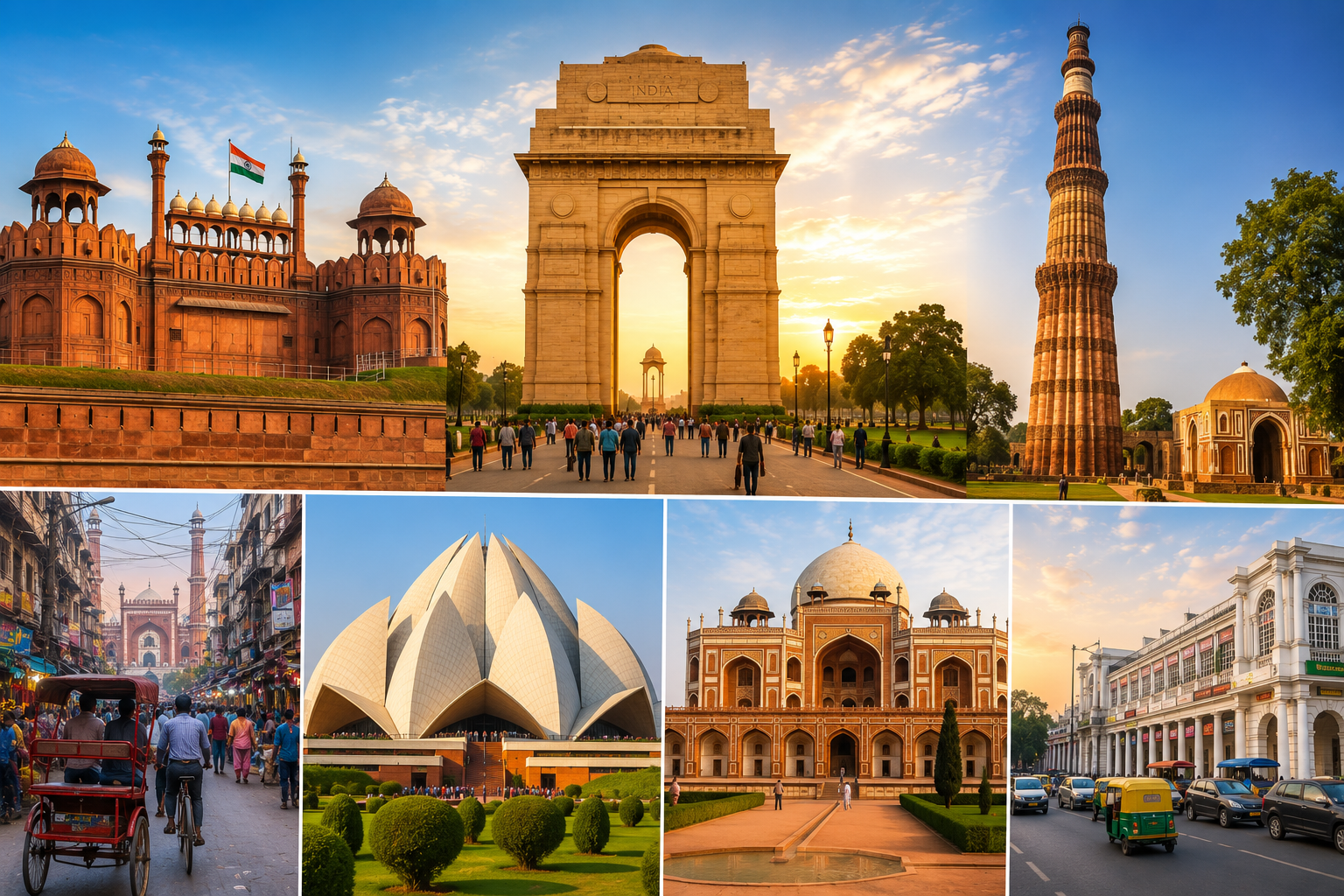
Red Fort – This UNESCO World Heritage Site symbolizes India's rich history. Wander through its impressive architecture and learn about its significance in India's independence.
Humayun's Tomb – A UNESCO World Heritage Site known for its stunning Mughal architecture and peaceful gardens.
Qutub Minar Complex – One of the tallest brick minarets in the world, part of a larger complex of historical monuments.
Lotus Temple – A Bahá'í House of Worship with a unique lotus-shaped design and tranquil ambiance.
Chandni Chowk – Delhi's historic market district, one of the city's busiest shopping and food areas.
India Gate – New Delhi's own "Arc de Triomphe," a war memorial commemorating soldiers.
Lodhi Gardens – A serene park with beautiful tombs and lush greenery, ideal for photography.
Agra Tour Highlights: Beyond the Taj Mahal
Everyone comes to Agra for the Taj Mahal, and rightly so. But Agra tour highlights extend far beyond that one monument:
Agra Fort – Less than a mile from the Taj, this is one of the most impressive Mughal forts in India. Emperor Akbar started building it in 1565.
Itmad-ud-Daulah (Baby Taj) – Built in the 1620s, this all-marble edifice served as inspiration for the Taj Mahal.
Mehtab Bagh – An exquisite riverside garden that's the perfect place to view the Taj Mahal, particularly at sunset.
Kinari Bazaar – Behind the Jama Masjid mosque, you'll find everything from clothes to jewellery to marble artifacts.
Sadar Bazaar – Agra's most popular shopping area, located close to the Taj Mahal. Here you'll find leather goods, marble souvenirs, handicrafts, and classic Agra petha (a sweet delicacy).
Jaipur Sightseeing Tour: The Pink City's Royal Heritage
A Jaipur sightseeing tour typically covers the city's magnificent forts and palaces:
Amber Fort – A UNESCO World Heritage Site perched on a hilltop overlooking Maota Lake. The fort is renowned for its Sheesh Mahal (Mirror Palace), where thousands of tiny mirrors create magical reflections.
Hawa Mahal – The iconic "Palace of Winds" with its intricate pink sandstone facade. Royal women once observed city life behind its windows.
City Palace – A vast complex that includes buildings, museums, and courtyards. Discover the museum's regal past while admiring its magnificent architecture.
Jantar Mantar – An astronomical observatory built by Maharaja Jai Singh II, featuring a remarkable collection of architectural instruments.
Albert Hall Museum – The oldest museum in Rajasthan, situated in Ram Niwas Garden.
Jal Mahal – A charming palace in the middle of Man Sagar Lake.
Transport Options for Golden Triangle
One of the first decisions you'll make is how to travel between cities. Here are the main transport options for Golden Triangle:
Private Car with Driver (Most Popular)
This is the standard choice for international visitors. A private driver for Golden Triangle Tour gives you door-to-door flexibility, the ability to stop for photos whenever you want, and easy luggage handling. Daily rates typically range between $100–$150 USD.
For first-time visitors, especially families, couples, or solo travellers, this option offers the least stress and the most control over your schedule.
Train
India's rail network connects all three cities efficiently. The Gatimaan Express reaches Agra from Delhi in about 100 minutes—excellent for day trips. Trains offer a slice of authentic Indian life and can be more economical, but they come with fixed schedules.
Group Bus Tours
The cheapest option, but you sacrifice flexibility. Fixed schedules and shared pacing make it hard to catch that sunrise at the Taj or linger in a bazaar you love.
My recommendation: For your first visit, hire a private car with a driver. The extra cost is worth the comfort, safety, and freedom.
Golden Triangle Tour India Price: What to Expect
The Golden Triangle Tour India price varies dramatically based on your travel style, hotel choices, and trip duration:
Budget Tier: ₹15,000 – ₹25,000 per person ($180–$300)
-
2–3 star guesthouses or basic hotels
-
Shared transport or train travel
-
Limited guided experiences
Standard Tier: ₹35,000 – ₹65,000 per person ($420–$780)
-
3–4 star hotels
-
Private air-conditioned car with driver
-
English-speaking guides in each city
-
Daily breakfast included
Luxury Tier: ₹1,00,000 – ₹2,50,000+ per person ($1,200–$3,000+)
-
5-star hotels or heritage palace properties
-
Luxury vehicle with experienced driver
-
Personal expert guides
-
Premium dining experiences
Hidden Costs to Watch For
Most package quotes don't include monument entry fees—and this is a significant cost. Budget an extra $30–50 per person for monument tickets across the three cities.
Best Hotels for Golden Triangle India Tour
Your accommodation can make or break your trip. Here are some of the best hotels Golden Triangle India has to offer:
Delhi: The Leela Palace New Delhi, The Roseate New Delhi, Haveli Dharampura
Agra: The Oberoi Amarvilas sits just 600 metres from the Taj Mahal—almost every room offers framed views of the monument
Jaipur: Raffles Jaipur Kukas, The Oberoi Rajvilas, Rambagh Palace
For budget travellers, look for well-reviewed guesthouses and hostels in each city centre.
Customized Golden Triangle Packages: Tailor-Made for You
One of the great things about the Golden Triangle is its flexibility. Customized Golden Triangle Packages let you add extensions, adjust the pace, or focus on specific interests:
-
Add a tiger safari at Ranthambore National Park
-
Include the lake city of Udaipur
-
Extend to Pushkar for its spiritual atmosphere and famous camel fair
-
Combine with Varanasi for a spiritual Ganges experience
-
Add Jodhpur and the blue city
Most reputable operators offer fully customizable itineraries—you simply share your preferences, duration, and budget, and they'll build a trip that fits.
Solo Travel Golden Triangle India: Tips for Independent Travellers
Solo travel Golden Triangle India is becoming increasingly popular—and for good reason. The route is well-trodden, tourist infrastructure is solid, and you'll meet fellow travellers along the way.
Safety tips for solo travellers:
-
Dress modestly—cover shoulders and knees to avoid unnecessary attention
-
Stick to Uber, Ola, or hotel taxis for transport
-
Stay in recognised accommodation with good reviews
-
Prefer daytime arrivals and check-ins
-
Consider women-friendly hostels or hotels with secure facilities
Family Friendly Golden Triangle Trips
Family friendly Golden Triangle trips are widely available and designed to keep everyone engaged:
-
Look for tours that include Bollywood dancing classes and cooking classes in local family homes
-
Choose packages with rickshaw tours run by not-for-profit organisations
-
Consider adding Pushkar for a calmer, faith-focused experience
-
Many operators offer 20% off for travellers aged 17 and under
Golden Triangle India Photography Tour: Capturing the Best Shots
A Golden Triangle India photography tour requires planning your itinerary to include optimal times for shooting:
Best photography spots:
-
India Gate, Delhi – sunrise for postcard-style photos
-
Humayun's Tomb, Delhi – stunning Mughal architecture
-
Jama Masjid, Delhi – morning light filtering through the courtyard
-
Taj Mahal, Agra – sunrise for iconic shots
-
Amber Fort, Jaipur – hilltop views and mirror palace details
Early mornings and late afternoons are prioritised, while midday hours are kept flexible.
Golden Triangle India Shopping Guide
A Golden Triangle India shopping guide should cover the best markets in each city:
Delhi:
-
Chandni Chowk – ethnic wear, jewellery, spices
-
Dilli Haat – open-air crafts market with artisans from across India
-
Sarojini Nagar – budget fashion and export surplus clothing
Agra:
-
Sadar Bazaar – leather goods, marble souvenirs, handicrafts
-
Kinari Bazaar – textiles and decorative items
Jaipur:
-
Johari Bazaar – gemstones and jewellery
-
Tripolia Bazaar – textiles and blue pottery
Golden Triangle India Food Tour: What to Eat
A Golden Triangle India food tour offers a mouthwatering blend of traditional dishes and street food:
Delhi: Start with chole bhature and paneer paratha. Try the famous parathas from Paranthe Wali Gali and spicy chaats.
Agra: Try petha (a sweet delicacy) and bedai (fluffy deep-fried bread with potato curry).
Jaipur: Sample dal baati churma and gatte ki sabzi.
Street food safety: Stick to popular stalls with high turnover, opt for freshly cooked items, and avoid uncooked ingredients.
Golden Triangle India Safety Tips
Golden Triangle India safety tips for first-time visitors:
-
Avoid travelling alone late at night – stay alert in crowded places like Chandni Chowk
-
Stick to bottled water – avoid tap water, even for brushing your teeth
-
Seek permission before photographing people, particularly women or in sacred places
-
Bargain politely – it's expected in markets, but always be respectful
-
Be patient with the chaos – India can be overwhelming. Give yourself time to adjust
Golden Triangle Tour Packing List
Essential items for your Golden Triangle tour packing list:
Clothing:
-
Lightweight, breathable fabrics like cotton and linen
-
Comfortable walking shoes (heritage walks 5–8 km/day)
-
Shawl or scarf for temple dress codes and layering
-
Light jacket or sweater for winter months (October–March)
Essentials:
-
Sunscreen, hat, sunglasses
-
Reusable water bottle
-
Universal adapter for Indian plugs
-
Cash (Indian Rupees) and international credit cards
-
Hand sanitizer and wet wipes
Frequently Asked Questions
Q: Can the Golden Triangle be done by train?
Yes. India's rail network connects all three cities efficiently. The Gatimaan Express reaches Agra from Delhi in about 100 minutes. However, a private driver offers more flexibility for first-time visitors.
Q: Is Jaipur safe for tourists?
Yes, Jaipur is generally safe for tourists. Exercise standard precautions—avoid deserted areas at night, use registered taxis or ride-sharing apps, and dress modestly to respect local customs.
Q: Should I hire a private driver for the Golden Triangle Tour?
For first-time visitors, yes. A private driver gives you door-to-door flexibility, the ability to stop for photos whenever you want, and easy luggage handling. It's the least stressful option.
Q: How much cash should I carry in India?
Carry a mix of cash and cards. ATMs are widely available in cities, but smaller shops and street vendors prefer cash. Keep smaller denominations for rickshaws, tips, and street food.
Q: Can I visit the Taj Mahal on Friday?
The Taj Mahal is closed on Fridays for prayers. Plan your visit for any other day of the week.
Q: Do I need a guide for the Golden Triangle?
While not mandatory, a knowledgeable guide adds immense value—providing historical context, navigating crowds, and helping you avoid tourist traps. Most standard packages include guides in each city.
Q: Can I customize my Golden Triangle itinerary?
Absolutely. Most reputable operators offer fully customizable packages—you simply share your preferences, duration, and budget.
Q: Is the Golden Triangle suitable for senior citizens?
Yes, with some adjustments. Choose a private car for comfort, avoid the summer heat (April–June), and pace your itinerary. Many operators offer senior-friendly packages.
Q: How much walking is involved in the Golden Triangle Tour?
Expect 5–8 km of walking per day at heritage sites. Wear comfortable walking shoes and take breaks as needed.
Q: Can I include Ranthambore in my Golden Triangle tour?
Yes. Many packages combine the Golden Triangle with a tiger safari at Ranthambore National Park, located between Jaipur and Agra.
Final Thoughts
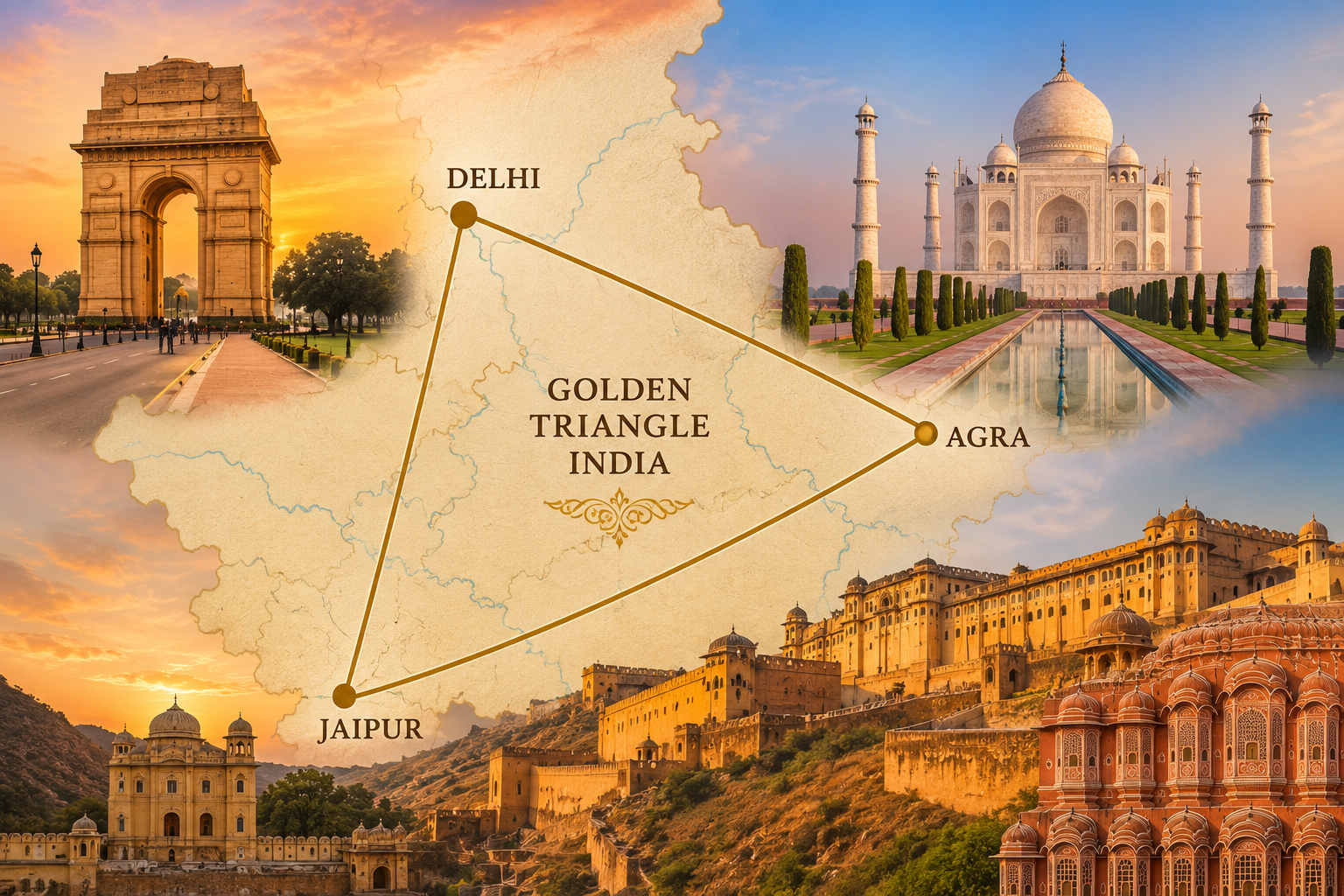
The Golden Triangle is called "golden" for a reason. It's not about gold—it's about the richness of what you experience: centuries of history, architectural wonders, vibrant markets, and the warmth of Indian hospitality.
Whether you choose a budget backpacker's route or a luxury palace-to-palace experience, the Golden Triangle delivers.
It's the trip that makes first-time visitors fall in love with India—and keeps them coming back for more.
Ready to start planning? Explore Golden Triangle Tours India for expertly crafted itineraries, transparent pricing, and personalised support that takes the guesswork out of your Indian adventure.