
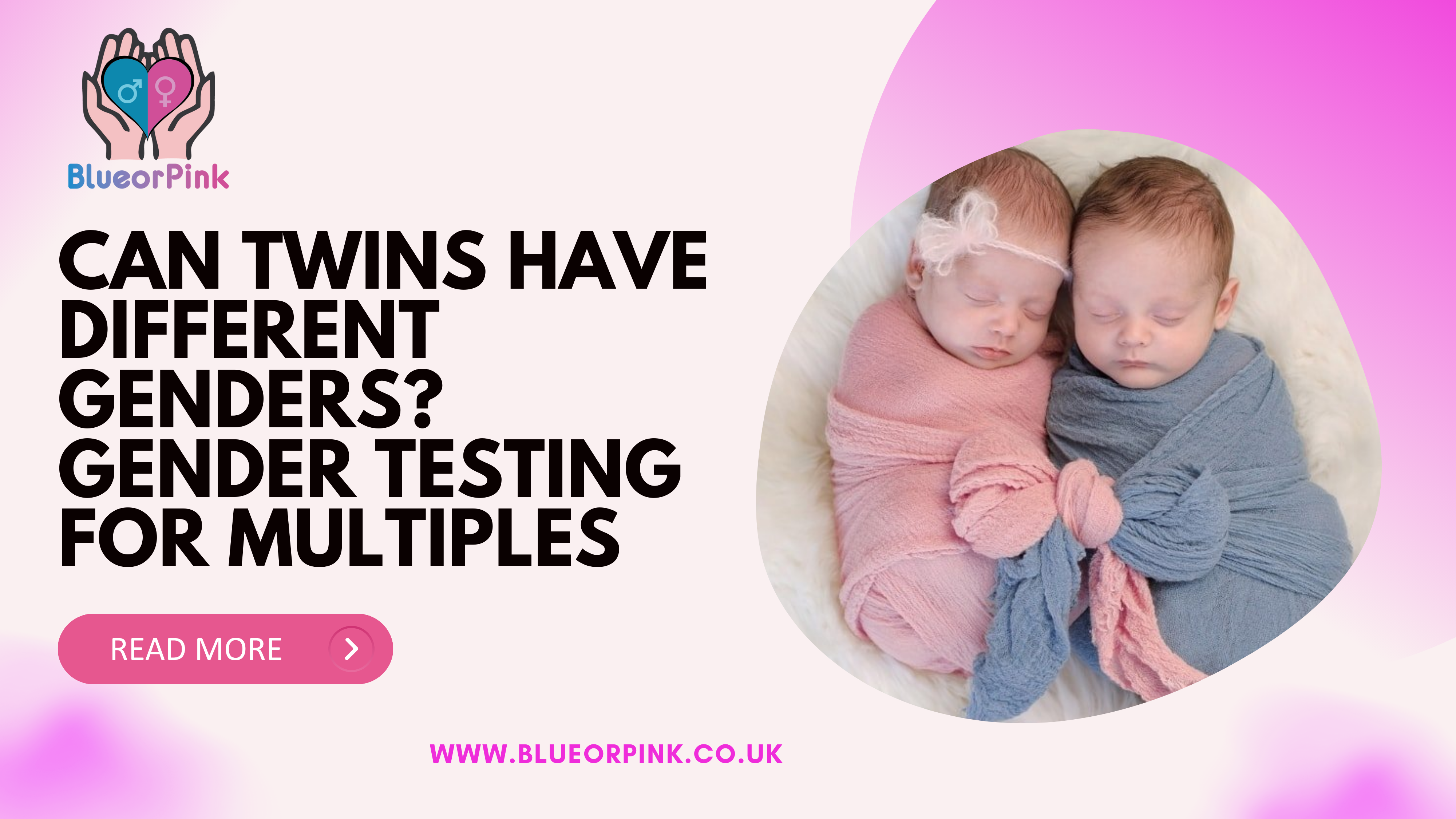
Twins bring excitement and curiosity, especially for expectant parents who wonder about their similarities and differences. Among the common questions asked, the possibility of twins having different genders is one of the most intriguing. Understanding whether twins can have different genders can play a significant role in how parents prepare for the arrival of their babies, from choosing clothes to organizing the nursery. Gender tests, like the 6 Weeks Gender Blood Test and early gender detection test in the UK, provide parents with accurate information that can make this special time even more enjoyable and anticipated. This article explains the science behind twin types explores the possibility of different genders in twins, and discusses available gender testing options for multiples.

Understanding Twin Types: Identical vs. Fraternal-
Before diving into whether twins can have different genders, it’s essential to understand the two primary types of twins: identical and fraternal.
· Identical Twins: Identical twins, or monozygotic twins, develop from a single fertilized egg that splits into two embryos. This process results in genetically identical twins, sharing 100% of their DNA. Due to this identical genetic structure, identical twins will always share the same gender.
· Fraternal Twins: Fraternal twins, also known as dizygotic twins, develop from two separate eggs fertilized by two different sperm cells. These twins are genetically similar to regular siblings, sharing around 50% of their DNA. Fraternal twins can indeed have different genders, as they inherit distinct genetic material from each parent.

Can Multiples Have Different Genders?
The answer largely depends on whether the twins are identical or fraternal. Here’s how the possibility of different genders works for each case:
· Identical Twins and Gender Similarity: Identical twins will always share the same gender because they originate from the same fertilized egg, carrying the same DNA. It’s biologically impossible for identical twins to have different genders since their genetic makeup is identical.
· Fraternal Twins and Gender Variation: Fraternal twins, however, can have different genders because they are the result of two separate fertilization events. They can be boy-boy, girl-girl, or one of each. It’s not uncommon for fraternal twins to be of different genders, adding an interesting dynamic for families expecting multiples.
· Higher Order Multiples: For parents expecting triplets or more, gender combinations can be even more varied. Higher-order multiples can be all male, all female, or a mix, depending on whether they developed from a single fertilized egg or multiple eggs.

Gender Testing For Multiples: What You Should Know-
Expectant parents often want to know their babies' genders early on for various reasons, from preparation to personal curiosity. For parents of multiples, gender testing can clarify whether they’ll be welcoming boys, girls, or a mix of both.
· Non-Invasive Prenatal Testing (NIPT): NIPT is a non-invasive method of determining the gender of twins or multiples as early as six weeks into the pregnancy. This test examines fetal DNA present in the mother’s blood to detect the presence of Y chromosomes, which indicate male gender. If Y chromosomes are present, at least one of the twins is a boy; if absent, both are girls.
· Ultrasound Scans: Ultrasound is a commonly used method to identify gender, but it is typically performed between 18 and 20 weeks of pregnancy. For twins, ultrasound can help confirm gender with high accuracy, though in some cases, a baby’s position can make it challenging to determine gender with certainty.
· Specialized Blood Tests: Blood tests like an early gender DNA test offered by clinics in the UK are designed to detect gender early on, which can be a helpful option for parents seeking clarity. These tests analyze fetal DNA for gender markers and can provide reliable results.
To summarize, twins can indeed have different genders if they are fraternal twins, as they develop from separate eggs and sperm. However, identical twins will always share the same gender due to their identical genetic structure. With advanced prenatal testing methods like NIPT and specialized blood tests, determining the gender of multiples is now simpler and safer. Expectant parents looking to confirm the gender of their twins or multiples can benefit from accurate, early testing. For reliable gender testing as early as six weeks, consider visiting the BlueorPink clinic in the UK. With their specialized 6-week gender blood test, you can gain insight into your babies' genders, helping you prepare and bond with your little ones from the start.
Also Read: How Early Gender Detection Tests Support Predictive Health Monitoring