
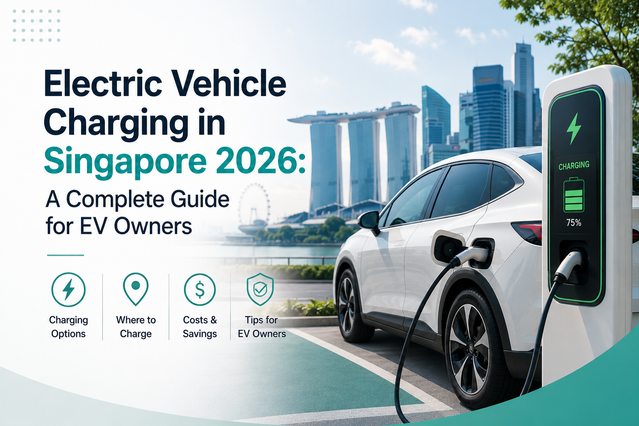
Singapore’s transition towards electric mobility is making EV ownership increasingly practical. As more drivers switch from petrol and diesel vehicles, understanding how charging works has become an important part of everyday EV ownership. From selecting the right charger to checking charging availability and planning longer journeys, knowing the basics of electric charging in Singapore can make driving an EV much easier.
Understanding EV Charging in Singapore
EV charging is generally divided into two main types: AC and DC charging. AC chargers are commonly used when vehicles are parked for longer periods, such as overnight at residential developments or during working hours. They provide a steady charging rate and are suitable for routine top-ups.
DC chargers, on the other hand, are designed for faster charging. They are particularly useful during longer journeys when drivers need to replenish the battery within a shorter period. Charging speed depends on several factors, including the charger’s power capacity, the vehicle's onboard charging system and the battery's current state.
For example, charging networks can offer different power levels, with some public chargers supporting AC options such as 22kW and faster DC options. However, a higher-rated charger does not automatically mean every EV will charge at that maximum rate. The vehicle itself determines how much power it can accept.
How to Find and Use Public Chargers
For most EV owners, planning where to charge is just as important as knowing how to connect the vehicle. Charging applications can help drivers locate available stations and check their status before arriving.
A typical public charging session involves:
-
Finding a suitable charging point.
-
Parking correctly and connecting the charging cable.
-
Scanning the QR code or entering the charge point ID where required.
-
Starting the charging session.
-
Monitoring the charging progress.
-
Stopping the session and disconnecting the vehicle once charging is complete.
Some newer systems are also reducing the number of steps needed. App-free charging technology introduced in Singapore allows compatible vehicles to be recognised automatically after a one-time setup, making future charging sessions more convenient.
Making Daily EV Charging More Convenient
For everyday driving, EV owners do not necessarily need to wait until the battery is nearly empty before charging. Regular top-ups can fit naturally into a daily routine. Charging while the vehicle is parked at home, at work or at a destination can reduce the need for separate charging trips.
When considering electric charging in Singapore, drivers should look beyond charging speed alone. Location, charger availability, parking duration, charging cost and compatibility can all affect the overall experience.
It is also useful to check the charging network before starting a journey. Public charging platforms can show whether a station is available, occupied, offline or experiencing a fault. This helps drivers avoid unnecessary detours and plan alternative charging stops when needed.
What EV Owners Should Check Before Charging
A few simple habits can make charging more efficient and predictable:
-
Check charger type: Confirm whether your EV requires AC or DC charging.
-
Check power capacity: Higher-rated chargers can provide faster charging, subject to vehicle limitations.
-
Check availability: Look at the charger's live status before travelling to the location.
-
Know the charging cost: Public charging fees may be calculated according to electricity consumed in kWh and the applicable rate.
-
Avoid unnecessary waiting: Move your vehicle after charging so that others can use the charger.
-
Plan longer journeys: Identify suitable charging stops before setting off.
Charging Beyond Singapore
EV ownership can also support cross-border travel between Singapore and Malaysia. Charging networks are increasingly connecting locations across both countries, allowing drivers to plan charging stops beyond Singapore. Available stations can include different AC and DC power levels, so checking the location and charger specifications before travelling remains important.
For a smooth trip, drivers should consider their expected driving distance, battery level, charging time and available charging locations along the route. A little preparation can prevent unnecessary waiting or range concerns.
Building Better EV Habits for 2026
As charging infrastructure continues to expand, EV ownership is becoming less about finding a charger only when the battery is low and more about incorporating charging into normal travel routines. Understanding charger types, checking availability and planning journeys can help drivers make better use of the growing charging network.
For anyone considering an EV or already driving one, electric charging in Singapore is an essential part of the ownership experience. With smarter charging technology, expanding infrastructure and better-connected charging networks, EV drivers can plan their daily journeys with greater confidence and convenience.